Success despite Misfortune tellers and Prophets of doom

You may not have experienced this personally, but you have heard people say they lack confidence because people verbally doubted their ability. Their abilities and value were challenged at an early age. They would never accomplish something. When they were older, they were told they were not qualified to do something or lacked the capacity or skill to achieve an objective. Their failure would be due to their socio-economic status, background, gender, race, culture, appearance or interests. These individuals were devastated and believed the negative remarks, hook line and sinker.

You may share my curiosity about people who go out of their way to predict a negative future about someone. They will not hesitate to tell a person that they will never earn a college degree, get into a particular college or program, and achieve a dream or a job, because of a limited vision of an individual’s potential. These misfortune tellers will frequently volunteer their assessment of a friends potential, as if it was a foregone conclusion. People are told that they will never be a leader, were not bright enough, tall enough, thin enough or good-looking enough to make it in this world.
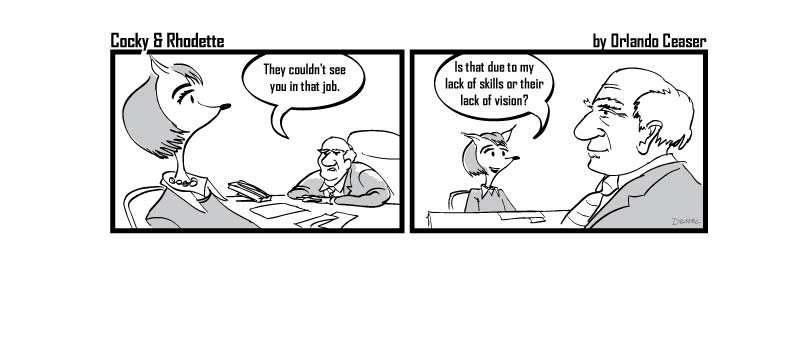
Lack-of-Vision

I walked into a room of new district managers after a merger. I was struck by the number of individuals present who were never supposed to be promoted. They wore the label of being unfit for management from their previous organization. Hell was to freeze over before some of them became managers. I looked around the room and arrived at the conclusion that the weather forecast for hell called for an ice storm of momentous proportions.

We look at these negative prognosticators, misfortune tellers, prophets of doom and dream killers, and wonder;

• Are they clairvoyant, bona fide, certified Palm readers?
• What is their success rate or track record of predicting events?
• Are they famous because of their success with the lottery, betting on horses or investing in the stock market?
• Do they have the best grades in school?
• Are they the highest performers on the job?
• Are they independently wealthy because of their ability to select winners?

The absence of such data, should disqualify people from seeing into your future and making judgments on what you can or will not be able to do. Why should we listen to these questionable, nonsensical projections without proof of their credibility? We seldom subject people to this kind of questioning. We take their word and grant them the influence to affect our lives. I wonder how they would answer these questions. A

Personal achievement and productivity in many segments of our lives are influenced by what people have said about us. The words of misfortune tellers have stunted the professional and personal growth of countless individuals. The words are devastating, but we give them added power by believing the words must be true. This belief increases the predictive power of words uttered by people who are mean-spirited enough to attack our dreams without offering any constructive criticism to help us grow. Their motives should disqualify them for conflict of interest. It may not be that they believed we would, but they wanted us to fail. Somehow our success might make them look bad, as they take it personally.

We have to be careful around misfortune tellers, prophets of doom and dream killers. Words have power and should not be used to predict a negative future unless they are used to instruct someone in a positive manner. Granted, some people may have unrealistic expectations of their potential and you may feel it necessary to bring them down to reality. This can be accomplished in a positive manner by directing them to an area where you feel their strengths are more appropriate. This of course should be done if you have the right experience, skills and credentials. If you don’t feel someone can do something and it’s just your opinion, you must evaluate the reason for bursting their balloon. You may need to show wisdom by being silent and keeping your opinions to yourself.

The prophets of doom, live in the world of the worst case scenarios. They can be destructive if they only and always paint a picture of the worst case happening to you. Frequently, they point to personal characteristic or circumstance that you cannot overcome. They can depress you and cause you to give up trying, if they consistently fill your head with negative expectations.

The following chart should be helpful when faced with naysayers who are running around with sharp objects, leaping in the air to burst your balloons. The balloons represent your goals, dreams, positive intentions and lofty expectations.

canbelieve
If people say you can’t do something and you believe them, chances are you will prove them right. You will be discouraged and doubt your ability to go against their predictions. You give them the ability to influence personal perceptions and actions.

If someone says you can’t do something and you do not believe them, you will do everything within your power to prove them wrong. Their perception of you will drive you to higher levels of performance. You ask yourself, what gives them the right to say that about you, they don’t know you. You will show them how wrong they are about you.

If someone says you can do something and their belief is consistent with your perception, you will work in concert with their expectations. Your performance will more than likely be inspired, as you validate your personal convictions.

However, if someone says you can do something and you do not believe them, the result would be as if they said you couldn’t do it. Your lack of confidence and weak belief in yourself would undermine your success. There are instances when someone’s belief in you is greater than your belief in yourself. If they are persistent, you may eventually see what they see in you. It is important for you to keep an open mind and consider them a good judge of character. It is very difficult to achieve something if you do not believe it is possible. If you cannot see yourself performing in a certain role, it is difficult to achieve it or succeed in it.

Your belief system is a central part of performing to meet your expectations. There may be instances where outside forces will try to derail your progress, but a healthy self image, positive encouragement from others and a persistent drive to excel, will work to your advantage. In a competitive world where misfortune tellers, prophets of doom and dream killers work to stifle your achievement, you must be vigilant in growing skills, protecting and projecting confidence in your abilities.

Copyright © 2014 Orlando Ceaser

A leader should stand by, with and for their team

Stand by your team

A manager felt his people would go through a brick wall for him. He based this on their belief that he would do anything for them. They knew he had their backs. This dedication and loyalty led to higher sales results and productivity. He created a culture of excellence, enthusiasm and trust.

The manager was known to stand by his team. When they are in need of guidance and resources to compete in difficult situations, he was known to stand by them. In today’s marketplace, there is a fair amount of angst about the future and employees role in it. Standing by your team allows you to detect any anxiety and address it with encouragement and skill development.
You can quickly squash rumors that are not true, before they become a morale problem. Immediately provide whatever information you can, within your leadership obligations, to ensure they are focused on the things they can control.

If the team misses the mark and fall short of achieving a goal, they are not thrown under the bus. They are held accountable, but you as their leader, takes them through a rational analysis of what went wrong. You are on the front line developing strategy and corrective measures. Your aim is to exceed the goal, so that the shortfall does not happen again.
You want your team to be a well performing unit, exceeding objectives. This is the best way you can diminish adverse situations. Being focused on excellence and driving productivity will build their confidence on the current job and prepare them to confidently answer interview questions for the next assignment.
Stand by your team as a strong role model who is authentic and committed to their development. This will enhance their performance loyalty and trust.
Stand with your team

It is critical to also stand with your team in skirmishes to drive market share. You have a history with them. Your relationships were strengthened in the trenches. You made sure they were informed about every major decision and the reasons for those decisions. You felt that if they were more informed about the intricacies involving the decisions, it would build trust in your leadership. Patrick Lynn Lencioni in his book, “Three signs of a miserable job,” speaks about each individual’s need to be known, to feel important and able to gauge their progress and level of contribution to the organization. When they feel connected, this has a positive influence on engagement and results.

If you stand with your team, your praise and proximity will indicate that you care about them and they are not just a means to an end. You value them as individuals and are committed to their success. You stand shoulder to shoulder with them in the day-to-day struggles in the marketplace. You are not afraid to roll up your sleeves and help them do the work. You are willing to ask them their opinions and implement their suggestions. Where there suggestions have merited, they are implemented and they are given the credit. They know that you are the boss, but you do not hesitate to show that you are so committed to getting the job done. This leading by example sends a powerful message.

When you stand with your team, you make sure that each individual knows their job and does their job. You are not a micro-manager. You are always open and committed to their development. You want them to be more efficient and effective and willing to offer suggestions to improve their performance while living up to their responsibilities.

Stand for your team

Thirdly, you should stand for your team. Be the proud representative or your team, department or organization. You are aware of the hard work they put into excelling on the job and you want to promote their excellence to anyone who will listen. You want to represent each member and the entire group to people who can have an influence on their career.
When you stand for your team, you openly and willingly engage in conversations about their talents, gifts and skills. You expose your team to knowledge, individuals and other resources that expand their experiences and expertise. Additionally, you are not timid about challenging them to higher levels of achievement. Your expectations are high, because you know they can do more.
There are times when your team will seem to take your performance personally. They want you to stand out among your peers when there is any competition. They watched with pride as you make a presentation on the agenda with other managers. You are their boss. You are representing the team and they are bursting with pride.

When you stand for your people you are loyal and not always looking to change teams for your personal benefit. You are committed to the productivity of the group. You select and develop a strong core of hard-working, ambitious people who crave recognition and rewards for their excellent performance. This strong core is being groomed to work as a team. They have the complementary skills necessary to exceed aggressive team objectives. They enjoy their jobs. They are fully engaged. They look forward to going into battle every day with everyone on their team. They are looking to you as their leader. They see you as their ally, an advocate against any adversary who stands in their path.
To maximize your effectiveness as a leader it is essential that you stand by your people, stand with your people and stand for your people. The results will be amazing and will enable everyone involved to reach levels of performance that are personally beneficial and a windfall to the team and the organization.

Copyright © 2014 Orlando Ceaser

Reading to children can make you a better leader

I was told of the benefits of reading to children. It would aid in their development, help them acquire a love for learning and strengthen the bond between parent and child. But I did not count on the collateral or ancillary advantages I would receive. Of course, I was excited and encouraged by the interaction and the way I was able to connect to my children. But, with each story, nursery rhyme or fable I began to associate their content with the people I managed in the workplace. Their content gave me new insights into executing my role as a leader.

When I returned to work I found that I began to incorporate some of the very language and concepts from the literature I read to my kids the night before. Aesop’s Fables were always good with life lessons. Androcles and the lion taught me the value of helping everyone no matter how small because you never knew when they could help you. The story was about a mouse who returned a favor by saving a lion that was caught in a hunter’s net. The Emperor’s new clothes by Hans Christian Andersen had many applications to corporate culture. The failure to speak to power brought on by fear and ego was a natural metaphor. The practice of using children literature to clarify leadership principles is widespread today with articles and books about the Goldilocks Leadership Style. There are books such as, The Oz Principle by Roger Connors, Tom Smith and Craig Hickman, and Our Emperor’s have no clothes by Alan Weiss and Emperor’s Clothes by Catherine Mc Guinness. They use the aforementioned classic as inspiration for their works.

Reading children stories make managerial principles fresh and exciting. Many people can relate to them and feel connected to the subject. It takes us back to our childhood and the rich and often forgotten lessons from our youth. I read the classic fable of the hare and the tortoise. I walked into work with a new perspective. The morale of the story is that “plodding wins the race,” emphasizing the value of persistence. But when I arrived at work, I placed a different spin on the classic story. I asked my managers, “Who would you rather be the hare or the tortoise?” After a light discussion, I announced that I would rather be a hare that did not sleep. In our fast paced world, a company could seldom afford to hire a large number of workers who always started and finished slowly. We needed people to get out of the starting blocks quickly, master the information around their jobs and get up the learning curve in record time. We needed speed merchants who were confident, with stamina and awareness of the danger of underestimating their competition and the needs of their customers.

Another principle that was reinforced was the idea of performing with a winning attitude, while may have involved faking it until making it was a reality. My daughter was nearly 3 years old and was at the swimming pool with my wife and her mother. She was reciting a book out loud. It was the book I read to her before bed. As she moved to the bottom of each page, she moved her eyes to the top of the next page or turned the page as appropriate. “The man was flabbergasted,” she said. A woman next to her was astonished by her apparent reading skills at such a young age. She did not realize that my daughter had merely memorized every word on every page in the book and turned the pages appropriately, on her way to learning how to read. As leaders we must sometimes show courage and strength in a positive outcome even when we are not 100% certain, until the result is achieved.

I found the following benefits from my bonding moments with my children that I used with my teams that had leadership implications.

1. I listened better because they gave me their undivided attention and asked questions. They wanted to know the why, the back story behind the story. This is similar to the teams we manage. People want to know the content and the context.
2. Children enjoy when you are enthusiastic when reading a story. I was animated and displayed passion in my delivery and interpretation of the story.
3. I had to adapt a reading style that brought each child into the moment. If one child was quiet and the other easily distracted, I had to individualize and customize my reading style, make stronger eye contact and gestures to ensure that both were engaged in the story.
4. I selected stories for them which were my favorites from childhood. This helped reinforce messages that I had forgotten. Some of the fairytales and nursery rhymes were originally written as political satire which helped explain the appeal to some adults. Looking for other ways to use the information helped broaden my perspective.
5. Reading taught me the value of play and including humor in my conversation and interactions with my children and my people.
6. The value of discipline and a set routine, along with the value of commitment to my promises by reading every night I was in town. If I was traveling out of town, I read to them over the telephone to keep my word. When there are challenges there are always ways to improvise to fulfill promises made on the important things in life.

We should look forward to reading to our children or to any children who could benefit from our time and attention. There are organizations such as Real Men Read which place adults in local schools to read to children. The men participating are receiving some of the same benefits I outlined above. The benefits are achieved whether you are reading to your children or any willing child sitting in front of you to hear your passionate delivery of a new book or a childhood classic

Additionally, we know that, “Children are born ready to learn and reading to them stimulates and satisfies their thirst for information. Children cultivate 85% of their intellect, personality and skills by age five. The first months and years of life set the stage for lifelong development,” according the National Research Council and Institute of Medicine, 2000. Reading to them at an early age is a tremendous advantage for them. However, the returns to the adults are exceptionally stimulating. When we think of the input into the creative process that is triggered when we read and visualize the images; the reinforcement of key values and the lessons to help illustrate leadership principles, reading to children should be a consistent and mandatory part of our lives.

Copyright © 2013 Orlando Ceaser

Tie breakers – Beating the crowd in a photo finish

Think_for_Myself[1]Similarity is everywhere. Parity is another word used to describe sameness that exists among sports teams. A commodity is a perception by customers that there is little difference between the items portrayed. The common view is that all of the products under review or investigation are interchangeable and can be substituted for each other. When this occurs with your career, something must be done to give you an edge. A slight variation can be seen as an advantage. If candidates are seen as equal, something must be done to break the tie.

There are so many talented candidates applying for jobs and many have equivalent academic and professional skill sets and expertise. College admission officers receive applications from a large number of straight “A” students and others with high grade point averages. Employment offices receive resumes from people with indistinguishable backgrounds. You have to devise a strategy to stand out or “differentiate” yourself from the crowd. Some people have accomplished this in the form of a short term and long term strategy of more education. This can be achieved in the form of an advanced degree or certificate of specialization in an area of need. This can be in the form of skills and experience gained in volunteer activities on the job, in school or in your community.

Leaders are needed in great numbers. Great leadership is desperately needed. Individuals with the emotional and intellectual fortitude to inspire and lead others to complete projects, exceed sales goals and solve problems will find employment. People with the technical, social skills and emotional intelligence will always be in demand.

Old School relatives always spoke of the value of a strong work ethic. It meant working a job to the best of your ability. It meant pride in the quality of your effort. Sometimes it meant working long hours, where the pay was not worth it in the short term, but there were significant long term benefits. There were occasions when a low paying job was used as a stepping stone to a higher paying job.

What would you use as a tie breaker if you were making a decision between several comparable people? This thought process will help you imagine what the interviewer is going through. Examples of potential tie breakers may include the following.

• Unique or various experiences which sets you apart from others
• Interests, hobbies and attributes which could add to the skills of your team. What are your interests that grow you in other areas? Volunteer opportunities and hobbies in art and music can portray an interesting person. You can develop techniques of creativity which can apply to other areas of life when examined for other tangible benefits
• Sports can be a tie breaker if you reached a high level of competency and can demonstrate valuable skills acquired during your playing days. Leadership positions such as the captain of the team and how this enhanced your character.
Some people look for points of identification with the interviewer as a potential tie breaker. I worked for a manager who loved to play racquetball. In a competitive interview when all else was equal I could see him leaning toward the candidate who was an avid racquetball player.

• Working to pay for your college education. Dave was a manager who worked his way through college and paid for 100% of his education. He therefore, had a bias for anyone who demonstrated these attributes. In an interview if he discovered this information, he immediately connected with the candidate. This plays into the decision-making process. He would use this information to break a tie. Granted this information is often impossible to gather, but I want you to think about acquiring extracurricular activities and education which could prove instrumental in your career development. The more well rounded you are, the greater the possibility of breaking the tie with other candidates.

Tony Alessandra, PhD. said years ago that people should work on their breath and depth of knowledge. The depth of knowledge referred to the information in your chosen area of interest; the data, experiences and connections that formed your expertise in your area of specialization. Your breath of knowledge is all of the other things you know outside of your business, which make you well rounded and hopefully more interesting.

You don’t want to be among the less impressive resumes. But even if among the best you must have sufficient skills to set yourself apart from others. Your leadership, risk taking, charisma and communication skills and leadership practices may be exactly what the organization or institution is looking to bring on board. Your hunger, sense of urgency and a track record of achieving goals are attractive to potential employers.

People may overlook the value of communication skills in breaking a tie and distinguishing yourself from others. Many people use their communication skills to enhance their profile. Students and adults join Toastmasters and look for opportunities to make presentations in front of large groups. People take acting classes to improve their ability to communicate. Their involvement has little to do with pursuing an acting career, but everything to do with building their network and improving their skills to communicate with different people.

Your career plan should contain elements or characteristics to set you apart from others. Or you should look at your interests and skills and ask, “Who would be interested in this array of talent? Am I competitive enough? What is missing? What do I need to do short term and long term? If interviewing was compared to a horse race, there would be people scattered all over the track. However, many would cross the line in a photo finish. It is up to the interviewers to find tangible ways to separate the candidates with equivalent skills. They find a way to break the tie. Illustrating and demonstrating your diverse skills, talents, background and connections will hopefully break the tie in your favor.

Copyright © 2013 Orlando Ceaser

Busted while looking for a new job

How would your boss respond if he discovered you were looking for a new job? What would you do if you were busted and caught in the act? What would you say? What would you do? This thought may seldom come to mind, however, you may want to plan some witty comebacks in case you are discovered.

There are more people available then jobs. Many people are trapped in jobs that are below their expectations. Additionally, ambitious employees want to quickly climb the corporate ladder to success. So we find ourselves in a world where individuals are constantly changing jobs or looking to change jobs. People are eager to improve their economic status and to satisfy their egos. Job seekers are using the Internet and social media, along with the traditional job fairs and newspapers. With the heavy traffic of candidates and employers, the Law of Probability predicts your boss could detect your search for a new job.

We hired a manager to help us staff a new specialty sales force. He was waiting to interview one of his former colleagues, who did not know that he had jumped ship. The colleague was waiting to be interviewed. He did not know the name of the person he was supposed to see. He sat in the hall waiting his turn. The door opened and his former colleague stepped out to meet him. The look on his face was priceless, as his knees buckled. Immediately his former colleague placed him at ease by saying that he no longer worked for the same company. The colleague uttered a sigh of relief and said,” I’m afraid that I am going to have to change my underwear.” This made me wonder if it is wise to formulate a few words to share if someone discovered your plans to leave the organization.

Shortly after a merger, I surprised many of my new employees during a session on gratitude. We filled up several pages on a flip chart listing the many benefits of our new organization, which was very helpful for the audience. I wanted them to know that we have a tendency to look at the negative side of change. I also wanted them to remember these things when they received phone calls from recruiters. I reminded them that recruiters were salespeople. The unscrupulous ones were more concerned about placement than the right fit for their clients. I stunned them when I said, jokingly,” I know you are receiving phone calls from recruiters. If you are doing a great job people should be calling you. And when they call, some of you are interested. I know this to be true, because when I call posing as a recruiter, some of you are interested.” It was so quiet you could hear a pin drop. A few of the new team members could be heard asking the person next to them,” Would he really do that?”

Everyone in the workplace is technically a free agent and free to move between companies at will. However, if you have indicated a desire to move up in an organization, they may not take kindly to you aggressively shopping your services. Developing a reputation of having a wandering eye could work against you unless you are a phenomenal performer. Companies may not always seem loyal, but loyalty is demanded of their employees. It is flattering for companies to know that someone else wants to hire you. They blush at the positive impact you have on your customers and the industry. If you take a risk and decide to follow up on their interest, think of a way to respond if you are caught.

A sales representative drove outside of his territory to attend a job interview. He entered an office building and waited for the elevator. The elevator doors opened and there stood his district and regional sales managers. Needless to say, they were surprised to see him and he was shocked to see them. The morale of the story is if you are discovered, be ready with a plausible explanation. Telling the truth about the hiring lead is highly recommended. This can lead you into a very candid conversation about your career. If you lied to make room for the interview, you may have complicated the matter by your lack of integrity. It is ideal to make room for an interview during a long lunch, before or after work or on a scheduled vacation day.

Discovery Advantages
Your willingness to consider another company sometimes it is an indication that something is lacking in your current relationship. It may also speak to the power of your brand that others are heavily recruiting you. There are benefits to the word getting out that you are looking for another job. They include, but are not limited to:
• Discovery may stimulate a serious discussion around your status with the firm
• Career opportunities may suddenly develop because the company feels that they may lose you
• Discovery may enable you to discuss your interest, ambition and lack of career opportunities

Earlier, I mentioned how the company would feel if they knew you were constantly looking for job. Many companies will understand this because of the current precarious state of employment. Some companies may not understand and may terminate you. Some companies may be reluctant to hire you if you are always on the market, trolling for better options.

I met a young man and he asked for my business card.” Are you hiring?” He wanted to know.” I am always looking for a better opportunity.” I wondered at that moment about his comment. He was impressive, but should I seriously consider him? If I hired him, would he maintain the same attitude and philosophy while working for me, always aggressively looking for something better? This takes me back to my central question. If you’re looking for another job and you are discovered,” What will you say?”

You might give the response that people often give when they resign. “I wasn’t looking for a job, but they called me.” Don’t be surprised if your employer is not satisfied with this response. It will not make them feel better to know that you did not initiate the process. A company may view this as disloyalty or as cheating in a relationship. Imagine saying to a companion, “Honey, I did not chase her or go after him first. They approached me. They made the first move and I just gauged their interest to see what they had to offer.”

We search for jobs on social media sites, job boards, career fairs and networking functions. Invariably, if you are active or pursue an opening once, there is the possibility that someone will find out. Discovery may not be due to carelessness on your part. Your profile may be seen by people who have connections with people within your organization. There are haters and informers in your company who wish to discredit you or make themselves look good by telling about your interest in a particular job. The fact remains, if you are looking for another job, it may be prudent to think of your response if your activity is exposed.

Copyright © 2013 Orlando Ceaser

Reputation – Working Capital in a Successful Life

Have you ever heard the phrase,” You are nothing like I expected,” or” You are nothing like I was told?” When you heard these questions, you probably received them with mixed emotions. They could indicate positive feelings about you or an underlying misconception or suspicion about your reputation. Why were they surprised?

If you’re like me, you try very hard to establish and protect your reputation. Your reputation is who you are, what you stand for and what you represent. Many times it goes before you and people say such things as,” Your reputation preceded you.” So it is critical that you do everything to keep your reputation pristine and positive.

Your reputation is like currency. It enables you to incur special favors and treatment, assignments, employment and business opportunities, the benefit of the doubt and information, power and influence. A poor reputation can also work against you and deprive you of many of the finer things in life. Reputation can affect what people think of you; a fine person they would like to work with or I wouldn’t work with them if they were the last person on Earth.

A Bad Reputation

A bad reputation, which could relate to a bad driving record, poor credit history or hard to work with, can haunt your work life. You may lose out on a job. Usually, losing out on a job may never be brought to your attention, but it does happen. Another tragedy is that there are times when a poor reputation, is not your fault. A director was asked to hire an assistant, who competed against her for her current job. She was initially reluctant. She had the usual concerns about this individual potentially sabotaging her agenda. But she was open to using the person’s skills to improve the overall department. She also felt that she could groom the individual to one day take her job or a similar assignment. She accepted it as a good a challenge.

Shortly after the person joined her department, she began hearing negative comments from members of the team about some of his remarks. He was undermining her authority. He secretly questioned her decisions and even went as far as to sabotage some of the marketing projects. Additionally, he was personally connected to other directors and began to influence their perceptions of her. He told them she was lazy, incompetent and ineffective, that she was in a job that was over her head. They believed him because he knew marketing and worked closely with her every day. He was eventually reassigned, but the damage had already been done to her reputation. He wanted her out of the job, so he could take her place. He could not beat her in the interview, but he was committed to poisoning her reputation.

Survey your people. Could any of them one day do your job? Assess their talent and interest and dedicate yourself to ensuring they will be ready for future promotions. The right person will be patient and welcoming your assistance and advocacy. The wrong person may try to sabotage your efforts, so do not be naïve. Prepare for any signs of betrayal, such as silent insidious insubordination, in word or deed. People will come to you in confidence. Take well meaning comments seriously, especially if they are warning you about passive aggressive behavior that is being used to discredit your reputation.

A positive reputation is crucial in validating who you are. It is a reflection of your life’s work and therefore should be guarded as you would your bank account or investment portfolio. The concept of acting above and beyond reproach is necessary to support your reputation. This should be done to establish a history of consistency. You must not cut corners where integrity is concerned. You don’t want anyone to doubt your character.

While you are working hard to protect your reputation, bear in mind, there may be individuals trying to give you a bad name. There are detractors or haters, determined to bring you down and remove you from competing with them for a current or future assignment.

A candidate was almost denied employment because his previous employer misrepresented his reputation during a reference check. The new company was so impressed with him in the interview that they allowed him an opportunity to address the malicious accusations lodged against him. He told his version of the story to address the example his employer had given, which were completely taken out of context. He also supplied the names of the zone manager and director of sales who spoke very highly of the candidate. They even went as far as to discredit his supervisor, which enabled him to get the job. This doesn’t usually happen, but the reputation of the candidate came through loudly and clearly in the interview and in the comments from the zone manager and the director of sales.

A manager was astonished to find out that an employee was interviewing his people, in an effort to gather negative information about him. She was planning to file a lawsuit against her manager. She wanted to prove that the organization tolerated bad behavior on the part of its managers. Since the manager’s reputation was beyond reproach, she failed in her efforts to link him to her lawsuit.

Failing to pay attention to integrity and your reputation is a very costly enterprise. A poor reputation may literally cost you thousands of dollars in lost promotions, salary increases, bonuses, key relationships and important clients. You must do everything in your power to keep your reputation positive and of the highest caliber. This involves monitoring and managing your personal and professional image. Just as there are agencies to monitor your credit and issue credit reports, you must find a way to monitor your reputation. You must set up a process, a mechanism or system to collect image data on yourself. There are a few simple techniques you should consider. You have heard them before and they should be repeated because repetition reinforces learning.

Reputation Feedback

Select a few trusted advisors to give you feedback on your character, image, personal and professional leadership. These all add up to your reputation, as you know it. You should gather information the old fashioned way by asking questions in a questionnaire, on the telephone, in a meeting or over a meal. Consider using the following questions.

• Do you feel I am listening to you?
• Do you feel I am treating you and others fairly?
• Have you heard anything that should be brought to my attention?
• What are things I need to change to make things better for you?
• Is there any dissent that has surfaced among your team members?
• What can I do to make you feel a greater part of the team?
• Are my actions in line with my stated values and intentions and your expectations?

Ask different people about the word on the street about you. What are people saying? What have they heard about you? If your company conducts employee surveys, they may drill down to your level to give you feedback. If this is the case, reputation information will be provided to you. If your company provides customer surveys which allow the customer to give data on the company and its representatives, you may get reputation data in this manner. Customer surveys give the perception information which contributes to the corporate image, your personal image and reputation.

360° feedback instruments are available to alert managers to how they are perceived by their people. Climate studies can also be conducted to assess the environment within a team or organization. Personally, you should always be aware of your actions because they are registered somewhere in the hearts and minds of those around you. The collection of your actions will shape your reputation and place you in high esteem or doom you to suffer dire consequences.

• The old adage of “ your word is your bond” should have meaning in your life, as you follow through on your obligations
• Treat people the way you want to be treated
• Remember you are an employee of the company and are always on duty
• Always model the company’s values
• Do not do anything that you would not like to see as a headline in the media
• Cultivate a number of trusted individuals who will advise you on matters that may affect your career
• In personnel matters, preserve the individual’s self esteem
• Cultivate advocate who will defend your reputation and alert you to any assaults on your character

You can bolster your character, image and reputation by sticking to these cardinal principles.

Copyright © 2013 Orlando Ceaser

Managing Up – Part 2 (The Manager’s Perspective)

Double_S-O-B_C

Managers can recount individuals and situations where they felt employees did an excellent job of managing up. The person did not seem manipulative, arrogant or self-centered regarding their career. They demonstrated many of the attributes mentioned earlier in the “Do” category and did not participate in the “Don’t” area at all. Many times they shared similar interests, but were not clones or mini me’s from the Austin Powers movie. They direct reports contained some of the following qualities;

  • Brought something intriguing to the table, with special qualities or contributions
  • Provided information about the job, concerning the workplace and on the industry
  • Reliable and could be counted on to follow through on assignments
  • Performed their jobs well, exceeding expectations
  • Took an interest in the manager’s job
  • Make the manager and the team look good, drawing rave reviews from many in senior leadership
  • Authentic in their approach to the job and their clients
  • Could be trusted to tell the truth regardless of the consequence

The manager is the manager because they like to get things accomplished. They are aware that some people are inauthentic in relating to them. Because the manager has input into hiring, performance reviews, compensation and terminations, employees tend to be guarded even when they have an open door policy. Many employees genuinely stated their opinions and intentions, whereas others are playing games, telling a manager what they think they want to hear, to win praise and recognition.

The Know System™ for decision-making was featured in the book, The Isle of Knowledge (available on http://www.amazon.com). The Isle of Knowledge is a fable set in the South Pacific with the hero on a journey of enlightenment, to better decisions. He is mesmerized by the journey and the inhabitants on his quest to ask the right questions to make better decisions. The Isle of Knowledge contains a methodology to help people manage up in an easy to follow series of questions.

The Know System is based on the word Know. If you use the four letters in the word Know you will have a system to gather information. Take out a sheet of paper or your computer, smart phone or tablet. Write Know at the top of the page or screen. Begin writing the words that come to mind. Be generous with the rules, but only use the letters from Know. You will arrive at the following words that are useful for this exercise;

  • Know, Won, Now, No, On, Own, OK, Ow, Wo, Wok, KO

Know

A skillful employee will start off asking questions to learn about themselves (self-awareness) and their manager. What do they know and what do they need to know? They may use Who, What, Where, Why, When and How to gather the information they need on personal and manager goals, values and interests. Who can give them information on the manager when they are conducting their interviews to learn about the manager’s habits and history?

Won

Self awareness will give them their goals and objectives. If they managed up effectively, what would their world look like? How would they feel, what would they gain from it? How can they make it a win / win where the individual and manager’s goals are reached?

Now

What are they doing now to manage up? Are their techniques the right ones? Are their techniques consistent with their goals? Are there aspects of their performance and personality that are forming a barrier? Are they operating with the right priorities and set of objectives?

No

We recognize there are some things they must remove from their activity list. They must say ‘No” to some things. They cannot say yes to everything and reach their goals. They may reach burnout unless guidelines are put in place. There are sections that are frowned upon by your manager; you may feel it is advantageous to be on the same wavelength. There are procedures you have said yes to that requires a change of heart and direction.

On

You must be on at all times. Authenticity is required as we stated earlier, but you must also be persistent and consistent. When you are on message, on target and on fire, you create a barrier to ward off those elements that try to distract you. There are negative people who will try to bring you down as well as your manager; you need to make sure you don’t inadvertently toss your manager under the bus.

Own

You will be held accountable for your actions. You are responsible for your career and your daily performance. The relationship with the manager is largely up to you. If you adopt this mindset, you will take the necessary steps to make it a success.

OK, Ow & Wo

If you are doing a poor job at managing up, this Ok performance is not satisfactory in the long-term. Jim Collins in his book Good to Great said “Good is the enemy of excellence.’ If good is the enemy, Ok cannot be far behind. The only time Ok is satisfactory is on a checklist. If you have a list of the areas you want to cover, to manage up effectively, OK will work marvelously, as a confirmation that an item is completed.

Ow is the sound we make when we are in pain. Sometimes pain says we are doing the wrong thing or we are doing the thing wrong. Pain also is the discomfort we go through anytime we do something different or we change. Some of the strategies in managing up maybe new and difficult and the awkward nature may seem painful. Soon they will be a part of your repertoire and beneficial in helping you manage up.

Wo is the sound you hear when people want to slow down a horse. This can apply to us, if we are going too fast, implementing too many techniques. You may need to reduce the list to a manageable number of actions and only add when you mastered a few at a time.

Wok

Sometimes you have to stir things up a bit when you institute variety and change. Just because you have always acted a certain way does not mean that you always have to act that way. Variety is the spice of life and makes flexibility a breath of fresh air. Innovative techniques are ways to endear you to a manager and become an indispensable part of her inner circle.

KO

If you are not successful at managing up, it is safe to say, your failure could knock you out of the running for whatever goal you want to accomplish.

Managing up is a skill set that is built on relationships and high performance. You may institute many of these practices and still not be invited into the manager’s inner circle. You may try them and the relationship with your manager is still distant and cold, but it is your responsibility to make every effort to make this work. The manager has a lot of power and influence over many aspects of your career. You can make a difference in showing them you are an indispensable member of the team, who rallies to make them look good, has their back and able to help them achieve their goals and objectives.

www.watchwellinc.com

Copyright © 2013 Orlando Ceaser

Managing Up – Part 1

 Managing up can mean different things to different people.  One may view it as a set of techniques and strategies to allow a subordinate to survive when working for a difficult supervisor. Another may see it as a means to harmonize actions with the person you are reporting to in order to pave a smooth road to more money and a promotion. Still others may see it as manipulation or performance acting in order to achieve a personal objective. Whatever your point of view the general consensus is there is a need to work with your manager in order to improve the climate in your work place and achieve personal and organizational goals.

I will draw largely from many years of reporting to a variety of managers. The techniques mentioned will be some that I’ve used personally or observed used masterfully by others. I will also refer to the literature around management and leading, ultimately providing the perspective of a person reporting to a manager and the viewpoint of a manager receiving the strategies.

Articles written on the topic of managing up, advise employees to first understand their personal motives and objectives. A high level of emotional intelligence through greater self-awareness, let’s you know what you wish to gain from a relationship with a supervisor. These may be a variation on rewards and recognitions to include, increased compensation, promotional opportunities or simply survival goals. It is also helpful in designing strategies to work with your boss. This analysis also exposes the non-negotiable, things you will not give up to succeed in a manager / employee relationship. You need to know what is in it for you or what you need to acquire to make it worth the time spent. The personal drivers of your behavior will become clear to you during this time of reflection. It is important to be genuine, transparent and honest with yourself.

Secondly, you must determine the goals and objectives of your manager. If the boss is a perfectionist, give her what she wants. She needs to deal with different styles, but you may not have the rank or credibility to change her. Managers have different management and personality styles. You need to know if they are autocratic, where they believe all objectives should come from the top of the organization or participatory where teams are emphasized.  They may also be consultative, persuasive, decorative or laissez-fare. The management style will give you insight into how they will run their slice of the organization.  A review or management style literature contains definitions of the styles and how to work effectively within them.

Managers leave a corporate footprint within their organizations. There will be evidence everywhere on their trials and tribulations, conquests, contributions and celebrations of achievement. The information is present within the company history and you will find it by indulging in research or investigative reporting. This research will involve interviews and asking the right questions.

These interviews may start as early as your pre-employment interview or the job interview prior to the promotion.  You want to determine what drives the manager, what makes them tick and what ticks them off.  You want to know their philosophies, values, ambitions and thoughts around teamwork and individual achievement, so you can see if their goals mesh with your work ethic. What are the manager’s views about performance and how it is rewarded or punished? You want to know what excellence looks like to them, their work habits and decision-making strategies. Do they involve their team in decision-making? Do they value those who come to them with solutions rather than problems to be solved? The manager has a track record as clear as footsteps in the snow; you want to know as much as possible, so you don’t make mistakes when managing your career while managing up.

The interviews should involve direct conversations with the manager, but also input should be solicited from others who have worked for her. A talk with their peers and others within the company will be helpful. You ultimately want to build a bridge with your performance to get you from where you are to where you want to be. If you are currently working for the manager you should have much of this information, but are you using it to your advantage? Here are a few do’s and don’ts that may be helpful for you.

Do’s

  1. Perform your job with excellence
  2. Make the manager look good
  3. Determine values, philosophies and pet peeves
  4. Avoid conflict unless the manager thrives on it to test your mettle
  5. Keep them informed about matters involving their area
  6. Have their back, protect them and cover their blind side
  7. Maintain confidentiality of key events that occur in your area
  8. Become an invaluable asset – indispensable

The first step in managing up is to do your own job with excellence, within the parameters of corporate policy and professionalism. Know your job and do your job. Know your boss and do your best to make them look good. The manager’s job can be one of the loneliest jobs in the company. The higher they rise in an organization, the more this statement applies. If you become a valued asset to the manager, this will enable you to manage up more effectively. Rosanne Badowski, co-author of Managing Up: How to forge an effective relationship with those above you says that your boss wants you to “go above and beyond your tasks assigned to you so that you can enhance your manager’s work.”  Penelope Trunk in the November 2006 issue of Managing Up said, “Helping your manager makes you a greater asset and will make you more competitive for a promotion – managing up is a “help me help you” type of role, and it can certainly work in your favor.”

If you are focused on continuous improvement, the manager will be impressed by your dedication. They may welcome you taking on additional responsibility by showing yourself worthy to handle the increased workload. This distribution of responsibilities will give you insight into their job, which could be helpful as you move up the company ladder. The manager may be open to mentoring and offering career advice to help you navigate the competitive waters of your industry or organization.

Don’t

  1. Compete with your manager – a victory is a defeat
  2. Make your manager look bad, incompetent, foolish or ridiculous
  3. Hang your manager out to dry by failing to keep them in the loop
  4. Embarrass the company and subsequently the manager
  5. Gossip, complain or speak ill of the manager to peers or others in management

There may be times when you may feel your boss is threatened by your presence and performance. You may catch the eye of senior leaders and your boss may feel you are the heir apparent to their job. This is a very delicate situation and you must do everything in your power to ensure that she can trust you and have your loyalty. Even if you are better than your boss in a certain area, do not rub their nose in it. Become a resource for your supervisor and use humility, offering your skill set for the benefit of the entire team. You must resist the temptation to go over their head, even when the senior leader gives you permission. Discuss this matter with your boss and ask for advice on how to handle. If you do not feel comfortable with this approach, consult your mentor or trusted advisor or alternative strategies.

Guard against setting up an adversarial relationship with your boss. A manager gained a reputation of being well-connected due to his many company relocations. This caused a problem with him and his director. The Director was the type who wanted to have access to all information. One day the manager mentioned in a meeting that he had copies of information the Director desired. The Director was furious and challenged him to disclose the person who sent him the files. When the manager surrendered the name, the Director replied, “So that’s your source of information in the Home Office.” The manager filled with ego, naively replied, “One of my sources of information.” When the words left his mouth, he said, he knew he had made a mistake. He worked from that instance to correct this error in judgment.

Copyright © 2013 Orlando Ceaser

Next installment

Managing Up – Part 2

The Manager’s Perspective  

Due to be posted March 12, 2013

Working your way out of a promotion

Career_in_a_Box[1]He was a tireless worker, delivering results above and beyond the call of duty. He was one of the top sales people; a legend in the sales organization. He boasted about the number of hours spent on the job and the number of customer calls made. He wanted to impress management with his work ethic, unyielding dedication to the job and the company. However, his managers were arriving at a startling conclusion. Whereas, they marveled at his drive, stamina and dedication, they were worried about his self-imposed workload; they could not risk promoting him to be a manager.

Jack thought he was impressing people in power, but he was sabotaging his career. Managers speak about greater production and engagement. He had both of these attributes at very high levels. Prevailing wisdom said, “There is no way we can make him a manager. He would expect others to work as hard as he does. He would kill people or chase them away.”

The management team also thought that it would be hard to replace his production. He was performing the work of two people. He was inadvertently destined to become an “individual contributor,” for as long as he was an employee. The individual contributor label made it virtually impossible for him to shed for it meant he was not seen as management material. Jack was ambitious. This moniker was devastating to him. He tried several tactics to change the reputation he had earned. His strategy was to model his behavior after other hard-working superstars. He had to answer questions, “What was hard work?” and “What was excessive?”

In today’s marketplace, he would not stand out as much, because everyone is being asked to do more with less and to allow their job to encroach upon their personal space. Nonetheless, people are still being denied promotions because of an excessive work ethic and perceived lack of flexibility. The advice received by Jack and others like him can be useful for workaholics and other ambitious employees.

Work / life balance

Convey a balanced life when discussing your home life while at work. If it is appropriate to talk about personal matters, you can disclose information about family activities. Discussion about involvement in school functions or the athletic pursuits of your family are fair game. Information about your hobbies and weekend recreation, as well as religious and community involvement shows you are a well-rounded person. If you are single, you can still demonstrate your interests in extra-work activities, to project someone who is more than an employee.

Employers want people who are dedicated and engaged on the job, but they also want people who have full lives, because in the end they make more productive employees.

Leadership

Individual contributors can demonstrate their leadership skills through their social interactions and civic duties. Discussing these matters at work gives you a chance to showcase leadership skills and instincts. Consulting with your managers about managerial scenarios in your church, associations or civic work can help people become comfortable with your work ethic and empathy for others. You can discuss leadership books and online programs and ask to attend seminars on your own time to project your interest.

Additionally, you may find it prudent to divert some of the effort and energy into projects outside of work to give you a greater sense of purpose and significance. Volunteer activities are useful on your internal and external resume. They also help you expand your social and professional network.

Candid Career Conversations

Career discussions with your manager and mentors will uncover instances of over powering your management with tales of sacrifice to complete a task. It may be wise to tone down some of the stories about late night projects and spending weekends to over produce. The time stamp on e-mail messages may also signal working at unreasonable hours. Allow your record to speak for itself. Even though you may be a workaholic, you do not want to brag about it. People have been known to think, “Why won’t he get a life?” “The job is all he has.” “She doesn’t have a family, so she can afford to give all of her time to work.”

A powerful work ethic is desired in an employee. Management strives to fill their teams with individuals matching this profile. However, you do not want to stunt your career growth because you represent an image that causes your managers to believe you would subject everyone to draconian, unrealistic and unrelenting standards in performing their jobs. They fear you will chase employees away and damage the morale and engagement levels of whatever team you are assigned to manage. If you do not address these concerns, you may not fulfill your career objectives to achieve a management position.

Copyright © 2013 Orlando Ceaser

Playing to the level of the competition


Scrolls-BestWorkI am from Chicago. I am a professional basketball fan; therefore I root for the Chicago Bulls.  The Bulls possess one of the best records in the Eastern Conference. They are tenacious and fiery competitors. However they can frustrate their fans by their inconstancy against the extreme teams in the league. They have a habit of occasionally playing to the level of their competition. For example, one night they beat the Miami Heat, who were world champions. On another night, they lost at home, to the Charlotte Bobcats. Charlotte lost 17 games in a row and sported one of the worst records in professional basketball.

This concept of playing to the level of the competition is not unique to world of sports. You can see it in business, academics and many organizations. This practice is brilliant if the competition is among the elite in your field. These skirmishes can be exhilarating and bring out the best in players, students and employees.

Remember when you joined a company, entered a new job or a new department; the manager assigned you to work with the best performer. They wanted you to acquire good habits and a strong work ethic. This move placed you solidly on the road to success. However, in the same company, employees may be performing to the lowest common denominator.

Working to the level of the competition is rampant in many classrooms. Where there is a high standard and the competitive bar is high, students excel. However, where the opposite is found, students with the potential to score higher grades do not want to stand out from their peers.

What causes teams and individuals to give less than their best effort and gauge their performance to the perceive competency of the competition? The following may be answers to this question;

  1. Arrogance and over confidence
  2. Focusing on their next opponent

Arrogance and over confidence

We are told as far back as childhood of the dangers of over confidence. One of my favorite stories was the hare and the tortoise. The hare under estimated the tortoise due to over confidence in his own ability. He had accurately deduced his chances of winning the race and the skill level of the tortoise. His marginal effort was due to arrogance which meant he disrespected the tortoise. In his mind there was no way the tortoise could win. He was too slow. Apparently, he did not take into consideration, how arrogance would affect his decision-making. When you are arrogant you may falsely judge your opponent or misjudge your ability to produce at a high level.

Arrogant people do not believe their maximum effort is required. They are convinced they can beat the other team. They may start slow and spot the other team an enormous lead. They figure they can catch them, but the other team may catch fire and play high above their usual play. In every contest one team may be playing to the level of their competition. They are hoping the other team takes them for granted.  

Focusing on their next opponent

The subconscious mind is responsible for the way we think and react to numerous stimuli. If we believe the current competitor is inferior we may not get our best thinking or response to situations that occur in battle.

If we view the current competitor as a weaker adversary, we may unconsciously wish to conserve our energy for a tougher challenger. We may decide to let down our defenses in order to rest up for the next formidable opponent. The old football adage is true, “On any given Sunday any team in the National Football League can rise up and defeat any other team in the league.” This is valid in sports, business and other aspects of our lives.

The key question is how does a team or an individual conduct themselves to avoid this let down in performance?

  1. Establish great habits
  2. Scrimmage with the best
  3. Treat everyone as the best

Set high expectations

The establishment of great habits through high expectations is a key ingredient in breaking people free from the mold of delivering average performance. Researcher Geoffrey M. Hodgson said “Individuals have habits and groups have routines.” These habits may come from conducting intense practices. Many coaches say, “The way you practice is a reflection of the way you will play the game.” So, the quality of the practice should not vary based on the opponent. Prepare for the opponent, regardless of their record, marketplace or position on the leader board. Maintain a high level of readiness. Hopefully, players will not take off plays during the game because they feel victory is guaranteed.

Charles Duhigg in his book, The Power of Habit states that habit is critical in shaping our behavior. “This process within our brains is a three-step loop. First, there is a cue, a trigger that tells your brain to go into automatic mode and which habit to use. Then there is the routine, which can be physical or mental or emotional. Finally, there is a reward which helps your brain figure out if this particular loop is worth remembering for the future.

Scrimmage with the best

Identify the best in your area and use it or them as a standard. People use or publish best practices and ask their team members to develop similar and greater examples for implementation in their areas. Exercises simulating the actions and response of the major players will keep your edges sharpened. Bring in experts to challenge your department and keep our skills sharp. Instill incentives to encourage those who can deliver more to deliver more. This does not mean abandoning work / life balance by driving people to conduct an inappropriate amount of work at home.

When I played high school football, Coach Ralph Hegner always scheduled a few scrimmages with the top teams from the Catholic League. They were usually well disciplined, larger in stature with excellent technique. Our eyes would become as large as saucers when these humongous players walked on the field. We were over whelmed on the initial players until we gained our composure and began to play better. Coach Hegner felt if we played well against these teams we would do well in our conference. I always remembered this routine of scrimmaging with the best whenever my sales team needed to develop their skills.

Treat everyone as the best

A champion approaches each challenger with the same level of intensity to achieve the victory. They postulated that extreme variances in performance were not the mark of a true champion. A champion should be able to get excited about competing against any opponent, regardless of their won / loss record or position in the marketplace. To do otherwise, showed you were not ready for the mantle of excellence or worthy to win the trophy.

There are benefits and dangers in playing to the level of the competition. If it allows us to achieve excellence, if it stretches us and develops us, it should be encouraged and mandated.  

Copyright © 2013 Orlando Ceaser