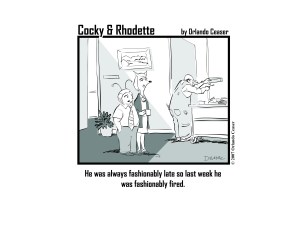
People are fired every day. The remaining employees were witnesses to the personnel decision and the aftermath. Coworkers may not be familiar with the whole story. They may suspect a person had performance issues, but were not aware of all of the particulars. However, they will form an opinion. Their opinion can affect their morale and the overall performance of the team.
The grape-vine and the rumor mill are the primary sources of information. It may present a jaded, slanted, one-sided day and misguided view of what happened. If they only hear the side of the affected person, the company may not get a proper hearing. Employees may see their peer escorted from the building or received a phone call about an employee’s departure from the organization. Their interpretation of the event will send a buzz of communication throughout the company. How management responds to these events will keep people focused and committed to the company and its goals and customers.
There are a series of personnel issues that management has to address. There are situations when a person violated company policies in an egregious manner. They may have a person in a job well over their heads. The situation is complicated when the person is personable with a long career with the organization. If they were no longer able to keep up with the workload, the job separation may have been a humane decision. Termination was an act of mercy, putting them out of their misery, whether they saw it that way or not.
Some people will not discuss their status change with their peers or drag the company name in the mud. However, in an effort to look like a victim, some will blame the company for unfairness and cite a history of false claims which have nothing to do with their situation. They portray themselves in a positive light.
A sales representative was fired from her company for just cause. In order to save agents and preserve their ego she spreads lies to her peers. Additionally, she contacted the customers in her territory and made unfair, untrue accusations against her management and the organization. This caused a reduction in sales, as she was truly liked by her clients.
Human Nature
Human nature causes many of us to preserve our ego when we leave an organization on bad terms. People will rarely acknowledge their role in a termination. It is unusual to hear people say;
- I was in over my head
- I no longer had the necessary skills to perform the job
- I lost my passion
- The job had passed me by
- I’ve violated company policy and was caught
It is more convenient to paint themselves as a victim and the company as the villain. Sometimes, people are fired for cheating or violating some of the companies’ rules and regulations. Invariably, Management will hear stories about the manager being a jerk, unfair and untrustworthy. If the person was highly regarded by their peers, there is a drop in trust and morale. Some people feel that if the affected person could be terminated, their own position may be very shaky or tenuous at best. “If they could let her go, I better watch my back.”
When people do not trust the company to do the right thing and feel decisions are made in a vindictive manner, employees will work out of fear. This fear increases anxiety and does not necessarily give the best performance and may show up or breakdown in other ways.
Professional Etiquette
Employees do not have access to the whole story, for it is not their business. However, if someone was struggling on the job, as a peer, they may have wondered, why the person was hired or why it took management so long to get them. If the person was not pulling their weight or were violating policies, their peers are usually the first to know. Many times after a person is terminated, the co-workers would ask, “What took you so long?” To which I would respond, “If you knew the person was a problem, why didn’t you come to us?” They would usually answer that it was not their job and they did not want to be responsible for someone losing their job.
Respect for employees and potential legal issues for the company, are good reasons to not discuss everyone’s performance issues. The best thing an organization can do is to discuss their overall personnel philosophy. If people trust the company and believe the company has their best interest at heart and act in a fair and impartial manner, they will assume the personnel decision was made for the right reasons. Companies candidly state they do not discuss individual performance levels of employees with their peers. However, they want everyone to know that personnel decisions are not made in a haphazard manner. They have a respectful workplace with an open door policy to allow all employees to discuss their performance with their manager and the Human Resources Department, when necessary. Some companies will allow employees to go over their supervisor to discuss performance with higher levels within the organization. This is a cultural matter which varies within companies and departments.
A Trusting Culture is the Key
I believe that prevention is the best intervention. This also applies to morale issues regarding terminations. The best response actually occurs on the front end. Within a high-performance culture where leadership is transparent and respectful, people are less likely to panic when someone is terminated. When a company has firmly established core values, people know what is expected of them. When these values are communicated, a culture develops that creates an environment of trust. David Horsager, in his book, The Trust Edge, says,” Everything of value is built on trust, from financial systems to relationships. He states eight components of The Pillars of Trust. They are clarity, compassion, character, competency, commitment, connection, contribution and consistency. When these eight pillars are strongly present, employees have to trust in their organizations.
The more employees know about the values behind decisions, the more trust and relaxation are present in the face of job actions. They realize that a termination or resignation is the result of an exhaustive, extensive series of events and soul-searching that may lead to the end of employment. Employees also realize that if they perform their jobs to the best of their ability, they will be treated fairly. They also, know that when people leave the organization, it is probably for a good reason.
Copyright © 2014 Orlando Ceaser
Free e-book, Leadership Greatness through High Performance Poetry, http://www.OrlandoCeaser.com
20% savings on all items on the site through December 31, 2014



 The "O" Zone