Diminishing your greatness – Taking days off

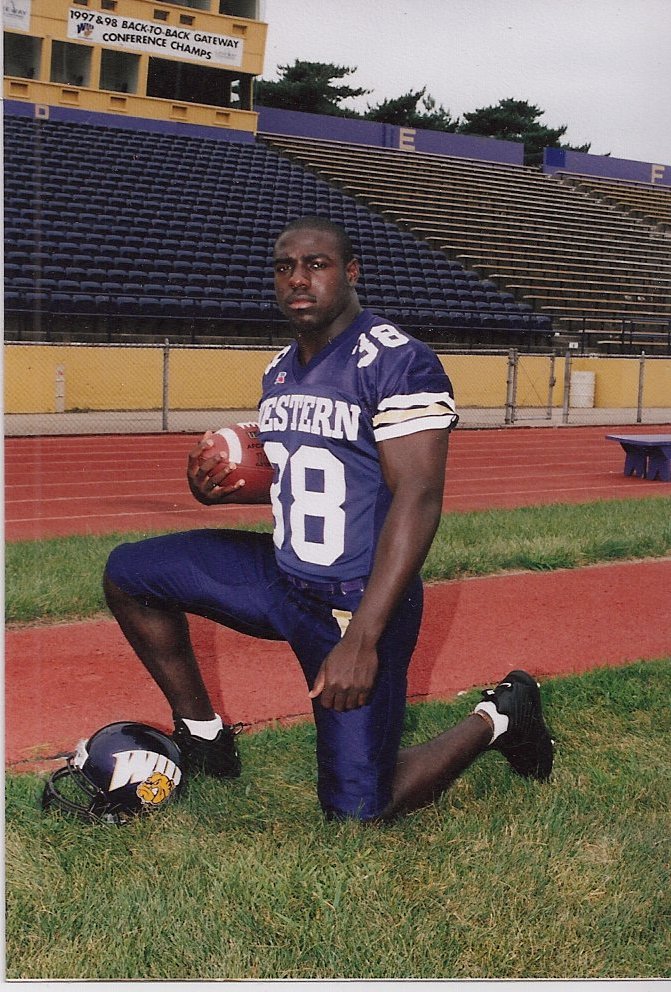
The two sports announcers were discussing the career of Randy Moss, the gifted wide
receiver in professional football. Despite his many accomplishments and
accolades in his prolific career and his volatile personality, they were
talking about one consistent complaint against him. He was accused of not giving
his best at all times. There were times they suggested that he was not fully
engaged. He was said to be known to take some plays off and merely go through
the motions.

The great ones, admired for their record-breaking performances, always went full
throttle, giving their best, even if the play was not designed to go in their
direction. They would never be accused of this trait. We make decisions daily
to be totally involved in critical situations or to skip an opportunity for
another time.

Granted, no one should be expected to go 110 miles an hour 24/7. However, there are
sequences or opportunities when people are counting on you and your production,
to carry the load, contribute your fair share, offer leadership, guidance, and quality
work to reach the goal. During these moments of high expectations, you should
be focused on the fundamentals and pulsating toward peak performance.

When you think about it, there may be predictable instances when you are vulnerable
and prone to a breakdown in engagement or a lack of desire. There may be times
when you are easily distracted from your goal? You should review your
experiences and increase self-awareness.  This will be good for you to guard against the
intermittent propensity to take plays off.

Years ago, my company ran a promotional campaign for one of our drugs to prevent
angina attacks. These are the chest pains some people feel when their heart is
not getting enough oxygen. The rationale for the campaign was there are certain
times of day or certain activities when the demand on the heart is greater than
normal. There are episodes of physical and emotional exertion, hot or cold
weather, stress or eating a large meal which can bring on the attack. If you
knew these triggers, you could take the medicine before and receive the extra
protection or coverage you needed to prevent an attack.

What activities, stressors, challenges or problems do you have that can predictably distract
you and take away your focus? When you need to consistently concentrate to
deliver your best performance, what can hold you back? You can determine this
by evaluating what held you back in the past. Internally, you must watch your
output. You may be a better gauge of when this happens than others. Externally,
eyes are always watching you. People are looking to you to come through in the
clutch and when excellence is required in routine operations.  You can be a leader and model the behavior of
champions. You do not want to rely on excuses to justify personally delivering
less than their best.

If you are in the right job or want to retain your current job until the right job
comes along you want to be the picture of efficiency and productivity. If you
were accustomed to watching the clock to pass the time away, this is no longer
a sound strategy. You need to think about your job and ideally thinking of a
way to improve your job. You add more value to the company if you perform your
job while simultaneously searching for ways to do it better. Constantly share
your ideas with your supervisor. Your net worth and value to the corporation
increases when you are recognized as being engaged on every play. This could be
the quality or attribute that separates you from others in your unit,
department or company.

In tough economic times, you want to demonstrate that when the lights are on and
all eyes are on you, your performance seldom wavers even when performing
repetitive tasks. After all, your heart beat and breathing are repetitive tasks
and you do them quite well. I am sure you don’t ever want to get tired of them.
Imagine how nervous you would feel if your body decided to take plays off.

The true test is how you perform when no one is watching you. We said as a child,
“When the cat is away the mice will play.” We carry this into our work life. It
is common knowledge that people work harder when the supervisor is present. But
the authentic workers are those who give their maximum effort because their
internal standards monitor their desire for excellence. They personally mandate
an all out performance against objectives. They guarantee that when they are
needed, they can be trusted to be fully on the field, consistently on the court
and entirely engaged.

Taking plays off is not an admirable trait and can tarnish a superb reputation. Don’t
let people review your work history and diminish your greatness by claiming you
would often take plays off in the heat of the competition, when you were needed
most.

Copyright © Orlando Ceaser 2011
Ambition and the Concrete Ceiling

Tom was frustrated and confused. He interviewed for a promotion and yet received word the job went to someone else. He had not initially posted for the job, but he received a telephone call from a highly respected source who insisted the job was perfect for him. He did not post originally because he held the position in the past and a company restructure eliminated his prior role. Now this was his opportunity to get back on track to fulfill his ambition.

Earlier in his career, when he received a telephone call asking him to post for a position, he was encouraged, because it was a guaranteed appointment. The interview was a mere formality to follow protocol. It meant the company was not pleased with the field of candidates and wanted him in the position. This time it was different. Tom applied for the position and prepared diligently for the interview. He even told his family about the impending possibility, of the promotion as he awaited the good news. 

Tom reminded me of our cat Fluffy when we cut off his claws on all four feet. He was cornered by another cat and the fight began in earnest. Fluffy struck the other cat with everything he had, but the usual effect did not happen. The other cat was not fazed by Fluffy’s activity of swift strokes and loud screams. He kept coming as if he didn’t feel a thing. Finally, Fluffy was wounded, panicked and ran away. Tom was Fluffy. What should he do now that his best efforts are not going to be effective? He did not think he was in the twilight of his career. Apparently, he was asked to interview to give legitimacy to the eventual winner of the position. The shoe was on the other foot. He was no longer the contender for the championship; the sure thing. He became the Credibility Man. His presence strengthened the field of candidates and gave credibility to the handpicked person management wanted in the job. After all, if the other guy beat Tom in the interview, he must be top talent, a phenomenal candidate.

People usually speak of the glass ceiling. This means there is a barrier overhead, but you do not realize it is there, or gauge its thickness, until you bump into it. The ceiling may be high or low, but eventually you will notice it in your career or the careers of others. People will talk about shattering the glass ceiling. However, the concrete ceiling is a different matter. You can see it. The dimensions are set, final and cannot be moved. How would you respond if you still have ambition, but your career strikes the concrete ceiling?

You have a variety of responses at your disposal, when you strike against the concrete ceiling. The most common are as follows:

  • Resign
  • Complain
  • Reinvention

Resign

Resignation must not be pursued unless you have exhausted all avenues. A quick quit is an emotional decision and can come back to haunt you. You want to slowly and thoroughly evaluate every option and consequence. You want to maintain the same philosophy you had when seeking the promotion. You want to improve your position in the company and increase your finances. Resigning in haste can give the impression the company made the right decision in not giving you the assignment. The company will rationalize your lack of maturity and use your flight to justify their decision.

Premature evacuation from the company can hurt you financially and damage your Personal Brand, if it causes you to step back. At some point in your career someone will ask why you left and to say you lost out on a promotion, will not make you look good. A perspective employer may see you as the type of employee who will quit whenever you don’t get your way. 

If you are driven by ambition and the concrete ceiling is impenetrable, resignation may be a viable option. Please make sure the timing of your departure shows wisdom and strategic career planning or your desire to hurt your ex-employer, may hurt you more in the long run. 

Complain

It is important to ask for feedback after an interview. If you did not get the promotion, ask questions to gain answers that can put you in a better position the next time you apply for a promotion. Do not complain and question the fairness of the decision, because that will not help you. You have noticed in most sporting events, the umpire or referee never reverses the call based on a complaint, unless there is instant replay.

Legitimate concerns about the interviewing process can be addressed in due time with individuals in Human Resources. These are rarely effective in bringing about the change you require, especially when there is a concrete ceiling over your head.

Your complaints about the process should not be told to your peers or other employees. The word will get around that you are a sore loser and have gripes against the way the company runs its business. You will not be helped by this type of negative publicity.

Reinvention

The concept of continuous renewal will be your best bet. Use the interview as another data point that you can use to revitalize yourself. Reinvention is a term that is commonly used. When the word circulates that you are rejuvenated by the lost opportunity; that you hit the ground running toward your next adventure; the benefits of modeling leadership behaviors will work in your favor. People will realize that you are not retired on the job, but committed to growth and excellence.

Ambition is a noble character trait. We need it to improve skill sets, advance careers and enhance the performance of our organizations. When you face a concrete ceiling with a jack hammer of a great attitude and reinvented skills, you may be successful in creating an opening for advancement. Nevertheless, if you have enhanced your value and the concrete ceiling is still present, the new and improved you can land a better job in a company that appreciates you.


Copyright © 2011 Orlando Ceaser

Invasion of the Idea Snatchers

You have seen them. They sit next to you, undetected, in meetings and slowly siphon your concepts and ideas. They steal them quickly in full view of witnesses. They sometimes collect them and stash them away when no one is watching. Later they will repackage them and pass them off as their own.

The Idea Snatchers walk among us and may be members of your family or cadre of friends and acquaintances. They seem harmless, but they can drain your energy, engagement, passion and willingness to be creative. As in the movie Invasion of the Body Snatchers these pods will lie next to you and pick your brain and duplicate your ideas.

Ideas must live and we are the conduits to release them into a word waiting to interact with them. We must therefore set them free and allow them to flow into the world. But, we like to receive credit; otherwise we will shut down and shut off their supply. 

Ideas must steadily be generated. We have more than one great idea in us, so we must harness the ability of continuous generation. The process or reputation for duplication and replication of more ides is a necessity. Some ideas should not be shared until they are fully baked and implemented. Others are resilient enough to be modified and shaped into a form superior to the original. Many ideas have a shelf life and an expiration date. I also discovered if you sit on an idea and don’t release it, you will eventually see the idea expressed through the lives of others. An idea, like water, will seek its level and burst forth in due time.

Idea Snatchers may be very creative. They will question you to fully understand your idea and then use their gift of embellishment to enhance and disguise the origin of the idea. They are not concerned with plagiarism because the ideas stolen are usually spoken and not written, but they do not want to be exposed.

Idea Snatchers may be spontaneous or premeditated. They could be opportunistic like a shoplifter who steals as a crime of opportunity. You left the idea unprotected and they seize the moment. They may also be great at implementing ideas but poor at creating their own. They provide a service and skill in implementation, but perform grand larceny when they become greedy and steal other people’s property.

Many Idea Snatchers may take your ideas to another organization or change of venue. You may not be aware or ever find out about the theft. There is usually nothing you can do about this theft. This is your anonymous donation to the greater body of innovation.

During an interview, many interviewers ask for specific examples. Sometimes the candidate gives the ideas from others within the candidate’s former organization. After the person is hired, they eventually run out of other people’s ideas. They may resort to a new round of idea snatching to replenish their inventory.

Document your ideas

While watching the Discovery channel you will see programs about scientific experiments with animals in the wild. They may be tracking fish, birds or large animals. In order to keep track of the test participants they will tag the animal with a GPS device to flag them later. They will tag the subject in order to flag the subject so when they bag or capture the subject to complete the experiment. You must utilize similar techniques to tag, flag and bag your ideas. 

Make your boss or others aware of your ideas and contributions. Write your ideas in a memo or in your journal with the date and time of origination. Take your idea from concept to potential utilization. The level of thought put into it will identify you as the creator. Think through the ideas and the value it can provide to the enterprise or the area that can benefit most from it. 

List your ideas in your performance evaluations so there would not be any doubt of my involvement. Be sure you are claiming credit for your ideas only. Make sure your boss is aware of your ideas before you spring it on them in the evaluation. You do not want to be accused of being one of the Idea Snatchers.

In a brainstorming session it is hard to determine who generated an idea, because they bear the finger prints of many potential owners. A possible solution is to make your idea the center of the discussion, so that it stood out from the others. You can also set up the idea by saying you thought about the idea a long time ago and list the advantages and disadvantages in a full-blown presentation. It would also be helpful if you could document your idea with a follow-up memo or handouts. Preparing for the meeting will enable you to claim the idea as your own.

Be careful how and where you share your ideas. Many networking events are promising environments to collect the ideas of others. If you are like me you will willingly share ideas, concepts and suggestions believing in the Law of Reciprocity, what goes around comes around. You will be rewarded for your generosity in helping others. If that is your motivation, don’t be surprised when your ideas come back under the name of someone else. In the language of professional speaking I was told, the first time you are quoted you are given credit. The second time it was something the speaker read. The third time the speaker was just thinking about a topic and it popped into his head. The only time you get full credit is the first time.

Idea Snatchers can be discovered and punished for their act of plagiarism. But sometimes circumstances cause them to step forward and identify themselves and their crime.  I was promoted and received a curious telephone call from one of my new direct reports. He called to apologize for an idea he had snatched 10 years earlier. Apparently, another manager told him 10 years before that I did not trust him. The reason for my mistrust was his kleptomania around one of my ideas. I frequently discussed ideas I was working on. I told him about an idea which he disclosed to our Regional Manager. He received credit for it. He never told the manager it was my idea.

I assured my new report that I did not remember the event and had not been thinking about it for the last 10 years. However, I asked him one question, “If I was not returning as your new manager, would we be having this conversation?” There was silence on the other end of the telephone.

Ideas must be freed. You are the conduit, the vehicle to release it into the atmosphere. I agree with Victor Hugo who said, “There is nothing more powerful than an idea whose time has come.” Consequently, if you generated an idea, you want to get credit for creating it and keeping it safely out of the hands of the Idea Snatchers.

 Copyright ©2011 Orlando Ceaser

Performance Envy

Have you ever worked on a treadmill or any piece of exercise machinery and found your eyes drifting to the other person’s instrument panel? Your eyes were sneaking a peek at their monitor to see how well they were doing. You can admit it. There is no reason to be ashamed. Humans are curious by nature, especially in the presence of someone performing at a very high level. Additionally, we want to see how we stack up against others performing the same activity.

This performance voyeurism in the workplace, can lead to performance envy if we are not careful. We may use this practice for personal motivation, but we can become overwhelmed and envious of the other person’s skills and contributions. During my early days as a pharmaceutical sales representative, I encountered performance envy from my peers.  I was gung-ho and enthusiastic about my new company and my new job. Some of my competitors were watching me move busily around the office complex and interacting with my customers. One of them decided to sit me down and talk to me. He was one of the younger veteran sales representatives of the group, with five years of experience. He asked what I was doing.  I gave him some number quantifying my effort on customer contacts; offices visited and samples distributed. He told me to slow down. I was working too hard. Then he said, I was making them look bad. I thanked him for our talk, but it registered that my work was beginning to bother my competition, which meant I was doing my job. I also felt he had some nerve to hold this conversation with me.

Performance envy is also launched against the newly promoted. We often feel that everyone is working at least as hard as we are. One of the many observations of a new manager is that others do not have the same skills nor are they delivering the same level of effort. New managers learn that they were among the top performers and worked beyond their peers in quality and quantity of work. This was one of the reasons used to explain their promotion. This realization partially explains why new managers cause tension early in their tenure when they try to get some employees to work as they worked. Additionally, promotions will lead to performance envy from people who are not as happy with their promotion as they would think.  

One manager was promoted to a highly visible marketing assignment for a major brand. This was a tremendous opportunity and she required the cooperation of her entire team to get up the learning curve and be successful. One of her associates felt he was passed over for the assignment. He became a roadblock for many of her ideas and initiatives. He spoke negatively about her work and qualifications, behind her back.

Preventing Performance envy

People are prone to say, “I’m so jealous of you” when faced with your good fortune or excellent results. They may be joking or silently harboring feelings of resentment. There are numerous strategies to minimize performance envy in others and in ourselves.

  1. Being supportive – help those who were promoted
  2. Showing reciprocity – Be open to help others improve in areas that match your skills
  3. Exhibiting humility
  4. Personal Action Plan – Work to improve your performance against personal goals
  5. Solicit assistance – Recruit a coach, mentor or co-worker gifted in your areas of greatest need for development

Being Supportive

Performance voyeurism can be useful if it drives you to a positive mindset and performance growth. The most productive means would be to approach someone and let them know that you’ve noticed their strong suit. Ask, how they became so successful and would they be willing to give you pointers to increase your performance. Their willingness may lead to friendly competition, but you should always say thank you and give them credit for helping you get better.

I was told that I was next in line for a promotion. However, at the 11th hour, the job was offered and accepted by another person who wasn’t even a candidate. He was highly regarded and more qualified for the role. He was told to expect trouble from me, because I felt the job should have been mine. I approached him, congratulated him and promised to help him succeed. I fulfilled my promise and he was my greatest advocate when I was promoted a year later. 

Showing Reciprocity

Look around your organization for people you can assist on their career journey. The desire to make others better demonstrates your ability to develop the entire organization. This method of paying forward crystallizes your commitment to expand the scope of your influence.

Exhibiting humility

There is something about an unpretentious, humble heart that makes you coachable and approachable. People will want the best for you or think less ill of you. Few people like arrogance, so humility will win converts to your side and reduce performance envy. 

Personal Action Plan  

Much has been written about your need for a personal career plan, equipped with a personal assessment, which includes a review of strengths and weaknesses, goals and milestones, and an action plan to market your brand. This plan should include a request for coaching and mentoring from experienced people who can guide you along your career path. No one can succeed without the help of others. We need help. Be courageous and humble enough to seek assistance.

Solicit assistance

Performance envy in isolation can lead to unprofessional behavior and a lack of support and cooperation. You have seen people resent someone because they always seem to do a good job. They create conspiracy theories that suggest their numbers or results are not due to hard work, but through preferential treatment due to special favors and programs. Performance envy can also be a barrier to trust and teamwork. Engagement levels can also be affected if the work atmosphere is contaminated by bad feelings caused by unhealthy resentment among team members.

High performers should dedicate themselves to becoming Impact Players. Those individuals are amazingly gifted at their craft, but they are committed to making others better around them. This blend of skill, creativity and passion will elevate team and individual results. The positive performance of the team will stimulate the culture to excel and will minimize performance envy.

Copyright © 2011 Orlando Ceaser

Motherhood and Leadership

My early exposure to leadership principles came from my Mother. I would imagine that I am not alone. Usually we tend to think of leadership as a masculine trait, but the seeds of leadership in many homes were actually planted by the Mother.   

Mother initiated our leadership education. She was the driving force behind our early physical, mental, educational and spiritual development. Mother planted the seeds of leadership by modeling behavior, holding us accountable, introducing us to new experiences, coaching and encouraging us, cultivating gifts and pushing us out of the nest to participate and get involved in our surroundings. 

Mother allowed us to explore different activities to find our talents. We were creative around her and she celebrated our ingenuity. Many of us have memories of our Mom taking us to the park, shopping and various school and church programs. She was eager to compliment us when we did something well and quick to discipline us when we were out of line. She was so proud of us. By supporting our interests she identified our gifts and bolstered our confidence. 

We were her team. The climate in her leadership environment allowed us to blossom as we outwardly and subliminally listened to the valuable messages. We were constantly infiltrated by leadership qualities that emerged as she navigated the parenting process. 

  1. Setting the vision for a possible future
  2. Establishing values and beliefs
  3. Providing direction, opportunities and resources
  4. Encouragement and reinforcement
  5. Discipline, feedback and developing healthy habits 

1.   Setting the vision for the future

We were told we could be anything we wanted to be. We were challenged to be and do our best. If we were going to be a janitor, we were told to be the best janitor. Education was strongly touted as the key to our future, as something no one could take from us. When I finished 8th grade, Mother asked, “What is next?” High school was the correct response. After high school, she asked, “What is next? I responded college, as we had discussed so many times since 8th grade. It was drilled into me at an early age that I was someone special and she saw me reaching my God-given potential.

2.    Establishing values and beliefs

The rules and regulations of life, the values and beliefs to guide our behavior and understanding of the world, were initially from our Mother. The stories she read, the lessons we learned in her presence and the experiences we received during playtime. She was the moral and religious center of the home. She showed what was important by how she spent her time and through the chores she distributed and the discipline she delivered. She practiced what she preached and walked the talk. My Mother was a continuous learner and went back to school and became a Registered Nurse. Additionally she gained a BS degree after all of the children finished school. She was always active in community, school and church affairs. 

3.    Providing direction, opportunities and resource

We were instructed in the ways of approved and acceptable behavior. We were warned about actions that would not be tolerated. We were not going to embarrass and shame her or the family. My Mother was a stickler on manners and polite behavior. We had standards of good conduct which was anchored in the Golden Rule. 

Mother gave us opportunities to express our opinions and grow our talents. I had a number of jobs through the years. I worked as a shoe shine boy, a paper boy, shoe salesman and shoveled snow to make extra money. I learned the value of hard work and how to handle money. I also benefitted from collecting money from her Avon customers. I could always count on her doing anything to see that I had what I needed. She paid for my art supplies, new clothes to march in a parade and prepared me for many other school projects.

4.     Encouragement and reinforcement

When we fell she picked us up and made us feel better. She always knew what to say when we were hurting. She was our biggest fan. She had confidence in us. My Mother had many children and she treated us all differently and there were no favorites among the children. If she was leaning toward one of the others, she was open to talk about it. My Mother told me I was the Chosen One. My response was chosen by whom to do what? It was her way of letting me know there was a purpose for my life and I had to find out what it was. When others seemed to abandon us, Mother was always in our corner offering words of support, guidance and forgiveness.

5.    Discipline, feedback and developing healthy habits

 Mother was known for providing simulations to prepare us for life in the real world, although we did not call them simulations.  She gave us positive and reasonably realistic feedback when we did well. She checked our homework to make sure it was done and done correctly. She did not let us off the hook. She held us accountable for our actions and helped lay down the law and maintain the order. 

When we broke the rules, the punishment usually fit the offense. She wanted us to get in the habit of doing our best and acting properly. There was a saying and a television program that said, “Father knows best.” If that was true Mother knew that and all the rest. 

My Mother challenged me to learn and present a very long drama poem when I was ten years old. The Creation by James Weldon Johnson was in her English literature text-book when she was in night school. She worked with me and checked with me until I mastered the piece. I began performing it in church services all over the city for many years. She brought out my gift of public speaking and made me comfortable in front of crowds. 

I realize that some may have a different opinion of their Mother’s role in sowing and demonstrating leadership principles into their lives. Some may have received examples of how a leader should not perform. Nevertheless, we know the value of strong leadership in altering the course of lives and organizations.

When we search our memories and review the books, theories, seminars and the performance of actual leaders, let us not forget where many were first exposed to lessons on leadership. We should recognize and celebrate the awesome contributions of Mothers. They should be honored for the role they play in developing leaders of today and leaders of tomorrow. During the time we spent on our Mother’s knee, in her lap or at her feet, we were overtly or covertly immersed in the relationship between Motherhood and leadership.

Copyright © 2010 Orlando Ceaser

3 Lessons about Love and Discipline

Two years ago, I spoke to three classes at an elementary school; classes of eighth, seventh and sixth graders. I was assigned the responsibility of giving motivational messages about my career. The program was designed to give hope, inspire students to excellence and emphasize the value of good grades and planning for the future. The students varied in their desire to be in school and in their aptitude for their studies, appreciation of their teachers and acceptance of the lessons from the guest speakers. I learned 3 lessons about love and discipline. 

The first teacher was not aware of my arrival and purpose, so I introduced myself and the organization I represented. I was there to tell the students about my background and to motivate them to achieve better grades in preparation for their academic and vocational futures. She seemed nervous by my presence. This was her second week on the job, transferring from another school. She was intense, focused, impatient and stern with the students. She was intimidating in voice and mannerisms as she raised her voice in a threatening manner, when some students were slow to hang their coats.

She yelled at one of the students and asked “Are you stupid or something?” This surprised me. The young man did not look defiant. He lowered his head and walked to his seat. I wondered, what is the right response to such a multiple choice question? Admitting you are stupid is not a good thing, especially in front of the entire class. To answer the question with the word “something” is really not a good idea, may be perceived as a smart remark and really doesn’t tell you anything. A young lady was slow to remove her coat and the teacher sent her out of the room. I did not know the history with this student, but she returned with tears in her eyes. The teacher played the role of the disciplinarian.

Additionally, she did not appear to be happy and I stood there wondering how the kids felt. She was demanding obedience and respect with heavy doses of discipline, but no love.  At one point stating, “You are not going to embarrass me with your behavior.” She did not turn the class over to me until you could hear a pin drop. I started the segment 20 minutes late, but there was order in the classroom.

The second teacher was very delightful. She was professional and eloquent when she introduced me to her students. The session was very animated. There was audience participation built into my discussion. I was very pleased with the level of engagement. However, 20 minutes later the students became restless. One by one, a number of side conversations sprang up. I escalated in my request for order and asked them to pay attention to me, as to the person who had the floor. The students would have none of that. They started side conversations. They had friendly expressions on their faces, as they were compelled to follow their agenda.  Their expressions seemed to apologize for their actions, as if to say, “Sir, please forgive us, but you don’t understand. We have to talk.” I tried numerous techniques to rein them in. The teacher would repeatedly ask for their attention without results. The teacher, exasperated, stood behind some of the offending students, but they continued to talk. I was successful in making the key points and had the interest of most of the students, but I could not get over those who continued to talk and pass notes in front of me. The teacher told the class how disappointed she was in their actions. She was a loving teacher with a lack of discipline.

The third class was a model classroom. I waited outside as a student thanked the prior speaker for taking time from his schedule to tell them about his job. After a brief introduction I began my presentation. The room was electric. The students were responsive, as in the other rooms, but there was something different. There were no side conversations and the quality of their responses was excellent. The time passed quickly. At one point the teacher left the room and I hardly noticed, because the children were still well-behaved. Before she left the classroom, she indicated her expectations about their performance in her absence. She was confident they would behave themselves. When I completed my talk, the teacher asked for a volunteer to thank me. One of the students gave a refreshing show of appreciation for the time I spent to help them prepare for their careers. The teacher in this room had discipline and love for the students and it showed in her interactions and their behavior. 

When I reflected on the day, I was thankful for the opportunity to talk to the leaders of tomorrow. Most were open to the questions and freely challenged and gave their input. Whereas, I was confident many of the children will succeed against some tremendous odds, I could not help but wonder about the leadership styles of the three teachers. These leadership styles are also present in the work place. 

The first teacher exhibited discipline without love. I am sure she cared for the students, but could they tell by the way she spoke to them. She did not provide a context for her discipline. By saying “you are not going to make me look bad” gave the impression that it was all about her. This technique reminded me of some managers I’ve seen. There were no benefits ascribed to the students for behaving appropriately, short or long-term. The intimidating nature of the teacher did not allow her to recognize one young lady who reentered the classroom had been crying. I wondered was there something going on in her life that caused her to reluctantly remove her coat, which angered the teacher? Would awareness of the total student enable the teacher to be more understanding and therefore, more effective? The disciplinary style got results, but there was no context and compassion to support her disciplinary actions. 

The second teacher may have had their attention on most days, but not during my 40 minutes. The teacher wanted to be liked by her students and this desire for friendship was not working on that particular day. They did not seem to be any consequences for ignoring her frequent pleas to be quiet. The loving and delicate manner, although well-intentioned could have been more effective to gain order if there were stated consequences, for failing to comply with her requests. Maybe the discipline came later. Some people do not like to discipline in front of strangers. 

The third teacher had the discipline and the love. I did not hear her state the consequences for being disrespectful, because they never did. This was the kind of learning environment that would optimally get the most out of students and prepare them for the real world. They received the nurture and obviously the discipline they needed to succeed. When the students became aggressive, she would look at them, state a few words to indicate she was not playing games and they settled down quickly. She spoke in a very supportive, encouraging, but stern tone of voice. The climate in this room was high energy and focused on learning. It enabled us to cover a lot of material in 40 minutes. In the other rooms, I lost time, either by starting 20 minutes late or having to slow down and wait for silence to cover the information. 

I would imagine that in the long run, a great environment for learning and productivity requires a combination of love and discipline. There are instances in school and in the workplace where providing discipline alone without the context of love and reward, will make students and workers more resentful and rebellious and fail to learn and produce as much. If you love and pamper employees and students without discipline and consequences, is that too soft? Will they become entitled and disrespectful, without manners and a potential problem for future teachers, customers and employers? The blend of love and discipline seems to be the right combination to build character in avid learners, strong leaders and the productive citizens we need today and tomorrow. 

Copyright © 2009 Orlando Ceaser

A Role Model – Whether you like it or not

 The public is enticed by image, status and popularity. Celebrities, as well as non famous people, have the ability to intentionally and accidentally cause individuals to imitate their behavior.  When we understand our impact on others, we can use this power to have a positive impact on the world. 

I reflected one afternoon on Judgment Day.  Would it include data on the positive and negative influence we had on others while here on Earth? Imagine a long list of individuals who were either led to pathways of constructive living or led astray due to an encounter with us or someone we influenced. Our indirect effect on people could generate a ripple effect causing someone to pass along positive behaviors learned from us. Conversely, it is also, possible for us to indirectly corrupt and contaminate someone we never met. They may become caught up in the chain reaction initiated by our actions.  

Athletes resent being called a role model because of the responsibility connected to it. To think that someone will act destructively because of the example they set is too much to bear. Phenomenal power accompanies fame and the influence generated from public exposure. There is a great obligation; to paraphrase Spiderman; “with great fame comes great responsibility,” therefore, the power they have over others is a great opportunity to influence in a positive manner. People want to be relieved of the responsibility of affecting people’s lives in a negative way. A professional athlete says, “I am not a role model, but their celebrity status increases their capacity to lead people whether they like it or not. The same applies to you and me. 

People will rebel, resist, and follow our lead when they see us behave in a certain manner. They want to participate in pleasurable deeds because we did and they want the same treatment received from our actions and reactions. Some will decide to travel a path because we walked that road. We cannot get out of life without our behavior making a mark. There is magic in the model we project. We may claim that we are not a role model, but we are, whether we like it or not. 

Our behavior is a suggestion placed in someone’s mind, which forms an opinion that is converted into action. Many people act, not remembering the source of the motivation. The seed placed in their minds may have a delayed reaction, as if a time bomb set to explode later in their lives or a flower that blossoms long after the seed was planted. 

People are unconsciously attracted to three elements that affect all relationships. They are drawn to charisma and chemistry with a desire to be connected to something or someone. 

  1. Charisma
  2. Chemistry
  3. Connection

 Charisma

Charisma has a magical quality that attracts people. Leaders with this quality are effective in getting people to follow them. Tony Alessandra, Ph.D., professional speaker, defines charisma in his book by the same title as follows; “Charisma is the ability to influence others positively by connecting with them physically, emotionally, and intellectually.” Charisma has also been the culprit to persuade people to behave in negative ways, causing harm to themselves and others.

Chemistry 

Chemistry is usually expressed as a natural bond that people have for someone. Good chemistry is usually used to convey the ease by which people get along. They are like compounds brought together in a chemistry experiment and seem to work well together. Hydrogen and oxygen work well to form water. Chemistry enables us to notice compatibility with someone from the things we have in common. When we are on their wavelength, we stimulate positive and negative behavior. Chemistry however, can cause people to overlook flaws as if they did not exist. 

Connection

One goal of a relationship is to achieve connection. Our need for belonging is satisfied through connecting with people. Remember, we are not an island. We need people and the assurance we feel when joined with someone we admire. We can’t deny the importance of our actions on the people around us. My daughter went through a rebellious phase where her favorite phrase in response to my suggestions was, “It’s my life.” This was her cry of independence. She would follow this comment with an argument justifying her right to make her own decisions without regard for the opinions of adults. 

I wrote her a poem after one of these debates, so she could read my thoughts without activating her defense mechanisms. The title was “Your life is not your own.” Needless to say, she was initially annoyed. The poem noted that we are not here in isolation. We are interdependent, whether we want to admit it or not. Ancestors sacrificed, protested, suffered, fought and died for her current life style. She would one day see the value of being connected with something larger than herself. A few lines are listed below.

“Your life is not your own,

For children emulate your ways.

They study you and when they’re grown

They will honor and paraphrase

Your life through imitation.

Imitation is the sincerest form of flattery. It is also the number one way we learn. As students, apprentices, assistants, understudies, protégés and everyday people, we learn by imitating and implementing the actions of others. We model after the master. We follow the leader. Therefore, our behavior can have a tremendous influence on our companies, communities, families and relationships.

Fashion trends exploit the tendency of people wanting to be with the “In” crowd. They want to belong, to be “in the know”, fashionable, current and influential. This need for belonging is hard-wired into our personalities. 

We can have an impact and not realize it. Our influence may go unnoticed by everyone except the person involved. Therefore it is crucial to watch our actions and live our lives as a carrier of influence. We are wielding power beyond our imagination.

 Many times people don’t want us to know they are copying our style or actions. Sometimes, they may forget to tell us how much we mean to them and how our behavior shaped their thinking and actions. The impression we made on them is not something they talk about enough, if at all. However, they picked up something and incorporated it into their thinking and responses.

The magnetic lure of our image is like magic. We must be aware that destructive practices, bad habits, arrogance, faulty alliances, toxic temperament can also be passed along like a virus if protective measures are not put in place. But, we can decide to make a positive influence on the universe by accepting the fact that we are role models. We are not innocent bystanders. If we utilize the authority of our presence, our influence and actions will make a difference in the lives of many people.

Copyright © 2011 Orlando Ceaser

Is anybody out there? This manager is killing me?

The question was posed the other day, as it is everyday in corporations around the world. The question relates to Upper Management’s awareness or lack of awareness of a manager viewed as menacing by their people. The essence of the question is why doesn’t Senior Management come to the rescue? Surely, they know what the manager is doing to them. Their cries for help are going unanswered. What is the solution to the problem? This manager is killing them.

Employees want to believe their top leaders have their best interests at heart. They believe in the corporate vision, mission, values and beliefs messages. Therefore, a manager behaving badly and acting outside of these creeds cannot be sanctioned by the company. The manager must be successful in keeping their crimes a secret from those above them. Otherwise, they would have been dealt with long ago.

The problems usually surfaces when there is a relatively new manager. The person wants to make a name for themselves and prove they were the right selection for the job. In their zeal, they overstep their bounds, step on some toes and walk on people in achieving results. They also may become;

  • Swift to act and fail to clarify their expectations and strategy
  • Heavy handed in using discipline and power to force people into action
  • Overly ambitious and try to implement too many ideas at once and fail to get employee input and engagement

 Many managers may not receive proper training and coaching in leadership and team development. They are essentially thrown into the turbulent waters and told to swim. When they have caused a morale catastrophe, early intervention may enhance their chances of success and rectify initial interpersonal mistakes.

There is also the reality that in many instances a new manager is brought in as a turnaround specialist. They will knowingly inflict pain or discomfort, make the tough personnel decisions, in order to boost productivity, remove ineffective employees and literally transform the department.

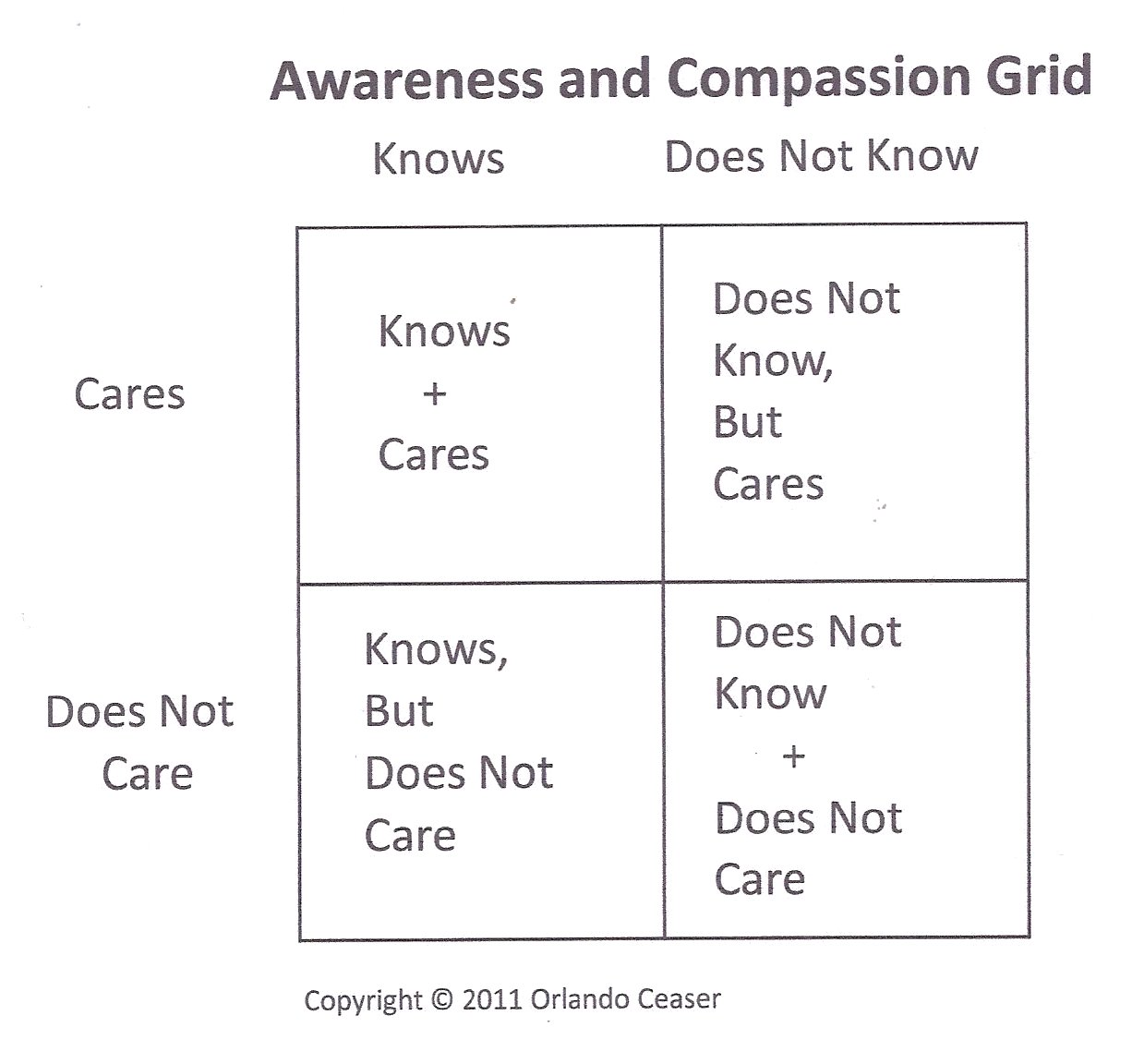
Employees are facing four possible positions that Senior Management may hold, which will influence their response to problems with direct supervisors.  They are outlined in Figure 1.  The Awareness and Compassion Grid

  • Knows and cares
  • Does not know, but cares
  • Knows and does not care
  • Does not know and does not care

Figure 1.  The Awareness and Compassion Grid 

 Know and Cares

Senior Managers who are highly skilled and in tune with their environment, receive feedback on their managers. Employee surveys, an open culture, town hall meetings and other forums enable them to capture information on employees and their corporate culture. They readily communicate that they want to know and show they care for their people. This sentiment generates feelings of trust, engagement, loyalty and hope. It says Senior Management is cognizant of what is going on and may be in the process of taking action.

Managerial mismanagement or misconduct is brought to their attention. Since they placed the person in power they have to be delicate and deliberate in managing the situation. The assumption is they will do something about it. They will investigate all grievances and complaints. The solution may involve conducting 360 degree feedback or climate studies, direct conference with the manager and possibly a meeting with the entire team. The manager will be replaced or retrained. Training is often prescribed with a coach assigned to work with them to improve their interpersonal skills.

Since they feel the leaders know and care, they will shortly communicate their actions or they will soon notice an unexplainable change in the manager’s behavior.Senior Management must act swiftly before the unit is decimated and morale, engagement and productivity experience a further decline. Highly regarded, recently promoted individuals can be salvaged and become strong leaders with proper direction and accountability. This initial glitch in their leadership performance can become a thing of the past.

Does not know, but cares

Senior Managers are sometimes shielded from problems in their organization. The manager and their sponsor may not disclose that a problem exists. If it is mentioned the blame in a unit or team is not placed on the manager’s style. The employees will be accused of an inability to adjust to someone who is trying to hold them accountable. When employees complain about their boss to that person’s supervisor, they may be penalized with more work or punishment.  Jack was such an employee. Whenever he complained about his new boss, to their supervisor, instead of relief the new boss would turn up the heat on him. This meant more assignments and negative attention that bordered on harassment. When this became known, other members of the team refused to come forward and remained silent.

The challenge in this situation is finding a person to serve as an ombudsman to listen to their cases and carry their complaints to someone in authority. Sometimes this involves contacting the Human Resources Department. They may launch a full investigation to see if there is any credence to the charges.  A strong HR Department will maintain the anonymity of the individuals in the complaint. A groundswell of employee dissatisfaction through complaints and resignation will get the attention of Upper Management. Hopefully, the problem can be addressed before it escalates to the level of a full-scale productivity meltdown.

Knows, but does not care 

When it can be discerned or deduced that a company knows and does not care, the best employees may leave the organization. Employees are in for a rough ride, when the company leadership feels that employees should be glad to have a job in today’s climate and the manager was placed there to get them to do their best. The company reads the employee survey and view comments as the gripes of ungrateful employees who act out of entitlement. The surveys become an indictment against the employees and not the leadership practices. When surveys are taken, complaints made and letters written, and nothing happens, it feels like a cover-up. If the company goes on an explanation campaign giving their side of the story and nothing changes, this is a toxic situation. A company that allows this to happen does not deserve hardworking, talented and committed employees.

The situation is further complicated when Senior Management stands up and gives a vote of confidence for the very person who is causing the problems, employees know where they stand. They are powerless to make any changes. This leader is protected and will not be removed or trained. This is an indication that everyone must work their hardest and get results or they will be replaced.

Remember, silence may be due to the fact that a new manager is simply following orders. They were brought in to do the dirty work and clean house and get better results. Employees are close to the action and must search their souls to ensure the complaints are justified. Sometimes complaints emerge when a new manager has a different style from a predecessor. 

Does not know and does not care 

Lastly, there is the worst situation of all; where the company does not know and would not care if they knew. This organization gives all power to their managers and assumes they will fulfill their responsibilities. These organizations do not have systems in place to seriously evaluate their managers. If the systems are in place, they are a sham, for nothing corrective happens with the data when someone is out of line. They are absentee landlords who do not work to improve the environment for their employees.

Most managerial promotions are effective. However, there are mistakes made by putting someone in a job with the wrong temperament, lack of business acuity or deficient in other key competencies. When this happens there must be a structure or mechanism to intervene to take corrective measures. The culture and philosophy of the company will govern their response. This will allow employees to know where they stand by how they are being treated. The employees must decide to maintain their sanity, elevate engagement and increase productivity to achieve optimum performance

Copyright © 2011 Orlando Ceaser

“Be yourself” – If that is who they want you to be

A candidate applied for a management position in a large pharmaceutical company. He solicited advice from friends and colleagues and was given the traditional interview words of encouragement; “Just be yourself.” They postulated that if the job was the right job for him, a true expression of his strengths, weakness and experiences should result in a job offer. However, the company had a ruthless results oriented culture and people were becoming a means to an end. He was attracted to the company because of their reputation and their promotional literature stated their intent to be an Employer of Choice. He wasn’t in the meeting when a Sales Leader clarified this slogan by saying they wanted to be the Employer of Choice, for those people they wanted to keep. If the candidate truly wanted a job in that company, he would be better off, “being someone else.” Additionally, if he wanted to be himself, he truly needed to ask himself, is that who they wanted him to be. 

Management courses, seminars and literature extol the value of being authentic and transparent.  Our personal lives are infiltrated with messages asking us to be realistic, to keep it real or to be real. Reality means to act in alignment with our values, calling and purpose. This requires a higher degree of discipline and self awareness.  I jokingly told a manager that I was an actor and the training was helpful since I was required to act every day at work. 

Many of us have a desire to play a role for only a season, until we get what we really want out of life, people we know and organizations. This temporary arrangement is especially rampant in today’s world of uncertainty. People are worried about their finances, careers, relationships and the looming threat of unemployment. They are faced with job choices which may not be their ideal employment situation. In a parody of the Stephen Sills song, “Love the one you’re with” which was later sang by the Isley Brothers; “If you can’t be who you want to be, then be who they want you to be.” Individuals may want to be themselves, but they may not feel transparency is helpful in landing or keeping a job.

Job seekers resort to less than full disclosure to achieve their goals. I am not advocating lying on resumes or falsifying information. But people are reaching down within themselves and within their capacity to play a role in order to gain employment or maintain a job. This natural survival instinct inspires tactics that are deemed necessary in the short term. 

The phenomenon of acting out of character is not a new one. Professional entertainers are known for this trait. I remember watching actors who were titanic sex symbols on the big screen. They were larger than life, exuding confidence, courage and charisma. Some are introverts by nature. They approached their aggressive characters, as roles they had to play. During talk shows some of them were soft spoken and seemed at a loss for words, searching for the right words to extend the conversation. It occurred to me they were playing a role in the movies, as many of us do in our personal and professional lives.  Employees who perform in a similar manner would violate the adage of being themselves. They are however, still acting within themselves. 

Companies deliver employee surveys to gain a better perspective on employee engagement and employee satisfaction. Data from the surveys may be skewed if employees act and deliver what they feel the company wants to see and hear. 

Job seekers who do their homework can teach us about acting. Their strategies can allow us to be authentic and transparent. Savvy candidates reveal the following elements of their strategy: 

1. Research the company culture – speak to current and past employees

2. Examine the traits required to be a successful employee in the organization 

3. What is rewarded, in other words what does excellence or success look like?

4. Shape their responses to their experiences to match company expectations 

Finally, they adopt a persona or character in line with what is expected in the targeted organization. This is not providing false information, but structuring answers so that they legitimately give data and experiences relevant to the company. This will increase their odds of being accepted and hired 

The practice of altering our approaches is commonly done at work every day. Think about a time when a managerial edict came down which had all the earmarks of a runaway train cast in stone. You knew that this runaway train would run over anyone in its path. You wanted to be authentic and speak up and acknowledge the flaws in the program and the need to go back to the drawing board with greater input from employees to gain buy-in.  Ingenuity, if present, would have advised you to take your reservations to a sympathetic power broker and let them present your concerns. But, Survival interceded and said to step away from the tracks and cheer the locomotive on its way. Deep inside you knew that you should be yourself. But the knowledge of your company and the managers in power activated your survival mechanism and you responded, “I will be myself, but only if that is who they want me to be.”

Copyright © 2011 Orlando Ceaser

Strategic planning for the life you deserve

A part of constructing a plan for your life involves anticipating the future world you will live in. In order to do this, you must use your imagination to create stories. By placing yourself in these scenarios, you can visualize your responses to different conditions. Developing the skill of reviewing the future possibilities enables you to anticipate and prepare to react to new realities. That is why you must harness the ability to dream or make-believe, because they can help you plan and execute your personal strategy. 

Planning involves writing a story around your dream and giving it characters, a location and a plot with different circumstances.  Since no one knows for sure, you create your best guesses of what will happen in the external environment.  You basically dream different beginnings, challenges, endings, futures and outcomes. You should develop a set of plans for each scenario. You place your best thinking and research around what you think has the greatest chance of happening and what you want to happen. Draw up at least 3 scenarios, although you can have more depending on your capacity for complexity. They should be labeled Base case, Worst case and Best case on the following criteria. 

  1. Base case – highest chance of happening
  2. Worst case – the outcome that scares you the most
  3. Best case – the one that gives you the greatest for success and reward 

You surround each of these views of the world with reasons to support your thinking. What are the circumstances, assumptions and conditions that must happen to make them come true? In highly sophisticated companies these assumptions are surrounded by mathematical equations to justify the allocation of resources. In your case we should just ask ourselves from 1 to 10, which scenario is most likely to happen?  What chance do you give each scenario? The one with the lowest number wins. 

The Base case scenario is the one you feel has the greatest chance of happening. When you examine the world around you, you ask yourself what has the greatest chance of happening.  This reminds me of high school when you voted people into a number of categories. There was the most talented, best physique or figure, most persuasive, attractive and most likely to succeed.  However, we never established odds for their success or failure.

Knowing people, knowing yourself and your strengths and weaknesses can help you arrive at a decision. Your actions and knowledge of things that tempt you compete for your time and your ability to give in to or resist these forces play into all of these scenarios. The base case is the one most likely to happen. The odds are in its favor. 

The Worst case scenario is the one that causes you the most fear. This set of circumstances would severely keep you down. It would leave you in a desperate position regarding your health, relationship and finances. A company would be in bad shape in sales growth, market value of the company and the solvency of the enterprise. In your situation, the worst case scenario would leave you in a position of poverty, ignorance, poor health and bad relationships or other bad situations. The worst case scenario is the one that cost people their jobs, promising careers, their health and their freedom.

The Best case scenario is the dream scenario. It has the best circumstances and your best responses.  It is the ideal position for you. All of the best possible conditions happen at the right time. Every good thing that could occur and a number of unforeseen positive situations arrive and place you in the perfect light. The right people come into your life and act according to your positive script.

Your goal is to do everything you can to ensure that the base case is the lowest you want to achieve and the Best case is a possibility.  

Use this strategic approach to think about your life. Ask yourself what would be the base, worst and best case scenario for your life. At the rate you are growing, what is likely to be my fate and how can you change the future, now?  Sometimes it is easier to do this exercise if we look at other people. Is there someone you know who is living a life that if they continue on the same path, bad things will happen to them? What are they doing? What can they do to prevent this negative future? The assumptions around their lives are very clear. At the rate they are going bad things will catch up to them and shorten their lives and cause them to have many self-inflicted bad days. When you are comfortable with this methodology, you can share it to help others. 

When you think of your dreams, what must happen for you to reach it? What must happen to reach your best case scenario? What people should you bring into your life or avoid? What environment must you grow up in to ensure that people who act as weeds don’t choke the life out of your growth? Look at the assumptions or things that must be true for you to make it. What role must you play? How courageous must you become to not betray your purpose on this planet? Remember you deserve the best, so strategically plan as if you believe this to be true.

Copyright © 2011 Orlando Ceaser