3 Lessons about Love and Discipline

Two years ago, I spoke to three classes at an elementary school; classes of eighth, seventh and sixth graders. I was assigned the responsibility of giving motivational messages about my career. The program was designed to give hope, inspire students to excellence and emphasize the value of good grades and planning for the future. The students varied in their desire to be in school and in their aptitude for their studies, appreciation of their teachers and acceptance of the lessons from the guest speakers. I learned 3 lessons about love and discipline. 

The first teacher was not aware of my arrival and purpose, so I introduced myself and the organization I represented. I was there to tell the students about my background and to motivate them to achieve better grades in preparation for their academic and vocational futures. She seemed nervous by my presence. This was her second week on the job, transferring from another school. She was intense, focused, impatient and stern with the students. She was intimidating in voice and mannerisms as she raised her voice in a threatening manner, when some students were slow to hang their coats.

She yelled at one of the students and asked “Are you stupid or something?” This surprised me. The young man did not look defiant. He lowered his head and walked to his seat. I wondered, what is the right response to such a multiple choice question? Admitting you are stupid is not a good thing, especially in front of the entire class. To answer the question with the word “something” is really not a good idea, may be perceived as a smart remark and really doesn’t tell you anything. A young lady was slow to remove her coat and the teacher sent her out of the room. I did not know the history with this student, but she returned with tears in her eyes. The teacher played the role of the disciplinarian.

Additionally, she did not appear to be happy and I stood there wondering how the kids felt. She was demanding obedience and respect with heavy doses of discipline, but no love.  At one point stating, “You are not going to embarrass me with your behavior.” She did not turn the class over to me until you could hear a pin drop. I started the segment 20 minutes late, but there was order in the classroom.

The second teacher was very delightful. She was professional and eloquent when she introduced me to her students. The session was very animated. There was audience participation built into my discussion. I was very pleased with the level of engagement. However, 20 minutes later the students became restless. One by one, a number of side conversations sprang up. I escalated in my request for order and asked them to pay attention to me, as to the person who had the floor. The students would have none of that. They started side conversations. They had friendly expressions on their faces, as they were compelled to follow their agenda.  Their expressions seemed to apologize for their actions, as if to say, “Sir, please forgive us, but you don’t understand. We have to talk.” I tried numerous techniques to rein them in. The teacher would repeatedly ask for their attention without results. The teacher, exasperated, stood behind some of the offending students, but they continued to talk. I was successful in making the key points and had the interest of most of the students, but I could not get over those who continued to talk and pass notes in front of me. The teacher told the class how disappointed she was in their actions. She was a loving teacher with a lack of discipline.

The third class was a model classroom. I waited outside as a student thanked the prior speaker for taking time from his schedule to tell them about his job. After a brief introduction I began my presentation. The room was electric. The students were responsive, as in the other rooms, but there was something different. There were no side conversations and the quality of their responses was excellent. The time passed quickly. At one point the teacher left the room and I hardly noticed, because the children were still well-behaved. Before she left the classroom, she indicated her expectations about their performance in her absence. She was confident they would behave themselves. When I completed my talk, the teacher asked for a volunteer to thank me. One of the students gave a refreshing show of appreciation for the time I spent to help them prepare for their careers. The teacher in this room had discipline and love for the students and it showed in her interactions and their behavior. 

When I reflected on the day, I was thankful for the opportunity to talk to the leaders of tomorrow. Most were open to the questions and freely challenged and gave their input. Whereas, I was confident many of the children will succeed against some tremendous odds, I could not help but wonder about the leadership styles of the three teachers. These leadership styles are also present in the work place. 

The first teacher exhibited discipline without love. I am sure she cared for the students, but could they tell by the way she spoke to them. She did not provide a context for her discipline. By saying “you are not going to make me look bad” gave the impression that it was all about her. This technique reminded me of some managers I’ve seen. There were no benefits ascribed to the students for behaving appropriately, short or long-term. The intimidating nature of the teacher did not allow her to recognize one young lady who reentered the classroom had been crying. I wondered was there something going on in her life that caused her to reluctantly remove her coat, which angered the teacher? Would awareness of the total student enable the teacher to be more understanding and therefore, more effective? The disciplinary style got results, but there was no context and compassion to support her disciplinary actions. 

The second teacher may have had their attention on most days, but not during my 40 minutes. The teacher wanted to be liked by her students and this desire for friendship was not working on that particular day. They did not seem to be any consequences for ignoring her frequent pleas to be quiet. The loving and delicate manner, although well-intentioned could have been more effective to gain order if there were stated consequences, for failing to comply with her requests. Maybe the discipline came later. Some people do not like to discipline in front of strangers. 

The third teacher had the discipline and the love. I did not hear her state the consequences for being disrespectful, because they never did. This was the kind of learning environment that would optimally get the most out of students and prepare them for the real world. They received the nurture and obviously the discipline they needed to succeed. When the students became aggressive, she would look at them, state a few words to indicate she was not playing games and they settled down quickly. She spoke in a very supportive, encouraging, but stern tone of voice. The climate in this room was high energy and focused on learning. It enabled us to cover a lot of material in 40 minutes. In the other rooms, I lost time, either by starting 20 minutes late or having to slow down and wait for silence to cover the information. 

I would imagine that in the long run, a great environment for learning and productivity requires a combination of love and discipline. There are instances in school and in the workplace where providing discipline alone without the context of love and reward, will make students and workers more resentful and rebellious and fail to learn and produce as much. If you love and pamper employees and students without discipline and consequences, is that too soft? Will they become entitled and disrespectful, without manners and a potential problem for future teachers, customers and employers? The blend of love and discipline seems to be the right combination to build character in avid learners, strong leaders and the productive citizens we need today and tomorrow. 

Copyright © 2009 Orlando Ceaser
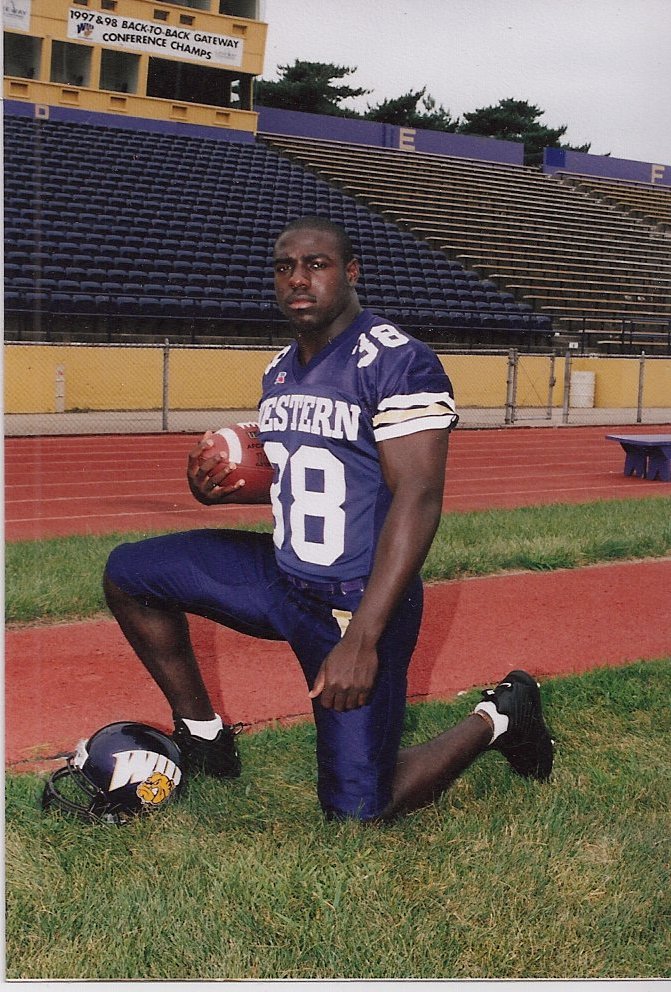
A Role Model – Whether you like it or not

 The public is enticed by image, status and popularity. Celebrities, as well as non famous people, have the ability to intentionally and accidentally cause individuals to imitate their behavior.  When we understand our impact on others, we can use this power to have a positive impact on the world. 

I reflected one afternoon on Judgment Day.  Would it include data on the positive and negative influence we had on others while here on Earth? Imagine a long list of individuals who were either led to pathways of constructive living or led astray due to an encounter with us or someone we influenced. Our indirect effect on people could generate a ripple effect causing someone to pass along positive behaviors learned from us. Conversely, it is also, possible for us to indirectly corrupt and contaminate someone we never met. They may become caught up in the chain reaction initiated by our actions.  

Athletes resent being called a role model because of the responsibility connected to it. To think that someone will act destructively because of the example they set is too much to bear. Phenomenal power accompanies fame and the influence generated from public exposure. There is a great obligation; to paraphrase Spiderman; “with great fame comes great responsibility,” therefore, the power they have over others is a great opportunity to influence in a positive manner. People want to be relieved of the responsibility of affecting people’s lives in a negative way. A professional athlete says, “I am not a role model, but their celebrity status increases their capacity to lead people whether they like it or not. The same applies to you and me. 

People will rebel, resist, and follow our lead when they see us behave in a certain manner. They want to participate in pleasurable deeds because we did and they want the same treatment received from our actions and reactions. Some will decide to travel a path because we walked that road. We cannot get out of life without our behavior making a mark. There is magic in the model we project. We may claim that we are not a role model, but we are, whether we like it or not. 

Our behavior is a suggestion placed in someone’s mind, which forms an opinion that is converted into action. Many people act, not remembering the source of the motivation. The seed placed in their minds may have a delayed reaction, as if a time bomb set to explode later in their lives or a flower that blossoms long after the seed was planted. 

People are unconsciously attracted to three elements that affect all relationships. They are drawn to charisma and chemistry with a desire to be connected to something or someone. 

  1. Charisma
  2. Chemistry
  3. Connection

 Charisma

Charisma has a magical quality that attracts people. Leaders with this quality are effective in getting people to follow them. Tony Alessandra, Ph.D., professional speaker, defines charisma in his book by the same title as follows; “Charisma is the ability to influence others positively by connecting with them physically, emotionally, and intellectually.” Charisma has also been the culprit to persuade people to behave in negative ways, causing harm to themselves and others.

Chemistry 

Chemistry is usually expressed as a natural bond that people have for someone. Good chemistry is usually used to convey the ease by which people get along. They are like compounds brought together in a chemistry experiment and seem to work well together. Hydrogen and oxygen work well to form water. Chemistry enables us to notice compatibility with someone from the things we have in common. When we are on their wavelength, we stimulate positive and negative behavior. Chemistry however, can cause people to overlook flaws as if they did not exist. 

Connection

One goal of a relationship is to achieve connection. Our need for belonging is satisfied through connecting with people. Remember, we are not an island. We need people and the assurance we feel when joined with someone we admire. We can’t deny the importance of our actions on the people around us. My daughter went through a rebellious phase where her favorite phrase in response to my suggestions was, “It’s my life.” This was her cry of independence. She would follow this comment with an argument justifying her right to make her own decisions without regard for the opinions of adults. 

I wrote her a poem after one of these debates, so she could read my thoughts without activating her defense mechanisms. The title was “Your life is not your own.” Needless to say, she was initially annoyed. The poem noted that we are not here in isolation. We are interdependent, whether we want to admit it or not. Ancestors sacrificed, protested, suffered, fought and died for her current life style. She would one day see the value of being connected with something larger than herself. A few lines are listed below.

“Your life is not your own,

For children emulate your ways.

They study you and when they’re grown

They will honor and paraphrase

Your life through imitation.

Imitation is the sincerest form of flattery. It is also the number one way we learn. As students, apprentices, assistants, understudies, protégés and everyday people, we learn by imitating and implementing the actions of others. We model after the master. We follow the leader. Therefore, our behavior can have a tremendous influence on our companies, communities, families and relationships.

Fashion trends exploit the tendency of people wanting to be with the “In” crowd. They want to belong, to be “in the know”, fashionable, current and influential. This need for belonging is hard-wired into our personalities. 

We can have an impact and not realize it. Our influence may go unnoticed by everyone except the person involved. Therefore it is crucial to watch our actions and live our lives as a carrier of influence. We are wielding power beyond our imagination.

 Many times people don’t want us to know they are copying our style or actions. Sometimes, they may forget to tell us how much we mean to them and how our behavior shaped their thinking and actions. The impression we made on them is not something they talk about enough, if at all. However, they picked up something and incorporated it into their thinking and responses.

The magnetic lure of our image is like magic. We must be aware that destructive practices, bad habits, arrogance, faulty alliances, toxic temperament can also be passed along like a virus if protective measures are not put in place. But, we can decide to make a positive influence on the universe by accepting the fact that we are role models. We are not innocent bystanders. If we utilize the authority of our presence, our influence and actions will make a difference in the lives of many people.

Copyright © 2011 Orlando Ceaser

Is anybody out there? This manager is killing me?

The question was posed the other day, as it is everyday in corporations around the world. The question relates to Upper Management’s awareness or lack of awareness of a manager viewed as menacing by their people. The essence of the question is why doesn’t Senior Management come to the rescue? Surely, they know what the manager is doing to them. Their cries for help are going unanswered. What is the solution to the problem? This manager is killing them.

Employees want to believe their top leaders have their best interests at heart. They believe in the corporate vision, mission, values and beliefs messages. Therefore, a manager behaving badly and acting outside of these creeds cannot be sanctioned by the company. The manager must be successful in keeping their crimes a secret from those above them. Otherwise, they would have been dealt with long ago.

The problems usually surfaces when there is a relatively new manager. The person wants to make a name for themselves and prove they were the right selection for the job. In their zeal, they overstep their bounds, step on some toes and walk on people in achieving results. They also may become;

  • Swift to act and fail to clarify their expectations and strategy
  • Heavy handed in using discipline and power to force people into action
  • Overly ambitious and try to implement too many ideas at once and fail to get employee input and engagement

 Many managers may not receive proper training and coaching in leadership and team development. They are essentially thrown into the turbulent waters and told to swim. When they have caused a morale catastrophe, early intervention may enhance their chances of success and rectify initial interpersonal mistakes.

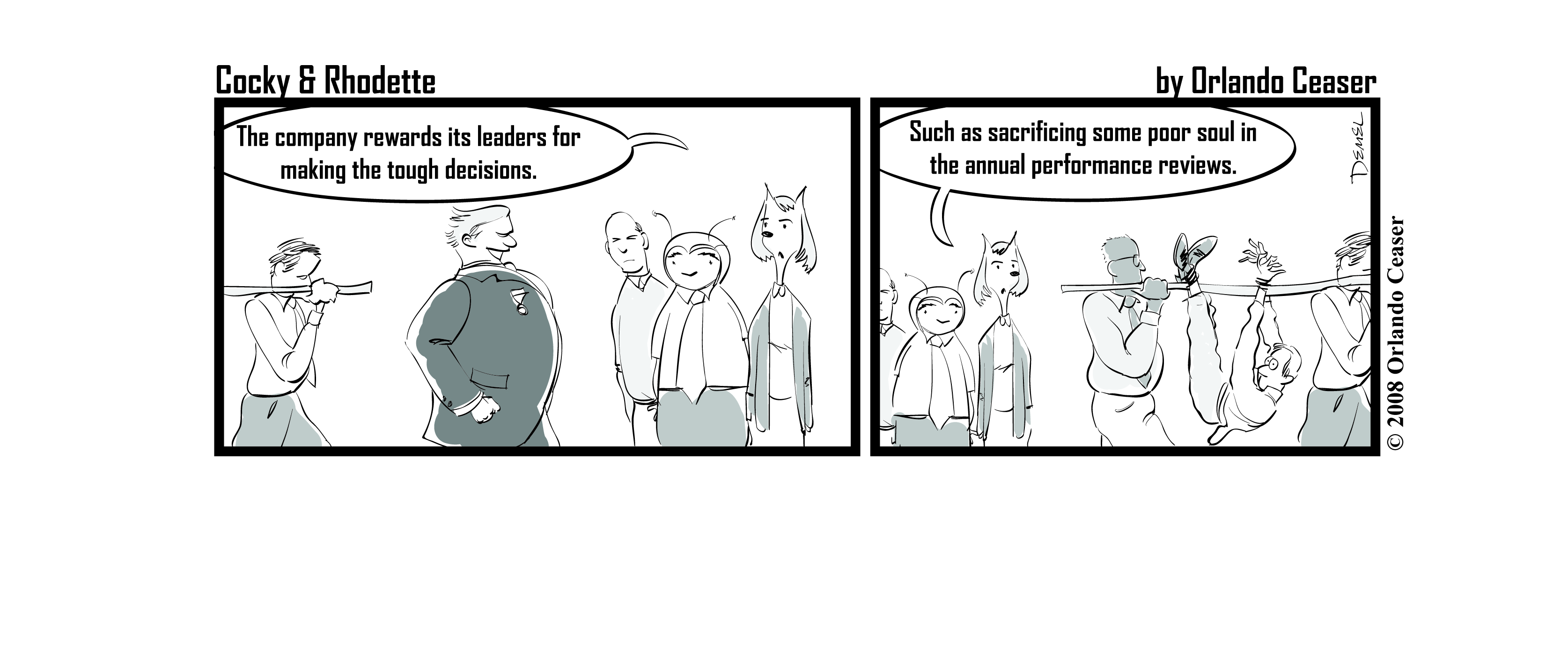
There is also the reality that in many instances a new manager is brought in as a turnaround specialist. They will knowingly inflict pain or discomfort, make the tough personnel decisions, in order to boost productivity, remove ineffective employees and literally transform the department.

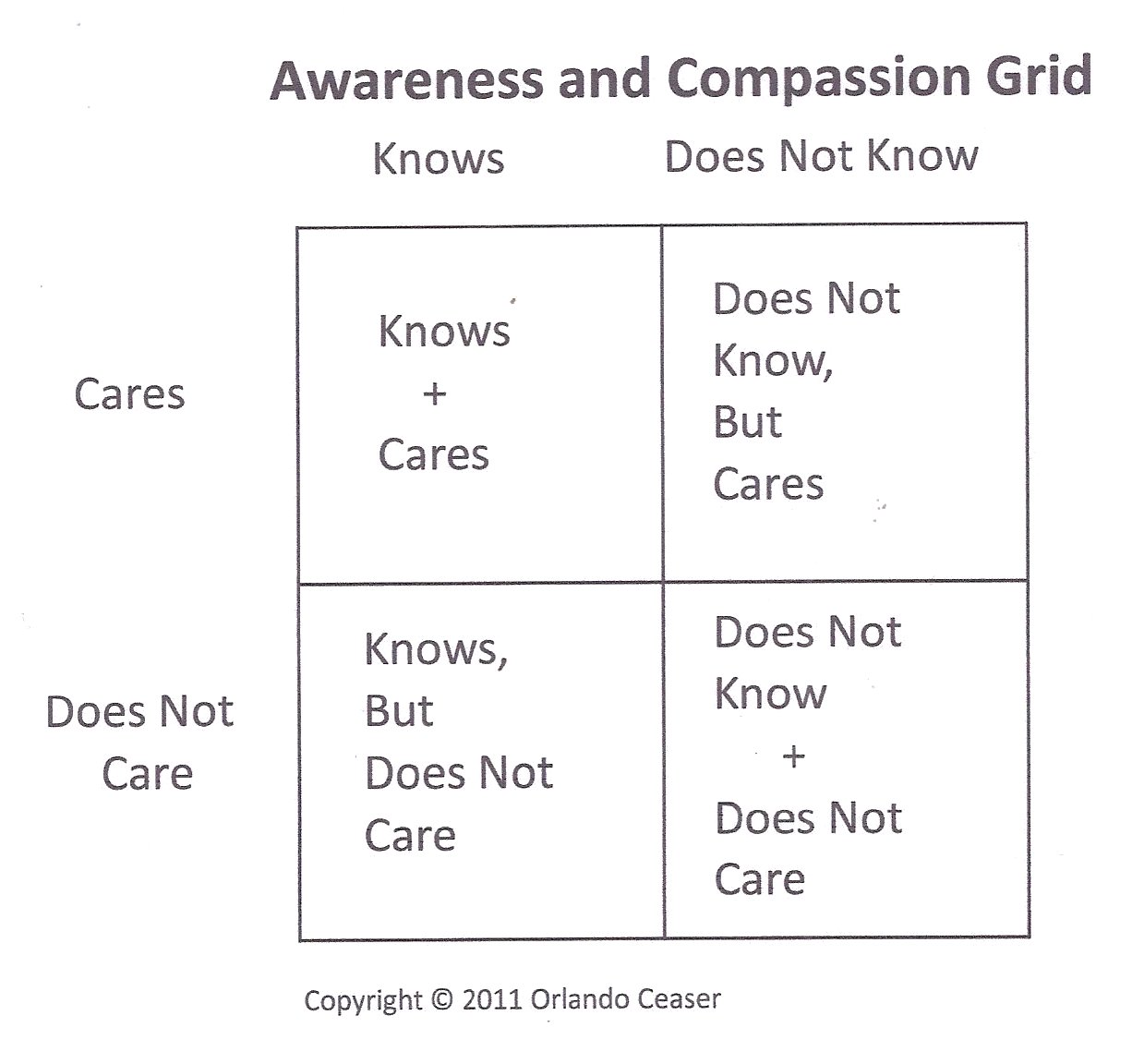
Employees are facing four possible positions that Senior Management may hold, which will influence their response to problems with direct supervisors.  They are outlined in Figure 1.  The Awareness and Compassion Grid

  • Knows and cares
  • Does not know, but cares
  • Knows and does not care
  • Does not know and does not care

Figure 1.  The Awareness and Compassion Grid 

 Know and Cares

Senior Managers who are highly skilled and in tune with their environment, receive feedback on their managers. Employee surveys, an open culture, town hall meetings and other forums enable them to capture information on employees and their corporate culture. They readily communicate that they want to know and show they care for their people. This sentiment generates feelings of trust, engagement, loyalty and hope. It says Senior Management is cognizant of what is going on and may be in the process of taking action.

Managerial mismanagement or misconduct is brought to their attention. Since they placed the person in power they have to be delicate and deliberate in managing the situation. The assumption is they will do something about it. They will investigate all grievances and complaints. The solution may involve conducting 360 degree feedback or climate studies, direct conference with the manager and possibly a meeting with the entire team. The manager will be replaced or retrained. Training is often prescribed with a coach assigned to work with them to improve their interpersonal skills.

Since they feel the leaders know and care, they will shortly communicate their actions or they will soon notice an unexplainable change in the manager’s behavior.Senior Management must act swiftly before the unit is decimated and morale, engagement and productivity experience a further decline. Highly regarded, recently promoted individuals can be salvaged and become strong leaders with proper direction and accountability. This initial glitch in their leadership performance can become a thing of the past.

Does not know, but cares

Senior Managers are sometimes shielded from problems in their organization. The manager and their sponsor may not disclose that a problem exists. If it is mentioned the blame in a unit or team is not placed on the manager’s style. The employees will be accused of an inability to adjust to someone who is trying to hold them accountable. When employees complain about their boss to that person’s supervisor, they may be penalized with more work or punishment.  Jack was such an employee. Whenever he complained about his new boss, to their supervisor, instead of relief the new boss would turn up the heat on him. This meant more assignments and negative attention that bordered on harassment. When this became known, other members of the team refused to come forward and remained silent.

The challenge in this situation is finding a person to serve as an ombudsman to listen to their cases and carry their complaints to someone in authority. Sometimes this involves contacting the Human Resources Department. They may launch a full investigation to see if there is any credence to the charges.  A strong HR Department will maintain the anonymity of the individuals in the complaint. A groundswell of employee dissatisfaction through complaints and resignation will get the attention of Upper Management. Hopefully, the problem can be addressed before it escalates to the level of a full-scale productivity meltdown.

Knows, but does not care 

When it can be discerned or deduced that a company knows and does not care, the best employees may leave the organization. Employees are in for a rough ride, when the company leadership feels that employees should be glad to have a job in today’s climate and the manager was placed there to get them to do their best. The company reads the employee survey and view comments as the gripes of ungrateful employees who act out of entitlement. The surveys become an indictment against the employees and not the leadership practices. When surveys are taken, complaints made and letters written, and nothing happens, it feels like a cover-up. If the company goes on an explanation campaign giving their side of the story and nothing changes, this is a toxic situation. A company that allows this to happen does not deserve hardworking, talented and committed employees.

The situation is further complicated when Senior Management stands up and gives a vote of confidence for the very person who is causing the problems, employees know where they stand. They are powerless to make any changes. This leader is protected and will not be removed or trained. This is an indication that everyone must work their hardest and get results or they will be replaced.

Remember, silence may be due to the fact that a new manager is simply following orders. They were brought in to do the dirty work and clean house and get better results. Employees are close to the action and must search their souls to ensure the complaints are justified. Sometimes complaints emerge when a new manager has a different style from a predecessor. 

Does not know and does not care 

Lastly, there is the worst situation of all; where the company does not know and would not care if they knew. This organization gives all power to their managers and assumes they will fulfill their responsibilities. These organizations do not have systems in place to seriously evaluate their managers. If the systems are in place, they are a sham, for nothing corrective happens with the data when someone is out of line. They are absentee landlords who do not work to improve the environment for their employees.

Most managerial promotions are effective. However, there are mistakes made by putting someone in a job with the wrong temperament, lack of business acuity or deficient in other key competencies. When this happens there must be a structure or mechanism to intervene to take corrective measures. The culture and philosophy of the company will govern their response. This will allow employees to know where they stand by how they are being treated. The employees must decide to maintain their sanity, elevate engagement and increase productivity to achieve optimum performance

Copyright © 2011 Orlando Ceaser

“Be yourself” – If that is who they want you to be

A candidate applied for a management position in a large pharmaceutical company. He solicited advice from friends and colleagues and was given the traditional interview words of encouragement; “Just be yourself.” They postulated that if the job was the right job for him, a true expression of his strengths, weakness and experiences should result in a job offer. However, the company had a ruthless results oriented culture and people were becoming a means to an end. He was attracted to the company because of their reputation and their promotional literature stated their intent to be an Employer of Choice. He wasn’t in the meeting when a Sales Leader clarified this slogan by saying they wanted to be the Employer of Choice, for those people they wanted to keep. If the candidate truly wanted a job in that company, he would be better off, “being someone else.” Additionally, if he wanted to be himself, he truly needed to ask himself, is that who they wanted him to be. 

Management courses, seminars and literature extol the value of being authentic and transparent.  Our personal lives are infiltrated with messages asking us to be realistic, to keep it real or to be real. Reality means to act in alignment with our values, calling and purpose. This requires a higher degree of discipline and self awareness.  I jokingly told a manager that I was an actor and the training was helpful since I was required to act every day at work. 

Many of us have a desire to play a role for only a season, until we get what we really want out of life, people we know and organizations. This temporary arrangement is especially rampant in today’s world of uncertainty. People are worried about their finances, careers, relationships and the looming threat of unemployment. They are faced with job choices which may not be their ideal employment situation. In a parody of the Stephen Sills song, “Love the one you’re with” which was later sang by the Isley Brothers; “If you can’t be who you want to be, then be who they want you to be.” Individuals may want to be themselves, but they may not feel transparency is helpful in landing or keeping a job.

Job seekers resort to less than full disclosure to achieve their goals. I am not advocating lying on resumes or falsifying information. But people are reaching down within themselves and within their capacity to play a role in order to gain employment or maintain a job. This natural survival instinct inspires tactics that are deemed necessary in the short term. 

The phenomenon of acting out of character is not a new one. Professional entertainers are known for this trait. I remember watching actors who were titanic sex symbols on the big screen. They were larger than life, exuding confidence, courage and charisma. Some are introverts by nature. They approached their aggressive characters, as roles they had to play. During talk shows some of them were soft spoken and seemed at a loss for words, searching for the right words to extend the conversation. It occurred to me they were playing a role in the movies, as many of us do in our personal and professional lives.  Employees who perform in a similar manner would violate the adage of being themselves. They are however, still acting within themselves. 

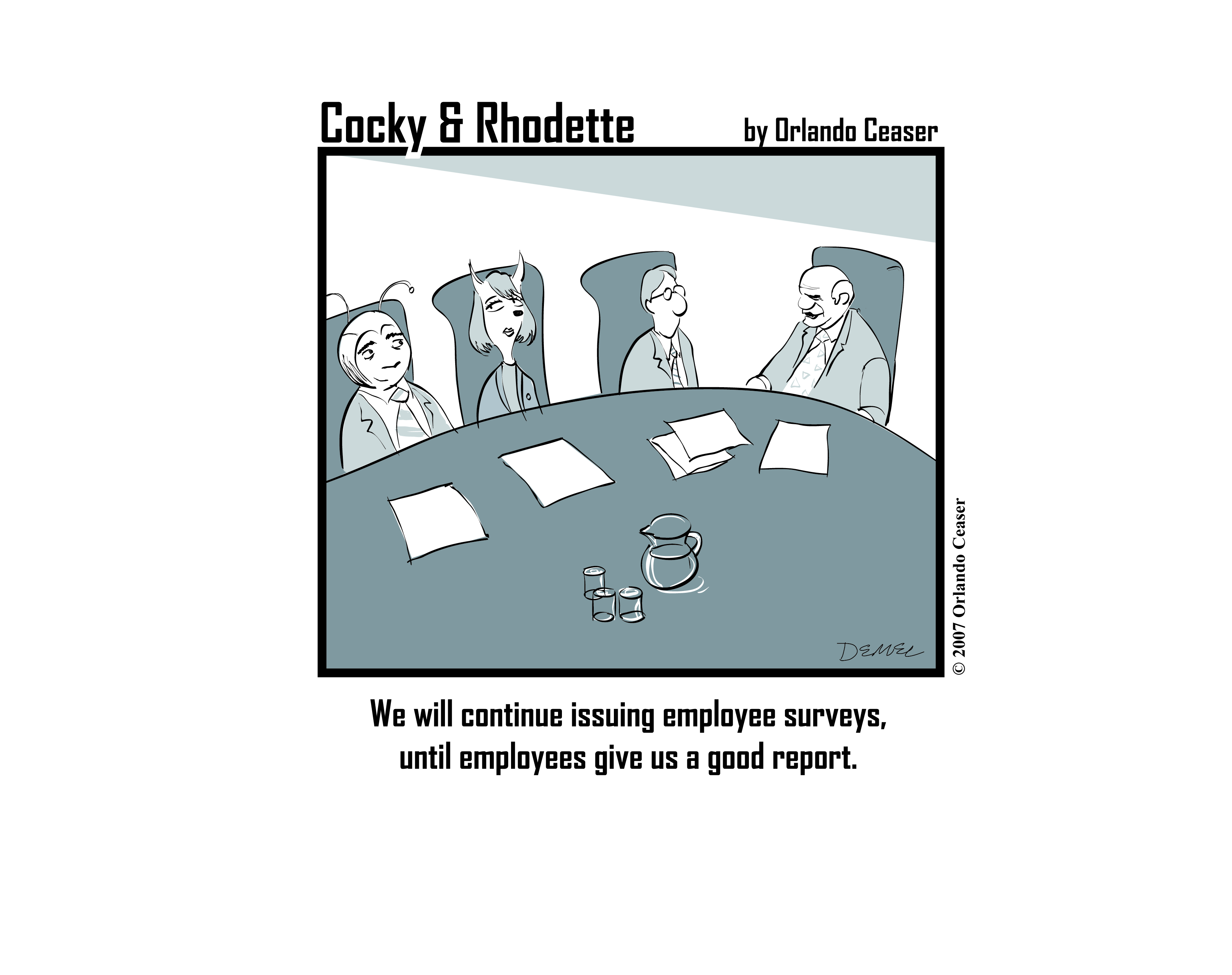
Companies deliver employee surveys to gain a better perspective on employee engagement and employee satisfaction. Data from the surveys may be skewed if employees act and deliver what they feel the company wants to see and hear. 

Job seekers who do their homework can teach us about acting. Their strategies can allow us to be authentic and transparent. Savvy candidates reveal the following elements of their strategy: 

1. Research the company culture – speak to current and past employees

2. Examine the traits required to be a successful employee in the organization 

3. What is rewarded, in other words what does excellence or success look like?

4. Shape their responses to their experiences to match company expectations 

Finally, they adopt a persona or character in line with what is expected in the targeted organization. This is not providing false information, but structuring answers so that they legitimately give data and experiences relevant to the company. This will increase their odds of being accepted and hired 

The practice of altering our approaches is commonly done at work every day. Think about a time when a managerial edict came down which had all the earmarks of a runaway train cast in stone. You knew that this runaway train would run over anyone in its path. You wanted to be authentic and speak up and acknowledge the flaws in the program and the need to go back to the drawing board with greater input from employees to gain buy-in.  Ingenuity, if present, would have advised you to take your reservations to a sympathetic power broker and let them present your concerns. But, Survival interceded and said to step away from the tracks and cheer the locomotive on its way. Deep inside you knew that you should be yourself. But the knowledge of your company and the managers in power activated your survival mechanism and you responded, “I will be myself, but only if that is who they want me to be.”

Copyright © 2011 Orlando Ceaser

Strategic planning for the life you deserve

A part of constructing a plan for your life involves anticipating the future world you will live in. In order to do this, you must use your imagination to create stories. By placing yourself in these scenarios, you can visualize your responses to different conditions. Developing the skill of reviewing the future possibilities enables you to anticipate and prepare to react to new realities. That is why you must harness the ability to dream or make-believe, because they can help you plan and execute your personal strategy. 

Planning involves writing a story around your dream and giving it characters, a location and a plot with different circumstances.  Since no one knows for sure, you create your best guesses of what will happen in the external environment.  You basically dream different beginnings, challenges, endings, futures and outcomes. You should develop a set of plans for each scenario. You place your best thinking and research around what you think has the greatest chance of happening and what you want to happen. Draw up at least 3 scenarios, although you can have more depending on your capacity for complexity. They should be labeled Base case, Worst case and Best case on the following criteria. 

  1. Base case – highest chance of happening
  2. Worst case – the outcome that scares you the most
  3. Best case – the one that gives you the greatest for success and reward 

You surround each of these views of the world with reasons to support your thinking. What are the circumstances, assumptions and conditions that must happen to make them come true? In highly sophisticated companies these assumptions are surrounded by mathematical equations to justify the allocation of resources. In your case we should just ask ourselves from 1 to 10, which scenario is most likely to happen?  What chance do you give each scenario? The one with the lowest number wins. 

The Base case scenario is the one you feel has the greatest chance of happening. When you examine the world around you, you ask yourself what has the greatest chance of happening.  This reminds me of high school when you voted people into a number of categories. There was the most talented, best physique or figure, most persuasive, attractive and most likely to succeed.  However, we never established odds for their success or failure.

Knowing people, knowing yourself and your strengths and weaknesses can help you arrive at a decision. Your actions and knowledge of things that tempt you compete for your time and your ability to give in to or resist these forces play into all of these scenarios. The base case is the one most likely to happen. The odds are in its favor. 

The Worst case scenario is the one that causes you the most fear. This set of circumstances would severely keep you down. It would leave you in a desperate position regarding your health, relationship and finances. A company would be in bad shape in sales growth, market value of the company and the solvency of the enterprise. In your situation, the worst case scenario would leave you in a position of poverty, ignorance, poor health and bad relationships or other bad situations. The worst case scenario is the one that cost people their jobs, promising careers, their health and their freedom.

The Best case scenario is the dream scenario. It has the best circumstances and your best responses.  It is the ideal position for you. All of the best possible conditions happen at the right time. Every good thing that could occur and a number of unforeseen positive situations arrive and place you in the perfect light. The right people come into your life and act according to your positive script.

Your goal is to do everything you can to ensure that the base case is the lowest you want to achieve and the Best case is a possibility.  

Use this strategic approach to think about your life. Ask yourself what would be the base, worst and best case scenario for your life. At the rate you are growing, what is likely to be my fate and how can you change the future, now?  Sometimes it is easier to do this exercise if we look at other people. Is there someone you know who is living a life that if they continue on the same path, bad things will happen to them? What are they doing? What can they do to prevent this negative future? The assumptions around their lives are very clear. At the rate they are going bad things will catch up to them and shorten their lives and cause them to have many self-inflicted bad days. When you are comfortable with this methodology, you can share it to help others. 

When you think of your dreams, what must happen for you to reach it? What must happen to reach your best case scenario? What people should you bring into your life or avoid? What environment must you grow up in to ensure that people who act as weeds don’t choke the life out of your growth? Look at the assumptions or things that must be true for you to make it. What role must you play? How courageous must you become to not betray your purpose on this planet? Remember you deserve the best, so strategically plan as if you believe this to be true.

Copyright © 2011 Orlando Ceaser

1 Way to Breakthrough Thinking

Imagine a moment when accomplishment bursts through the final layer of resistance. You stand exhausted, but exhilarated as you breakthrough years of a prior situation and previous understanding. To breakthrough is converted from a verb into a noun to announce your victory. To achieve success you practiced a method of thinking which some would call breakthrough thinking. This level of thinking forced you to adopt principles that caused you to adapt to the innovative needs of the world.

Imagine cruising along in your current reality knowing that life is good or at least predictable.  You have become complacent. Life appears to be working well for you. The challenges are manageable and under control. You reside in a comfort zone because difficulties and hardships do not exceed your ability to handle them. But, you are not worried about the future for it promises more of the same. Inertia, that natural resistance to change is keeping the necessary objects of your world in orbit. The results are predictable, as you act consistently to match your values and beliefs. It is fortunate to be insulated, protected and feeling no pain.

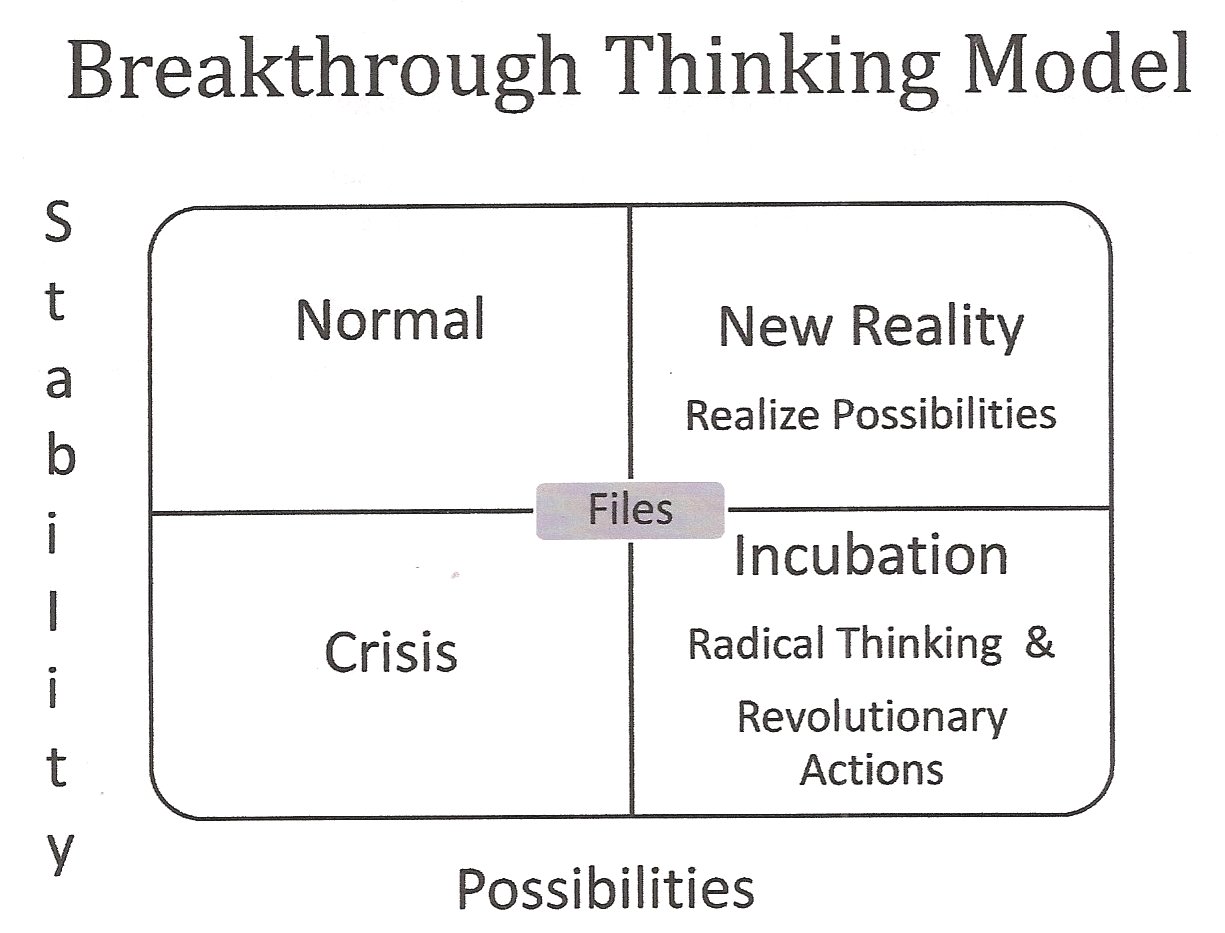
The world of Normal, “the way it is”, “business as usual,” and the status quo will remain stationary until something bad happens to negatively rock your world. Sir Isaac Newton said that an object at rest will stay at rest and an object in motion will stay in motion unless acted upon by an outside force. When the outside force strikes it may throw you headlong into a crisis.

Suddenly, you encounter SBH (Something Bad Happens). You fall into or are struck by a crisis. This change in your circumstances threatens your way of living. Chaos and uncertainty are injected into your habitat. Your very survival, existence and quality of life are under attack. The panic button has been activated and you fear you may never experience the world as you knew it. While struggling to put the pieces together again, you remember the warnings received and ignored. The people who could stand on the parade route and look you in the eyes could shake their heads and say, “We told you so,” and “We tried to tell you, but you wouldn’t listen.”

When you find yourself in a crisis, you want to quickly get out of it. There is a transition phase at the latter end of the crisis. When in the tailspin, you bump repeatedly against a barrier which is the curtain to the next level of thinking. If the barrier is a wall you are trapped in your present predicament and level of thinking. However, if the barrier is a membrane, you can move to the other side in your thinking. Now you are ready to listen and obey. You beg someone to give you advice you will follow. You open yourself to Radical Thinking that was once considered taboo, irrelevant and unnecessary. Feedback is solicited that was previously resisted. You practice inclusion and involve everyone in the decision-making process. 

You are now willing to; 

  • Evaluate options that were never placed on the table or you would not allow their placement
  • Take Revolutionary Actions, which were out of character for you
  • Cast the net widely for suggestions, new ideas, and best practices
  • Encourage and implement these ideas and suggestions 

Individuals and organizations tend to restrict absorbing information from alternative data sources because they were inhibited by their files or biases and perspectives. Files in a computer are the areas where we place information. The information is neither good nor bad; it is just the data, experiences, conclusions, prejudices and thoughts in your minds. These files can be barriers to accepting new approaches. They may prevent us from reaching out and trusting people and creating appropriate relationships. We have to analyze these files and the problems they cause. A crisis causes us to rethink our suppositions and practices. We do not want them to be an impediment to growth and development.  Albert Einstein spoke of changing our level of thinking to match our current dilemma. He said, “The significant problems we face cannot be solved at the same level of thinking as when we created them.”

You are essentially in an incubation chamber, reforming and recalibrating your way of thinking. In this inquisitive, innovative state of development you face the challenges of the Crisis with the freedom and power of possibility.

When you are receptive to new ideas and see approaches, problems and situations with fresh eyes, you will discover wonderfully new possibilities.  Acting on these new possibilities consistently will cause you to reach a new description of Normal. This new Normal over time will become your current Normal and the cycle could reproduce itself unless there is an intervention and a change in your way of thinking.

When you are stuck in Normal, complacency, in business as usual, it took a crisis to dislodge you and place you in a free-falling state. Some people have evolved beyond a crisis initiated creative process. They frequently move from their current Normal into the Incubation phase and then into a new Normal. This is done by establishing a climate of spontaneous evolution, always being calibrated to produce radical thinking, while being receptive to taking revolutionary actions to realize possibilities. Practitioners of Breakthrough Thinking strive to create a culture of acceptance and inclusion. They welcome new ideas and encourage all employees to give their candid opinions. This cultivated environment has an expectation of inclusion, participation and innovation and the results support the validity of this approach. 

It is best to enter the Crisis through a dream or simulations because then you can wake up or say; I will listen; I will do the right thing and prevent the bad thing from happening. I will engage in radical thinking and revolutionary actions consistently to prevent entering a crisis. By thinking strategically and anticipating potential futures, you are ready for the sudden adventures and possibilities that life has in store for you. 

The dynamism of this Breakthrough Thinking Model will keep you constantly evolving and reinventing yourself and your business. Some of the principles were shared with me in workshops by Gap International of Philadelphia. The Landmark Forum teaches some of the same concepts. The result of exposure to the Breakthrough Thinking Model will be an innovative mindset and culture, with the agility and responsiveness to survive in a very competitive world and marketplace.   

Copyright © 2011 Orlando Ceaser

Personal Evolution and Self – Development

To be a major player in the lives of others, we have to continually reinvent ourselves to meet their dynamic needs. This evolutionary process will enable us to exist among, to paraphrase Charles Darwin, only the strong who will manage to thrive.  

In the past, personal development was often external. Your manager told you what you needed to improve and if you were lucky, showed you how to do it. This tactic had some merit, but you may not have agreed with their observations or committed to their plans to improve your performance. The present and the future require personal development to be internal. You have to accept your strengths, weaknesses and development level and devise a plan to improve. Your manager will serve as a consultant and a resource. This approach will enable you to establish realistic goals and programs that are relevant to your personal needs. You cannot be a spectator in your own development.  

Ironically, you must share your weaknesses with others and accept their assistance in helping you improve. We are often reluctant to share our faults if they were not discovered by our manager. In the past, we would not reveal our shortcomings, but that has to change. The future has a bright light that will reveal our needs whether we want to disclose them or not. Remaining stationary in our skill level may have disastrous results. Our customers, the competition, the industry we work in and our professional and personal relationships are not standing still. We must adapt and change if we want to experience growth and progress.

We are responsible for our own learning. Organizations have shifted this massive burden onto the shoulders of their employees. Many will provide access to resources to assist in personalizing employee career and development plans. This requires a heightened state of self awareness and knowledge of your capabilities and blind spots. This conjures up images of evolving, changing and calibrating performance to keep pace with the rapids of change.  We could adapt our processes to match the changing face of industry. 

Profitability and Costs 

We have to look upon ourselves as entrepreneurs in every endeavor. We therefore, become involved in facets of the business that we paid little attention to in the past. Such items as profitability and the cost of resources become important to us. The decision must be made to resist the temptation of calling on a customer because they are friendly and available. Walking away from a call or a client who doesn’t have much potential is a wise use of time and effort. Managing your resources will have a positive impact on results and profits. 

Future Demands 

We often talk of developing new skills, but there isn’t a consensus on which skills are required. The skills needed today may be different tomorrow. We speak of developing a business orientation, social media expertise, cultural competence, analytical skills, relationship building, presentation skills, teamwork, strategic planning, financial and business acumen. All may be necessary today in varying degrees. However, we must determine how much of each is needed tomorrow and devise ways to get them. It is also important to plan for additional skill request that are uncovered during our journey.  Customers will want us to keep track of their skills needs so that we can advise them as a part of our excellent customer service. It is sensible to become indispensable and this will help distinguish us from our peers. 

We must be perched on the precipice of change, responding to current reality and anticipate the environment of the future. We can accomplish this by doing the following; 

  • Speaking with thought leaders
  • Reading the works of futurists and industry gurus
  • Learn to foretell and “fore-sell” the future to influence its outcome

Wayne Gretsky, the great Hall of Fame hockey players spoke about the need to anticipate by saying, “A good hockey player plays where the puck is. A great hockey player plays where the puck is going to be.” You must conquer the present and the future in order to be successful over a long period of time.

Personal evolution is a prerequisite for developing peak performance. Self development orientation is a mindset to accelerate the process. Continuous improvement is a necessary component. If you were to look in the mirror, would the reflection represent someone who is different today than they were yesterday? I’m not speaking of the aging process, but the reflection the customer wants to see? Are you someone fashioned to meet their needs? Do you have an image that’s beneficial to them and is always changing to match the times.

Copyright © 2011 Orlando Ceaser

Managerial Warfare: The danger of competing against the boss


There is conflict in many organizations caused by individuals competing against their managers and managers equally involved in managerial warfare. Much of the combat is out in the open, but many skirmishes occur secretly. Why does this happen? What is the cause? Here are a few possible explanations for the dissension.

Manager focused

  • The manager is insecure and wants to remove people they view as a threat to their position or ego  
  • The manager was appointed due to favoritism and may or may not be competent or confident   

Employee centered

  • The employees feel the manager took a job that should have gone to someone else; therefore they did not earn it.
  • An employee is asked to train their new boss which they resent because they personally wanted the job 

An insecure manager is dangerous. The threatened manager may demonstrate their insecurity by firing salvos to challenge people in public, undercut their ideas and take credit for their suggestions. The friction caused by their actions reduces the level of candid constructive participation by members of the team. When employees strike back they are acting in counter productive ways. They are operating from a faulty premise that if they can undermine, embarrass and sabotage the boss’s effectiveness, the manager will be replaced.  The job will be up for grabs and available for the right person. They believe a mutiny or coup is the only way to correct the injustice. 

People fail to consider that the manager was placed in their position by upper management, for a reason. Leaders do not like to be proven wrong in their selection process. A shot against the manager can be seen as a blow against the people who put them in power. 

Additionally, even an ineffective manager may have the influence and initiative to fight back and sabotage someone’s career. The manager can inform their superior of the difficulties caused by their subordinates. A manager, no matter how weak, can launch dangerous accusations against employees, which could damage their reputations, especially if they provide specific examples of insubordination. People who are cited for poor performance and insubordination can be removed from future promotional consideration. 

Case Study 1 

A manager was promoted to a job that Harold thought he should have received. When Harold heard about Bob’s promotion he was stunned. He felt he was next in line for the position and had been groomed for it. He was told by a former boss that everything looked good and that the job was his. Harold knew Bob. He was aware of his track record. They were in the same training class. Harold admired the growth in Bob’s career. He could not argue with his selection, other than the fact, he was promised the job. 

During a sales meeting Harold noticed Bob nervously pacing outside of a meeting room. He walked over to him and congratulated him on his new assignment. He told him he had interviewed for the job and would do everything he could to make Bob successful. He told Bob that he could count on him for anything. Bob thanked him and said he was pleased at his reaction. Bob also mentioned that he had been told that Harold may be a problem, because he wanted the job. Harold knew he was disappointed because the job was promised to him. Harold and Bob formed a strong team and less than a year later, Harold was promoted. The strongest endorsement for his new job came from Bob. 

From Harold response you can glean the following: 

  • Harold openly discussed his situation with his new boss
  • Harold did everything he could to help his new boss look good
  • Harold stayed committed to delivering excellence which made him a fantastic role model for others
  • Harold recruited his new boss Bob as an ally and advocate for his career development 

Harold remained positive and stayed with the organization as a constructive leader. If he could not be positive it would have been smart to leave the company. It would be career suicide to poison the company environment and change people’s impression of his maturity and leadership potential. When people are negative, it often confirms the decision management made not to give them the job. At least that’s the way management will look at it. 

Case Study 2 

John found out that his manager was threatened by him. He had not intentionally done anything he was aware of to cause this resentment. He was told by his previous supervisor that his current boss was threatened by his presentation skills and relationship with other leaders. His boss conspired to leave him off agendas and gave him smaller speaking roles and shorter time slots. John knew this explained his recent interactions with his manager. Apparently, managers had been very complementary of John’s presentations and his boss did not like their appreciation. 

John responded by continuing to perform at a high level and expand his exposure to customers and sales leaders. He even worked closer with his manager to take on more assignments and asked for more feedback on his performance. He tried even harder to make his boss look good and give him credit for the unit’s success. John was eventually promoted and his manager was demoted. 

Insecure bosses require a lot of time and attention and must be handled cautiously. Their egos are fragile and their actions may be calculated and destructive. People should work with their mentor to receive guidance on how to handle these individuals. 

There are rare circumstances when the boss openly competes against employees as an initiation exercise to test them. They want to see if they are tough enough. They will challenge them to see if they have the strength to make it in the organization. This situation when diagnosed should be pursued with great enthusiasm and competitive spirit. To lose would not be to their advantage. 

If you discover your boss is competing against you in public or behind your back, you may not be able to diminish the threat you represent to the manager’s career and ego. The general rule of thumb still holds true. Do not compete against your boss. Even when you win you may lose. The career consequences within your organizations may be destructive. Work with them to improve your relationship and job performance by making the company and your boss look good.   

Poor bosses have been replaced and great employees have left organizations. You must decide if you have the patience, faith and courage to stay or make the move that is best for you. If you stay or leave, it should be on your own terms. If you are thoughtful and strategic, even though there is conflict and warfare, you will make the right moves for your career. 

Copyright © 2011 Orlando Ceaser


The illusion of inclusion – when companies play games

Management called a meeting with several groups of employees. The objective was to gather input on a problem that needed to be solved. They allegedly wanted to hear directly from employees, so they could collectively create a workable solution. The employees would buy into a decision they helped to develop. As management laid out the problem they solicited suggestions. Each time a solution was offered by the rank and file, the managers told why it wouldn’t work and offered an alternative. This went back and forth for an extended period of time, until finally they were at an impasse.

The employees became frustrated by the leader’s rejection of their ideas. The managers had apparently arrived at a solution they wanted the workers to endorse, rather than give their opinion. The tension in the room was significant. Later, the workers learned that a proposal had already been submitted to Senior Leadership and received their approval. A document outlining the change had been printed. It was all a charade, the decision had been made. Some managers thought it would be a coup if they could run the program by the employees before implementation to receive their stamp of approval before rolling it out to the entire company. They could use employee input and endorsement to sell it to the entire population. Needless to say the strategy backfired and caused dissent and mistrust.

Another organization read the latest data on the importance of diversity and inclusion programs to improve the level of engagement in top corporations. They viewed themselves as a top-tier company and wanted to attract and retain top talent. Their definition of diversity was not limited to race and gender. It incorporated all of the ways people are different including variety of ideas and thought. One candidate was told in the interview that his independent thinking and ability to challenge existing methods was attractive to the company. When he was hired he was told to use the same forthright challenging method to shake up the establishment. He followed their suggestions. Almost immediately, there was trouble in paradise.

He spoke up against the status quo and was severely isolated and reprimanded. He reminded Human Resources of the conversations held during the interviews where he was told that candor was encouraged. When he referred to pre-hire mandate, he was told he had to take it slow. In essence they hired him for his brain and independent thinking but forbade him from using these gifts. He was chastised for not being a team player.  He was told that he did not respect tradition and demonstrated a low-level of emotional intelligence. In retrospect, he should have done greater research into the company culture before trusting the words of the interviewers. He felt he would be at home and would be readily accepted and included in changing the company. He ran head on into the illusion of inclusion.

If the company has an identity crisis and has not settled on its corporate values and personality, it may take a while to find itself. If a few individuals have good intentions about changing their culture, but does not have the support of leadership, be careful. There are at least three things to take into consideration.

  • People are smarter than you might think and will eventually see through the lies
  • It is better to be authentic about your intentions, even if it portrays a ruthless organizational climate
  • People should be involved as soon as possible in matters that concern their jobs

People are smarter than you think

People can tell when your actions don’t match your words or your walk doesn’t match your talk. People would rather you tell them the truth than to lie to them. They can respect you more if you are consistent, truthful and tell it as it is. They know where you stand and where they stand. No one likes to have someone underestimate their intelligence or play them for a fool. The highest form of arrogance is to think your employees don’t have the intellectual capacity to see through transparent acts of manipulation.

Be authentic about intentions

Career selections and company choices are critical decisions. Just as you want the correct match for your organization, the same is true of candidates. If the company makes a bad hiring decision, they have more room to regroup without much damage. However, an individual with a family to feed and a reputation to explain may not have the same flexibility, time and resourcefulness to recover. Don’t waste time on illusions and projecting a false image of your company and culture. People will find out soon enough. Eventually the marketplace will punish you for your lack of integrity. Top talent will avoid you. The community of candidates can create a potent grapevine to steer people away from your organization.

People should be involved ASAP

People like to be involved in matters affecting their employment, such as quality and quantity of work, culture of the environment and employment opportunities. Numerous studies support employee desire to be asked their opinions. Many companies have focus groups, employee surveys, suggestion systems and various means to hear from employees. Daniel Pink in his book Drive discusses the new information on motivating employees. The first quality is to have autonomy over their work. They want the ability to influence time at work, the tasks they perform, the people on the team they work with and the different techniques they can use to be effective.

If you work for a company that uses smoke and mirrors and other means of deception to project an ideal culture; that they have no intention of achieving, work can be frustrating. If you are a leader in such an organization, the plethora of data on engagement, culture, climate, diversity and inclusion, should remind you of the need to change. Authenticity will build trust. Inclusion that is genuine will have a profound effect on company culture, engagement, productivity and overall results. 

Copyright © 2011 Orlando Ceaser

Burnout – Living effectively near the boiling point

Burnout is understood by everyone as a condition you wish to avoid. Merriam – Webster defines it as exhaustion of physical or emotional strength usually as a result of prolonged stress or frustration. Individuals become less efficient and less effective and lose the very drive they need to make a positive impression. 

Additionally, many are functioning near the boiling point, within striking distance of burnout. People are working harder, smarter and longer and crashing and burning at a higher rate. Individuals are spinning out of control also, due to over indulgence, stress and sensory over load.

Burnout use to be synonymous with Type A personalities. They were legendary for flaming up and virtually evaporating from sheer mental and physical exhaustion. These individuals stood out in organization due to the small number of people who demonstrated their traits. However, the number of Type A look-alikes and Type A wannabes has grown as workloads in organizations around the world has increased. 

A common phrase I delivered to my managers who were on the verge of burnout was, “We will kill you if you let us.” This seems too often be a corporate attribute. It was the responsibility of the individual to know their limits and limitations. They were to be the circuit breaker to monitor the amount of stress they could consume. When the surge in activities became too high they were to find ways to regulate and distribute the volume of work. If they did not institute a self-defense regimen of burnout prophylaxis they would cause damage to their health, family and career. 

Burnout prophylaxis 

Most experts would agree that you can avoid or diminish burnout by a healthy lifestyle which would involve taking care of mind, body and spirit. This would involve exercise, proper diet, sufficient sleep, spiritual connection, strong relationships, and reducing stress as much as possible. At work it could involve prioritizing projects, dividing up the workload and delegating assignments. This is sometimes easier said than done.  

Just as you follow maintenance schedules for machinery such as automobiles, furnaces, air conditioners and other electrical equipment, the same should be done for your body.  Maintenance schedules in the form of a check-up and a consistent exercise routine can maintain your health. People tend to postpone their health check-ups when they are busy. These assessments are more important now than ever. Make a check list of areas of your life that could benefit from a maintenance schedule and then develop as needed. 

  • Try to maintain a healthy amount of sleep
  • Eat right and maintain as many family rituals as possible
  • Maintain your faith and spiritual development

Don’t obsess or overstress;

On minor matters focus less.

Sonya was a high energy, enthusiastic employee. Her favorite phrase was “Too blessed to be stressed.” And this mantra kept her in the emotional sate she required to manage her workload. 

Take care of your body. You are prone to illness if you don’t take care of yourself. In these difficult times, people are afraid of losing their jobs, so they go to work when sick and infect other people. Their condition gets worse and they end up taking a greater amount of time from work and cause others to miss work as well. There is a threshold over which overwork has diminishing return. Remember in college when you stayed up so late, that it took three times as long to read your assignment.

Everyone has a pain threshold, boiling point and breaking point. Know when you are being emotionally taxed by the stress associated with work. You may ask a co-worker or friend to let you know when you are particularly short or temperamental with them or others around you. 

Prioritization

You can’t be all things to all people and some areas are more important than others. If possible, speak to your boss about elimination or redistribution. Take the initiative because you are closer to the work and have a better understanding than your supervisor. 

  • Establish a ranking system for the important work and live with the reality that some things will not be done.  Since fewer people are doing the work in many instances, you may not be able to maintain the same level of commitment to lesser tasks.
  • Defer to the competition – give them more responsibility for minor matters, so you can concentrate on your core strengths. 

If you must take on the extra hours some things will have to go as you prioritize your work. Fred was told to take on an additional assignment which would take up 30% of his time. Since there is only so much work to physically be done, he asked which 30% of his current assignment could be removed from his docket. His boss was initially surprised, but Fred’s logical argument made sense. He developed a recommendation and the critical duties were performed, the new project handled and without a reduction in department performance. 

Teaming – Work and Home  

The valuable principles you learn at work about teaming applies in other areas of your life, such as the home and your community and church activities. 

  • Discuss workload and situation with family members
  • Plan activities for when the assignment at work reach a more normal level
  • Redistribute the workload at home
  • Be grateful that you have a job and don’t take it for granted
  • Gratitude and generosity – Continue to bless others as you have been blessed through sharing your time and resources
  • Find time to celebrate and have fun – laughter will help you make it through the difficult times
  • Find time to plan and focus on your dreams and your purpose 

Countless numbers of people are functioning near the boiling point and can successful manage to stay away from burnout. Burnout should be avoided at all costs. When you burn out, it will take a while to regain your composure, prior form and productivity levels. My philosophy around physical exercise is applicable to resisting burnout: “I work out to stay in shape, because of the pain associated with getting back in shape, when I get out of shape.” This will serve you well in preventing burnout. 

As the economy improves and business moves toward the black, employment levels should increase and you are hopefully rewarded for taking on a major increase in work load.  Hopefully, you can see the light at the end of the tunnel and it is not a train heading your way and blocking your path.

Copyright © 2011 Orlando Ceaser