The Anatomy of Acronyms to Positively Impact Performance


MSU_CAcronyms are used extensively by writers, speakers, students and anyone who likes to communicate. Businesses, organizations and institutions use them to assist in the retention of a message, concept or name. They are used along with association, rhyming, and alliteration to help people remember things.

Acronyms have been proven as a simple way to help people recall information by breaking it down into manageable bits of data. An acronym, is defined by Merriam-Webster’s collegiate dictionary as, “a word (such as NATO, radar, or snafu) formed from the initial letter or letters of each of the successive parts or major parts of a compound term.” Some of my favorite acronyms are; Fear is False Evidence Appearing Real, EGO is Edging God Out and when learning musical scales E, G, B, D, and F (Every Good Boy Does Fine).

Acronyms can work to inspire, motivate and improve performance. For example, years ago our sales region wanted to emphasize the value of asking questions. I came up with the acronym ASK, which stood for Acquiring Selling Knowledge. If our reps wanted to be effective they had to gather information by asking probing questions. When you establish the framework you can apply it to various concepts by substituting other words, such as spiritual, significant, etc.

The need and applications for acronyms are all around us. We had a feedback group known as VOICE to give us information on company policies, programs, products and procedures. One day the director of the program was asked if VOICE stood for anything. He replied that it was not an acronym. I walked up to the booth and suggested, Very Often I Change Everything. The director stood there in amazement. He looked back at the word and saw that it worked, for all of the words were there. It captured the purpose of the company changing some of our initiatives based on hearing the voices of our people.

There are organizations that can create acronyms for your organizations. You can search for acronyms at http://www.acronymsearch.com where over 50,000 acronyms are listed and you can even post your company’s acronyms to their database.

Acronyms vary across companies as each organization has their own vocabulary. Therefore, it is important to explain them to ensure you are communicating effectively. I was a part of the pharmaceutical sales organization and STD’s were sexually transmitted diseases. When I spent time in our human resources department, they openly discussed the rise in the number of STD’s which was disconcerting until I realized they were speaking of (short term disabilities).

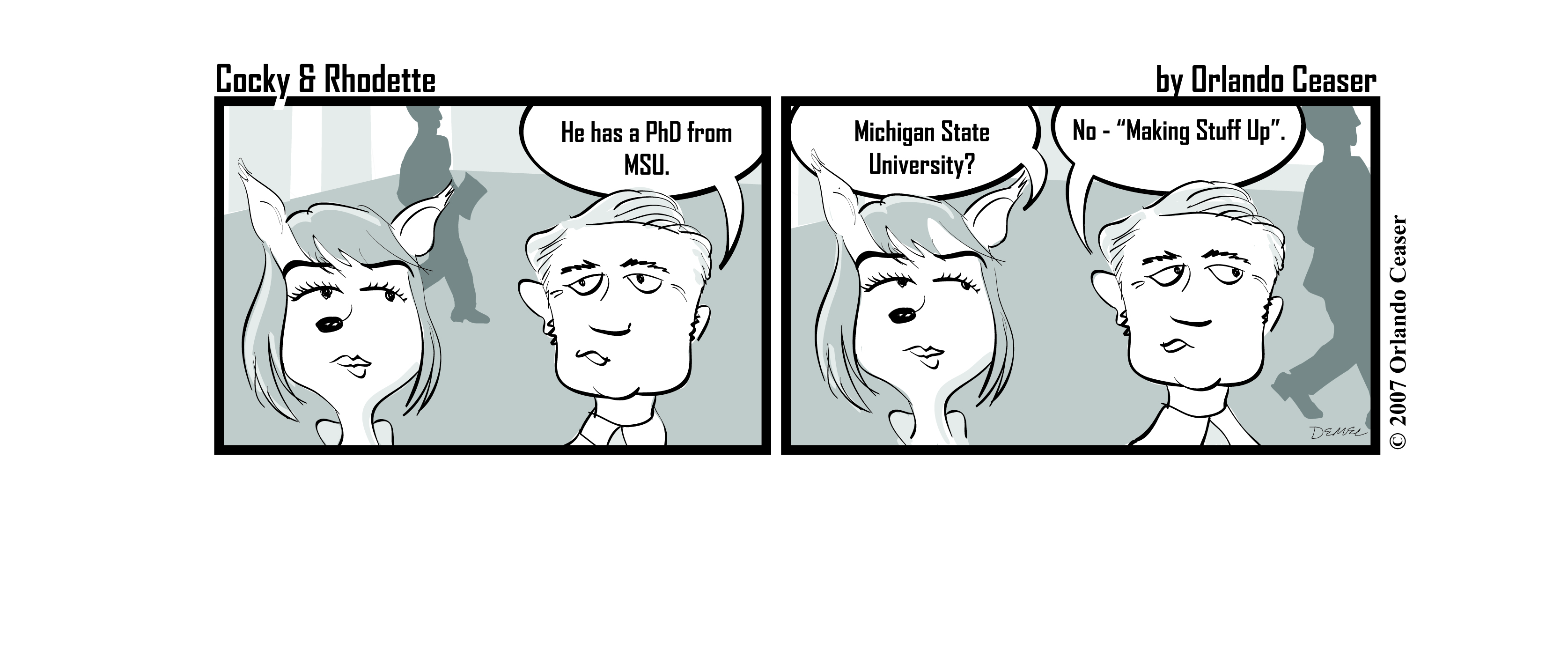
The secret of a good acronym is to be simple, clear and catchy. In the 1980’s I was training sales reps and noted that several of them were trying to make up information during a sales simulation. I reminded them that their doctors had forgotten more about medicine then they would ever know. I suggested that they could not Make Stuff Up or words to that effect. Years later I found out this concept was the subject of a book of a similar concept.

If the acronym has too many words it may maintain its effectiveness by association rather than attaching each letter with a particular word. For example, the Jupiter trial for a popular cholesterol lowering medicine: Justification for the Use of Statins in Primary Prevention: An Intervention Trial Evaluating Rosuvastin.

When you hear the word you want someone to make a quick association. I speak to organizations about creating a climate where people can safely state what is on their mind. In my book Unlock Your Leadership Greatness; (available at www.OrlandoCeaser.com and http://www.amazon.com) an OASIS is described as, a place where people can be Open And Share Information Safely.

Acronyms are an art. Since I have a knack for acronym development I have been asked on several occasions to help groups in their efforts to create one. I would speak with them and solicit their intent, the word they are trying to develop (if they have one) and the placement of the word in their overall strategy. This information allows me to know what they are trying to achieve and gives me the insight to meet their expectations.

Has Anyone Been Inspired Today is a mantra  for HABIT to remind me to help people through positive and encouraging actions. When an expert in a given area or topic is performing their duties it looks effortless. Aga Karve, my spin instructor is such a person. When she is working on the bike she is smiling while class members are groaning under her strenuous workout. One day it struck me that She Makes it Look Easy, SMILE. So we can say Someone Makes It Look Easy as they are smiling and effortlessly performing their work.

Acronyms can be fun. They can build your vocabulary and creativity. When creating acronyms, please remember the following:

    • Acronyms can be designed as a memory device
    • They are more effective when they are simple, succinct, catchy and linked to the topic in a powerful way


  • Be observant and on the lookout for acronyms and do not be surprised when they appear
  • Keep track of acronyms in notebooks and computers

When you allow acronyms to incubate in your mind you can develop fascinating associations between the words and concepts you want to remember creatively and assist you in memorization and performance.

Copyright © 2015 Orlando Ceaser
Authenticity – From Impressionist to Your Authentic Self*

Inconsistent

The path to understanding people will lead to greater personal awareness. There are 4 roles you may encounter during your developmental journey. Several contain character traits and skills commonly associated with actors and other performers. The 4 portraits can be seen as roles played that can influence personality styles and overall performance. They are the impressionist, impersonator, imposter and the authentic self. Knowledge of these images and the ability to adjust to them will enable you to adapt and survive in business and social situations.

Impressionist

The impressionist likes to imitate or model someone they admire. They may copy their speech patterns, mannerisms, key phrases, behaviors or routines. The television show Saturday Night Live garners huge ratings during presidential elections. Their actors do a fantastic job with impressions of the political candidates. Actresses Tina Fey and Amy Poehler’s impressions of Sarah Palin and Hillary Clinton were performed to perfection and rave reviews.

People may accidentally or intentionally model character traits that are synonymous with someone else. Some will select a person and duplicate the way they make decisions or perform their jobs. Individuals may stand like them or speak like them and conduct meetings the way they do. Additionally, they may be drawn to someone’s excellence and decide to emulate a particular characteristic in order to make it their own.

There is a danger in randomly and haphazardly imitating too many people. A person may lose their own identity. Rich Little a famous impressionist who made a living imitating famous entertainers once said, “I have done so many impressions I sometimes forget what my voice sounds like. It is true that we are a composite of many people but we must be strategic and systematic and how we inculcate their traits into our personality. We must be consistent with our true nature and not forget who we are.

Professional development can be helped by utilizing the appropriate impressions. In the early days of my career I worked in the Sales Department, where I had to make decisions when my boss was on vacation. I would ask myself, “How would John handle this particular situation or what would John do if faced with the same set of circumstances?” I would use the same wording and try to deliver messages with the same tone, emphasis and authority, as I imagined John would do it. My impression of John’s decision-making was instrumental in my growth and development.

We are all impressionable and prone to mirror and match behavior. We assume these impressionist tendencies to cope with our environment. This is how we survive and grow. One of the side effects of our impressions is that we may be accused of kissing up to management or trying to gain special favors by being the teacher’s pet.

Impersonator

An impersonator is an impressionist who is totally immersed in a role. They may temporarily abandon their identity and put on another persona. You have seen female impersonators, Elvis impersonators, individuals who impersonate presidents and other political figures. They may go to great lengths to excel and playing the part. We hired a guest speaker who was an impersonator of former president Bill Clinton. He looked like him, spoke like him and had the similar mannerisms. We wondered if he naturally looked like the former president or were enhancements necessary to project that appearance. It may take tremendous sacrifice to stay in character.

Impersonators may eat, sleep, think and act like the person they are imitating. They may assume the person’s name in public. They lose their identity and put on the image and character of another. They will conduct their daily activities from the vantage point of how would that person perform an activity or live their lives. They may give up their own ideas and opinions to become the other person, thus paying tribute to their idol.

Organizations have been known to promote clones of their top executives. This is the epitome of advertising to their employees, the value of impersonating and projecting the corporate image.

You must be careful. Do not surrender your personality to play a role. If you abandon your key traits and characteristics to assume the role of another you have denied yourself the right to fully express your gifts. You cannot fool people into thinking you are the original and you will deprive the world of your authentic self. Remember, a copy will never be a superior representation of the original.

The use of the impersonator style may be due to the image that is rewarded in the organization. People reproduce what is rewarded and what the organization really wants to see. Being an impersonator could also be as innocent as not feeling safe or appreciated by the company. The use of the impersonator style is typically designed to gain a personal benefit. It is often used to please someone in power with your ability to pattern your behavior after their professional image. You may be seeking a mentor/protégé relationship. You are hopeful that they in turn will generously lavish you with special favors or recognition.

Imposter

The imposter is based on misrepresentation. They claim to be someone or something they are not. They present an image that is inauthentic, false or misleading. This is easy to see on the movie screen or in television shows where the person assumes the identity of a dead person or through examples of identity theft, where someone assumes another person’s identity to steal their money.

However, an imposter is difficult to see in business and in your relationships, especially if we want to believe they are who they claim to be. Hopefully, we find out about their deception before significant damage is done.

The imposter in an interview misrepresents their personal history. They may assume the personality of someone they think the employer is wishing to hire. They may profess credentials, such as degrees, skills or connections that are nonexistent. They present themselves with high integrity and character which are far from their real values and personality. The imposter is a liar and will do anything to fool you into thinking their façade is their true image or actual position on an important matter.

Years ago one of our offices on the West coast hired a person they were pleased to bring on board. They said she was intelligent, beautiful and articulate with an electric personality. When she arrived at the office to sign up for the company orientation they were surprised by her calm, demure and low keyed demeanor. She was introverted and had little to say, which was a concern since she had to make presentations to physicians. They felt something was wrong, but they couldn’t explain it.

At the end of the second day of her orientation she mentioned that she was going to meet her sister for dinner. She introduced her sister to the group. You guessed it. It was her twin sister. She was equally beautiful, articulate and intelligent with an electric personality. They wondered if they had hired an imposter. Most cases of imposters are not this dramatic.

When an imposter is discovered, justice is usually swift. The person is confronted, embarrassed and fired. Their reputation is ruined and many people may be hurt in the process. If you are tempted to pose as an imposter, remember, the results are rarely positive. The masquerade is seldom worth the pain and embarrassment when you are exposed.

Authentic Self

The authentic self should be the desired objective or personality style. You should be vigilante and remain true to your real character and true self. The authentic self is who we really are. It is true that we may model some of our behavior after the three earlier models. However, this is done to enhance not to misrepresent your authentic self.

We are a composite a combination of many factors woven together to form a distinct creation with the potential to achieve phenomenal results. If we feel threatened we will be reluctant to bring our whole selves to work because it may be used against us. This fear is a challenge to authenticity and may tempt us to be an impressionist, impersonator or imposter to ensure our survival.

You will find out that there is no substitute to being authentic. The refreshing satisfaction of fulfilling your purpose will grant you the peace you need to joy the success of the life lived to the fullest with integrity.

*Excerpt from Unlock Your Diversity Greatness, release date 4th quarter of 2015

Copyright © 2015 Orlando Ceaser

Eight ways to alienate and frustrate your people

alienate

Inclusion is a key desire of all members of the human race, even in the workplace. We want to be included and welcomed into the inner circle, where we can enjoy all of the rights and privileges. Acceptance is another objective of the human heart, closely linked to inclusion. We have a desire to draw into the in crowd, where we are told that we belong. We want to be accepted and inclusion becomes the vehicle that can enable us to achieve a state of connectedness that makes everything worthwhile.

It is generally more productive to discuss how to become a better leader rather than focusing on the negative aspects of leadership. People want to know what they need to do, instead of what they need to stop doing. However, I would like to deviate from this pattern and construct a composite of everyone’s leadership nightmare. I wish to discuss the leadership attributes that cause followers to lose sleep at night, walk around in uncertainty during the day and distress about their future.

I began by exploring common pet peeves and comments made by people during my coaching sessions. It is not unusual for me to walk up on people who are complaining about leadership or lack of leadership within their organizations. These are the topics discussed at the water cooler, provided it is located in a safe location. The same conversations can be heard at the health club and where ever people congregate.

These are perilous times as evidenced by a comment from one of my neighbors. She said she would stare into her husband’s eyes when he arrived home each night to determine if this was the day he would lose his job. During his work day I’m sure he was dealing with some of the eight ways outlined below that leaders use to alienate and frustrate their employees.

My premise revolves around eight ways that a leader can really get under your skin, on your last nerve and drive you out of your mind. The curious thing is these attributes may not always present with the leader. Given the day-to-day stress and pressure of the job many leaders have transformed into the person they never thought they would become. If you were to ask them to list eight things that they could do to alienate and frustrate employees they would probably list some of the items presented.

Ineffective leaders display two or more of the eight qualities. They are so caught up in survival mode that they may not care that they are alienating and frustrating members of your team. The team members are the very ones they need to have fully engaged to accomplish their objectives.

o3banner21.jpg

These eight ways are extracted from my book Unlock the Secrets of Ozone Leadership. The main character is about to experience a mutiny because his people have had enough of his fatalistic leadership style. This style had been very helpful in moving him up the corporate ladder, but at the same time leaving alienated and frustrated bodies in its wake. Finally, he has poisoned the atmosphere so badly it is about to be his downfall.

When the heat is intense, leadership must become as the ozone layer for its people. It must filter the non-essential and non-productive heat, so that the necessary warmth and energy is generated to achieve success. I used to say that I am an environmentalist, not that I wanted to save the spotted owl, but I wanted to create the climate where maximum productivity and people development occurs. The eight ways to alienate and frustrate your people are listed below. Please identify the ones in your current leadership team and decide which of these attributes apply to you. If they apply, you must immediately begin a course of minimization and elimination.

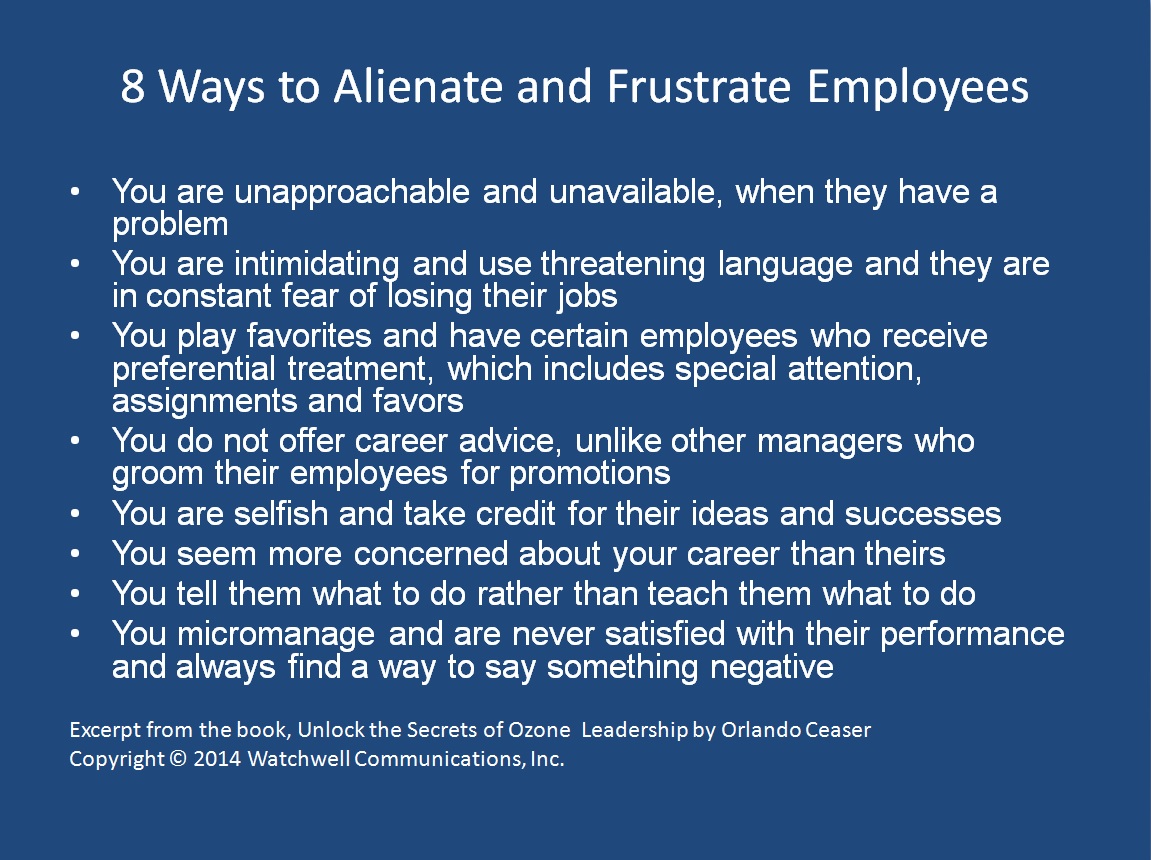
8 Ways to Alienate and Frustrate Your People*

  • You are unapproachable and unavailable, when they have a problem
  • You are intimidating and use threatening language and they are in constant fear of losing their jobs
  • You play favorites and have certain employees who receive preferential treatment, which includes special attention, assignments and favors
  • You do not offer career advice, unlike other managers who groom their employees for promotions
  • You are selfish and take credit for their ideas and successes
  • You seem more concerned about your career than theirs
  • You tell them what to do rather than teach them what to do
  •  You micromanage and are never satisfied with their performance and always find a way to say something negative
  • *Excerpt from the book, Unlock the Secrets of Ozone Leadership by Orlando Ceaser

These are at least eight surefire ways to cause people to be disengaged and paranoid in the workplace. If you want to ensure that the workers you hired or inherited are pushed to the edge, include as many of these dysfunctional practices, as you feel is humanly possible into your workplace.

Employees understand that corporations are in difficult circumstances. They want to play a role. They want to be an integral component in the partnership that enables an organization to lift itself from the quagmire of extinction. Companies are fighting for survival. Companies are competing to service their customers and to meet the needs of their clientele better than the competition. Allow employees to help the organization succeed.

Dedicated individuals are committed to help you achieve your objectives. They deserve the opportunity to contribute at the highest level. They deserve the best leadership has to offer. When they are inspired through effective leadership; when Ozone Leadership is put into action, they will have the necessary direction and energy that will allows them to do their best work. Success becomes an inevitable result of strong leadership at the right time with the right people.

Copyright © 2015 Orlando Ceaser

Informants in the workplace

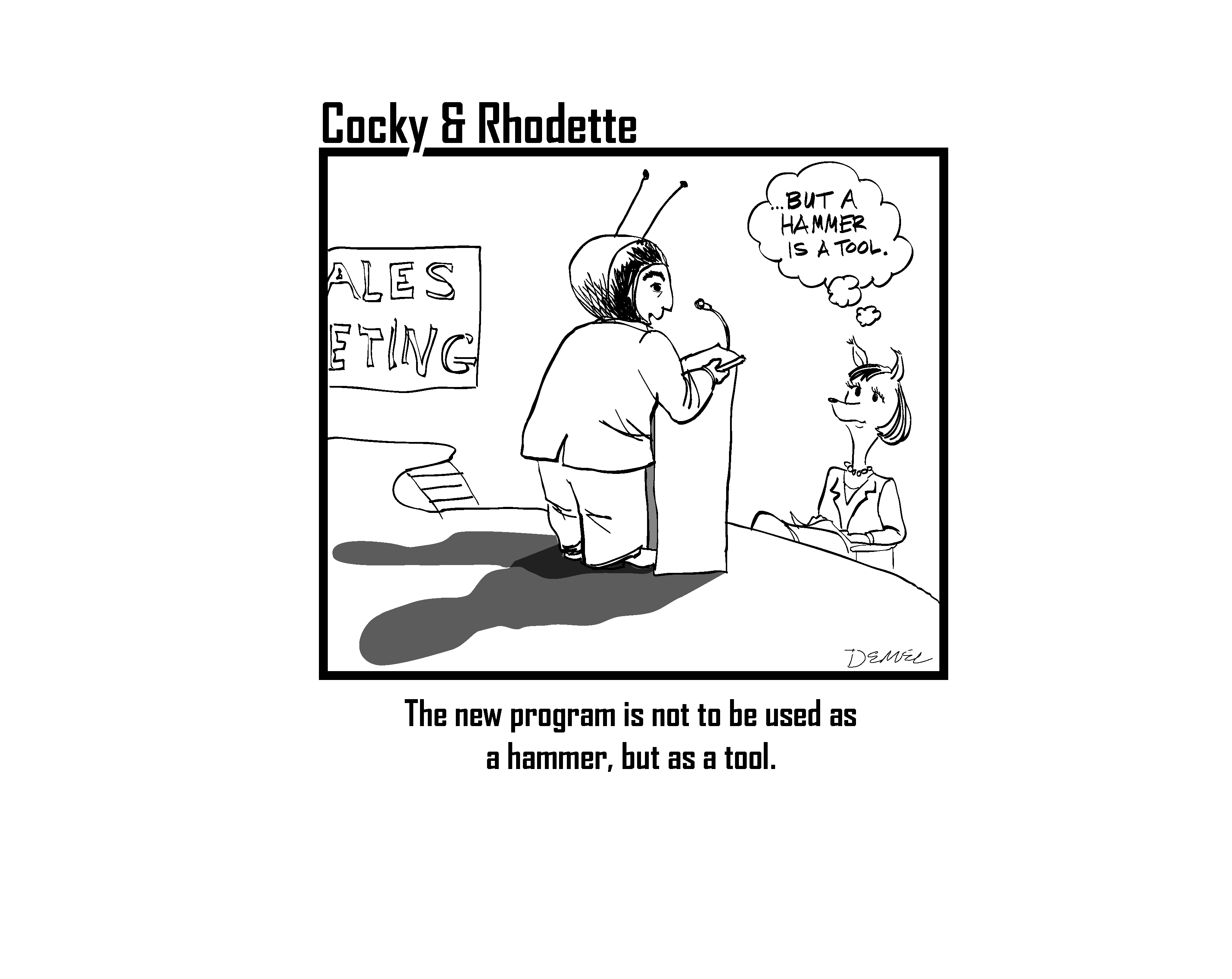
Hammer

Information is an essential ingredient in the leader’s decision making arsenal. There are many established, credible resources at their disposal. There is everything from company databases, computer files, the Internet and consultants to the minds of employees. The information available in the minds of employees is critical. However, there may be situations where employees are reluctant to disclose relevant information for a number of reasons.

If the environment is not perceived as safe, people are reticent to step forward with their information. There may be employee surveys and numerous forums within an organization where data is accumulated. But, there is still a need to decipher the data and provide additional perspectives. These translations and interpretations can be provided by informants in the workplace.

An informant is defined by Webster’s New Riverside University dictionary as, “one who discloses information and one who furnishes cultural or linguistic information to a researcher.” Oftentimes, informants volunteer their services. They may be guided by a number of motives. One such motive may be a genuine desire to improve the culture of the workplace or team.

Secondly, informants may be driven by ulterior motives, hoping to be rewarded in some fashion. A pharmaceutical company discontinued their bonus program which disappointed a number of their representatives. A group of employees got together and complained and expressed their dissatisfaction. The most vocal member of the group became an informant and notified leadership of the various opinions expressed. The other members were chastised and eventually the informant was promoted. The moral of this story is to express your opinion in a situation where your insight is appreciated and the person can do something about it.

Thirdly, a leader may ask everyone to be an informant. They would like to create an environment where everyone can step forward and let them know the climate of the team. The leader would like to receive the word on the street regarding a new policy or procedure, directly from the employees.

Fourthly, there are situations where a leader may select a particular person or a small group of people, who have keen insight into the workplace. They may have the ability to articulate the feelings of the team.

Lastly, there are situations where a team may identify someone as a spokesperson, a group sanctioned employee. This person is an approved voice of the people.

There is crucial information that the company must provide to the employees or members of a team, in order for the company or team to be successful. This data is around the vision, mission and the type of organization they are trying to create.

There is also crucial information possessed by the employees. The employees have the perspectives and relevant data obtained by being closest to the customer. They must share or release this information to leadership, in order for leadership to recognize the impact of their programs and strategy. The release of this information from the employee may be through the informant.

There were numerous occasions in my career where I used an informant to improve the success of a strategy, program or my leadership effectiveness. In one situation I did not realize the tension that existed between my District Managers. One manager called me and asked if I noticed the discomfort in the room. Armed with the information from her call, I scheduled a team building session where they were able to play together and resolve their differences.

Additionally, there were another time when individuals were poisoning the environment I was trying to create. There was a time when I served as a healer to address a dysfunction within a team. I brought the team members and their manager into my office for a debriefing session. After the meeting was over, I received a telephone call from one of the participants. She stated that before their drive to their territory, she heard my voice in the back seat of the car. Apparently, one of the representatives had taped my entire session with the team. This informant made me aware of either the insidious nature of the team member for their lack of trust. I was able to satisfactorily handle the situation because of the courage of my informant.

Leaders have told me of situations where members of their team smiled to their face, but tried every effort to undermine their efforts, behind their backs.

The leader must create the environment where people feel comfortable enough to tell management what they think. The manager must create a culture which is an OASIS. The OASIS (Open And Share Information Safely) is an acronym describing a concept that I introduced in my book Unlock Your Leadership Greatness (available at www.OrlandoCeaser.com and www.amazon.com. This environment will have a direct them on the number of formats available in the organization.

Informants are critical in the lives of leaders who are new to an organization or new to the role of leadership. It is comforting to have individuals who can share with you and serve as a barometer for your policies and procedures. They can also let you know how your personality comes across to the group.

Informants do not necessarily have to be spies who infiltrate an organization to gather secrets. They can be legitimate information merchants dedicated to helping leadership make better decisions.

Copyright © 2015 Orlando Ceaser

4 Directives to Influence Behavior

Instructions since childhood were designed to teach and guide us. Over the years we have noticed remarkable similarities between the directives given in our youth and the requests made of us as adults. In retrospect, their effectiveness varied based on our circumstances and development level. The same is true at work. Leaders and managers give instructions using the same memorable phrases. The objective of these phrases is to elicit our compliance with their demands, commands or requests for action.

“Do as I say, because I said so”

People have used a variety of commands to get the kind of behavior they want. “Do as I say, because I said so,” is the classic power phrase of authority. Parents use it often. The power can be based on position, where they can administer rewards or punishment if someone fails to comply with their request. The sentence could easily end with,” or else.” The job, held by the speaker, confers position power. They are the boss, the parent, the person in charge and when they speak they want others to jump quickly into action. The person using this phrase does not wish to be questioned or challenged. People will also use the specter of fear, brute force, physical strength and threats to persuade people to fall in line. Threats may be physical or assaults to someone’s character or reputation.

Frustrated parents and managers have used this phrase when they run out of answers. When they are busy or in a hurry, they resort to this language to end conversations. They do not want to discuss the matter anymore. They want people to listen, obey and stay quiet.

“Do as I say, because I said so,” is a technique that can influence a number of people. When matched to the right individuals, it is very effective. It is useless when delivered to the wrong person.

“Do as I say, not as I do”

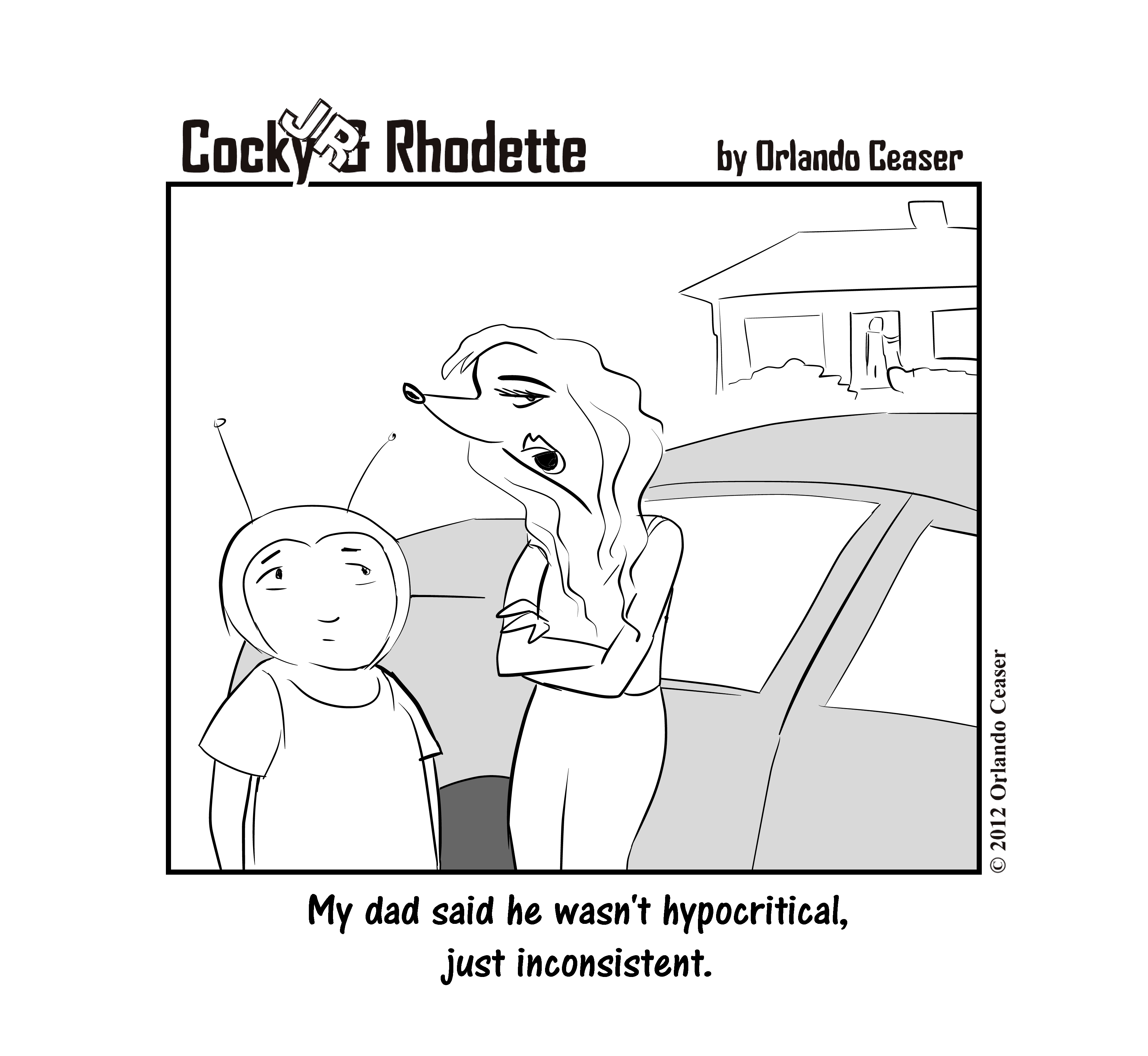
Some people adopt a hypocritical style to exert influence on others. They recognize that they don’t have the discipline or integrity to practice what they preach. Yet, they insist that others listen and obey their dictates and commands. This works in situations stated in example number one, however, the inconsistency and hypocrisy will render it ineffective in some cases. The resistant ones will not comply and they will use the leader’s hypocrisy as justification for refusing to follow their commands.

There is a certain amount of arrogance associated with telling someone to do something that you are not committed to do. The advice may be solid, but the absence of following your own advice, may compromise its impact. They may do what you say, but only when you are watching.

A powerful story was told about Mahatma Gandhi at http://www.witandwisdomstories.com. The blog post “Mahatma Gandhi’s salt less diet” contains the following story. “One day an anxious mother, along with her son visited Mahatma Gandhi. She told Bapuji, “My son is suffering from a kidney disease, Bapuji. I am really concerned. I took him to the doctor and the doctor has advised him to take food without salt.” She continued, “the problem Bapuji is my son refuses to follow the doctor’s orders, but if you tell him he will listen as he worships you and he will not deny you.” The Mahatma asked the mother and son to see him after a week.

After a week or so, Mahatma Gandhi called the mother and the son to his house. He took the boy aside and looked him in the eye and said” You are very important for your mother’s happiness and your health worries her. It is my wish that you follow doctor’s orders and stop taking salt in your diet.”

The boy who was in awe of the Mahatma was so pleased with the Mahatma worrying about him, agreed at once. He turned to his mother and said” no more salt for me Ma.”

The relieved mother stood puzzled for a while and asked Gandhi “But Bapuji, you could have told him this when we came a week ago, why didn’t you?”

To this Gandhi replied, ”But madam at that time I was taking salt in my diet and it has taken a week for me to give up salt myself. How can I advice your son to eat a diet without salt with a clear conscience? How can I tell someone to do something which I myself do not practice?”

Hypocrisy will not be tolerated in today’s climate of transparency and authenticity. Some will follow this request, but must see the benefit or fear the speaker.

“Don’t do what I did – Learn from my mistakes”

It is well-known that experience can be the best teacher. Rebellion is a natural part of the human spirit. Many of us have received instruction, but elected to ignore it to listen to our own voice or the voices of others. Going down the wrong path has caused us discomfort and ultimately we realized we were wrong. Armed with the experience, we wish to let others know the value of staying on the right path. We don’t want them making the same errors in judgment that plagued our lives. We therefore, become an ambassador for the truth. We say to people,” Don’t do what I did. Learn from my mistakes.”

This is sometimes seen as a tough love message or using scare tactics. Former prisoners have used a” scared straight” philosophy to convince youth to stay away from a life of crime. They feel that education on the negatives associated with criminal activity would discourage youth from hanging with the wrong crowd and making questionable decisions. They take the glamour out of disobedience and use their lives as proof.

Conversations in a corporation may involve older employees telling younger employees about the mistakes they made. These mentoring sessions or coaching moments are an effort to steer less tenured employees toward making better decisions on their career path. There is value in information sharing. That occurs when the different generations in the workplace tell their stories of arrival and survival within the context of the organization.

This approach also works on some people, but not on others. There will always be people who think they are too smart, clever, intellectual, lucky, cool or too good-looking to suffer the consequences of their actions. They will view the sad story, as something that only applies to others.

“Do it like I did it – Follow my lead”

This is normally a very potent approach. It is the lead by positive example model. People will look at you, your reputation and your execution and realize the value of your words and actions. Learning occurs through imitation or modeling behavior. “Let me show you how it’s done, makes “Do it like I did it ” even more powerful. Many times, “Do it like I did it” and follow my example, is not verbalized. Yes, there are many occasions where people will issue these words to give a standard to follow, but often its power is in seeing someone act out the phrase. It is the practice that occurs with or without the preaching that makes it work. It is the example exhibited on a day-to-day basis.

Most of the time, “Do it like I did it” and “Follow my example” are positive exhortations. But, it may not work in all cases. People will imitate and follow negative leaders and negative examples. If the culture of an organization is filled with intimidation and a lack of appreciation, individuals desiring to be leaders will pick up on the signals. They will emulate the same kind of insensitivity broadcast by their leaders.

However, leading by example does not work on everyone. Someone will find a way to discredit your work or assign your accomplishments to favoritism or inequality, they cannot duplicate. These 4 directives to influence behavior collectively have been used to get individuals and groups to act and follow orders. They are spoken to move people to action. However, individually, we have found that they may not work on everyone all the time.

Copyright © 2014 Orlando Ceaser

Protectionism in a competitive marketplace

Protectionism is designed to discourage others from competing for your talent or resources. Barriers are put in place to keep markets, company, or department restricted from outside forces. People try to artificially maintain or mandate the status quo, because it is a beneficial, but questionable policy.

Insecure organizations who are afraid to lose top talent will institute external mean to keep their people, which may deny their people freedom, benefits and promotional opportunities.

Protectionism is a preemptive strike aimed at discouraging others from hiring or tampering with your personnel. Countries try to control their markets by setting up impediments to prevent others from fairly competing with their industries and companies.

Protectionism is at work inside organizations. A regional manager was constantly near the top of the organization in sales. He experienced very little turnover in his sales organization, through promotions or resignations. Many in the organization were puzzled to learn that stellar results were not accompanied by promotions. Conversations with the regional manager revealed that the top performers, in his estimation, were somehow flawed and not ready to receive more responsibility. This manager’s protectionism policies were personally beneficial, yet detrimental to the career growth of many hard-working employees. He did not want to go through interviewing to replace them and training a new crew. Careers were inhibited because he had labeled them as insufficient to assume greater responsibility.

A successful sales representative accepted a promotion to the human resources department. She wanted to return to the field as a manager. After several years, she had lunch with a sales manager. He lamented the fact that she wanted to stay in HR. She was shocked at his opinion and asked why he felt she did not want to return to the sales force. He said he had been told by an HR director that she was happy with her new career path and it did not want to leave. Needless to say, she was stunned by the misinformation and the inaccurate portrayal of her career objectives. The protectionist policies of her department backfired and she subsequently resumed her sales career.

Protectionism leads to the creation of policies to restrict the penetration of their borders by competing companies. One company raided another company and hired some of their best sales people, when they started a new division. The losing CEO was angry by their practice. He instructed his lawyers to write a letter to the company stating his displeasure and threatened legal action. The response he received was carefully worded. The acquiring CEO defended his hiring practices. He asked the other CEO to see his actions as the risk of doing business. He suggested the people were leaving on their own volition. If the people were happy they would not have been so anxious to leave. Needless to say, the other company continued to hire his representatives, but at a slower pace.

People will gravitate to top talent. In the era of social media, networking events, savvy recruiters and employee referral fees, the best performers will be identified. There is an incentive to keep people happy and there is an incentive to recruit them to other organizations.

The hiring CEO delivered a very powerful message. What can be done to minimize employee’s propensity to jump ship? What can be done to the culture to make them want to stay with your organization longer term?

Organizations can change managerial mindsets to mandate mutual benefits for all parties involved. This philosophical shift is initiated and enforced by senior leadership. Intuitively, it is difficult to pour a lot of effort and time into someone, only to see them walk away to a perceived better opportunity. As stated earlier, there are risks involved in developing people. At some point, you will have more people than you have promotable positions. This may cause some people to be patient and wait for better jobs internally; however others may be impatient and look for greener pastures outside of the organization. You have to chalk this up to the price of doing business and wish them well.

There are tremendous advantages short and long term for a full scale long term development program. This may ultimately lead to future business alliances and collaborations with companies who have hired your people. It may also be a recruiting tool for prospective employees. A reputation for hiring and developing talent can lead to an influx of extraordinarily qualified candidates. Higher employee engagement levels and productivity is currently seen as a positive benefit of a stronger culture.

If you constantly assess and provide opportunities for personal and career growth, you minimize employee flight. Today, Millennials are subject to career impatience, if you do not sufficiently reward and challenge them, your organization will constantly be under pressure due to rapid turnover.

Sensors can be put in place in the form of stronger leaders and mentors to assess and regulate career development. Employees will gain an up-to-date, real world view of their skills and abilities and prospects for career development. Organizations have established career academies, equipped with resources, such as class room work and online training programs to help employees can grow their technical and life skills.

Protectionism in theory is about holding on to your talent against unfair pilferage, but it will work against you in the long run. You must update your training and development practices to create stronger leaders. Additionally, you must:

  • Pay attention to the company culture to treat people with respect and harness their skills and abilities.
  • Provide an honest assessment of performance through clear cut performance objectives and regular evaluations
  • Career discussions should be held to understand and to share employer and employee expectations
  • Develop confidence in your training and development program to rapidly replace people who leave the organization or leave the team
  • Strong managers and leaders are necessary to ward off protectionist tendencies, as they strive to develop the best teams imaginable

Organizations have been known to offer retention bonuses during a time of uncertainty, such as during mergers and acquisition, to keep their top talent. A variation of this practice is to ensure that the best performers receive the best rewards, whether financial, special projects or greater career opportunities.

Protectionism is usually a policy instituted when an organization fails to put a coherent people strategy in place. In their haste to prevent people from leaving, they  blame outside forces for problems in their culture. Protectionism practices that strikeout at the employee or toward outside forces are rarely successful. Organizations should look internally at their leadership practices and career development strategies, to see if they can be more conducive to creating a culture where leaving the organization is to difficult for an employee to imagine or implement.

Copyright © 2014 Orlando Ceaser 

Free e-book, Leadership Greatness through High Performance Poetry at http://www.orlandoceaser.com

Are you smarter than a Squirrel?

squirrel

I believe that anybody and anything can teach me something. I believe I can learn from everything in my environment. Sometimes it is nature and the animals that are my greatest teachers.

I was sitting in the kitchen one day observing activities outside my window. My wife is an avid gardener, so in front of me were many varieties of flowering plants. There were xenias, Echinacea, sunflowers, roses and many others; a botanical garden that held my attention. There were hummingbirds darting back and forth to my delight. In the center of the garden was a small tree from which she hung one of her bird feeders.

She had a problem with the squirrels. They could usually be found sitting in the bird feeder eating the seeds she purchased to attract and feed her assortment of feathered friends. She purchased from the garden store, a revolutionary bird feeder designed to be “squirrel proof”. This new bird feeder looked like something from outer space or a cross between a jellyfish and a Portuguese man of war. It had a large dome which was to protect the bird food from the squirrels. The food was housed in a cylinder from the center of the dome. Finally, she had a bird feeder to keep away the squirrels.

A curious sight developed in front of me. A squirrel came by to feed or to see the new contraption. Did someone think this device would keep him from the food? The squirrel jumped on the tree, climbed to the limb from which the bird feeder hung and climbed down the chain to the top of the dome. When he reached the dome he fell quickly to the ground. The look on his face as he frantically tried to grab something to hold onto was priceless. He fell to the ground quickly. He looked at the new feeder as if to say, “What happened?” He seemed to love a challenge. He dusted himself off to try again. He tried several more times to master the bird feeder, but with the same result, landing flat on his feet and disappointed on the ground. I felt my wife had made the right decision on this new bird feeder. The frustrated squirrel stared at the bird feeder, as if to study it. If I didn’t know better, I would think he was trying to figure out the best approach. Squirrels have a reputation as creative thinking creatures; causing havoc in many locations.

Finally, he climbed the tree, as he had before, with the same determination. This time, I paid attention to the pink ribbon my wife had placed on the top of the bird feeder to make it look attractive. The squirrel lowered himself slowly down the chain, as he had done before. This time, however, he stopped at the pink ribbon. What came next stunned me. He slowly pushed his tail through the bow, she had meticulously tied. He locked his tail in the loop of the bow, anchored himself and slowly slid over the side of the dome, until he was perched over the feeding tray. There he hung upside down helping himself to the food that was denied him. It was a marvel to behold.

I called my wife and told her what had happened. She was upset. She muttered something about false advertising. She immediately packed up the bird feeder and took it back to the garden store. The bird feeder was squirrel resistant, but not squirrel proof. I tried to persuade her to just remove the ribbon, but that was not enough. The squirrel proof claim had already become null and void for her.

If animals can face a problem and use instinct or ingenuity to arrive at a solution, what can we do, since we are the wisest of all creatures on the planet? We could say it was an accident and the squirrel was lucky. However, the truth still stands, it solved a problem. If we review all available options, we find that the squirrel when faced with a problem was:

• Motivated to succeed – hunger or hunger prevention
• Persistent mentally and physically in trying different approaches (tenacious)
• Tried many choices and different decisions
• Used available resources to solve the problem
• Savored the victory

We told this story to our real estate agent and she told a similar story. Apparently, a client placed oil on a bird feeder to keep the squirrels away. The squirrels would slide off the feeder. However, one squirrel was seen rolling in the dirt until he was covered with a mixture of oil and dirt. The dirt enabled him to get traction so that he could hold onto the feeder and not slide off. This seems like a calculated, reasoned approach to solving a problem. She was able to get the food without slipping off and falling to the ground.

When we lived in Ohio, my wife had her signature garden again. Her problem with squirrels was their aggressive nature around her sunflowers. They would take the seeds from the sunflowers. She collected the sunflower seeds for planting and eating. There was one sunflower that was her pride and joy. It literally had a 12 inch head. She decided the cover the head of her largest sunflower with a plastic bag before we went to church to prevent the squirrels from stealing the seeds. When we returned from church, there was no trace of the sunflower head. It had apparently been chewed off at the base and dragged away. Well that’s the story we tell, and we have no reason or evidence to think anyone climbed the fence to destroy this one sunflower, but our usual suspects, our fine furry little friends.

Do not underestimate the creativity of a determined animal. We should not underestimate our ingenuity when passionate about a cause and resilient in our methods. So the question remains, “Are you smarter than a squirrel?”

Copyright © 2010 Orlando Ceaser