Global Warming in the Workplace

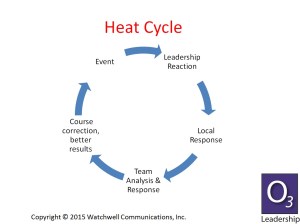
heat_cycle1

“It is getting hot in here.” Can you feel the heat? The heat is rising in workplaces around the globe. Competition is intensifying. Competition for customers, products, services and career opportunities is heating up. Heat is also known as pressure, when it flows from higher levels of management as edicts, high expectations and strongly worded challenges to the people in the hierarchical structure below. The heat also flows from peers, internal standards and the family values

The list of individuals sweltering under the blistering temperatures in organizations is increasing. Companies are falling by the wayside due to heat stroke and the casualties of progress. The business landscape is littered with the fallen logos and share prices of former titans of industry. Innovation and new methods of distribution have led to the demise of companies that could not adjust and keep up. Companies that were once household names, no longer exist. So, now the companies that are still standing, have survival paranoia hanging over their heads, as they reflect on the cost of failure.

Companies have restructured, attempting to do more with less people and resources. Survivors of downsizing are dealing with survivor’s guilt and an increased workload. When employees demonstrate that they can function with fewer co-workers, relief does not seem to be on the near horizon. Employees want to save their jobs, even if they are unfulfilled, because it is hard to find a new job in the current employment environment.

The heat at work is beginning to move into homes as tensions mount due to the lack of attention overworked individuals display on the home front. Schedules at home are equally chaotic and hectic and have become the new normal. These factors have created immense pressure on relationships. The heat is spreading like wildfire. The pressure of life and the heat of each day confirm that global warming is prevalent at home and in the workplace.

Promoting individuals to management, who are not well schooled in leadership, can negatively affect the environment. Veteran managers with too much on their plates can become impatient when they are under fire to produce. Employees who want to grow, but barely have time to catch their breath, because all of their time is task time and nothing is left for personal development. If there is no positive end in sight morale and engagement will become areas of concern. The thermostats within organizations indicate that engagement levels reflect the temperature and pressure of working in today’s climate.

When there is a problem or discrepancy between expectations and results, leadership may react by raining down heat or turning up the heat. Merely emphasizing this lack of achievement will also be seen as bringing on the heat. Heat really means high expectations. This terminology is well accepted in companies everywhere.

Leaders will exercise their positional and personal power to get results. Ideally, the manager may not let unproductive heat go through unfiltered to their people. They may stand in the gap and become the ozone layer for their people. This filtering philosophy will only let the productive, constructive and inspiring heat reach their people. This heat will cause the manager to hold strategy sessions to determine the reasons for the discrepancies and propel them to devise an appropriate course correction.

Brainstorming and strategy sessions will result in recommendations for getting on the right course. In makeshift war rooms, teams are working diligently to yield revised tactics. These new marching orders are the result of analyzing the strategy and competitive response, gathering data on customer acceptance and revising resource allocations. The successful implementation of strategy changes will hopefully put the team on the right track. The new results will please leadership and the entire team.

Ironically, whenever another problem occurs, the leaders believe the heat administered the first time was the reason for the change in behavior and production. Therefore, as part of a vicious cycle or continuous loop, heat is again acomponents3dministered until expectations are reached.
The astute ozone leadership practitioner will help his team establish an early warning system, with a feedback mechanism, to serve as indicators of impending change. This metric will alert them to changes or malfunctions in the strategy at the earliest possible moment to minimize any surprises. Veteran and new employees will receive training on strategy execution and how to assess progress to minimize problems in reaching their goals. They will know the early warning signs that strategy and tactics need to be adjusted.

Global warming within the workplace has a number of origins. Some of them are due to a direct reflection of new technologies and distribution channels, as well as the competitive nature of the most industries. It is also a function of the realities of the current lifecycles of products and organizations and the internal drive and survival instinct of employees.

ozone_cover

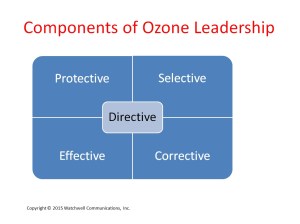
Ozone leadership can be further explored in the book Unlock the Secrets of Ozone Leadership. The book, keynote address and workshop espouse the five principles of this leadership model. The five components are directive, protective, corrective, effective and selective. When leaders have a mindset incorporating these five components they are more inclined to focus on developing people and developing the business. The implementation of these principles in the program would do its part to counteract global warming within your workplace.

Copyright © 2015 Orland Ceaser
Under New Management – A chance to decline or a chance to shine

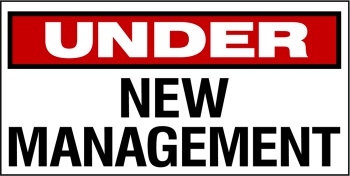
new-mgmt

The sign has three words, “Under New Management.” We often see the sign in the window of a retail establishment. What does this sign mean to you? Does it conjure up images of change and great expectations? Are you saddened that a great institution will never be the same, gone the way of the dinosaur? Does it make you think hopeful thoughts about the future, casting aside the circumstances of the previous administration? Do you instantly wonder if new people with more money, resources, business acumen, talent and operational expertise, will make the business successful. Under New Management can bring opportunities, as well old problems and new obstacles.

Your opinion about an “Under New Management” sign is based on being connected to the previous management; as a patron or participant in their business. If you were dissatisfied with the prior regime, this sign may give you words of encouragement that things will be better. If you are on the inside, and not in the inner circle, this may mean greater opportunities for advancement. If you are on the outside, you are hopeful for a better return on investment or an increase in quality and customer service.

When new management arrives on the scene, there are new people to handle the day-to-day operations. The communications industry, especially radio, is notorious for bringing in new ownership, followed by new management. Radio personnel are often under the specter of change. When rumors start about a potential acquisition, panic leaps into the hearts and minds of everyone, except those personalities who view themselves as untouchable. These individuals, due to their notoriety, can be classified as employable, because of their ease of finding another job.

It is customary for most industries to experience change. Will that change be in products or services or the management structure, personnel or brand identity? In radio the change could be in their format? Will the station go from all news to a talk radio or country music format? What will the new manager think is the financially prudent format to recoup their investment? What changes could “Under New Management” bring to your company or industry? How could your life be changed?

“Under New Management” is a sign that could be hung after a merger and acquisition. Those in positions of power and leadership may worry the most. Many times the higher up you are in an organization the more worried you are of losing your job, status, influence, mentors and advocates. But, there are those on the outside of power, looking forward to the opportunity to shine. They want a clean slate, audiences before a new panel of judges.

Some of my greatest opportunities were, “Under New Management.” I recall making a speech before a large audience after a merger. I was approached by one of the sales representatives from Puerto Rico, excited about my message. She said,” I never knew you could speak like that! We have never heard you on the big stage before. Why haven’t you been on stage in this type of setting?” I smiled and thanked her, realizing that there was something special about the opportunities provided by being, under new management. There can be many career benefits brought on by a change in management. Ambitious personnel should strategically plan for a jump start, a new start to their careers and seize the new opportunities.

“Under New Management” could provide an environment where people can feel courageous enough to explore new areas. It could be seen as a chance to overcome mistakes made earlier in one’s career. New management may have a policy of mistake forgiveness, like the accident forgiveness features in some automobile commercials. It is true that negativity never gets amnesia in some organizations. It has a long memory for mistakes, even though the clarity of its memory may be very vague.

I spoke with the manager who applied for re-entry into her former company. She was cleared for rehire, but someone mentioned a problem they had with her almost 20 years earlier. He couldn’t remember the specifics, only that it was unpleasant. This company was under management, however there were lingering problems of old biases from the people they maintained.

New management can therefore, lead to the continuation of old stereotypes and biases from the remaining managers. It may also replace old unconscious biases with a new set of preferences and biases. But we must be optimistic and strive for the excitement and new energy to commit to build something new and magnificent. We must build an organization that allows us to make the most of the honeymoon period assigned to “Under New Management,” to impress upon everyone the desire and willingness to serve in order to achieve high expectations.

“Under New Management” is not the answer to all problems and it is incumbent upon everyone to bring their best and be hopeful that the environmental change will be a breath of fresh air. They must work to help provide fertile soil for people to grow to their fullest potential. They must work diligently to give the new managerial structure a chance to succeed and flourish.

Copyright © 2015 Orlando Ceaser

New Managers: Courage does not come with the job description

New Managers: Courage does not come with the job description

The new manager has the unenviable task of quickly climbing the learning curve, coping with the challenges of the new job and causing people to forget about their predecessor. The new job is intimidating and the new manager wants to perform well and execute strategies flawlessly. But, some new managers are in a state of fear with the new assignment. This goes beyond the fear of looking bad for failing the end position.

According to a report by the Corporate Executive Board, “Sixty percent of new managers fail within the first 24 months.” So it is important to do everything within our power to ensure that managers are courageous enough to do their jobs.

Four areas where new managers may demonstrate a lack of courage are listed below.

  1. They want to be everyone’s friend
  2. Reluctant to make the tough decisions
  3. Blame the company when things go wrong
  4. Provide too much information without the proper context

They want to be everyone’s friend

The new manager may not be comfortable with the enormity of their promotion. They are anxious to perform, but recognize their competence level is below their personal expectations. They view leadership as cooperation and a good way to get people to cooperate is to be their friend. They believe that if people like them, they will work harder and be more productive.

The new manager may not feel deserving of the role or doubt their ability. They may feel that they have job that people see you should’ve been given to someone else. This individual may even be one of their direct reports. Wanting to be liked by everyone becomes a central and damaging part of their management style. The new manager discovers very early that courage did not come with the job description.

The new manager, following this fear mindset will socialize excessively with their subordinates. They could develop a deep relationship which could compromise their ability to lead. Even if the manager can be objective, the employee may not be able to be objective. A rift could develop when the manager must chastise the employee or there is a dispute around compensation.

The need to be a friend or perceived as a peer is sometimes brought on by promoting a person to head a group where they were a part of the team. This is not an ideal situation, but at times cannot be avoided. A person in this case must be very careful. They must be coached about the potential dangers within the situation. There may be discomfort among their former peers. The new manager may be worried because they once said something to their former peer which could be used against them, now that they are a part of the management.

Afraid to make the tough decisions

Many new managers may be reluctant to make decisions because they are afraid to make mistakes. Risk taking is a part of being an effective manager. It is important to know boundaries and levels of authority. If the environment is not forgiving of errors, the manager understandably may be hesitant to act. Once you know this, a new manager should be prepared to exercise good judgment.

Dan became a new manager and was anxious to make a good impression. He enjoyed consulting with his manager before making a tough decision. This was all right at first, but he became cautious and consulted even on routine discussions. Dan called his manager at home, on two successive Friday evenings, to ask him questions about work issues. His manager listened to each case and asked Dan what he wanted to do? Dan gave a soundly rational response for both situations. His manager agreed with Dan’s assessment and supported his approach. His reasoning was equally effective the second week when he called to discuss more decisions he wanted to implement. Once again the manager agreed with his rationale and supported his thinking once again.

Weeks went by and Dan stopped calling his manager on Friday evening. The manager waited for Dan to call but, there were no calls. He saw Dan at a meeting, a month later, and asked what had happened. He joked about missing their Friday evening telephone calls. Dan told him that he realized that the issues were well within his authority. He felt comfortable in his decision-making and would call if he ran into a problem. This was a tremendous leap in his leadership development and courage to perform and take risks.

When a new manager is trained and given the amount of authority relative to the level of leadership maturity, they grow with proper supervision. As a leader, they are expected to exhibit the courage of a leader by taking responsibility for their teams, managing their business and keeping their leaders apprised as necessary. 

Blame the company when things go wrong

Since preservation of the relationship is their most important objective, this new manager may separate themselves from unpopular corporate decisions. They will take the coward’s way out and blame the company, rather than finding out and giving the rationale for the corporate decision. They are afraid to be seen as the bad person. They go into their conflict avoidance mode and take the side of the employees without living up to their managerial responsibility. They have been known to say such things as,” I am asking you to do this because the company thinks it the right thing to do. I recommend or supported you, but I was overruled. The company made a mistake and you can’t tell them anything.”

A characteristic of managers who lack courage is to set themselves up as the expert. They will volunteer their opinions and state what they would do if they were in charge. They blame upper management for the tough decisions and challenging circumstances, but this can certainly backfire on them. One manager sent a memo to his direct reports blaming the company for a decision. One of his representatives forwarded the memo to their regional sales director. This led to an embarrassing, but fruitful discussion on leadership. Situations like this occur when the new manager lacks confidence.

The team will pledge allegiance to the manager rather than the company. Since the manager is new, the bond of loyalty is not strong enough to retain the employee who is disenchanted enough to quit. Therefore, their approach undermines the stability and morale of the group.

Over communicate information without the proper context

They talk for the sake of talking, too afraid to get additional information from their peers or supervisors. Do not want to appear to not measure up to others. These new managers may constantly bombard their people with every bit of communication at their disposal. This may even include confidential information which can easily be taken out of context. Some memos may summarize meetings and strategies, but not give the complete story. It is crucial for managers to filter the quantity of information sent to their teams. Took over communicate could be a distraction and affect the efficiency of the team.

Copyright © 2015 Orlando Ceaser

The Case of the Righteous New Manager

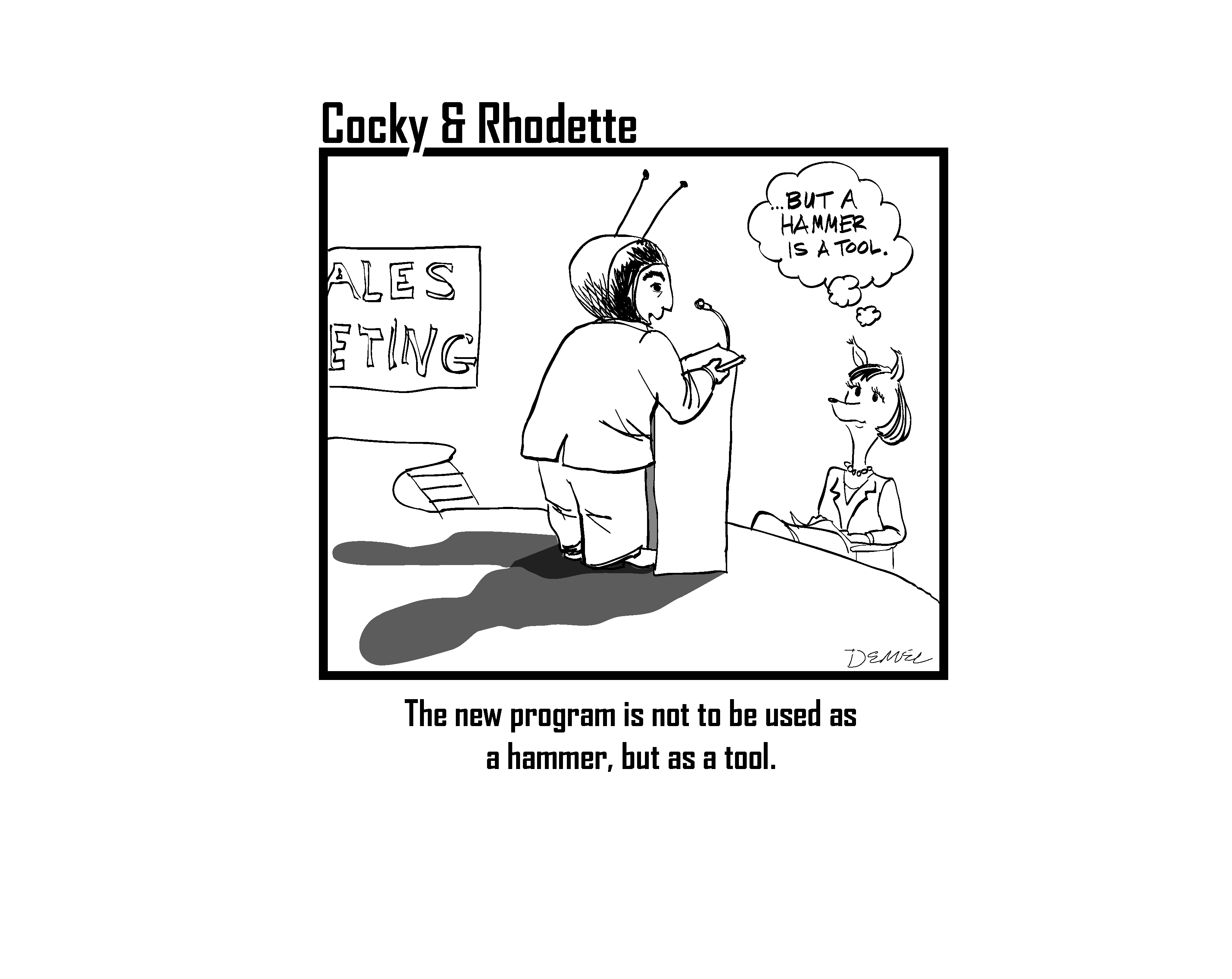
Hammer

A promotion to management is quite an accomplishment. A new manager joins the ranks of leadership, among the most important individuals in an organization. The manager conducts the functions of planning, organizing, staffing and budgeting, to help the company achieve results and expectations. They are accountable for implementing corporate policies and strategies, as well as caring for the company’s most important resource which are its people.

New managers may possess traits that may hinder or delay the development of their teams and the rapid results they desire. Some have an attitude of righteousness, which means they feel anointed as a manager, rather than being appointed to the job.

New managers bring a fresh perspective to their assignment. They may not be mired in history, preconceived notions and the barriers and restrictions on what can’t be done. They bring drive, enthusiasm and a can do attitude along with a desire to prove that their superiors made the right choice when they were selected as the manager.

The righteousness that new managers display can be itemized as follows:

  • They use an autocratic management style to avoid being challenged
  • They try to mold people in their own image
  • Abuse power through favoritism and preferential treatment
  • Never truly left their old job

Autocratic style

The righteous new manager using the autocratic management style believes that the manager is always right. This management style is perfect for it allows some new managers to hide their insecurities. They project a feeling of superiority. They display an attitude that says they deserved the job and should not be questioned. Challenges are seen as disrespectful to their position and they are swift and deadly in their response. The righteous new manager can be detrimental to organizations, departments and teams, when they operate vanity, insecurity or sheer arrogance.

If the righteous new manager is not comfortable with her skill level, she may not want people questioning her decisions. Autocratic managers don’t want to be questioned. They are accustomed to having all the answers in their previous assignment. But they have not achieved that level of competence in their new position. They respond to inquiries, as the parent who says,” Do it because I told you to or because I said so.” They are afraid to be vulnerable and admit they don’t know everything. They view this as a sign of weakness.

I watched a new manager receive a suggestion from a member of his group who was a former manager. When the idea was proposed, he simply responded that it can’t be done and moved on to the next subject. He missed an opportunity to compliment an employee on the idea and work with the group to fashion something that was within policy. The discussion could have been very open and fruitful if he had used a more participative style of management.

Autocratic managers unwittingly shut off information, which is vital to the success of their group. Managers do not have all the answers. An environment open to challenge and scrutiny can be very beneficial. The new manager must learn how to create this environment. This will enable the manager and the team to grow immeasurably from this experience.

The autocratic management style is a very effective style in the right circumstances. There are situations when the manager has to make the call without input from their teams. However the misuse of this style can be a problem.

Mold people into your own image

The righteous new manager may be tempted to over emphasize the skills that got them promoted. They may be experts in data analysis, customer service, strategic thinking, problem solving, administration or sales. If they were a great salesperson, they will demonstrate that they can sell and expect everyone to sell as they did. Sometimes they will not allow their salespeople to sell because they are always showing them how it should be done. The magic phrase,” this is how I used to do it,” eventually undermines the team. A righteous new manager will take over the sales call to the chagrin of their salesperson and the customer.

The biggest roadblock with the righteous new manager may be the veteran employee. The variance between the new manager’s methods and the veterans experience may be the most significant challenge. The veteran employees may not have had the advantage of the new terminology and techniques and the latest training modules, but they know their jobs. They have the advantage of experience and know how to get results.

When a veteran employee is in trouble, it is up to the new manager’s superior to guide them through this delicate personnel issue. This enables the new manager to benefit from the expertise of their manager. A high producing veteran employee can be placed on the verge of resignation or termination because the new managers making their lives a living hell. I remember when the most effective salesperson was demoralized and frustrated because the righteous new manager wanted things to be done their way. This frustration affected the workers ability to do his job. Sales began to decrease and the new manager made a case that to the veteran had lost his touch and needed to be replaced.

Favoritism

The new manager may have a number of people play up to them to gain preferential treatment. We’ve already discussed situations where prior relationships may lead people to think they should be treated differently. The new manager cannot give in to this temptation. There must be a concerted effort to treat employees with the appropriate and equivalent level of attention. If someone always gets the best assignments or is always called on and applauded in the group, this can cause problems in morale nothing can undermine credibility and engagement more than preferential treatment.

There may be instances where you have a natural affinity or relationship with someone in the group due to prior history. Don’t let this circumvent your ability to lead. This is easier said than done. Sometimes when you have made a conscious effort to avoid favoritism, people may initially accuse you of it anyway. There are situations when members of your team are of the same gender, race, ethnicity, city or country of origin, fraternity / sorority, college and personality type. People will assume you have a preference, even if you have not exhibited one. This says more about them than it foes about you. Be patient and steadfast. In time people will see that you are fair in your relationships with your team and their accusations, suspicions and thoughts of favoritism will go away.

Never really left the old job

This person loves to be called on in matters related to their old assignment. They were good at that job and it was a source of confidence. There is comfort and safety and the tried and true, the familiar has its own rewards and recognition. The new assignment is not been mastered, so these good feelings from the old days provide satisfaction to their ego, but can hinder their growth in the new job. They have to cut away and devote themselves to the new position. They also have to lose the mother hen mentality and allow the replacement the room to grow in their new job.

The new manager needs validation. It is important for them to receive encouragement as well as continued instruction until the new job is mastered. Maintaining a foot in both camps may result in doing a substandard job in both positions.

New managers want to demonstrate their effectiveness as soon as possible. In most announcements, it states the effective date of the promotion, but it does not state the effective date of the manager, in regards to their skill level. The reason is obvious. No one knows the effective date, when the manager’s leadership skills are fully grown and they are fully operational. A new manager plagued with righteousness delays their effectiveness and the performance of their team

Copyright © 2015 Orlando Ceaser