The “A” Game Chronicles – Discover and deliver it

Keeping_Up_C
How often have you heard someone say or someone is told to bring their “A” Game to the competition? They don’t say bring a game, but the capitalized “A” game. I wonder if people know what their “A” Game looks like. How often have they seen it? Would they recognize it when they saw it? I wonder if they have ever challenged themselves at such a high level that it brought out their “A” game. Then they would know what it looked like and could therefore, duplicate it upon demand. They are told to get an “A” for effort, but you need the results to back it up

Their “A” game is heavily in demand. “A” is for action or “A” is for achievement. “A” is for the highest performance. I knew managers who were never rated at the top performance tier within their organization. Yet many of these managers would distribute these ratings without hesitation. My questions were always two fold. First, “How could you?” and secondly, “Do you know what awesome looks like, since you never received the rating? The same applies to someone’s “A” Game. Do you know what it looks like and does a manager know when it has arrived and how to bring it out in the open? An accumulation of “A” games should lead to the highest performance ranking and rating within the group.

There are apparently different standards for an “A” game. I suppose it is in the eye of the beholder. What measuring device are you using for an “A” game? Your “A” Game could be a function of the following:

• Attitude – your disposition spells confidence and could cause your best performance to explode out of your potential.
• Awareness refers to self – awareness, for you are in touch with your physical and mental capabilities. Your emotional intelligence (EQ) involves knowledge of people and relationships. When combined with competitive knowledge and personal or self knowledge you create a climate for your “A” game to develop.
• Aptitude – (IQ) – intelligence referring to mental skill and thinking enhances by hours of hard work, reading and analyzing your performance and expectations.
• Alignment – consistent with goals
• Achievement focused
• Action oriented – execution, passion and initiative

What the “A” Game is not – pseudo “A” Game or false positive

• Avoidance – hiding from your best performance and abdicating to other work you should perform yourself
• Absent – missing and engaged in inaction when you are expected on the job. When people are depending on you.
• Awkward – uncoordinated, undisciplined due to a lack of practice and poor technique.
• Average – In the same level as others. Your “A” game should be a moving target. The best you have today should be better than yesterday and below the high bar, you have established for tomorrow. This gives you something to aspire to within the range of your potential.

In delivering your “A” Game on a bad day you may be slightly short and deliver an “A-“Game, which is an A minus Game. But this is a whole lot better than a negative “A” Game. For this is the polar opposite to your best performance. This is essentially an “F” Game which is not acceptable.

Everyone brings a game to the arena, but you should make sure that it is your “A” game; an awesome effort that leads to an astonishing performance.

Copyright © 2011 Orlando Ceaser

Quick decisions – Decisive or deceptive

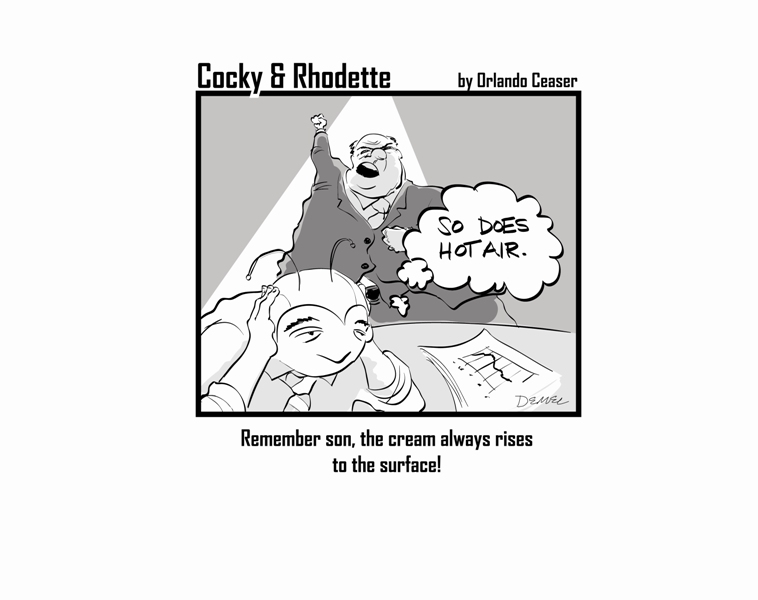
CreamRises

Speed is often admired in the communication process. A leader who makes snap decisions is seen as forceful, decisive and endowed with qualities that command attention and admiration. However, in some instances the quick decisions may mask insecurity, incompetence, lack of authenticity and integrity issues. The observer may miss the signs as they focus on the flashy presentations.

Difficulties in business relationships arise when the false and manipulative motives are discovered and revealed. Lack of integrity violates the rules of emotional intelligence as portrayed by Daniel Goleman in his book Primal Leadership. The snap decision from a disingenuous leader is pretentious and undesirable. They may be hiding something.

People with cruel intentions will ultimately be discovered. Perceptive people are everywhere. They will play the role of an investigative reporter and will eventually unmask the leader through the clues provided through their communication style. The early signs of skepticism may be initiated when snap decision are made without collaborating with others. This could be the tip of the iceberg that will lead to their downfall. A gut feeling may signal that something is wrong. The observer may decide to register their actions as suspicions and commit to keeping an eye on the leader. The unscrupulous leader may use their quick decisions to impress people, shield their incompetence or to ward off threatening opponents. But, their dishonestly will be discovered, because someone is watching them.

Quick decisions on their own are not a problem, particularly if based on familiarity with the situation and subject matter and a reputation of sound judgment. Snap decisions do not automatically mean a character defect. They may be the result of a keen business mind that thinks through multiple options with split second timing. These traits must be respected and appreciated. However, people have been known to make knee jerk reactions without thinking through all of the data and evaluating the options in order to hide their selfish or libelous intentions.

Let us take a moment to review, explore and extol the benefits of a leader being decisive.

If the leader is an effective communicator and demonstrates balance in their decision making, people are impressed. People are not tempted to look for problems. They analyze the messages from formation, to delivery, receipt and response and nothing seems out of order. When messages are filtered through the receiver’s value system, experiences and beliefs, the communicator seems perfectly in line.

People look up to and study the leader. They innocuously look for signs to learn how to communicate better and to ensure they are properly following the leader. Additionally, people;

• Pay attention to, notice and respond to more than the leader’s words. By this I mean, they watch the leader’s facial expressions. The non-verbal signals are launched before the verbal. It’s like lightning arriving before the sound of thunder.
• Messages incompatible with the leader’s intent are intercepted and clarified. They will clarify by saying,” I don’t think if I made myself clear.” They may ensure understanding by asking, “May I restate what I said?” They place the onus on the leader rather than on the receiver for the accuracy of the communication, which should minimize misunderstandings.
• The leader has an obligation to do their best to clear the arteries of communication. Then it’s up to the person hearing the message.

The first time the perceptive person (investigative reporter / listener) suspects there is something improper about the leader, they may feel uncomfortable. They know biases and prejudgments cause us to think the worst in human interactions. If they are objective, they may feel they could be biased against the leader because the leader may remind them of someone else, who dealt them a dirty deed. Initially, they may question their own judgment and objectivity.

The investigative reporter recognizes that it is wise to go slowly in such serious matters. They are patient and thorough, as they compile the information. They look for a trend in certain behaviors before jumping to conclusions. When they consistently see snap decisions made that devalue people, witness inconsistent messages that seem illogical, they are pressed into a deeper state of scrutiny. They do their homework and move carefully to gather data on relationships and careers that were trashed by the leader’s impulsive and damaging words.

There is a certain rhythm and communications in the workplace. There is a standard of how people should perform and how people should be treated. Invariably, you may find a leader with character issues, such as a lack of integrity and this will upset the rhythm of the environment through their communication style. Snap decisions in their hands are a weapon and a shield. When they are discovered, they should be replaced or the organization risk losing credibility for a lack of commitment to standards.

Snap decisions, that are the wrong decisions and those delivered for the wrong reasons, may cause continuous stress and conflict. They will create a constant state of turmoil due to internal and external pressure. But they may be an indicator of a major cover-up that is happening right before your very eyes

Don’t forget. Be impressed by quick decisions made by skillful leaders with the gift of discernment and execution. However, where they are made with insufficient data with a disregard for people, they may reflect a skill deficiency or the leader is hiding a major insecurity or character flaw.

Copyright © 2014 Orlando Ceaser

Secrets of Success in Sales and Leadership

This interview was given to Pharmaceutical Sales Representative Magazine and contains information that is still current and vital for today’s professional in any field.
“How do you describe your job? Do you feel that you are simply a salesperson whose only real duty is to sell as much of your products as you can? If so, this month’s column is for you! The average rep might get away with this mindset, but the best reps in this industry see their jobs in terms of both sales and leadership.

This month we speak with Orlando Ceaser, author of Leadership Above the Rim: The Poetry of Possibility. He has authored numerous articles, books and CDs, and has a comic strip on leadership, motivation and personal development. Formerly the Senior Director of Diversity for AstraZeneca, he is now a motivational communicator for Watchwell Communications, Inc, We speak with him this month to tap into his over 30 years of experience to learn how the best reps use leadership skills to get to the top of their field.

Orlando, you have worked with reps from a variety of vantage points. Why don’t we start by giving us a definition of leadership as it pertains to a pharmaceutical sales representative?

Leadership is defined in the eyes of the customer. The pharmaceutical sales representative, who helps their clients reach their vision of quality patient care, will be perceived as a leader. They will lead by example and develop credibility through technical expertise and outstanding customer service. Their responses to questions will be in the best interest of the customer. Their objectivity will create meaningful trusting relationships. They will be in the upper echelon of sales reps by using their talent, skills and resources to provide value and exceed customer expectations.

How do you see the industry’s most successful representatives using their leadership skills to advance their careers?

These individuals are not afraid to take risks. They will openly ask questions in meetings, volunteer for special projects and coach and challenge their peers. They recognize that each interaction is an interview, so their time in front of senior leadership is used as an opportunity to demonstrate their talent and tactics. They realize that the first step to a promotion is doing their current job to the best of their ability. The most successful representatives know that advancing their careers does not necessarily require a promotion or relocation. They may accept a lateral move, as well as a higher rung on the career ladder.

The successful sales representative will use a mentor or coach to help them improve their performance and counsel them on their career. They will develop advocates who are aware of their track record. These representatives are continuously learning and looking for ways to excel among their peers, by being competitive, but not in a negative manner.

If a rep doesn’t have a lot of experience in leading other people, where can he or she begin to get that experience?

Experience leading people can be gained on the job by taking the lead on projects and volunteering to assist their manager on special teams and with field training new representatives. They will gain valuable experience leading a team and learn to influence without authority. Additionally, there are opportunities away from the job where they can hone leadership skills. Sales representatives may volunteer in local community, religious, social, military and sports programs.

Sales representatives should let management know the scope of these leadership opportunities and the skills being developed. It is a good idea to have leadership development as a career objective and read books, take classes, attend seminars to help fulfill the leadership objective.

What do you think are the top one or two qualities and/or habits that make a great leader in this field?

Great leaders have the ability to rally a team to a cause greater than themselves. Marcus Buckingham, the author of First break all the rules and The one thing you need to know, says, “Great leaders rally people to a better future.” This vision of the better future is passionately presented, designed and executed. People follow because they can see how it will benefit them. Clarity in defining the future and optimism as they alleviate the fears of their team is necessary to keep them focused on achieving corporate and personal objectives.

What one or two qualities or habits do you think are very destructive in people who are in leadership roles?

I have noticed a number of leaders lose control of their organizations lacking integrity and trustworthiness. These are more than moral failing; they strike to the core of motivating a team to strive for the future espoused by a leader. If people don’t trust the leader this will impact morale, levels of engagement, productivity and sales results. It will also prevent the leader from retaining their top talent.

Additionally, in a global economy, leaders who are not inclusive or culturally competent will be a liability to their organizations.

What would you tell a representative who feels that they don’t have the basic skills or characteristics to be a leader? Perhaps they don’t like to be in the spotlight, or lack confidence in speaking out and giving their opinions, for example.

I would suggest reading books on leadership and discussing leadership skills with their manager. They may be mistaken regarding their ability to lead. In these current economic times, it may be a competitive advantage to acquire leadership qualities. For example, speaking up at meetings is a skill set that can be developed. Some people are introverts who like to process information differently and may take time to think through a response before commenting. Participation strategies and tactics can be devised to increase confidence and engagement. I know people who write down questions before and during a meeting to structure their thoughts. Others role play their responses before a meeting through mentally rehearsing their questions or practicing out loud.

Senior leadership makes decisions about the value of sales representatives from their ability to sell and their ability to lead. Expertise in selling today will cause leadership to ask the question, “Do they have what it takes to lead, tomorrow?”

The Humility Obsession – Suppressing your greatness

As children we were told to downplay emotions and not to brag about our talents. We were to temper our enthusiasm and refrain from taunting and trash talking. Too much celebrating was unsportsmanlike and might make the other players feel bad. Additionally, we did not want the other party to return the favor and celebrate in our faces. If we won, we should be humble and defer a lot of our positive comments to the performance of team. The more we could transfer the secrets of our success to the team, the better. Individual greatness was to be placed in the background. We should be graceful in victory or defeat. However, if we are not careful, this could work against us.

If we are talented, we should display the talent and refrain from arrogance, I get that. It is character building and appropriate to put team first, I understand the principle. But, unless we have a solid self image, a strong will and self confidence, we might develop a humility obsession, which could diminish our level of participation in various situations.
No one likes a braggart. This concept is clear. We are haunted by virtual and physical images of people being loathed for their “I am better than you” attitude. We have become so worried about being perceived as being stuck on ourselves that we run in the opposite direction. We feel out of place talking about our contributions, which could affect our self image and self-esteem. We don’t want to become unpopular. Therefore, some of us overcompensate and use excessive humility to project an incomplete, less potent version of our true self.
Have you encountered people with great ideas, but will not bring them up in meetings? They are not particularly shy or soft spoken. They often have many of these innovative thoughts, but do not want to come across as a know it all. They were told to be humble and this meant to keep a low profile.

A woman in the health club made the comment, “why can’t I see myself as my friends see me.” They told her that she was intelligent, creative and attractive, but she could not embrace those words for herself. She was caught up in the humility obsession and could not feel good about her appearance and intellect. Many of us tend to resort to self-deprecating words and behaviors because of the guilt we feel around placing ourselves at a higher level than those around us. We don’t want to be perceived as a target for ridicule which is often the case when people display a lot of confidence.

There is untold and untapped talent within our communities and corporations that will not step forward because of an inappropriate perception of humility. Some of these individuals are not shy or insecure, but may be driven to holding back their greatness because they were told to be seen and not heard.
This humility obsession causes us not to be satisfied with certain aspects of our career achievement or personal accomplishments. A humility obsession makes us afraid to take credit for our success. We fail to disclose the full range of our competence. We may not acknowledge the value of our role in achieving and exceeding objectives.
There are numerous solutions to the humility obsession. First, we need to concentrate on our motives and our intentions. Secondly, we should bask in our blessings and realize our gifts are to be shared with others to entertain, educate and inspire them to take positive action. We concentrate too much on the fall from grace if we jinx ourselves by being too proud of our work. “It is best to be humble rather than to be humble.” This is the mantra we repeat in our heads. We have what we have because of fate, so we shouldn’t get carried away with our role in the process. However, we must be thankful for our blessings and not feel guilty. Thirdly, we need to stop and celebrate who we are and what we’ve done. Our positive achievements should be a matter of record and we deserve accolades for the discipline required seek and secure excellence.

In my seminars on the Know system™, I take approximately 10 words from the word know to illustrate the Know System™ Decision Making Model. One of the keywords found in the word know is the word “on”. We have to be on at all times, which enables the people and resources we need to find us. When we are on message, on fire, on target or simply turned on, we are closer to being fulfilled. This also unleashes the winning instinct within us which drives us to become successful.

Humility has its merits. I am not advocating arrogant, obnoxious or condescending behavior. We should not be self absorbed or condescending. It is true that a bad case of arrogance can propel people from you rather than draw people toward. However, we must not use the humility obsession to deprive us of participating in life to the fullest. We should not use it to diminish our progress, success or achievements or to deprive the world of our skills, talents and abilities.

Humility is good, but a humility obsession makes us feel inhibited and unnatural when we want to express our greatness. We need to be secure in to allow people to utilize their talents and abilities and celebrate excellence without fearing ridicule from others. Humility if improperly used prevents us from appreciating the work we’ve done and the results we’ve achieved. We are worried about what people will say about us. We don’t want to be that person who is arrogant. But this aversion to arrogance can affect our confidence and self-esteem in the long run and cause us hours of discontent.
Copyright © 2014 Orlando Ceaser

6 Ways to be discovered at work

I remember many stories of people being discovered at some point in their career. This language is often associated with artists, entertainers and movie stars. The person or group was performing in a small nightclub and that night, a record producer was in the audience. The young lady was working behind a cosmetic counter and a modeling agent was stunned by her beauty. The painter’s work is shown in an obscure art gallery when seen by a critic. These situations also happen in the business world. A hard-working employee is brought to the attention of an influential manager, who inquires about their performance and subsequently takes them under their wing. A person delivers a presentation and suddenly, upper management is aware of their existence.

Many times, the act of being discovered was portrayed as being lucky, something beyond the individual’s control. However, life and experience teach us, that there are actions a person can take to put them in a position to be discovered. What is the secret to being discovered? What role can you play to ensure it happens to you or your people? Is it a matter of luck or do you play a major role in achieving the dream you deserve.

There are at least six things that an individual can do that will increase the odds of exposure and discovery. They are as follows:

• Professionalism and expertise
• Market yourself to the right people
• Visit places of the powerful and influential
• Ask people to view your work and give feedback
• Acquire an advocate
• Ask for recommendations

Professionalism and expertise

It is correct to assume that working at a very high level and excel at your craft will attract attention. If you are selling more product than your peers, this will eventually be noticed by people in higher levels of authority. If you are generating more ideas, working longer hours, volunteering for leadership roles on major projects, standing out in the crowd by asking pertinent questions, you will be noticed by influential people. Your expertise will lead to higher performance ratings and greater rewards and recognition.

Display character and a positive work ethic. This will draw attention to your career and people who can help you succeed. They will be attracted to your talent and pristine work history.

Market yourself to the right people

Find the people who make the hiring decisions or pull will the purse strings. Create a career plan that includes the components listed below, as tactics in your strategy. Share your success with the right people. Don’t be bashful; let them know how good you are without bragging. Always remember, “Every interaction is an interview.” My coach James Malinchak has a saying that is pertinent here.”ABM, Always Be Marketing.” Look for ways to perform your job and make people aware of your contributions. Be subtle, but effective in sharing your words to key decision-makers. Being discovered is the reward you deserve for hard work and dedicated focus. The right people can place you in a position to maximize your contributions organization. Position yourself so that people in power or those who have hiring authority can see the impact of your work.

Visit places of the powerful and influential

Place yourself in a position where you can be seen and heard by decision-makers. I know people who join groups and associations or volunteered because it placed them in the presence of important people. They were committed to helping others, but doing it in the presence of some of their managers provided an extra incentive. People in power like to align themselves with people with similar interests. Increasing your visibility and participating in similar activities, can accelerate the process of being discovered. This is a prime motivator for people to take up golf, tennis and other athletic activities. The presence of influential people is a lure for being discovered.

Ask people to view your work and give feedback

Many people love to assist someone who are committed to excellence and are anxious to improve. Hard work and dedication to excellence attracts people who want to play a role in your success. By asking people to observe your work and give feedback, it shows that you are open to improve your performance. The rapid implementation of their ideas will show them that you are sincere and respectful of their suggestions.

Acquire an advocate

If you acquire a person who is very interested in your growth and development, they will refer and recommend you to other people. As a matter of fact, they may be so excited about you that they will tell everyone about your potential, your talent and your ambition. If these individuals are highly regarded, their words of praise will help open doors for you. You will be amazed at the number of people that other people know who can benefit your career.

Ask for recommendations

Show your initiative by asking for the names of people who could help you. When you ask for the recommendation, ask them if they can let the other party know they have their support. I heard a statistic on a radio program that 70% of people landing new jobs were due to employee recommendations. If you want to be discovered, if you want people to know who you are and where you, recommendations can help speed along the process. Over time, you will master the skill of being in the right place at the right time, highly skilled and ready to be discovered.

Copyright © 2014 Orlando Ceaser

Leaders are not mind readers

There is value in leaders being aware of critical issues in the workplace. The quality of leadership decision-making is based on the quality of information or data on hand. You may feel that any leader worth their salt should have access to information that will help them do a better job. Leaders have many talents, but clairvoyance and mind reading are not within their skill set. Therefore, it is important for their teams to practice full disclosure on matters critical to the success of individuals, teams and organizations.

There are three areas I would like to emphasize to make my case. They are career status and updates, environmental hazards and new ideas.

Career expectations and updates

Current aspirations

Is your manager aware of your career expectations and personal goals? An employee became frustrated when he did not receive an assignment he cherished. He felt his performance would convince his boss that he was the ideal candidate for the job, but he never stated his interest. When I sold encyclopedias, I often used the ‘B’ volume for its excellent article and pictures about birds. The article began with a picture of a mother bird with a worm in her mouth. There were several baby birds in the nest. The question on the page was which bird will get the worm? The answer of course was the ones who made it known that they were hungry, by screaming with their beaks open. Individuals must vocalize their interest and make them known to their leaders by their actions.

Career alerts – changes in expectations

If you have career aspirations that have changed, wish to lead a project team and possess insight and ideas that could benefit the company, you must let them know.
Leaders have an understanding of your career limitations or restrictions. If this information becomes outdated or you have changed your mind, the only way they will know this, is if you bring it to their attention.

If you have changed your relocation flexibility, please keep your manager informed. Leaders are not like the notice included in your monthly bills. The notice asks if there is a change of address, please provide the new information. You must adopt the same procedure regarding career updates. It is also important for you to be objective when others around you are promoted who do not have your restrictions. You cannot be frustrated when others are moved ahead of you because of their ability to relocate to accept choice assignments.

Greg was very upset when a person with less tenure was promoted and relocated to the home office. He spread negative comments and felt it was unfair. When confronted with his displeasure, he indicated that he should have been considered for the job. When he was asked if his relocation restriction had been removed, he lowered his head and said it had not. He was reminded that he would have been in consideration if he could relocate. He was challenged to be more positive and to represent himself as the kind of leader who could be promoted in the future. He stated that that he wanted someone to ask him if his status had changed. He agreed to take responsibility for this task, since it was his career.

A reluctance to keep leadership informed on key aspects of your career can cause you to develop an unhealthy and unwarranted negative attitude towards leadership and the organization.

Acquisition of new skills

If you have acquired new skills through education or volunteerism outside the company, these new skills should become a part of your corporate resume. Skills such as organizing, administration and facilitation acquired on large civic, association or church projects might be transferable to the workplace.

Environmental hazards

A leader may not know about the poor working habits of some of your coworkers. These employees may not be shouldering their fair share of the work load. These individuals could be a drag on the team by damaging the morale of the group. These people are environmental hazards who could erode the culture of the unit. The attitude that says,” the leader is being paid the big bucks, so let them figure things out on their own,” undermines the effectiveness of hard-working individuals, the team and the organization. Failing to expose inefficiencies and ineffective people will eventually harm everyone.

If there are time wasting and budget draining activities, they should be discussed with your leadership as soon as possible. Ineffective procedures should be disclosed in a tactful manner.

A leader may inadvertently offend someone in your department or group. The manager may not be aware of this. Find a way to bring it to their attention, rather than allowing it to fester and endanger productivity.

The presence of such dangers may impair the well-being and effective functioning of the team. It is incumbent upon you to step forward and tell the leader. When you are close to the situation, you have the best view. The leader cannot read your mind and extract the necessary information. You must tell them.

New ideas

If you have talent and a skill set that is not been shared, maximum benefits are being minimize. Find a way to inform people about your gifts, whether in a meeting, by memo or through your mentor. If you have an idea or a better way of doing something, which could cost the company time and money, it would be a travesty for you not to disclose this information. The personal recognition and praise you receive could be financially rewarding.

Sharing information should not pose a threat to your career. If the organization punishes the messengers, you have to be very careful, but the information must be disclosed. You may handle this by participating in employee, satisfaction and engagement surveys, writing anonymous memos in suggestion boxes and / or relying on a trusted member of leadership in another department. The leader is not a mind reader, so you must adopt creative and straightforward measures to keep them informed about information vital to the well-being of everyone.

Copyright © 2014 Orlando Ceaser

6 Ways to Cope with Irreconcilable Differences at Work

There are relationships where both parties decide that it is pointless to continue. They do not and probably will not ever understand each other. They are constantly in a state of disagreement whether verbalized or not. Some type of discontinuance, whether separation or divorce is contemplated to dissolve their partnership. They have reached the boiling point of irreconcilable differences.

There are similar circumstances on the job. There is a cold, but cordial work environment. The job may even be hostile, intimidating and dead end without opportunities for advancement. People cannot get along with their coworkers or their supervisor. The tension in the air becomes unbearable but resignation is out of the question. Quitting for a variety of reasons would not be in their best interests. The economy is treacherous and finding a new job is risky. They have a family to feed and financial obligations.

Let’s bring the situation closer to home and make it more relevant. Your manager may be a jerk. She is making life unbearable. She cannot get rid of you because you are doing your job and have not broken any laws. She would rather have her person working in your position. She cannot remove you for fear of a lawsuit.
Additionally, you may have a skill set that the organization values and the manager cannot afford to get rid of you, but you no longer find the job challenging. You want to be promoted to another position, but they cannot see you doing any job other than your current assignment. You are stuck in corporate cement as opposed to career quick sand.
You are at an impasse. You can’t live with her and you can’t live without her. You have to cope with irreconcilable differences.

A manager for a small company inherited an employee who was a powerful, persuasive salesperson, but ultimately could be a liability to the organization. Management loved this individual and viewed him as a sales representative for life. However, the sales person had aspirations to be promoted. The more he was held to corporate standards, the more frustrated he became. One day in frustration, he stood up in a restaurant, pointed his finger at his boss and said these words; “I understand that you don’t like me and have never liked. If it was up to you I would’ve never been hired. If we can’t get along, we might as well get it on” (a reference to physical confrontation). The rep was at his wits end and surely felt he was coping with irreconcilable differences.

How do you cope with irreconcilable differences, when you cannot walk away from the job? What do you do when you have no place to go and are unable to leave your position? You must first acknowledge that the situation is toxic. A negative state of mind could damage your health and other areas of your life. Conduct an accurate assessment of your performance and career aspirations. Recognize that you may have played a small role in the bad relationship. The six tactics below may help you cope with irreconcilable differences at work. You may wish to debate these suggestions with co-workers and friends in order to arrive at a strategy that will work for you.

1. Make the most of the situation
2. Work hard and try to get transferred?
3. Work hard and try to get your boss transferred?
4. Seek counseling through the Human Resources Department
5. Recruit advocates – mentors, coaches or allies
6. Schedule a meeting with your boss

Make the most of the situation

This is generally seen as a grin and bears it approach. This does not necessarily mean for you to suffer in silence. You may look on the brighter side of things, such as being grateful that you have a job. You may display a positive attitude and devote yourself to the quality and quantity of work needed to excel. Through this entire process you must throw yourself into doing your best work, although you may not be fully engaged.

Beware of persistent anger. If you are constantly angry, you may develop ulcers, headaches and an overall feeling of grumpiness at work and at home. People around you will suffer with you; work performance will be stunted by your low level of engagement, because you are not happy. You can be patient and tolerate your plight. Your boss may leave the department through resignation, termination or promotion.

Work hard and try to get transferred

People have been known to put their nose and shoulder to the grindstone in hopes of working their way out of their circumstances. The prevailing philosophy is to work as hard as you can and be rewarded for your diligence and discipline. This strategy can work, unless your manager is working to undermine and missed represent your effectiveness. You can be driven to succeed, even in a toxic environment when you are growing your skills and working toward a goal.

Another manager, through networking with other departments, may request your services. They may become aware of new skills you required. Obtaining additional education and training may work in your favor and increase your value in the eyes of others.

Work hard and try to get your boss transferred

The same methods used above may catapult your manager into a new position. You may breathe a sigh of relief, but if the underlying problems have not been solved, this individual can harm your career aspirations from a distance. If there are misunderstandings that need to be addressed, you may have to face them courageously alone or have a trusted mentor intercede on your behalf. It may seem insincere, but you may have to act as if things are not as bad as they are, in order to survive. You may have to use your acting skills to minimize friction and give the illusion of a harmonious working relationship.

Seek counseling through Human Resources

Many people are reluctant to go to the Human Resources Department to complain about their manager or the environment on their team. They fear HR is working as the right arm of leadership and will sabotage their employment. Some companies have an Ombudsman who is present to hear employee complaints, which makes disclosure easier. If individual courage is viewed as foolhardy, the power of a group may be necessary to add additional credibility to your complaints. This is often the last resort when the person feels they cannot take it any longer; when the benefit outweighs the risks.

You have heard manager say,” you don’t have to like me or love me, but you must get the job done.” The same applies. Your manager or coworkers do not have to like you or love you but they must respect you, as you get the job done.

Recruit advocates – mentors, coaches or allies

You may have a mentor, coach or ally on speed dial or retainer to help you plan your strategy for coping with a manager who is out of control. They can advise you on the next steps take in dealing with your predicament. If the manager goes beyond acceptable rules and regulations, they can advise you on the approach to HR. They may also be helpful in calming you down and allowing you to see your role in any of the difficulties. It is always good to have consultants to bounce ideas off of to learn from their seasoned perspective.
You may have a trusted friend in higher places who can hear your tales of woe and help craft a strategy to make your life easier. They may talk to the guilty offending party or help you get reassigned.

Schedule a meeting with your boss

You can call a meeting to discuss your feelings and job performance. This will enable you to clear the air of all misunderstandings, so that your boss knows how you feel. Ask for their assistance in helping you achieve your goals for the betterment of the organization. Solicit feedback on the things you can do better to help them in their job.

If you try this approach before and it did not work, be careful. If you heard others try the same tactic and suffered, scratch this suggestion from your list.
A good leader would take your information and check the perceptions of others in your group. The appropriate corrective actions will strengthen the leader’s ability to achieve personal and team objectives.

It is important to strengthen the relationships with people at work. Invariably, difficult relationships will exist in the workplace. You may have to address the problem head-on, because walking away may not be an option. As uncomfortable as it may seem, coping with irreconcilable differences may be the only course of action.

Copyright © 2014 Orlando Ceaser

Success despite Misfortune tellers and Prophets of doom

You may not have experienced this personally, but you have heard people say they lack confidence because people verbally doubted their ability. Their abilities and value were challenged at an early age. They would never accomplish something. When they were older, they were told they were not qualified to do something or lacked the capacity or skill to achieve an objective. Their failure would be due to their socio-economic status, background, gender, race, culture, appearance or interests. These individuals were devastated and believed the negative remarks, hook line and sinker.

You may share my curiosity about people who go out of their way to predict a negative future about someone. They will not hesitate to tell a person that they will never earn a college degree, get into a particular college or program, and achieve a dream or a job, because of a limited vision of an individual’s potential. These misfortune tellers will frequently volunteer their assessment of a friends potential, as if it was a foregone conclusion. People are told that they will never be a leader, were not bright enough, tall enough, thin enough or good-looking enough to make it in this world.

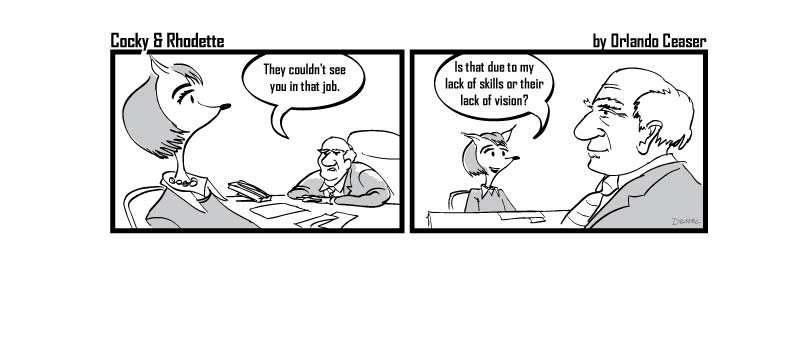
Lack-of-Vision

I walked into a room of new district managers after a merger. I was struck by the number of individuals present who were never supposed to be promoted. They wore the label of being unfit for management from their previous organization. Hell was to freeze over before some of them became managers. I looked around the room and arrived at the conclusion that the weather forecast for hell called for an ice storm of momentous proportions.

We look at these negative prognosticators, misfortune tellers, prophets of doom and dream killers, and wonder;

• Are they clairvoyant, bona fide, certified Palm readers?
• What is their success rate or track record of predicting events?
• Are they famous because of their success with the lottery, betting on horses or investing in the stock market?
• Do they have the best grades in school?
• Are they the highest performers on the job?
• Are they independently wealthy because of their ability to select winners?

The absence of such data, should disqualify people from seeing into your future and making judgments on what you can or will not be able to do. Why should we listen to these questionable, nonsensical projections without proof of their credibility? We seldom subject people to this kind of questioning. We take their word and grant them the influence to affect our lives. I wonder how they would answer these questions. A

Personal achievement and productivity in many segments of our lives are influenced by what people have said about us. The words of misfortune tellers have stunted the professional and personal growth of countless individuals. The words are devastating, but we give them added power by believing the words must be true. This belief increases the predictive power of words uttered by people who are mean-spirited enough to attack our dreams without offering any constructive criticism to help us grow. Their motives should disqualify them for conflict of interest. It may not be that they believed we would, but they wanted us to fail. Somehow our success might make them look bad, as they take it personally.

We have to be careful around misfortune tellers, prophets of doom and dream killers. Words have power and should not be used to predict a negative future unless they are used to instruct someone in a positive manner. Granted, some people may have unrealistic expectations of their potential and you may feel it necessary to bring them down to reality. This can be accomplished in a positive manner by directing them to an area where you feel their strengths are more appropriate. This of course should be done if you have the right experience, skills and credentials. If you don’t feel someone can do something and it’s just your opinion, you must evaluate the reason for bursting their balloon. You may need to show wisdom by being silent and keeping your opinions to yourself.

The prophets of doom, live in the world of the worst case scenarios. They can be destructive if they only and always paint a picture of the worst case happening to you. Frequently, they point to personal characteristic or circumstance that you cannot overcome. They can depress you and cause you to give up trying, if they consistently fill your head with negative expectations.

The following chart should be helpful when faced with naysayers who are running around with sharp objects, leaping in the air to burst your balloons. The balloons represent your goals, dreams, positive intentions and lofty expectations.

canbelieve
If people say you can’t do something and you believe them, chances are you will prove them right. You will be discouraged and doubt your ability to go against their predictions. You give them the ability to influence personal perceptions and actions.

If someone says you can’t do something and you do not believe them, you will do everything within your power to prove them wrong. Their perception of you will drive you to higher levels of performance. You ask yourself, what gives them the right to say that about you, they don’t know you. You will show them how wrong they are about you.

If someone says you can do something and their belief is consistent with your perception, you will work in concert with their expectations. Your performance will more than likely be inspired, as you validate your personal convictions.

However, if someone says you can do something and you do not believe them, the result would be as if they said you couldn’t do it. Your lack of confidence and weak belief in yourself would undermine your success. There are instances when someone’s belief in you is greater than your belief in yourself. If they are persistent, you may eventually see what they see in you. It is important for you to keep an open mind and consider them a good judge of character. It is very difficult to achieve something if you do not believe it is possible. If you cannot see yourself performing in a certain role, it is difficult to achieve it or succeed in it.

Your belief system is a central part of performing to meet your expectations. There may be instances where outside forces will try to derail your progress, but a healthy self image, positive encouragement from others and a persistent drive to excel, will work to your advantage. In a competitive world where misfortune tellers, prophets of doom and dream killers work to stifle your achievement, you must be vigilant in growing skills, protecting and projecting confidence in your abilities.

Copyright © 2014 Orlando Ceaser

Strong Leaders: Strong Enough for Their Teams

Strong enough could mean having sufficient energy, capacity and emotional and intellectual fortitude to challenge the status quo, as you look into the future with strategic vision. Strong enough for your team could mean you can be counted on to flex your leadership muscles to protect your team and get the most out of them. Strong enough for your team could describe the charisma and the tenacity exhibited as you demand the performance and execution required for success.

Boot camp for the military and training camp for athletic teams are conducted to ensure their members are mentally and physically fit; that they are strong enough to compete in battle or competition. We need a managerial or leadership equivalent of these events to ensure managers are strong enough for their teams. Are they strong enough to lead? Do they have what it takes to deliver what is required by their team to help them function at their highest level of performance? Are the managers the catalyst to continuously develop teams to deliver world class results?

Performance evaluation

Strong enough for their team is apparent during performance evaluations. Companies encourage employees to provide input which is included in the final written document. This input gives the manager insight into how workers see their performance. If the employee is candid, they outline their strengths and weaknesses, as they perform to reach or exceed their goals. The final document should be largely constructed using a perspective gathered from the boss’s observations. Otherwise, the employee will question the strength of their leader. Also, some people have an inaccurate view of their performance and strength is needed to deliver an unpopular message.

Organizations are concerned about inconsistencies in managerial judgment across their management teams. They want to guard against some managers being easier on their people than other managers. People have been known to receive an excellent rating from one manager which would not be excellent in the eyes of another manager. This disparity leads to some people being rated higher than they deserve. Organizations try to minimize this problem by a process known as calibration. These organizations have meetings with their managers and discuss their team and individual team members. Members of their peer management group will have an opportunity to question, challenge and give input into the performance of people on other teams. Each manager’s interpretation of their team performance is open for discussion and sometimes, a heated debate. Calibration is often a competitive event and the manager who is strong enough derives the appropriate benefits and impressions for his team.

A strong enough manager is required to competently represent their team in these calibration meetings; otherwise their team will suffer when challenges are made. These challenges have performance rating and financial implications. A manager who is strong enough supports their assessments with a strong written evaluation. They also have strong verbal communication skills to state their case and fend off any challenges. Timidity and poor verbal skills may stifle the growth of individual team members if the manager’s peers do not gain an accurate assessment of their abilities.

Additionally, managers also convene to discuss the talented individuals on their team in the succession planning meetings. These meetings are held to evaluate talent to fill vacancies and to ensure they have qualified candidates for promotions to build a pipeline of talent for the future. A manager must be strong enough with their communication and analytical skills to state a solid case for their top talent.

Strong enough to challenge

Managers have to be strong enough to stand up to their people for their own development; to ensure that they are giving their best efforts. They must be tough enough to make the hard calls and replace individuals who are a poor fit for the job and the organization. I heard one manager say, in frustration,” I should have fired him 15 years ago.” He was lamenting the fact that the current leadership would not be wrestling with this problem person if he had done his job many years earlier.

An employee from a major airline was distraught when they discovered that their manager was not strong enough for them during a major restructuring campaign. The team was decimated and many individuals were cut from the organization. A manager, who was strong enough, may not have prevented everyone from receiving a negative verdict, but the people would have received a fair trial.

A creative director was frustrated every time senior leadership disagreed with her when she pitched a new proposal. Her boss was always present and frequently left her on her own to defend her project. She knew she had his support outside of the meeting, but wanted him to come to her assistance when she was under fire. If he had been strong enough for his team, even though her programs were denied, she would’ve been motivated, knowing that he was in there fighting along with her.

Managers who are too strong

Some managers have a bully personality and are disliked and not trusted by their peers. Their reputation could work against anyone associated with them. These managers are viewed as tyrants and suffer from being too strong or too forceful in their business relationships. They make a lot of enemies and sometimes revenge is taken against anyone they support, especially anyone seen as their protégé.

Some managers are viewed as difficult to work with by outsiders. When asked about his leadership style, the employees gave favorable comments. The manager gave them exactly what they needed. He was matching toughness with the needs of his team. They said he was fair, disciplined and had their best interests at heart. The secret was to apply the right amount of strength to the right situation.

The objective of the strong leader is to be strong enough to be effective in every dimension of their job, to achieve the best results.

Copyright © 2014 Orlando Ceaser

A leader should stand by, with and for their team

Stand by your team

A manager felt his people would go through a brick wall for him. He based this on their belief that he would do anything for them. They knew he had their backs. This dedication and loyalty led to higher sales results and productivity. He created a culture of excellence, enthusiasm and trust.

The manager was known to stand by his team. When they are in need of guidance and resources to compete in difficult situations, he was known to stand by them. In today’s marketplace, there is a fair amount of angst about the future and employees role in it. Standing by your team allows you to detect any anxiety and address it with encouragement and skill development.
You can quickly squash rumors that are not true, before they become a morale problem. Immediately provide whatever information you can, within your leadership obligations, to ensure they are focused on the things they can control.

If the team misses the mark and fall short of achieving a goal, they are not thrown under the bus. They are held accountable, but you as their leader, takes them through a rational analysis of what went wrong. You are on the front line developing strategy and corrective measures. Your aim is to exceed the goal, so that the shortfall does not happen again.
You want your team to be a well performing unit, exceeding objectives. This is the best way you can diminish adverse situations. Being focused on excellence and driving productivity will build their confidence on the current job and prepare them to confidently answer interview questions for the next assignment.
Stand by your team as a strong role model who is authentic and committed to their development. This will enhance their performance loyalty and trust.
Stand with your team

It is critical to also stand with your team in skirmishes to drive market share. You have a history with them. Your relationships were strengthened in the trenches. You made sure they were informed about every major decision and the reasons for those decisions. You felt that if they were more informed about the intricacies involving the decisions, it would build trust in your leadership. Patrick Lynn Lencioni in his book, “Three signs of a miserable job,” speaks about each individual’s need to be known, to feel important and able to gauge their progress and level of contribution to the organization. When they feel connected, this has a positive influence on engagement and results.

If you stand with your team, your praise and proximity will indicate that you care about them and they are not just a means to an end. You value them as individuals and are committed to their success. You stand shoulder to shoulder with them in the day-to-day struggles in the marketplace. You are not afraid to roll up your sleeves and help them do the work. You are willing to ask them their opinions and implement their suggestions. Where there suggestions have merited, they are implemented and they are given the credit. They know that you are the boss, but you do not hesitate to show that you are so committed to getting the job done. This leading by example sends a powerful message.

When you stand with your team, you make sure that each individual knows their job and does their job. You are not a micro-manager. You are always open and committed to their development. You want them to be more efficient and effective and willing to offer suggestions to improve their performance while living up to their responsibilities.

Stand for your team

Thirdly, you should stand for your team. Be the proud representative or your team, department or organization. You are aware of the hard work they put into excelling on the job and you want to promote their excellence to anyone who will listen. You want to represent each member and the entire group to people who can have an influence on their career.
When you stand for your team, you openly and willingly engage in conversations about their talents, gifts and skills. You expose your team to knowledge, individuals and other resources that expand their experiences and expertise. Additionally, you are not timid about challenging them to higher levels of achievement. Your expectations are high, because you know they can do more.
There are times when your team will seem to take your performance personally. They want you to stand out among your peers when there is any competition. They watched with pride as you make a presentation on the agenda with other managers. You are their boss. You are representing the team and they are bursting with pride.

When you stand for your people you are loyal and not always looking to change teams for your personal benefit. You are committed to the productivity of the group. You select and develop a strong core of hard-working, ambitious people who crave recognition and rewards for their excellent performance. This strong core is being groomed to work as a team. They have the complementary skills necessary to exceed aggressive team objectives. They enjoy their jobs. They are fully engaged. They look forward to going into battle every day with everyone on their team. They are looking to you as their leader. They see you as their ally, an advocate against any adversary who stands in their path.
To maximize your effectiveness as a leader it is essential that you stand by your people, stand with your people and stand for your people. The results will be amazing and will enable everyone involved to reach levels of performance that are personally beneficial and a windfall to the team and the organization.

Copyright © 2014 Orlando Ceaser