DEI Essentials

Profitable Possibilities

DEI Essentials 
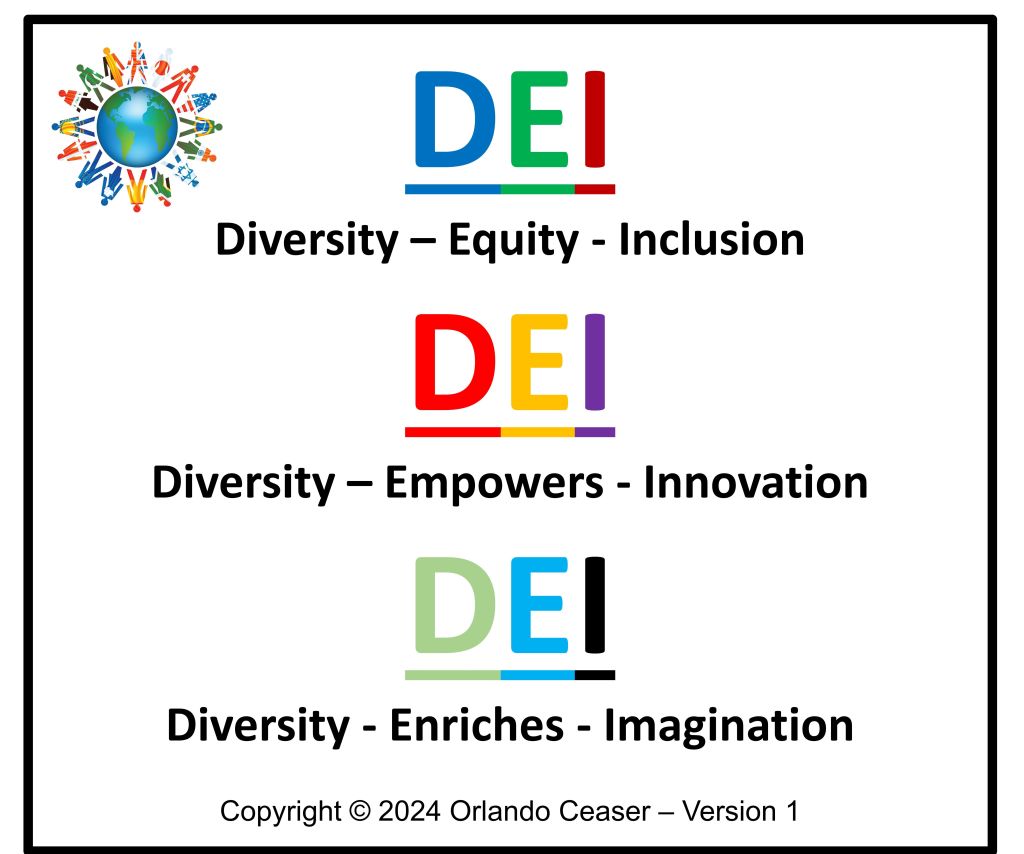
DEI stands for Diversity, Equity, and Inclusion, but there are many positive variations on these words that express the intent of the strategy and tactics for everyone.

DEI is the code of discovery that can unlock new paradigms of potential, imagination, and innovation. People think of DEI as separate from meritocracy, however, fairness would suggest that equity is essential when measuring and rewarding performance. DEI Essentials is a phrase to describe the necessary and seldom considered attributes associated with diversity, equity, and inclusion. These positive expectations and ancillary benefits are constructive. When DEI Essentials are present, there is synergy formed with the interaction of diverse and creative exchanges. They affect us on a personal and business level, enhancing decision-making, problem-solving solving and innovation. It is imperative to isolate and identify these assets to engage minds and develop better solutions.

DEI Essentials extract the best from everyone, creating a climate where dignity, respect, empathy, cooperation, and compassion are natural values. The results are a coordination of resources and ideas that lead to innovation and successful interactions. As we encourage fairness, involvement, and ingenuity, we set up an inclusive environment where people care and share, and dare to declare their greatness through strengthening relationships. We must maintain the desire to build relationships and cooperation, for they are critical to success.

“Diversity, equity, and inclusion

Must endure the chaos and confusion;

And emphasize positive potential,

And focus on DEI Essentials.”

  • Orlando Ceaser

DEI Essentials are necessary components if we want to achieve the ultimate state of effectiveness. They contain bedrock values and are the cornerstone of a thriving enterprise. They allow us to continuously push the envelope to greater frontiers. It is built on open representation, equal access to opportunity, and stimulating contributions to ensure people bring their best talent and ideas to the table. We are tapping into reservoirs of potential and possibilities.

Diversity Essentials

Diversity Essentials are characteristics that manifest our uniqueness, variety, distinctiveness, and perspectives. We developed our character through education, culture, exposure, experiences, and expertise. Diversity Essentials comprises the ways we are different, including the visible and invisible, seen and unseen. It captures the different generations and their interests. Baby Boomers are eliciting the talent and genius of Generation X, Millennials, and Gen-Z. It is an invitation to all people and ideas.

When we look at a definition of diversity, everyone should see themselves in it. We may be altruistic to a certain extent, but we need to see ourselves featured to feel as if we belong; for inclusion is a natural desire.

More of the distinctions and descriptions that describe how we are or how we feel are as follows.

Ability status, age, background, citizenship status, class, culture, development stage, educational level, ethnicity, extroversion, family status, function, gender, generation, immigration status, introversion, language, leadership styles, learning styles, life experiences, life styles, love languages, mindsets, national origin, organizational levels, other, outsider, personality types, physical attributes, political affiliation, race, regional origin, religious beliefs, sexual orientation, socio-economic status, spirituality, thinking and working styles.

Diversity Essentials are strategic business decisions that ensure that company personnel and representation reflect the customer base, community, and availability of talent. They are spontaneous revelations that believe in Win/Win situations. Diversity is more than race and gender. It is not a monster or the boogeyman to cause fear and loathing. It wants us to cultivate our abilities for the widespread improvement of projects, people, teams, countries, and the planet. Where it is practiced, organizations thrive financially in a robust culture of cooperation and innovation. Joel Barker, a Futurist who popularized paradigms and paradigm shifts, said, “Societies and organizations that most creatively incorporate diversity will reap the rewards of innovation, growth, wealth, and progress.” He also said many innovations are attributed to the outsider because they bring diverse perspectives to an opportunity.

Diversity Essentials recognizes our special nature and characteristics. We benefit extensively from the fortuitous value of working together and learning from each other.

Diversity Essentials harmonize these traits in an environment of acceptance and belonging, which allows each individual to be free, fulfilled, and fruitful.

Equity Essentials

Equity Essentials cultivates respect for fairness and the potential to be treated fairly to reach our potential to express our greatness with unfettered access to opportunity. There is an expectation of excellence. Meritocracy is a key component because the organization cannot function successfully unless it is staffed appropriately with hard-working, highly skilled employees.

Equity Essentials must be established and verifiable to potential and current employees, as well as investors. Equity Essentials assures us that we are attractive to top talent. People are attracted to places where sound, enforceable policies are in place. They wanted to be treated fairly in a setting of equal opportunity. Employee reaction should be validated in company surveys and individual conversations.  People do not feel they have an equal opportunity where favoritism and nepotism run rampant without leadership emphasizing fairness. It is one thing to have written policies against favoritism and nepotism, but if they are not enforced, they are meaningless.

Equity Essentials provides feedback on micro-inequities, bias, acceptance of generations, and increasing engagement levels. They educate us and improve our awareness of anomalies that are barriers to high performance. Integrity is an integral part of our operations, and we must elevate and celebrate core values that reflect who we are and want to become.

Inclusion Essentials

Inclusion Essentials are premeditated acts to involve others. We are pieces to puzzles and may contain missing perspectives and ideas for concepts, programs, and problems. We may have what is needed for the evolution, development, and growth of our peers or mankind in general. We cannot afford to isolate individuals who may hold the keys to our success.

Inclusion Essentials may manifest as practices, rules, and regulations that establish a climate of access and full participation. People want to be accepted in an environment of authenticity where they genuinely belong. When people know that they are valued and aligned with high expectations, in a caring group, they will not want to disappoint us. When we hold them accountable and solicit their contributions, they will stand up and stand out. There is joy in being part of something larger than each individual. They will bask in the association of being connected to fulfilling and worthwhile work.

DEI Essentials flourish, as it nourishes inquiry, constructive relationships that lead to better coordination, problem solving, and reduced conflict.

DEI Essentials promote a level playing field where individual talent and effort are encouraged and rewarded. People willingly release energy and discretionary effort as they engage in excellence and are committed to a cause greater than themselves.

Copyright © 2025 Watchwell Communications, Inc.
DEI vs VEI – “Variety is the Spice of Life, Imagination, and Innovation”

DEI is a strategy to alter the climate in the workplace, build company culture, and capitalize on different talents and perspectives. It reflects customers’ makeup and ensures that many groups are represented. DEI is also necessary to ensure that organizations have a workforce that meets their staffing needs. However, despite its intent and documented positive results, DEI is controversial. Many believe that when DEI is implemented correctly, it is effective and has company and employee benefits.

The word diversity is primarily linked to affirmative action and reverse discrimination. Diversity is more than race and gender, but some people fail to see this. DEI applies to many valuable attributes and creates an environment where innovation can enhance teamwork and improve company culture. Equity and inclusion should be human rights. A successfully implemented DEI strategy in your culture is a win-win proposition. Additionally, it helps employers staff organizations today and in the future.

The variety among members of our species is visible and invisible. We have idiosyncrasies, peculiarities, and eccentricities that make us stand out from our peers. People should realize that their uniqueness is not a weakness, but a viable asset. DEI allows this to happen.

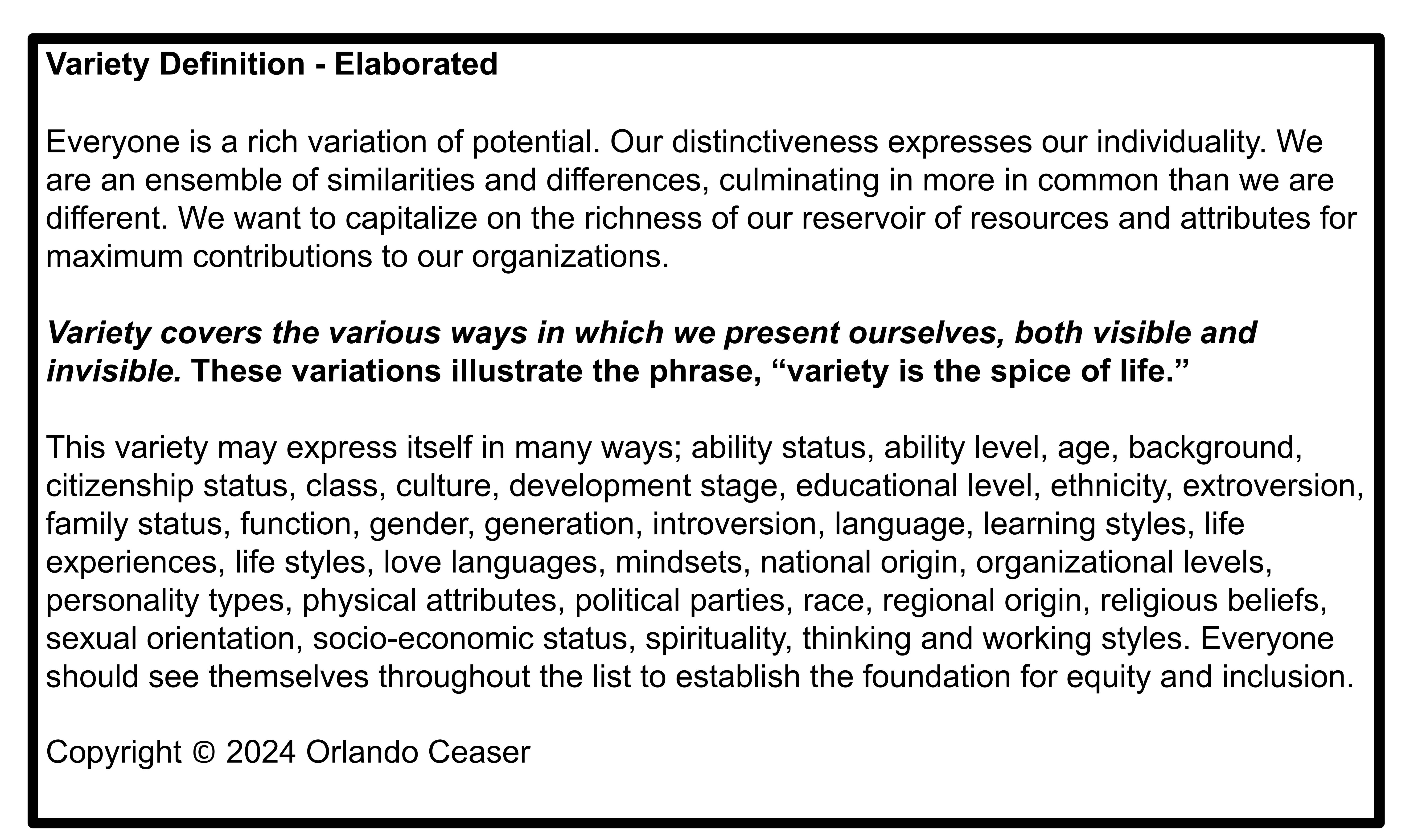
Consider the following kaleidoscope of values that highlights our differences. Everyone should see themselves in multiple words in the definition. When this is observed, it is not seen as a special program only for particular groups of individuals. Additionally, one does not feel left out and excluded.

Despite challenges to DEI, many organizations have remained steadfast in their commitment because they have seen the business transforming power of DEI. However, others have removed their support, due to pressure and negative impact on business. For example, consider the situation with Bud Light sales when a boycott was engineered after a social media post featuring a transgender actor. Bud Light went from number two to number three in sales and they had to shuffle company executives to distance themselves from the controversy.

Eliminating DEI programs prevents people from experiencing and benefitting from the fullness of DEI. Resistance to history, unconscious bias, micro-aggression, micro-inequities, and other diversity training are lost opportunities to better understand each other.

I propose the ‘V’ word, as a replacement for individuals confounded by the ‘D’ word. The principles present in DEI are valuable to all employees. We want to create an accepting, fair, inclusive, and belonging climate. Ultimately DEI can influence imagination and innovation. Variety should be used to accentuate our similarities and differences for growth and development.

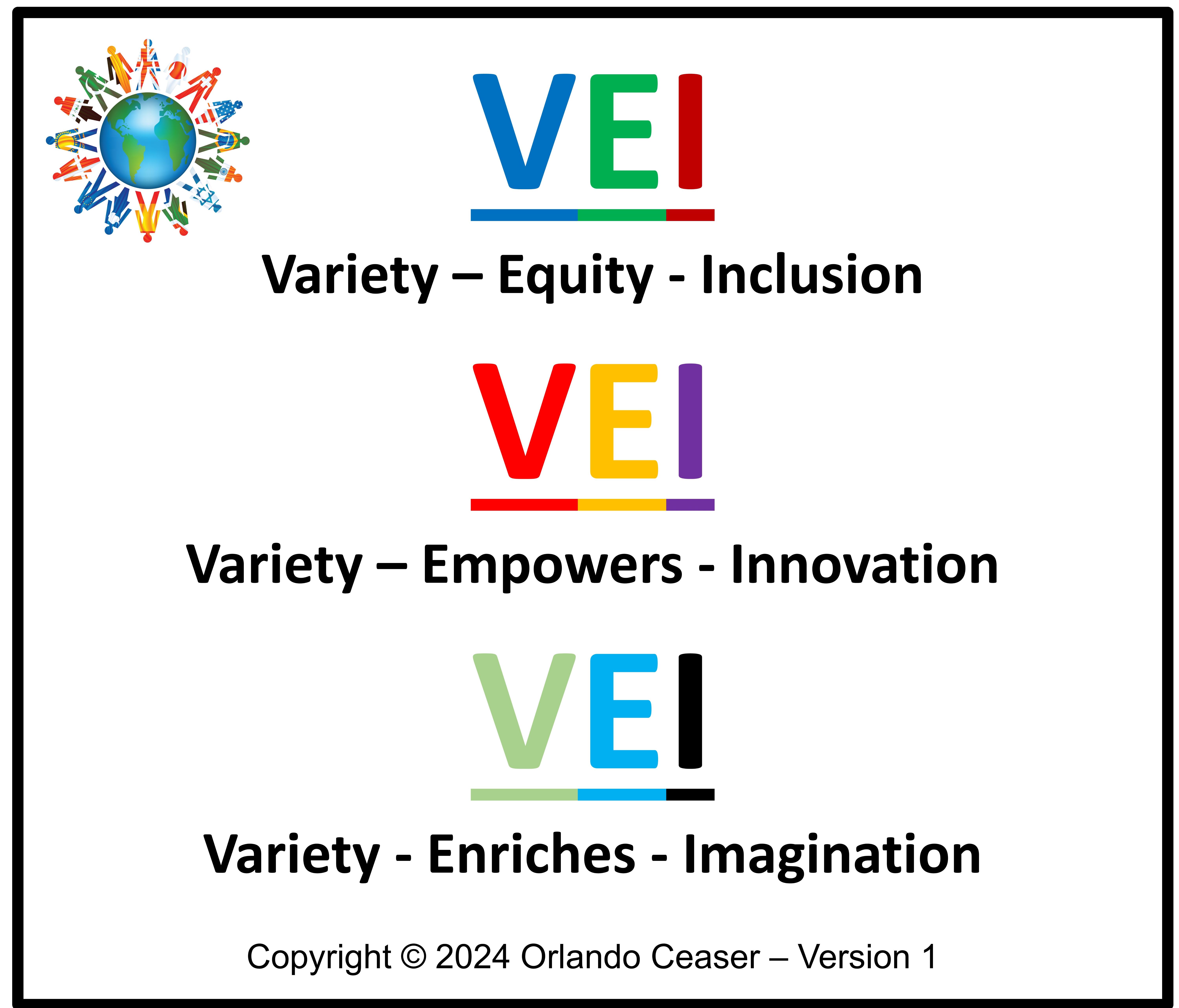
Variety in the acronym may minimize controversy. I reworked the chart using variety as a neutral word for diversity while maintaining the highlights.

VEI addresses the advantages of our distinctiveness. We can enhance value by creating a positive company culture, where individuals and teams perform at a higher level.

Everyone has distinct qualities that make us unique. Variety as a replacement word may allow people to come to the table and use their various and sundry skills to bring out the best in everyone for the good of everyone in the enterprise. My premise is that substituting ‘Variety” for “Diversity” will help us achieve benefits for all employees.

Copyright © 2024 Watchwell Communications, Inc.

DEI & Rudolph the Red-Nosed Reindeer – “Uniqueness is not a weakness”

Gene Autry was a military hero, who became an actor and singer. He sang the Christmas classic, “Rudolph the red-nosed reindeer.” It is a delightful song, enjoyed by young and old. However, this cheerful song delivers a powerful message about encountering and handling differences. Let us examine Rudolph the red-nosed reindeer and its meaningful conversations about diversity, equity, inclusion, belonging, and accepting others.

The song begins with a reference to the reindeer popularized in Clement Clarke Moore’s, “The night before Christmas”, also known as “A visit from St. Nicholas.” It begins with a roll call of Santa Claus’ reindeer that of course omits the name of Rudolph. As you recall, Rudolph was different from the other reindeer because of the luminescent quality of his nose. His nose was so shiny that it had either reflective qualities or it glowed like a light. This was enough to make him the object of ridicule and ostracism by the other reindeer.

This lack of acceptance is seen when children and adults are confronted with someone who is different from them. Our initial response is to make fun of the person and then isolate them because of their characteristics, traits, heredity, or idiosyncrasies. We may recall when we were young and begged for acceptance and approval. Even to this day, there is something about us that makes us stand out from the crowd. We feel self-conscious and wish that our difference could go away. If possible, we will change our stories and appearance so others will like us. When we are new and different, we carry a tremendous unnecessary burden. We view our “uniqueness as a weakness.“

At work or in school, simply being the new person, the new kid on the block, the person who is unknown, becomes a source of teasing or isolation. We often wondered,” if they would only get to know me, they would see that I’m just like them. I am a good person. “Rudolph was a reindeer, so he surely had a similar appearance, except for his nasal peculiarity. But suppose he was of a different color, from a different region of the country, or had a different ability. We usually ask the different parties to fit in, when the real focus should be on including and accepting them into the group.

Bullying is also a response shown toward those who are different. The song does not indicate that Rudolph was bullied, but we can only assume that preventing him from “playing in any reindeer games” was not accomplished in the most delicate manner.

The song does not tell us what Santa Claus was doing during the hazing or if he even knew about it. But, as a good leader, he engineered a very strategic response. He knew the talent and value of all his reindeer. He evaluated the weather system for his next journey and realized he was going to encounter many blizzards. He knew the problem could be solved by the reindeer, but he needed to show his acceptance of Rudolph the talented reindeer. The leader has vision and can often see what others cannot.

Santa Claus knew the skills and abilities of each reindeer. He knew that the appropriate circumstance would allow for each skill to be revealed. He knew Rudolph had a special gift and could provide navigation assistance on those wintry nights when delivery of toys to children around the world, would be difficult. Snowstorms would provide opportunities where others, including the reindeer, could benefit from the gift of Rudolph, the red-nosed reindeer.

We can give Santa credit for waiting for the appropriate time to unveil his strategy. He could have given the reindeer the opportunity to work it out amongst themselves, as so many people do in similar situations. We would say such things as,” kids are just being kids, learning to navigate tricky situations will only make the recipient stronger and teach them valuable life skills. We say that which does not kill them will make them stronger, to paraphrase Friedrich Nietzsche the philosopher. The reindeer performed similar initiation rites to others in the group that had other distinctions from their peers. They saw their treatment of Rudolph as being harmless and natural.

The defining moment came,” one foggy Christmas Eve, Santa came to say: Rudolph with your nose so bright, won’t you guide my sleigh tonight?” Many managers, leaders, and parents look for the opportune moment to use the skills of their people; the right moment to show the world and the individual their true value. However, it would be prudent to consistently look for ways to utilize the talents of their people. They should know the coordinates of their subordinates, so they can meet them where they are.

We can only assume that in the fictitious conversation, Santa’s encouraged Rudolph and told him about the value of his difference. He made him feel that he was something special and should never feel that he was not important and did not have a place. I’m sure he made him feel like an essential member of the team. He validated his worth by asking him to lead the team by moving up to the front of the line.

You remember the successful conclusion to the song. “Then all the reindeer loved him, as they shouted out with glee, Rudolph the red-nosed reindeer, you’ll go down in history!” We know that in life, responses to differences may not always lead to a happy ending. Sometimes the individuals have lingering insecurity, damage to their self-esteem, and underlying resentment from the initial exclusion. But, when the difference that is ridiculed or denied is used for the benefit of the group, the organization, institution, family, or community becomes more vital. Everyone learns a valuable lesson about diversity, equity, inclusion, belonging, and acceptance. We are hopeful that when the person is accepted, they don’t become complicit and act in the same manner when they encounter other people who are different.

Suppose we remember the Rudolph days of our lives and commit ourselves to preventing them from happening to others. In that case, we will maximize their future contributions to our teams, families, organizations, and communities. We will perform a noble act when leading by example with the lessons learned from Rudolph the red-nosed reindeer.

Unlock Your Leadership Greatness and other leadership resources can be found at OrlandoCeaser.com or amazon.com.

Copyright © 2013 Orlando Ceaser

The Magic Words to Openness and Belonging

One of my favorite stories was Ali Baba and the 40 Thieves. What I remember most is the secret words that opened the side of the mountain and revealed a phenomenal treasure. The magic words were, “Open Sesame.” I often wish there were such a phrase we could use in our interactions with people. This iconic phrase would make them feel comfortable enough to share their inner treasures with us. When they are comfortable, accepted, and included, suspicion would disappear. Defense mechanisms would not be activated, and evasive tactics would not be employed.

In our current environment, we need to understand people who are different from us. We value diversity, equity, and inclusion. However, employees often wear invisible self-preservation armor for protection. How can we share our interests if we are not comfortable with each other? Silence, lack of participation, and minimal interaction are diversionary methods. They may seem like a good idea, but the lack of openness may be counterproductive. I support an environment which is an OASIS (Open And Share Information Safely). People in this climate will unleash their full potential and feel a sense of belonging at work.

A constant refrain I heard early in my career, was that people did not know me. People wanted me to tell them more about me, so that they could identify with me. They wanted information outside of work, about family, interests, beliefs, and hobbies. But I was reluctant. Initially, I felt full disclosure, would lead to overexposure. Eventually lowered my shield with certain people, after I developed trust in their intentions.

There are reasons for being guarded; reserving or withholding feelings. We may hear, see, or experience events that prevent us from revealing too much. I engaged in many conversations over lunch. During these discussions I learned the difference in perspective that existed among my peers. During one such conversation, we discussed discrimination. The opening premise by a well-intentioned manager, was that the only kind of discrimination that existed in the United States was economic. They went on to say that if you have the money you can live anywhere without any difficulty. This perspective differed from my personal history and my knowledge of many celebrities who encountered problems in certain neighborhoods. There were broken windows and graffiti and reckless damage to their property. It became clear to me, from this discussion and others, that our different experiences shaped our perspectives, which caused us to view the world differently.

People retract like a turtle or armadillo when they do not feel safe. They will not take a risk or step out on a limb with their perspectives and opinions. I knew someone who went as far as to not place family pictures on their desk. They wanted to separate work from home and keep the company out of their personal affairs. When we open ourselves, we will see the similarities that accentuate our differences and create a powerfully productive connection. I would call this a piece offering. By piece offering I do not mean peace, as in the absence of war, but piece, as in giving them a part of ourselves, to open to a greater dialogue and understanding of each other.

There was a manager who told every ethnic joke imaginable. He was humorous at the lunch table and people enjoyed his witty stories. One day, I pulled the manager aside and said, “I am probably depriving you of some of your best material, by being present here.” He paused, thought, smiled, and looked me in the eyes and said, “you’re probably right.” He did not receive points for sensitivity and not bringing up those stories in my presence. I could argue that he was careful, but the stories may have been told, but not in my presence. If the stories existed for others, they also existed for me and should not have been part of the workplace.

If we are to understand each other better, we must open to each other. If we are to open to each other, we must create a climate where people feel comfortable, accepted, included, and treated equally. There are not any magic words to convince people to be vulnerable. However, by giving of ourselves, even small amounts, and to create the right climate, we can set the stage for a marvelous relationship based on trust and reciprocity where people feel safe. Ultimately this results in a workplace with productivity and innovation that is beneficial for everyone.

Copyright © 2021 Orlando Ceaser

Check out my web-sites at OrlandoCeaser.com and Watchwellinc.com for more content and resources. Contact information is also available at the sites.