
Take My Advice and Be Nice

I have a twist on a common adage. Nice guys finish, instead of nice guys finish last. Many times, we attach a negative to the concept of being nice. We view niceness as a form of weakness. If someone is nice, we see them as vulnerable, and subject to being exploited. But the definition of nice does not concede toughness and effectiveness.

Dictionary.com defines nice as, characterized by, showing, or requiring great accuracy, precision, skill, tact, care, or delicacy. Miriam-Webster dictionary lists synonyms for nice to include kind, polite, pleasing, agreeable, appropriate, fitting, socially acceptable, virtuous, and respectable. We could also include trustworthiness.

The definitions and synonyms paint a picture of attributes that we should admire in each other and our associates. But something is lost when we decide to filter nice through the lens of our prospective, and degrade, mislabel, and misinterpret information. These misconceptions may cause us to be condescending and devalue the people who work for us and underestimate their performance.

A company surveyed their customers in a customer satisfaction exercise. They wanted to see, through surveys and interviews, how their sales representatives were perceived by their customers. The word nice came up consistently relative to their competitors. Each group of interviewers reached the same conclusion. The clients enjoyed being with the sales of representatives and thought they were, nice.

The company decided that the word nice was a deficiency and needed to be changed in the minds of the prospects. They viewed nice as weak and therefore, ineffective in a maliciously competitive environment. Nice was a part of the corporate brand in the minds of their customers, which needed to be changed. Nice was not good, and everyone knew that nice guys finished last.

An anti-nice message was delivered to the sales team. They were made to feel inadequate versus competitor companies. Tension was created between the Home Office and the sales force, as they launched allegations against each other. This was a perfect opportunity to capitalize on the relationships built by the sales team with their customers.

Since they owned the nice space in the minds of customers; rather than viewing nice as a negative, building on this favorable perception was an option. Rather than work on a make-over to change their sales representatives into the image of the dominant competitor, exploit the niche of being nice. They should use the perception of nice to gain permission to ask the right questions. They should use the attribute of nice to increase customer interactions and create a space to ask for more business.

Relationships are a key part of the sales process. Individuals with high emotional intelligence can translate this skill into greater customer service, greater customer confidence, customer loyalty and greater sales performance. People like to buy from people whom they know, like, trust and respect. Nice individuals may have skills that are admirable attributes to their clients. You generally like to hire nice people, because it is difficult to create nice people, if you do not have them. You may teach people nice habits and practices, but if they are not nice by nature, in the middle of a crisis or difficult situation, they may relapse to their original tendencies. How often have you heard someone compliment someone who was not a nice person?

The Marriott Corporation’s excellent customer service reputation was addressed in an interview with a business publication. They were asked how they were able to train people to be personable and nice, which attributed to their superb customer service. The head of their training department indicated that they did not have a training program to teach this skill, they addressed this skill in the hiring process. In other words, they hired nice people and trained them on the other things, they needed to know.

There is value in hiring and developing nice people, for they are usually seen as trustworthy. Their personality, service acumen and ability to get along with others, makes them potentially strong members of your team, company/organization, or partners in your relationships. There are individuals who are “too nice” and cannot ask tough questions, take risks or be persistent. These individuals may not be the ones appropriate for your business. But likability alone should not be a detriment to a person’s success.

Nice people finish with relationships that can be created and strengthened. They can be there in the end because people want them around. Nice people have a commitment to service and to people, which makes them desirable members to help you in your quest toward greatness and serving clients. They can often go places and gain business where others have not earned permission. If someone comes across as too good to be true, too nice to be right, vet them as you would any other individual. Do not discount them immediately because they are nice. Because the right nice guys/gals have a reputation or the potential to finish strong.

Copyright © 2020 Orlando Ceaser

Leadership in a Crisis – 9/11 Lessons in Leadership

September 11, 2001 was a shocking day in our country’s history. The violation of our sovereignty and sense of safety will forever haunt our memories. I was at a National Sales meeting in Dallas, TX. The leadership response and lessons learned have served as a crisis management reservoir. It is incredible how comforting and timeless these lessons are as we relate to the COVID-19 pandemic.

The total story, my step by step recollection can be found in an earlier blog: https://wordpress.com/block-editor/post/myozonelayer.com/1314.

I will highlight the key lessons below.

– A structured well-conceived plan provides comfort

– Take care of your people – take the necessary steps to meet your people’s needs and help[ them feel safe

– Money is not an object and should not stand in the way of caring for your team

– Provide structure for your people until more information is available

– Note the location of everyone

– Provide frequent updates to share recent communications

– Delegate responsibilities to those most gifted to lead in their area of expertise

– Understand people’s emotions and relate with empathy

– Establish a timeframe to report progress

– Allow people time to release and relax

– Value people and show concern for their families

– Determine the key areas on which to focus your attention

–  Strong leadership created great stories and paid dividends in loyalty and increased performance

May you find them of value as we grow as a country, with leadership, compassion, love, unity, and safety as guiding principles.

MSU (Making Stuff Up) – Credibility and Creativity

MSU C (2)

I began speaking about the concept of MSU in 1986 when training sales representatives as a Regional Operations Manager. A few representatives, when faced with a difficult question, tried to bluff their way through their answers to tough questions. Their responses contained misinformation and outright lies. A few of them demonstrated unbelievable creativity under pressure to make up fantastic stories but distorted the facts. I was rather angry because we took the truth very seriously. We boasted to have one of the best trained sales forces in the industry. You had to achieve 90% to pass our product examinations. We stated the company policy around misinformation. Their credibility and the company’s reputation was on the line, therefore MSU was forbidden. We would not tolerate MSU (Making Shit Up). I apologized for the language, but it was a profoundly serious matter. Additionally, we told them that it made them look stupid because the doctors probably forgot more about medicine then they would ever know.

I must admit that some of the responses were rather creative. We applauded creativity but not in the dissemination of product information and following company policies and procedures.

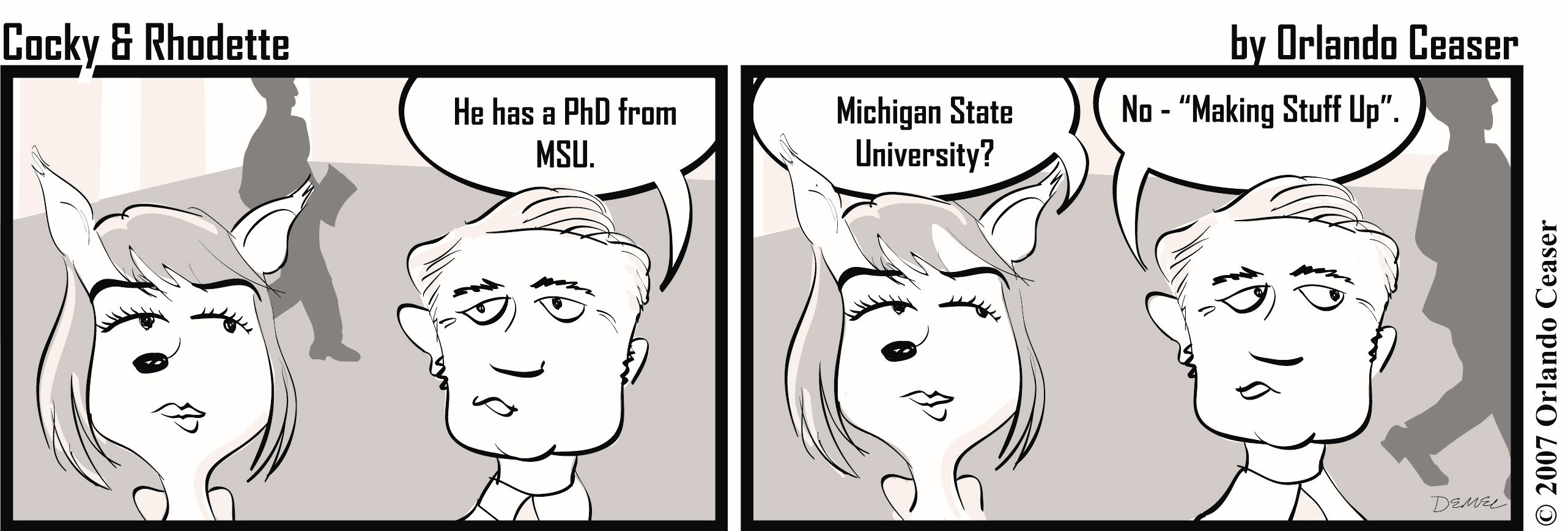
MSU was such a catchy concept that we included it in our regular training vocabulary. We would openly talk about Making Stuff Up and the dangers of resorting to that practice in answering physician questions. MSU had value as it related to creativity and other areas. When I introduced the concept of MSU I would state that it did not stand just for Michigan State University.

Years later we were training physicians on presentation skills. I decided to drop in on one of the sessions. I noticed that on one slide were the letters MSU. This piqued my curiosity and I sat for the session. The presenter opened the session by saying he wanted to talk to them about MSU and it did not just stand for Michigan State University. It stood for Making Stuff Up. I was impressed but, I sat there speechless. I did not recall reading about MSU before that fateful day in 1986 in our sales training seminar.

15 years later I was in my office as an Area Sales Director. One of our trainers (Field Development Leaders) gave me a book. The book was titled MSU (Making Something Up). And 10 years later in Zambia, South Africa, one of our pastors conducted a workshop on MSU, Making Stuff Up; obviously, it was a well-established concept.

MSU is therefore a viable practice. It is a catalyst for creativity and a warning. We must use it wisely because authenticity and transparency are required to enhance your credibility. As a leader, is important to be aware of MSU and how adopting this mindset can be used to make decisions, answer questions, solve problems and enrich our world through creative thinking and innovation.

Copyright © 2020 Orlando Ceaser
Websites: OrlandoCeaser.com

watchwellinc.com

7 Steps to “Suck Less 4 Success™” Pandemic Reflections

Suck-less4SuccessBlack (2)

Pandemic reflections uncover instances where we are extremely hard on ourselves. I spoke to a group of restaurants servers when they were notified that they may be furloughed due to the COVID-19 pandemic. You could hear the sentiment that “this sucks” (job loss) or their life to that point was below expectations.

In today’s vernacular if something does not go well, meet expectations or seems unfair, we say it sucks. When the employee says, “This sucks” referring to performance, company, manager, team or their job, it is synonymous with dissatisfaction with effort, treatment or results and must be addressed.

The word “sucks” is part of our vocabulary and describes our displeasure with the current situation, especially when it falls short of the results we want. We can use the word suck in a manner that can be delivered with humor to take the sting out of our disappointment. Or we can speak it to show serious anger and dissatisfaction with performance or circumstances.

There is a quality component to our work. Growth in our performance is often a function of reducing the number of errors. If we can cut down the number of mistakes, we will not suck as badly. Therefore, we will be in a better position to succeed.

7 steps sucklesslight (2)

7 Steps to Suck Less

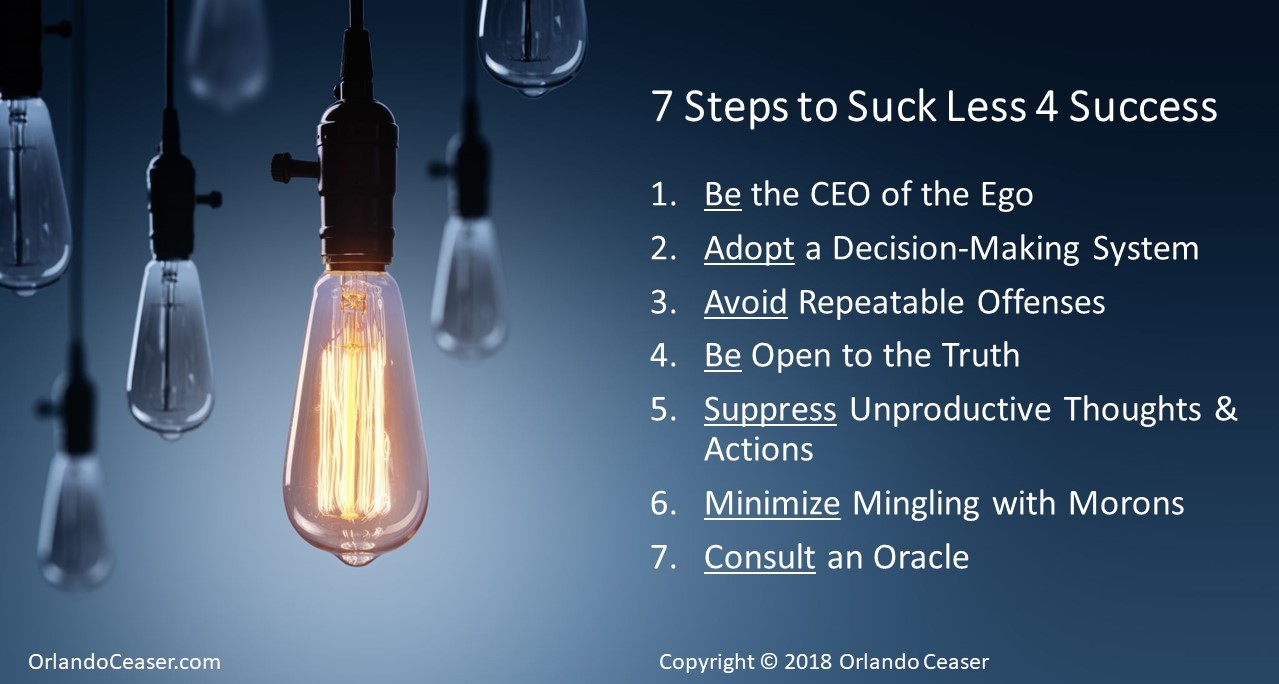
There are 7 Suck Less Factors (SLF’s) we should consider to improve performance. This is not a comprehensive list but should contain practical tactics and strategies. They will serve as step down therapy, so we suck less and less until we achieve the desired success we need. These 7 Suck Less Factors are:

  1. Be the CEO of the Ego
  2. Adopt a Decision-making System
  3. Avoid Repeatable Offenses
  4. Be Open to the Truth.
  5. Suppress Unproductive Thoughts and Actions
  6. Minimize Mingling with Morons
  7. Consult an Oracle

Be the CEO of the Ego

We should be Command and Control of our thoughts and actions. Manage our ego and keep it in check, aligned with our purpose. Ego is accountable for the pride we have in our performance. Use it to ensure that we complete all the relevant actions with the quality necessary to achieve excellence.

As the CEO of the ego we must minimize deficiencies and effectively manage time and other resources. Lead and manage by focusing on our Vision, Mission and Goals (VMG’s).

Adopt a Decision-making System

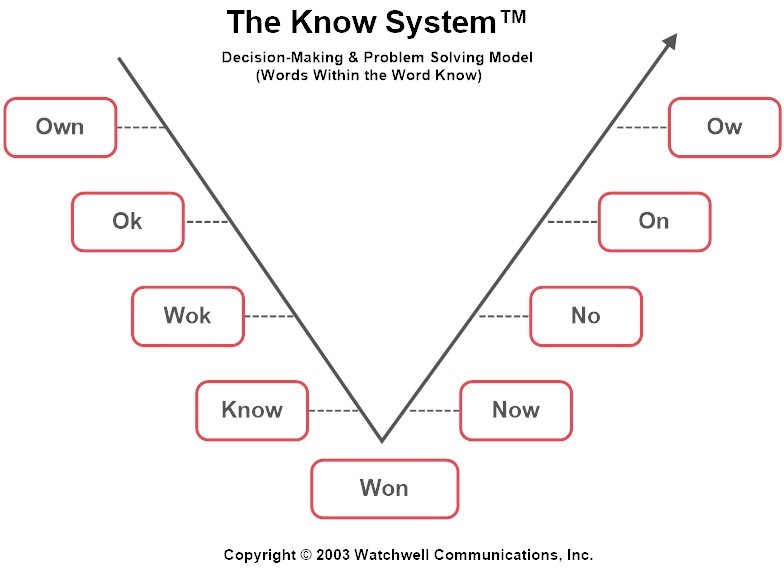
A decision making, and problem-solving methodology could work in our favor, to add structure to our thinking. I am an advocate of The Know System™ featured in my book The Isle of Knowledge.

The Know System™ is a simple and intuitive decision making and problem-solving model based on the word know. On a sheet of paper, flip chart or computer screen we can write the word Know at the top. We should list the two, three and four-letter words found in the word Know (Won, Know, Now, No, On, Own, Ow, OK, Wok). We can use the words to address the problem or decision we want to address. For example:

Won:   What does success / winning look like? (Vision)

Know: What do you Know or need to Know?

Now:   What are you doing Now? Is it the right priority?

No:      Who or what do you have to say No to?

Wok:   Are you stirring things up, disrupting and changing?

OK:      Are you good enough? Only works on checklist

On:      Are you turned On, passionate, focused and excited?

Ow:     What are the pain points and pain threshold?

Own:   Are you committed, responsible and accountable?

TKS V Chart (2)

Avoid Repeatable Offenses

We must learn from our mistakes and recognize that they are mistakes. This heightened self-awareness will be good for us. Smaller doses of stupidity are necessary. It is viewed as stupidity only when demonstrating the definition of insanity by performing the same actions and expecting different results.

Be Open to the Truth

We should be open to information that is given in a manner to help our development. We also tend to look disparagingly on those who try to tell us what to do. We should remove barriers that impede acquiring the information we need to succeed. Don’t weed whack feedback. Feedback is essential to gain an accurate perspective of our current reality. Feedback is also needed to assess progress and increase self-awareness, for it is an important aspect of emotional intelligence.

Suppress Unproductive Thoughts and Actions

We need to ween ourselves from unproductive thoughts and actions. They are like speed bumps on a highway of achievement. They will curtail our ability to reach posted speed limits for success. We should curb our cravings for negativity, unproductive thoughts and actions which are the empty calories of performance. Ensure that we concentrate on those activities that support our priorities (VMG’s – Vision, Mission, Goals).

Minimize Mingling with Morons

The people we associate with are key. Those who add value and optimism over negativity are helpful. We should inoculate and isolate from ignorance, by limiting our exposure to the misfortune tellers, who always predict a negative result.

Consult an Oracle

We should surround ourselves with people who can fearlessly review our performance and offer advice. They can challenge us with scenarios and potential situations that will help us anticipate the future of present and proposed responses to our actions. They will ensure that we are not satisfied with a level of performance that sucks. They will encourage us to do better and to believe that we can do better.

We must incrementally reduce the number of times we fall short of expectations.  We must pledge to put practices into place that will enable us to suck less in the long run. When we emerge from the COVID-19 pandemic, our reflections should lead to practices that enable us to Suck Less 4 Success.

Copyright © 2018 Orlando Ceaser


A Call to Decency & Integrity (D&I)

The 4th Monkey (3)

Decency is not a trade he frequently discuss. Yet, people know what it is when they see it. We would agree that people who are decent are trustworthy, with strong character traits, such as integrity. They are respected and held in high esteem. Decency is an acquired state. It is a function of diligence, conditioning, and a propensity to do the right thing. It is combination of characteristics, attitudes, and positive personal values, which causes people to gravitate to the as a magnet.

You may not have it as a goal, nonetheless it is a byproduct of being a good person. Decency is a positive side effect of good behavior. The individuals possess high moral standards and a solid reputation and track record.

Google defines decency as “behavior that conforms to accepted standards of morality or respectability.” It is often used in the context of someone being modest.

Decency surfaced on my first interview trip as a district sales manager. I was sent to help a district manager fill vacant sales of territories. The company had a structured interview program based on behavioral questions. We looked for competencies or behaviors necessary to do the job. Past performance / behavior was a predictor of future performance. Whereas there were no questions related to decency, it was evident, among the candidates.

One candidate rose to the top of my list. He had the requisite potential to be an outstanding sales rep. This was during a time when we were hiring recent college graduates for sales positions. There was one sales territory that was hard to fill. My favorite candidate evoked the word decency. He had the requisite skills, but I kept thinking, he is a thoroughly decent individual.

Decency translated into a culmination of many positive character traits. His overall demeanor was supported by quantifiable, specific behavior related outcomes.

Our interviewing questions covered such areas as presentation skills, product knowledge, administrative abilities, persuasion, teamwork, tenacity, resilience, creativity, and organizational skills.

Sandwiched between his answers were examples of

  • Fairness, equality, and good judgment
  • A hard-working personality
  • Faith centered living
  • Integrity and moral behavior with clients and competitors

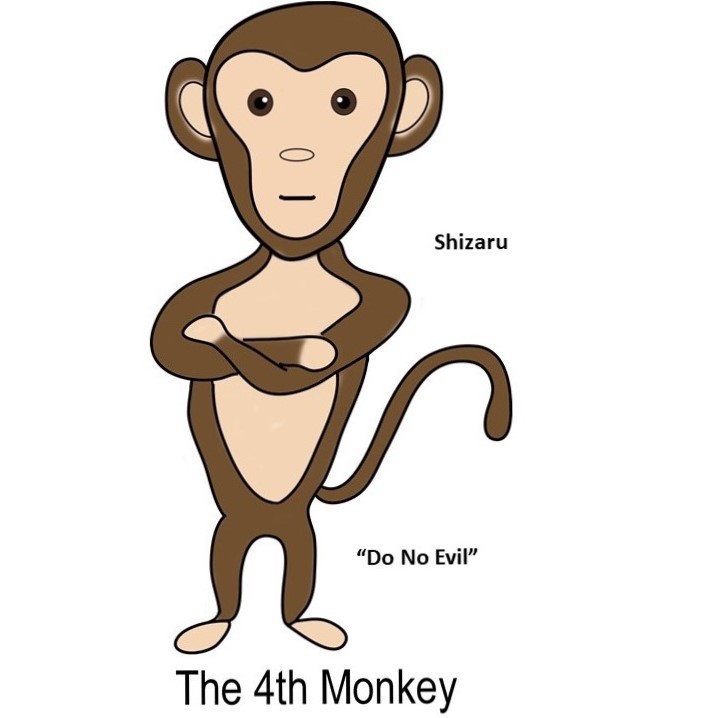
Decency is an attribute, we relish in people who lead us, serve us, and befriend us. They have integrity which is characterized by the 4th Monkey (Shizaru) which is “Do No Evil”. Decency is not something we feel we can teach, but believe it was necessary for longevity and success in the long term. It may be a function of upbringing, conditioning, modeling behavior, practice, and reinforcement. Decency is often described as; you know it when you see it, or you can feel its presence in your gut.

In a highly competitive marketplace, decency can be a tiebreaker in hiring employees and building relationships and collaborations. We should determine whether candidates can play well in the sandbox, are good listeners and strong team players. They could essentially play well with others, driven by a sense of fairness and purpose, emotional intelligence, likability, and a desire to excel and achieve their inner greatness.

When we visually survey our workers and coworkers, if we find they have a sense of decency we could probably see the following.

  1. Authenticity
  2. Integrity
  3. Honesty
  4. Strong work ethic, based on productivity, quality and execution
  5. Treats people fairly, with dignity and respect
  6. Moral character as reflected in the stories they tell
  7. A sense of fair play

Answer the following question. Are you a decent human being? How do you know this to be true? Asked the coworker, relative or friend if they would consider you a decent person. Ask for examples.

The decent human being is the team player that people like to work with and want on their teams. Strong character individuals are sought after in every interaction that is important to us. It is advantageous to associate with decent people and hire, develop and promote in our organizations.

Copyright © 2020 Orlando Ceaser


The Core of More™ – Be Awesome from the Inside Out

MORE (2)

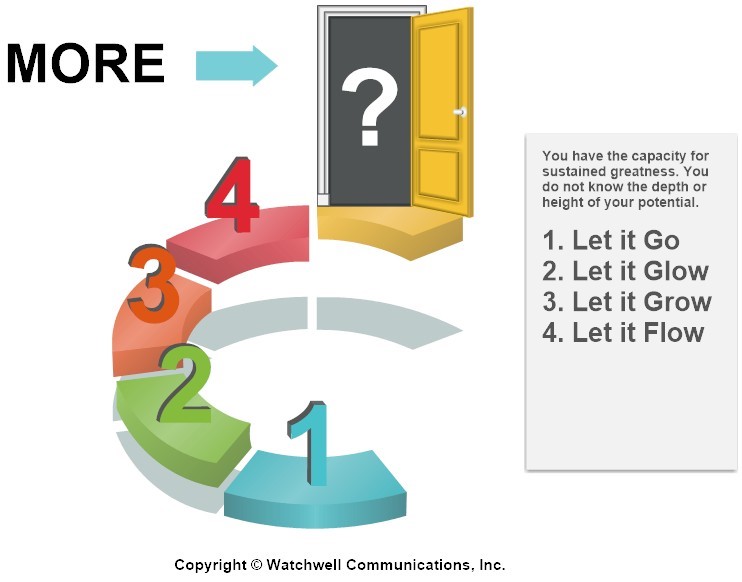
There are crucial components to your development that must be examined to accelerate your progress. There is a core set of skills, values or principles which can be debated, but factually, these key ingredients build on your present state. You have more depth and more in the core of your being you can imagine.

Let’s place four elements in this Core of More™. These elements confirm there is more in your core than you can imagine, yet you periodically ignore one or more components. They are Let it Go, Let it Glow, Let it Grow and Let it Flow. These ingredients will enable you to gain rather than regress and achieve success, that is surplus, but not necessarily excess.

Let it Go

Before you start and during your journey, there are nouns that you must displace. There are people, places or things that are excessive weight that must be discarded. There are situations, memories and perspectives you must release.  As a hot air balloonist will tell you, if they want to increase their altitude, sandbags must be cast overboard, or they will impede their ascension.

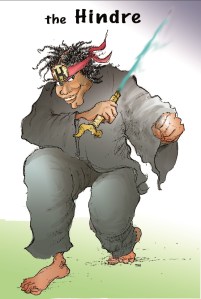
There are personal situations that try to hold you back and hold you down. In earlier articles I refer to them as the Hindre™ a person or force of negativity that attempts to hinder or restrict your progress.

Hindre


They must be released if you are to soar to the rightful heights of your potential. You may know these impediments. You must be open to receive information on people who are plotting against you. Additionally, you must change old mindsets and adorn new ways as you grab on to new beginnings.

You must let go of destructive habits, attitudes, the wrong crowd, the wrong thinking and other roadblocks that may block your progress.

Let it Glow

Your light, however you define it, must be allowed to shine. Your talent, skills, abilities, capacity and resources must be a beacon of hope, a living positive example. Your light must be an indicator of your presence, purpose and performance. As we sang in Sunday School, “This little light of mine, I’m going to let it shine. Let it shine, let it shine, let it shine.” When it shines, it has a glow, a luminescence that grabs people attention, pinpoints your location and potentially influences behavior.

Let it Grow

Skill level and impact will expand and enlarge your contributions. Influence grows as your abilities are refined and increased. You must devote time, effort, energy and insight received from teachers, mentors and coaches to improve knowledge and the quality of your work.

You will become a continuous learner and communicator, passionate about getting better in the priority areas of your life. Your light will get larger and brighter and more will take notice of you and more will be expected of you, as more are influenced by your presence. Your abundance will become a windfall to others, as you realize you are slated to get better, so others can benefit from your brilliance. You can state your growth as, “I’m proving myself by improving myself.”

Let it Flow

As it glows and grows, it will flow in the execution of your skill set and in helping other people. Work will become easier and more natural. Executing your tasks will appear effortless, mainly because you are in your sweet spot and you are streaming in success. It is captured in an acronym SMILE (So Make It Look Easy). An athlete will comment that they let the game come to them or the game slows down for them, as they improve their craft.

When you Let it Flow, your stream of influence will remove logjams that exist in your path. Your actions are fluid as a well-trained athlete, gliding through the race; a musician who makes playing the instrument look easy; a world class professional speaker in their comfort zone, delivering a powerful message, a leaf sailing on the water. You are caught up in the flow.

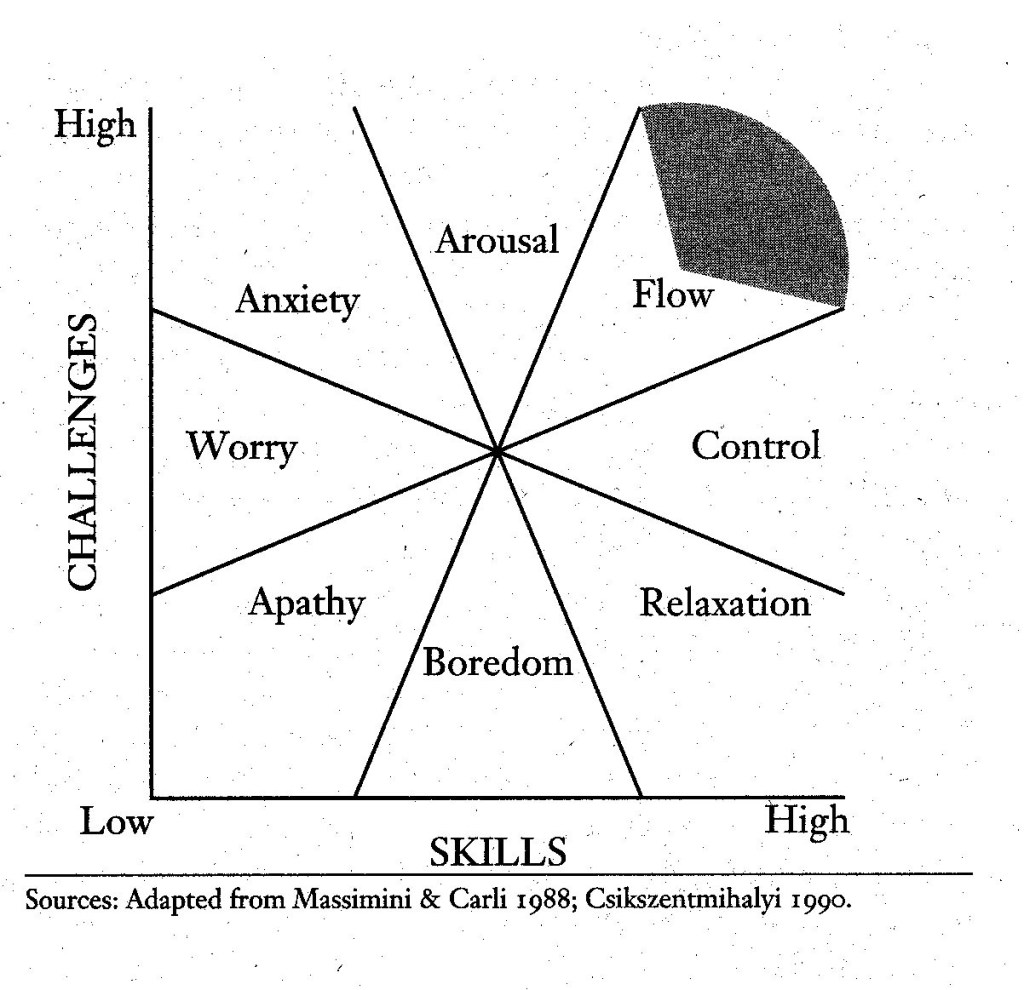
Professor Mihaly Csikszentmihalyi , has a concept of Flow which is defined as follows, “In positive psychology, as the zone, is the mental state of operation in which a person performing an activity is fully immersed in a feeling of energized focus, full involvement, and enjoyment in the process of the activity”1. It is a state where skills are consistent with the challenges presented to you. In the state of flow, you lose track of time and you are consumed in passion2. Simon Sinek says, “Working hard for something we don’t care about is called stress; working hard for something we love is called passion.”3 When you Let it Flow, your passion shows and when added to perseverance, you are exhibiting Grit4.

Flow Document (1)

Let it go, Let it glow, Let it grow, and Let it flow are part of the Core of More™. Apply these principles to help you achieve success in the professional and personal realms of your life.

Copyright © 2018 Orlando Ceaser

  1. https://en.wikipedia.org/wiki/Flow_(psychology)
  2. Csikszentmihalyi, Mihaly (1998). Finding Flow: The Psychology of Engagement With Everyday Life
  3. wordpress.com/2014/08/24/working.
  4. Duckworth, Angela (2016). GRIT: The Power of Passion and Perseverance


Resilience and Another Starfish Story

starfish

Resilience is a way of describing your bounce back ability (BCA). A trait that is wired into our mental framework to give us the tenacity to govern our behavior. It is a portrayal of our stamina and stability and the survival instinct within us. We are formed, fortified and framed with the mindset to resist tough times. We are not saying that we are challenge proof, but challenging resistant, enabling us to bounce in the presence of hard times and hard surfaces.

Let me tell you another Starfish Story. This is different from the traditional starfish story. This story takes place in the ocean. Our hero or heroine is an injured starfish, that is wounded in the ocean. The injury either by accident or sustained damage from the encounter with a predator or a vessel in the water.

During this mishap the starfish was badly damaged and lost one of its points. The starfish has five arms, as we know from the pictures we’ve seen or the animals in an aquarium. However, they may have any number ranging from five arms, to over 50, but I digress. You may have been lucky enough to see these fascinating creatures, sometimes referred to as sea stars, and the they are not really fish.

Our starfish suffers what would be considered a devastating injury to most animals. Imagine this wounded animal moving around in the water eligible to die from the mutilation. However, the starfish has a quality that allows it to rejuvenate or regrow its arms. It is as if the starfish’s body, metabolism or inner programming remembers its original structure and works to replace it. This fascinating attribute allows it to live for 35 years.

Humans do not yet have this ability to physically rejuvenate, however mentally we are resilient. We may face a devastating appointment which takes away our drive and self-esteem. We may make a mistake which appears to be career ending. We may have our reputation tarnished to the extent we feel we may never recover. But like the starfish, we can rejuvenate, regenerate, replenish and reestablish ourselves with proper a mindset.

We can re-institute a positive, reassuring and confident state of mind. When we were infants and toddlers, there were qualities we had, such as curiosity, adventure, stamina, persistence and endurance. We could focus on something with relentless intensity and if we fell trying to get it, we had the resilience, the bounce back ability, after a moment of pouting to get back on our feet and resume our pursuit of the goal.

Later in life, many of us periodically, have these traits badly damaged and removed from our repertoire or body of skills. We may go through life psychologically impaired when we have the inmate ability to do something about it. We need to rejuvenate and regenerate the mental demonstration of renewed strength and resilience.  We need to re-grow these former strengths in order to sustain ourselves and renew our level of effectiveness.

Think back to a time when you were whole and constructed for success and survival. Remember how it felt to be fearless and confident. Remember the other starfish story and recapture what was lost or taken from you, so that you can replenish yourself and be structured to become your best. Remember the words of the philanthropist W. Clement Stone who was the proponent of PMA (positive mental attitude). He said that what the mind could conceive the and believe, it could achieve.

Think of the starfish and reach down within yourself to repair the damage and regain whatever you lost, the world is counting on you and your leadership.

Copyright © 2020 Orlando Ceaser
OrlandoCeaser.com


Revolution, Resolution and Evolution in Leadership

I was stirred from my sleep, before a presentation to business owners, thinking about the enormous responsibility of leadership. The role of leadership is often debated, nevertheless, many consider it a guiding force for success in business and in other sectors of our lives. There were three words that was prevalent in my reflections. They were revolution, resolution and evolution. Obviously these three words rhyme, but I was struck by the relationship among them, as it relates to leadership.

Revolution

The entrepreneurs started their businesses because of a dissatisfaction with the status quo. They noticed that something needed to change. Something in their job was not appropriately satisfying their ambitions, the needs of the client or the world at large. Therefore, they felt a change was required, a disruption was necessary, and they were the persons who could make a difference. The business owners felt that they should be the catalyst to lead the charge, by staging a revolution.

Additionally, a revolution can be defined as a complete turn. Building their awareness by seeing the world from all sides has advantages. This peripheral perspective is important in any business. There is a requirement that an object in motion must gain energy and maintain motivation and momentum.

Resolution

Secondly, a resolution was mandatory, whether spoken, written or inferred. We are speaking of resolution, also from two perspectives. First there is a resolution like the plans and platitudes and goals we make at the beginning of a new year. They serve as promises to do more, better or different. However, we can also speak of resolution as it relates to a higher degree of clarity. The Hubble telescope was launched into space in 1990. The images receive were not of the quality required by astronomers. Apparently, there was a defect in one of the mirrors. It was ground incorrectly and compromised the telescope’s capabilities. This was a classic example of manufacturer error. A repair team was sent to fix the problem and the optics were improved, resulting in magnificent photographs, increasing our understanding of the universe.

As a leader, we need to clarify our value and direction, so that our people are clear about where we stand. We need transparent directions and expectations of them. We may have to repair them to ensure that we are transmitting the proper images. I watched a video of Marcus Buckingham, noted leadership guru. He said that leaders need to clarify their values so that their followers knew what they believed in. Leaders may not be perfect, but they should be predictable.

Evolution

Thirdly, an evolution is required. Business leaders and business owners need to build evolution into their planning cycle. An expectation was required that people should improve and getting better should enable them to address the challenges of the marketplace and needs of the people. There was also a requirement that people, and practices need to evolve to a higher level of service, sophistication and developing their people.

My presentation to the entrepreneurs was well accepted. The early-morning reflection on leadership, affirmed the role of revolution, resolution and evolution in addressing the challenges and expectations of today’s business leaders and business owners.

Copyright © 2010 Orlando Ceaser

Scary Supervisors – Managerial Monsters


Halloween makes me ask the question, “If my manager were a monster, who would they be?” Ponder this question, only if it applies to you. To play along with me you must have a picture of your current manager, a manager from the past or a manager you heard about from another poor frightened individual.

I grew up watching a program called Shock Theater. The hosts were zombie musicians who were probably the inspiration for the look of Michael Keaton in the movie Beetlejuice. The program was a prelude to the Creature Features segments on late night television. There were six favorite monsters or categories that dominated the movies in my childhood; the Wolfman, Dracula, the Mummy, Frankenstein and Bride and various reptiles or mutated animals that were exposed to radiation. For this segment let’s concentrate on the top five; Wolfman, Dracula, Frankenstein, the Bride of Frankenstein and the Mummy.

My favorite character was the Wolfman. He was a frustrated man who was bitten by a werewolf and had to spend the rest of his life howling at the full moon. He was always seeking a cure and looking for sympathy from anyone who would listen to his tale of woe and help rescue him from his fate. He wanted to be different but was overpowered by the curse. Have you seen the Wolfman Manager in your organization? They appear to be nice, but are tormented by their role. They blame something or someone else for their cruel behavior. They were forced to be tough and it was agonizing for them because it was, out of character and against their temperament. In the presence of their boss, they would reluctantly turned into something horrible, to become consistent with leadership expectations.

Then there was Dracula, the vampire. He was charismatic, smooth talking and mesmerizing. He spoke with a distinctive accent and people were drawn to his charm, appearance and professional demeanor. He was royalty; after all he was a Count. But Dracula was still a blood sucker planned to render his victims hopeless and under his control. His intent was to drain others until they were no longer of use to him, other than to locate another food source. You may have seen a vampire walking around your company with that same arrogant, cold, uncaring look. The look that says they are interested in you for what you can do for them. The Vampire Managers walk around feeling as if they would be there forever and no one would discover their secrets. You may wonder if somewhere, there is a coffin containing their native soil.

Frankenstein was named after his creator. He was a collection of body parts, that were sewn together to create a living breathing inhuman being. Frankenstein’s monster was depicted as mindless and easily irritated. He was created to be controlled and to demonstrate the power and influence of the scientist. He was the earlier version of the zombie. Frankenstein became identified with his creation. When the Frankenstein Monster saw his reflection and what he had become, he became angry. He realized how different it was from everyone else and that people were afraid of him. He was deliberately created to be controlled as an example of his creator’s intellect and power. He ultimately turned on his master.

The Frankenstein Manager appears in many organizations as the protégé who was shaped, mentored and created in the ruthless image of their sponsor. Eventually, the protégé will turn on its creator, causing much instruction in its wake. They emulate the same selfish tendencies observed in their Pygmalion. After the monster received or learned all they could from their master, it may cast the mad scientist mentor aside.

The Bride of Frankenstein was an interesting monster because she was created to be a mate for the Frankenstein Monster, a female version of his kind. However, she was frightened by his image. This female monster was known for their ability to be dangerously independent and competitive. The aggressively competitive personality to prove they are just as good as the man may manifest in some individuals in the workplace. Additionally, you can find a female personality that applies to each of the monsters listed.

Lastly, the Mummy was cursed to guard the tomb or temple of his beloved. He was slow of foot, but was loyal, relentless and powerful. I’m speaking of the older version played by Boris Karloff. The newer version with Brandon Fraser is a stylized adaptation, but the plot is the same. There is a creature driven by an overpowering love and allegiance for the object of their affection. This person within your organization has an undying love for the status quo and the good old days. He would destroy anyone who tries to harm or change it. They will blindly institute unethical policies and cover them up, especially if an investigation is pending or inevitable. This individual will persistently pursue anyone who has anything negative to say about the company or anyone they personally admire within the organization. They will practice a technique known as delayed retaliation to seek revenge against their enemies.

An organization began a process of offering 360° feedback to its managers. The managers enlisted the help of their peers, direct reports and their supervisor. When they received less than flattering commentary, they smiled and thanked everyone for their contributions. Over the next several months, the Mummy Manager did everything within their power to slowly, relentlessly, strike back against those who offered disparaging feedback. The mummy within the organization is wrapped up, as a metaphor, to hide either their identity or their intentions.

There are present day Scary Supervisors, who are managerial monsters in the workplace. The Millennials and each generation has its own monsters; whether they are zombies, Aliens, the Predator, Jason of Friday the 13th or Freddy Krueger from Nightmare on Elm Street, they can be compared to the leadership styles of many of the leaders seen in organizations around the world. The traits of these frightful creatures are found in the leadership practices of some managers who believe they must resort to fiendish tactics or insensitive methods in order to get results. Where there is a monster, there is fear. Where there is fear, there is an antidote or a strategy possible to eventually relieve people from the threat of the monster and the power it has over the employees in the workplace.

Copyright © 2015 Orlando Ceaser

What is your From – To Story (FTS)?

Goals
Constantly, we are exposed to stories that grab our attention. They are tales of unbelievable struggle, growth and accomplishment. People have overcome tremendous odds the and circumstances to arrive at an unforeseen destination. They may be classified as from rags to riches, from poverty to higher education, from homelessness to home ownership or from working as a janitor to becoming the principal of a school. These stories show the power of the human spirit; the magnificence of vision, goal setting, perseverance, generosity, luck and encouragement.

Our hearts were warmed a few years ago by the story of a Ted Williams, a homeless man who was called the Man With The Golden Voice. He was given a job making commercials and later returned to radio. When you think about your life, you can also create your own personal From – To Story. Look at a point in your life, a different job or think of your current position or objective in life. Where were you? Where are you? Where do you want to go? What do you want to become? What is your purpose, your destiny or your goal?

When I was younger, I would read about individuals who stated that they were the son or daughter of a sharecropper. Their bio would state, from a sharecropper’s son they rose to the position of president of their own company; from a single parent to the position of a medical doctor; from the inner city to a position in higher education. I have known individuals who have gone from an administrative assistant position to a position in sales management. These examples are all around us.

You know who you are and where you’re From, now it’s up to you to establish, what is your destination, or more specifically, what is your To? What is the right To for you? Before you arrive at your ultimate destination, there may be a series of stops along the way, therefore, there may be multiple To’s in your forecast, in your future.

What does your dream scenario look like? What is the tagline that you would want attached to the beginning of any description of your life and accomplishments? Fill in the blanks below to give yourself some practice. Thinking about your responses may fill you with a sense of accomplishment, on how well you’ve done and how far you’ve traveled. It may also show you, how far you must go and serve as a reminder of your purpose, destination and destiny.

From ________ To ___________.

From ________ To ___________.

From ________ To ___________.

From ________ To ___________.

From ________ To ___________.

I wish you success on your journey. I look forward to the day when we can discuss where you are From and your arrival to the To that is right for you. Your, From – To Story (FTS) will be a benefit to you and enrich the lives of others.

Copyright © 2019 Orlando Ceaser