Motivation from the Heart – Propel Yourself into Action

heart

We can gain valuable information about motivation by studying the heart and how it functions to keep us alive. During my training as a pharmaceutical sales representative, I received cardiovascular instruction to prepare me to sell a drug for treating heart disease. There were two components of my cardiovascular education I use to this day. They are the characteristics of the heart and the equation for blood pressure. To truly experience motivation from the heart we must demonstrate these qualities.

The heart has 4 main characteristics. They are as follows:

  1. Automatism – the heart can generate its own impulse to initiate the heart beat
  2. Contractility – the heart has the ability to contract, which is to do work
  3. Conductivity – the heart conducts and therefore, sustain electrical impulses
  4. Compensatory mechanism – the heart can create additional arteries to help supply oxygen to areas where existing arteries are blocked

Automatism

Just as the heart has the ability to generate a signal to get started, we should have automatism built into the fabric of our personality and value system. We need to be self starters. Our biological clock must have an alarm to awaken our desire to achieve. Additionally, we should align ourselves with people who also demonstrate this trait.

People with automatism instinctively start, regardless of the changes in their environment. The heart has an SA node, the sino-atrial node which is the network of nerves that are responsible for the impulse that triggers the heart beat. Each person is hotwired with his or her own hot button. What is your SA node? Do you know the triggers, switches and hot button to turn on your ignition to drive toward greatness?

The best workers are those who are doing what they love. They are using their talents and skills in a career or area suited to their interests and passions. Individuals in the right job utilize their values, beliefs and purpose to propel them to higher levels of performance. They have the spark that provides their own ignition.

Contractility

Contractility is the second trait, which is expressed as the ability to do work. The heart when faced with increased demand or workload will beat faster. We must work smarter and harder when the challenges are higher and more difficult. We need to spend the time and effort, exhibit the stamina and energy to reach our potential and expected outcomes. We don’t need people to carry around a motivational defibrillator to frequently jump start our attitude. Some employees are great workers when things are calm, but when the tension rises they fall apart and become less productive. We will not become those individuals, because we have lofty career goals.

Individuals may require help during an intermittent crisis in morale, but the matter should be temporary and should not be needed often. A motivational pacemaker, would be a drain on time and resources.  These pacemakers and defibrillators can become habit forming and lead to entitlement and an always need to be rescued mentality. The resulting motivation is effective only if the stimulant is always present. If the external stimulant is a manager or threat of disciplinary action, the long term motivational impact is doubtful.

Conductivity

Conductivity is the third trait. It is important because we must sustain the desire and commitment needed to do the work. The heart is like a battery. It can distribute power that is stored inside. The drive must be rejuvenated over time with the stamina and repetition to achieve results. The need for continuous external stimulation is not desirable. Conductive people are enthusiastic and easily identified by their ability to transmit this energy and enthusiasm to others.

Conductive workers are usually positive role models. They are the ambassadors of the purpose, mission and goals of the group. They lead by example and can be counted on to support the goals of the organization. We must be people who cause a positive chain reaction and a current of courage and collaboration to achieve results.

Compensatory

The heart’s compensatory ability is the fourth characteristic. It is shown by its ability to create new arteries to go around the blocked areas to deliver oxygen to the region of the heart that is not getting enough blood flow. When motivation is in short supply in the workplace, this compensatory mechanism has protective properties to keep people fired up and dedicated to reach the goal.

We are expected to compensate, adjust and adapt to forces within our environment. When barriers confront us while completing responsibilities, we need to think of creative measures to work around the obstacles. Innovation and flexibility are requirements in these changing times and versatile people with compensatory abilities are in great demand.

Work versus Resistance

The other major component related to the heart is the blood pressure equation. Blood pressure exists in the Circulatory System and serves as another way of illustrating the concept of motivation. Blood pressure in the body can be displayed in a simple equation.

CO (Cardiac Output) X TPR (Total Peripheral Resistance) = Blood Pressure

Blood pressure is a function of cardiac output (CO) and total peripheral resistance (TPR). CO is the work the heart performs, when it beats. The heart works against TPR, resistance in the arteries. If the heart works harder, this will increase blood pressure. If the resistance goes up, there will be an increase in blood pressure. The resistance is like the drag that an airplane experiences in flight. It is like the head wind that causes friction that could slow down the plane.

Work X Resistance =  Success (Quality of life, performance, results, etc.)

The equation can also apply to life. If quality of life or success is the goal of motivation, we can say it is influenced by the amount of work we do in the face of the internal and external resistance in our environment. If we want to improve our quality of life or success, we have to be motivated to do more work or reduce the resistance or competition.

Resistance is an obstacle and can represent people, environment, lack of resources, competition, peers, attitudes and other circumstances. As the resistance increases, we must counteract by working harder and more efficient. If we can reduce the resistance, we minimize the barriers to our quality of life, but we must still do the work.

Leadership should recognize and reward, motivated performance and establish an environment of positivity, optimism and development. Workers must ensure that their communication arteries and career arteries aren’t clogged with bad habits, unhealthy attitudes (entitlement and negativity) and a failure to give their best performance.  We must also encourage each other to greater performance levels of excellence.

When we speak of motivation from the heart, the correlation between how the heart works and what is needed today is very strong. We must be heart smart in developing ourselves and the people around us. We should look to the heart and emulate the qualities of automatism, conductivity, contractility and compensatory mechanisms. We should also remind ourselves of the blood pressure equation and the relationship of work and resistance. We can influence success, quality of life, performance and results by affecting the quality and quantity of work we produce against the various levels of resistance.
Global Warming in the Workplace

heat_cycle1

“It is getting hot in here.” Can you feel the heat? The heat is rising in workplaces around the globe. Competition is intensifying. Competition for customers, products, services and career opportunities is heating up. Heat is also known as pressure, when it flows from higher levels of management as edicts, high expectations and strongly worded challenges to the people in the hierarchical structure below. The heat also flows from peers, internal standards and the family values

The list of individuals sweltering under the blistering temperatures in organizations is increasing. Companies are falling by the wayside due to heat stroke and the casualties of progress. The business landscape is littered with the fallen logos and share prices of former titans of industry. Innovation and new methods of distribution have led to the demise of companies that could not adjust and keep up. Companies that were once household names, no longer exist. So, now the companies that are still standing, have survival paranoia hanging over their heads, as they reflect on the cost of failure.

Companies have restructured, attempting to do more with less people and resources. Survivors of downsizing are dealing with survivor’s guilt and an increased workload. When employees demonstrate that they can function with fewer co-workers, relief does not seem to be on the near horizon. Employees want to save their jobs, even if they are unfulfilled, because it is hard to find a new job in the current employment environment.

The heat at work is beginning to move into homes as tensions mount due to the lack of attention overworked individuals display on the home front. Schedules at home are equally chaotic and hectic and have become the new normal. These factors have created immense pressure on relationships. The heat is spreading like wildfire. The pressure of life and the heat of each day confirm that global warming is prevalent at home and in the workplace.

Promoting individuals to management, who are not well schooled in leadership, can negatively affect the environment. Veteran managers with too much on their plates can become impatient when they are under fire to produce. Employees who want to grow, but barely have time to catch their breath, because all of their time is task time and nothing is left for personal development. If there is no positive end in sight morale and engagement will become areas of concern. The thermostats within organizations indicate that engagement levels reflect the temperature and pressure of working in today’s climate.

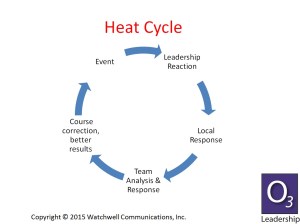
When there is a problem or discrepancy between expectations and results, leadership may react by raining down heat or turning up the heat. Merely emphasizing this lack of achievement will also be seen as bringing on the heat. Heat really means high expectations. This terminology is well accepted in companies everywhere.

Leaders will exercise their positional and personal power to get results. Ideally, the manager may not let unproductive heat go through unfiltered to their people. They may stand in the gap and become the ozone layer for their people. This filtering philosophy will only let the productive, constructive and inspiring heat reach their people. This heat will cause the manager to hold strategy sessions to determine the reasons for the discrepancies and propel them to devise an appropriate course correction.

Brainstorming and strategy sessions will result in recommendations for getting on the right course. In makeshift war rooms, teams are working diligently to yield revised tactics. These new marching orders are the result of analyzing the strategy and competitive response, gathering data on customer acceptance and revising resource allocations. The successful implementation of strategy changes will hopefully put the team on the right track. The new results will please leadership and the entire team.

Ironically, whenever another problem occurs, the leaders believe the heat administered the first time was the reason for the change in behavior and production. Therefore, as part of a vicious cycle or continuous loop, heat is again acomponents3dministered until expectations are reached.
The astute ozone leadership practitioner will help his team establish an early warning system, with a feedback mechanism, to serve as indicators of impending change. This metric will alert them to changes or malfunctions in the strategy at the earliest possible moment to minimize any surprises. Veteran and new employees will receive training on strategy execution and how to assess progress to minimize problems in reaching their goals. They will know the early warning signs that strategy and tactics need to be adjusted.

Global warming within the workplace has a number of origins. Some of them are due to a direct reflection of new technologies and distribution channels, as well as the competitive nature of the most industries. It is also a function of the realities of the current lifecycles of products and organizations and the internal drive and survival instinct of employees.

ozone_cover

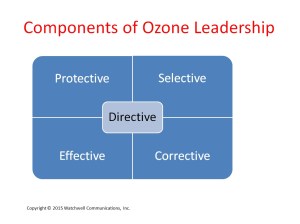
Ozone leadership can be further explored in the book Unlock the Secrets of Ozone Leadership. The book, keynote address and workshop espouse the five principles of this leadership model. The five components are directive, protective, corrective, effective and selective. When leaders have a mindset incorporating these five components they are more inclined to focus on developing people and developing the business. The implementation of these principles in the program would do its part to counteract global warming within your workplace.

Copyright © 2015 Orland Ceaser

Under New Management – A chance to decline or a chance to shine

new-mgmt

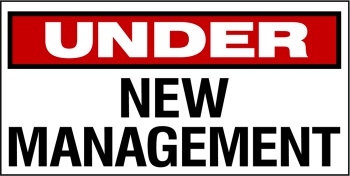
The sign has three words, “Under New Management.” We often see the sign in the window of a retail establishment. What does this sign mean to you? Does it conjure up images of change and great expectations? Are you saddened that a great institution will never be the same, gone the way of the dinosaur? Does it make you think hopeful thoughts about the future, casting aside the circumstances of the previous administration? Do you instantly wonder if new people with more money, resources, business acumen, talent and operational expertise, will make the business successful. Under New Management can bring opportunities, as well old problems and new obstacles.

Your opinion about an “Under New Management” sign is based on being connected to the previous management; as a patron or participant in their business. If you were dissatisfied with the prior regime, this sign may give you words of encouragement that things will be better. If you are on the inside, and not in the inner circle, this may mean greater opportunities for advancement. If you are on the outside, you are hopeful for a better return on investment or an increase in quality and customer service.

When new management arrives on the scene, there are new people to handle the day-to-day operations. The communications industry, especially radio, is notorious for bringing in new ownership, followed by new management. Radio personnel are often under the specter of change. When rumors start about a potential acquisition, panic leaps into the hearts and minds of everyone, except those personalities who view themselves as untouchable. These individuals, due to their notoriety, can be classified as employable, because of their ease of finding another job.

It is customary for most industries to experience change. Will that change be in products or services or the management structure, personnel or brand identity? In radio the change could be in their format? Will the station go from all news to a talk radio or country music format? What will the new manager think is the financially prudent format to recoup their investment? What changes could “Under New Management” bring to your company or industry? How could your life be changed?

“Under New Management” is a sign that could be hung after a merger and acquisition. Those in positions of power and leadership may worry the most. Many times the higher up you are in an organization the more worried you are of losing your job, status, influence, mentors and advocates. But, there are those on the outside of power, looking forward to the opportunity to shine. They want a clean slate, audiences before a new panel of judges.

Some of my greatest opportunities were, “Under New Management.” I recall making a speech before a large audience after a merger. I was approached by one of the sales representatives from Puerto Rico, excited about my message. She said,” I never knew you could speak like that! We have never heard you on the big stage before. Why haven’t you been on stage in this type of setting?” I smiled and thanked her, realizing that there was something special about the opportunities provided by being, under new management. There can be many career benefits brought on by a change in management. Ambitious personnel should strategically plan for a jump start, a new start to their careers and seize the new opportunities.

“Under New Management” could provide an environment where people can feel courageous enough to explore new areas. It could be seen as a chance to overcome mistakes made earlier in one’s career. New management may have a policy of mistake forgiveness, like the accident forgiveness features in some automobile commercials. It is true that negativity never gets amnesia in some organizations. It has a long memory for mistakes, even though the clarity of its memory may be very vague.

I spoke with the manager who applied for re-entry into her former company. She was cleared for rehire, but someone mentioned a problem they had with her almost 20 years earlier. He couldn’t remember the specifics, only that it was unpleasant. This company was under management, however there were lingering problems of old biases from the people they maintained.

New management can therefore, lead to the continuation of old stereotypes and biases from the remaining managers. It may also replace old unconscious biases with a new set of preferences and biases. But we must be optimistic and strive for the excitement and new energy to commit to build something new and magnificent. We must build an organization that allows us to make the most of the honeymoon period assigned to “Under New Management,” to impress upon everyone the desire and willingness to serve in order to achieve high expectations.

“Under New Management” is not the answer to all problems and it is incumbent upon everyone to bring their best and be hopeful that the environmental change will be a breath of fresh air. They must work to help provide fertile soil for people to grow to their fullest potential. They must work diligently to give the new managerial structure a chance to succeed and flourish.

Copyright © 2015 Orlando Ceaser

Authenticity – From Impressionist to Your Authentic Self*

Inconsistent

The path to understanding people will lead to greater personal awareness. There are 4 roles you may encounter during your developmental journey. Several contain character traits and skills commonly associated with actors and other performers. The 4 portraits can be seen as roles played that can influence personality styles and overall performance. They are the impressionist, impersonator, imposter and the authentic self. Knowledge of these images and the ability to adjust to them will enable you to adapt and survive in business and social situations.

Impressionist

The impressionist likes to imitate or model someone they admire. They may copy their speech patterns, mannerisms, key phrases, behaviors or routines. The television show Saturday Night Live garners huge ratings during presidential elections. Their actors do a fantastic job with impressions of the political candidates. Actresses Tina Fey and Amy Poehler’s impressions of Sarah Palin and Hillary Clinton were performed to perfection and rave reviews.

People may accidentally or intentionally model character traits that are synonymous with someone else. Some will select a person and duplicate the way they make decisions or perform their jobs. Individuals may stand like them or speak like them and conduct meetings the way they do. Additionally, they may be drawn to someone’s excellence and decide to emulate a particular characteristic in order to make it their own.

There is a danger in randomly and haphazardly imitating too many people. A person may lose their own identity. Rich Little a famous impressionist who made a living imitating famous entertainers once said, “I have done so many impressions I sometimes forget what my voice sounds like. It is true that we are a composite of many people but we must be strategic and systematic and how we inculcate their traits into our personality. We must be consistent with our true nature and not forget who we are.

Professional development can be helped by utilizing the appropriate impressions. In the early days of my career I worked in the Sales Department, where I had to make decisions when my boss was on vacation. I would ask myself, “How would John handle this particular situation or what would John do if faced with the same set of circumstances?” I would use the same wording and try to deliver messages with the same tone, emphasis and authority, as I imagined John would do it. My impression of John’s decision-making was instrumental in my growth and development.

We are all impressionable and prone to mirror and match behavior. We assume these impressionist tendencies to cope with our environment. This is how we survive and grow. One of the side effects of our impressions is that we may be accused of kissing up to management or trying to gain special favors by being the teacher’s pet.

Impersonator

An impersonator is an impressionist who is totally immersed in a role. They may temporarily abandon their identity and put on another persona. You have seen female impersonators, Elvis impersonators, individuals who impersonate presidents and other political figures. They may go to great lengths to excel and playing the part. We hired a guest speaker who was an impersonator of former president Bill Clinton. He looked like him, spoke like him and had the similar mannerisms. We wondered if he naturally looked like the former president or were enhancements necessary to project that appearance. It may take tremendous sacrifice to stay in character.

Impersonators may eat, sleep, think and act like the person they are imitating. They may assume the person’s name in public. They lose their identity and put on the image and character of another. They will conduct their daily activities from the vantage point of how would that person perform an activity or live their lives. They may give up their own ideas and opinions to become the other person, thus paying tribute to their idol.

Organizations have been known to promote clones of their top executives. This is the epitome of advertising to their employees, the value of impersonating and projecting the corporate image.

You must be careful. Do not surrender your personality to play a role. If you abandon your key traits and characteristics to assume the role of another you have denied yourself the right to fully express your gifts. You cannot fool people into thinking you are the original and you will deprive the world of your authentic self. Remember, a copy will never be a superior representation of the original.

The use of the impersonator style may be due to the image that is rewarded in the organization. People reproduce what is rewarded and what the organization really wants to see. Being an impersonator could also be as innocent as not feeling safe or appreciated by the company. The use of the impersonator style is typically designed to gain a personal benefit. It is often used to please someone in power with your ability to pattern your behavior after their professional image. You may be seeking a mentor/protégé relationship. You are hopeful that they in turn will generously lavish you with special favors or recognition.

Imposter

The imposter is based on misrepresentation. They claim to be someone or something they are not. They present an image that is inauthentic, false or misleading. This is easy to see on the movie screen or in television shows where the person assumes the identity of a dead person or through examples of identity theft, where someone assumes another person’s identity to steal their money.

However, an imposter is difficult to see in business and in your relationships, especially if we want to believe they are who they claim to be. Hopefully, we find out about their deception before significant damage is done.

The imposter in an interview misrepresents their personal history. They may assume the personality of someone they think the employer is wishing to hire. They may profess credentials, such as degrees, skills or connections that are nonexistent. They present themselves with high integrity and character which are far from their real values and personality. The imposter is a liar and will do anything to fool you into thinking their façade is their true image or actual position on an important matter.

Years ago one of our offices on the West coast hired a person they were pleased to bring on board. They said she was intelligent, beautiful and articulate with an electric personality. When she arrived at the office to sign up for the company orientation they were surprised by her calm, demure and low keyed demeanor. She was introverted and had little to say, which was a concern since she had to make presentations to physicians. They felt something was wrong, but they couldn’t explain it.

At the end of the second day of her orientation she mentioned that she was going to meet her sister for dinner. She introduced her sister to the group. You guessed it. It was her twin sister. She was equally beautiful, articulate and intelligent with an electric personality. They wondered if they had hired an imposter. Most cases of imposters are not this dramatic.

When an imposter is discovered, justice is usually swift. The person is confronted, embarrassed and fired. Their reputation is ruined and many people may be hurt in the process. If you are tempted to pose as an imposter, remember, the results are rarely positive. The masquerade is seldom worth the pain and embarrassment when you are exposed.

Authentic Self

The authentic self should be the desired objective or personality style. You should be vigilante and remain true to your real character and true self. The authentic self is who we really are. It is true that we may model some of our behavior after the three earlier models. However, this is done to enhance not to misrepresent your authentic self.

We are a composite a combination of many factors woven together to form a distinct creation with the potential to achieve phenomenal results. If we feel threatened we will be reluctant to bring our whole selves to work because it may be used against us. This fear is a challenge to authenticity and may tempt us to be an impressionist, impersonator or imposter to ensure our survival.

You will find out that there is no substitute to being authentic. The refreshing satisfaction of fulfilling your purpose will grant you the peace you need to joy the success of the life lived to the fullest with integrity.

*Excerpt from Unlock Your Diversity Greatness, release date 4th quarter of 2015

Copyright © 2015 Orlando Ceaser

Pursuing Your Purpose in 2015 – a format for fulfillment

niche (1)

The teacher arrived at the author’s booth at the convention. She perused the books and educational resources on the display table. She previewed the posters and listened to the motivational CD’s that were present. She turned to the author, looked him in the eyes and asked a poignant question,” Why haven’t I heard of you? Why don’t I know you? These resources are exactly the kind of help I need to work with my students.” This scene was repeated by a local television actor on a network show. He was on a program, with the author, speaking and mentoring to students at a high school. While waiting for the session to begin, the actor reviewed the author’s latest book. “Man, why haven’t I heard of you?” he said.

Most of us are not fortunate enough to be challenged to live out our purpose in this manner.  The situations are real and reflect a question we should ask ourselves. Have the right people heard of us? Have they been exposed to our purpose and message? The objective is not necessarily notoriety. But wants to know if we are doing what is required to pursue our purpose. Are we doing what is necessary so that a wide range of people can benefit from the talent and skills we have to offer? I attended a Big-Money Speaker conference conducted by my coach James Malinchak. He suggested that we could use our financial success as one way to determine the level of service we are providing to others. Therefore, if we are pursuing our purpose and utilizing a format or system for fulfillment, we should see this reflected in how we measure success or influence.

We should constantly work to pursue our purpose. This begins with the identification of why we are on this planet. This can usually be suggested in our talents and the passion that we have for certain activities. In my case, it is reflected in the dedication and persistence in spreading the word around the world about leadership, excellence, motivation and utilizing our gifts. My keyword for 2015 will be ubiquitous, which means to be widespread. But, widespread does not mean everywhere or to everyone, it means that I must be widespread within a targeted area of emphasis, within my niche. We can’t be all things to all people or we will eventually dilute our impact and burn out in the process.

We should develop a format for fulfillment which will include a system we will follow to reach our goals. This system or process will be followed routinely as a discipline focusing on our purpose. I created The Know System™ in my book, The Isle of Knowledge, as a way to stay focused on making the right decisions to reach your goals. Great coaches will tell us to pick a niche and focus our attention in that specific area.

We should be determined to be “Known in our niche and famous in our family.” We should work strategically within a targeted area to meet the key customers and prospects and make them aware of our products and services. This awareness could be from attending and running workshops and conferences, conducting podcasts and webinars, or writing articles and blogging. We want to be perceived as an expert in our given area. Therefore, writing a book on the subject, may be appropriate, to establish us as someone who knows more about the subject then most people.

To be famous in our family includes your intermediate as well as our extended family. Are our relatives aware of our job and our purpose? This awareness will enable them to ask questions out of curiosity and to increase their knowledge. They can be inspired by the way we live and come to us for career advice. Our extended family may include friends, acquaintances, business contacts and people we meet at networking events. Do they know who we are? Do they know what we stand for? Do they know our purpose and the products or services we provide? We can use this phrase as a reminder to use the influence we were placed on this planet to acquire and deliver. We must be driven to be known in our niche and to be famous in our families. This will push us toward our responsibility of activating our talent and using it so that we are fulfilled. Our niche and family members may be able to help us achieve our purpose.

I am the entrepreneur mentioned at the beginning of this article. The words stated by the teacher and the actor are being used as a mantra to drive my behavior and performance. I am committed to entertain, educate and inspire action in people to achieve outstanding results. This compels me to deliver the messages and develop the resources to enable people to do their jobs, pursuing their purpose and making a difference. I am hopeful that these messages and resources will help people unlock their leadership greatness and develop a format to fulfill their dreams and provide the level of service necessary to enrich the lives of others. Please contact me if you have any questions about the content of this blog post, my speaking topics and the motivational resources of Watchwell Communications, Inc. I can be reached at Orlando.ceaser@watchwellinc.com, www.OrlandoCeaser.com and http://www.watchwellinc.com.


Copyright © 2015 Orlando Ceaser

The “A” Game Chronicles – Discover and deliver it

Keeping_Up_C
How often have you heard someone say or someone is told to bring their “A” Game to the competition? They don’t say bring a game, but the capitalized “A” game. I wonder if people know what their “A” Game looks like. How often have they seen it? Would they recognize it when they saw it? I wonder if they have ever challenged themselves at such a high level that it brought out their “A” game. Then they would know what it looked like and could therefore, duplicate it upon demand. They are told to get an “A” for effort, but you need the results to back it up

Their “A” game is heavily in demand. “A” is for action or “A” is for achievement. “A” is for the highest performance. I knew managers who were never rated at the top performance tier within their organization. Yet many of these managers would distribute these ratings without hesitation. My questions were always two fold. First, “How could you?” and secondly, “Do you know what awesome looks like, since you never received the rating? The same applies to someone’s “A” Game. Do you know what it looks like and does a manager know when it has arrived and how to bring it out in the open? An accumulation of “A” games should lead to the highest performance ranking and rating within the group.

There are apparently different standards for an “A” game. I suppose it is in the eye of the beholder. What measuring device are you using for an “A” game? Your “A” Game could be a function of the following:

• Attitude – your disposition spells confidence and could cause your best performance to explode out of your potential.
• Awareness refers to self – awareness, for you are in touch with your physical and mental capabilities. Your emotional intelligence (EQ) involves knowledge of people and relationships. When combined with competitive knowledge and personal or self knowledge you create a climate for your “A” game to develop.
• Aptitude – (IQ) – intelligence referring to mental skill and thinking enhances by hours of hard work, reading and analyzing your performance and expectations.
• Alignment – consistent with goals
• Achievement focused
• Action oriented – execution, passion and initiative

What the “A” Game is not – pseudo “A” Game or false positive

• Avoidance – hiding from your best performance and abdicating to other work you should perform yourself
• Absent – missing and engaged in inaction when you are expected on the job. When people are depending on you.
• Awkward – uncoordinated, undisciplined due to a lack of practice and poor technique.
• Average – In the same level as others. Your “A” game should be a moving target. The best you have today should be better than yesterday and below the high bar, you have established for tomorrow. This gives you something to aspire to within the range of your potential.

In delivering your “A” Game on a bad day you may be slightly short and deliver an “A-“Game, which is an A minus Game. But this is a whole lot better than a negative “A” Game. For this is the polar opposite to your best performance. This is essentially an “F” Game which is not acceptable.

Everyone brings a game to the arena, but you should make sure that it is your “A” game; an awesome effort that leads to an astonishing performance.

Copyright © 2011 Orlando Ceaser

Quick decisions – Decisive or deceptive

CreamRises

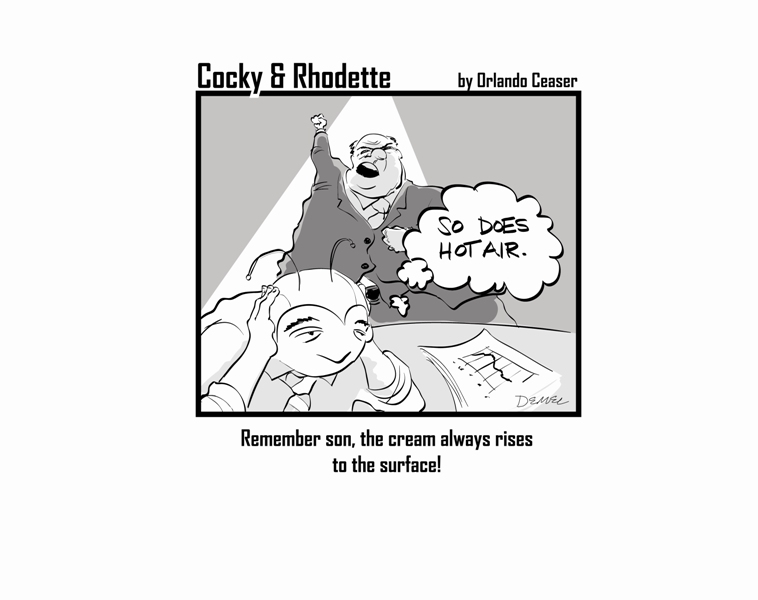
Speed is often admired in the communication process. A leader who makes snap decisions is seen as forceful, decisive and endowed with qualities that command attention and admiration. However, in some instances the quick decisions may mask insecurity, incompetence, lack of authenticity and integrity issues. The observer may miss the signs as they focus on the flashy presentations.

Difficulties in business relationships arise when the false and manipulative motives are discovered and revealed. Lack of integrity violates the rules of emotional intelligence as portrayed by Daniel Goleman in his book Primal Leadership. The snap decision from a disingenuous leader is pretentious and undesirable. They may be hiding something.

People with cruel intentions will ultimately be discovered. Perceptive people are everywhere. They will play the role of an investigative reporter and will eventually unmask the leader through the clues provided through their communication style. The early signs of skepticism may be initiated when snap decision are made without collaborating with others. This could be the tip of the iceberg that will lead to their downfall. A gut feeling may signal that something is wrong. The observer may decide to register their actions as suspicions and commit to keeping an eye on the leader. The unscrupulous leader may use their quick decisions to impress people, shield their incompetence or to ward off threatening opponents. But, their dishonestly will be discovered, because someone is watching them.

Quick decisions on their own are not a problem, particularly if based on familiarity with the situation and subject matter and a reputation of sound judgment. Snap decisions do not automatically mean a character defect. They may be the result of a keen business mind that thinks through multiple options with split second timing. These traits must be respected and appreciated. However, people have been known to make knee jerk reactions without thinking through all of the data and evaluating the options in order to hide their selfish or libelous intentions.

Let us take a moment to review, explore and extol the benefits of a leader being decisive.

If the leader is an effective communicator and demonstrates balance in their decision making, people are impressed. People are not tempted to look for problems. They analyze the messages from formation, to delivery, receipt and response and nothing seems out of order. When messages are filtered through the receiver’s value system, experiences and beliefs, the communicator seems perfectly in line.

People look up to and study the leader. They innocuously look for signs to learn how to communicate better and to ensure they are properly following the leader. Additionally, people;

• Pay attention to, notice and respond to more than the leader’s words. By this I mean, they watch the leader’s facial expressions. The non-verbal signals are launched before the verbal. It’s like lightning arriving before the sound of thunder.
• Messages incompatible with the leader’s intent are intercepted and clarified. They will clarify by saying,” I don’t think if I made myself clear.” They may ensure understanding by asking, “May I restate what I said?” They place the onus on the leader rather than on the receiver for the accuracy of the communication, which should minimize misunderstandings.
• The leader has an obligation to do their best to clear the arteries of communication. Then it’s up to the person hearing the message.

The first time the perceptive person (investigative reporter / listener) suspects there is something improper about the leader, they may feel uncomfortable. They know biases and prejudgments cause us to think the worst in human interactions. If they are objective, they may feel they could be biased against the leader because the leader may remind them of someone else, who dealt them a dirty deed. Initially, they may question their own judgment and objectivity.

The investigative reporter recognizes that it is wise to go slowly in such serious matters. They are patient and thorough, as they compile the information. They look for a trend in certain behaviors before jumping to conclusions. When they consistently see snap decisions made that devalue people, witness inconsistent messages that seem illogical, they are pressed into a deeper state of scrutiny. They do their homework and move carefully to gather data on relationships and careers that were trashed by the leader’s impulsive and damaging words.

There is a certain rhythm and communications in the workplace. There is a standard of how people should perform and how people should be treated. Invariably, you may find a leader with character issues, such as a lack of integrity and this will upset the rhythm of the environment through their communication style. Snap decisions in their hands are a weapon and a shield. When they are discovered, they should be replaced or the organization risk losing credibility for a lack of commitment to standards.

Snap decisions, that are the wrong decisions and those delivered for the wrong reasons, may cause continuous stress and conflict. They will create a constant state of turmoil due to internal and external pressure. But they may be an indicator of a major cover-up that is happening right before your very eyes

Don’t forget. Be impressed by quick decisions made by skillful leaders with the gift of discernment and execution. However, where they are made with insufficient data with a disregard for people, they may reflect a skill deficiency or the leader is hiding a major insecurity or character flaw.

Copyright © 2014 Orlando Ceaser

Secrets of Success in Sales and Leadership

This interview was given to Pharmaceutical Sales Representative Magazine and contains information that is still current and vital for today’s professional in any field.
“How do you describe your job? Do you feel that you are simply a salesperson whose only real duty is to sell as much of your products as you can? If so, this month’s column is for you! The average rep might get away with this mindset, but the best reps in this industry see their jobs in terms of both sales and leadership.

This month we speak with Orlando Ceaser, author of Leadership Above the Rim: The Poetry of Possibility. He has authored numerous articles, books and CDs, and has a comic strip on leadership, motivation and personal development. Formerly the Senior Director of Diversity for AstraZeneca, he is now a motivational communicator for Watchwell Communications, Inc, We speak with him this month to tap into his over 30 years of experience to learn how the best reps use leadership skills to get to the top of their field.

Orlando, you have worked with reps from a variety of vantage points. Why don’t we start by giving us a definition of leadership as it pertains to a pharmaceutical sales representative?

Leadership is defined in the eyes of the customer. The pharmaceutical sales representative, who helps their clients reach their vision of quality patient care, will be perceived as a leader. They will lead by example and develop credibility through technical expertise and outstanding customer service. Their responses to questions will be in the best interest of the customer. Their objectivity will create meaningful trusting relationships. They will be in the upper echelon of sales reps by using their talent, skills and resources to provide value and exceed customer expectations.

How do you see the industry’s most successful representatives using their leadership skills to advance their careers?

These individuals are not afraid to take risks. They will openly ask questions in meetings, volunteer for special projects and coach and challenge their peers. They recognize that each interaction is an interview, so their time in front of senior leadership is used as an opportunity to demonstrate their talent and tactics. They realize that the first step to a promotion is doing their current job to the best of their ability. The most successful representatives know that advancing their careers does not necessarily require a promotion or relocation. They may accept a lateral move, as well as a higher rung on the career ladder.

The successful sales representative will use a mentor or coach to help them improve their performance and counsel them on their career. They will develop advocates who are aware of their track record. These representatives are continuously learning and looking for ways to excel among their peers, by being competitive, but not in a negative manner.

If a rep doesn’t have a lot of experience in leading other people, where can he or she begin to get that experience?

Experience leading people can be gained on the job by taking the lead on projects and volunteering to assist their manager on special teams and with field training new representatives. They will gain valuable experience leading a team and learn to influence without authority. Additionally, there are opportunities away from the job where they can hone leadership skills. Sales representatives may volunteer in local community, religious, social, military and sports programs.

Sales representatives should let management know the scope of these leadership opportunities and the skills being developed. It is a good idea to have leadership development as a career objective and read books, take classes, attend seminars to help fulfill the leadership objective.

What do you think are the top one or two qualities and/or habits that make a great leader in this field?

Great leaders have the ability to rally a team to a cause greater than themselves. Marcus Buckingham, the author of First break all the rules and The one thing you need to know, says, “Great leaders rally people to a better future.” This vision of the better future is passionately presented, designed and executed. People follow because they can see how it will benefit them. Clarity in defining the future and optimism as they alleviate the fears of their team is necessary to keep them focused on achieving corporate and personal objectives.

What one or two qualities or habits do you think are very destructive in people who are in leadership roles?

I have noticed a number of leaders lose control of their organizations lacking integrity and trustworthiness. These are more than moral failing; they strike to the core of motivating a team to strive for the future espoused by a leader. If people don’t trust the leader this will impact morale, levels of engagement, productivity and sales results. It will also prevent the leader from retaining their top talent.

Additionally, in a global economy, leaders who are not inclusive or culturally competent will be a liability to their organizations.

What would you tell a representative who feels that they don’t have the basic skills or characteristics to be a leader? Perhaps they don’t like to be in the spotlight, or lack confidence in speaking out and giving their opinions, for example.

I would suggest reading books on leadership and discussing leadership skills with their manager. They may be mistaken regarding their ability to lead. In these current economic times, it may be a competitive advantage to acquire leadership qualities. For example, speaking up at meetings is a skill set that can be developed. Some people are introverts who like to process information differently and may take time to think through a response before commenting. Participation strategies and tactics can be devised to increase confidence and engagement. I know people who write down questions before and during a meeting to structure their thoughts. Others role play their responses before a meeting through mentally rehearsing their questions or practicing out loud.

Senior leadership makes decisions about the value of sales representatives from their ability to sell and their ability to lead. Expertise in selling today will cause leadership to ask the question, “Do they have what it takes to lead, tomorrow?”

6 Ways to be discovered at work

I remember many stories of people being discovered at some point in their career. This language is often associated with artists, entertainers and movie stars. The person or group was performing in a small nightclub and that night, a record producer was in the audience. The young lady was working behind a cosmetic counter and a modeling agent was stunned by her beauty. The painter’s work is shown in an obscure art gallery when seen by a critic. These situations also happen in the business world. A hard-working employee is brought to the attention of an influential manager, who inquires about their performance and subsequently takes them under their wing. A person delivers a presentation and suddenly, upper management is aware of their existence.

Many times, the act of being discovered was portrayed as being lucky, something beyond the individual’s control. However, life and experience teach us, that there are actions a person can take to put them in a position to be discovered. What is the secret to being discovered? What role can you play to ensure it happens to you or your people? Is it a matter of luck or do you play a major role in achieving the dream you deserve.

There are at least six things that an individual can do that will increase the odds of exposure and discovery. They are as follows:

• Professionalism and expertise
• Market yourself to the right people
• Visit places of the powerful and influential
• Ask people to view your work and give feedback
• Acquire an advocate
• Ask for recommendations

Professionalism and expertise

It is correct to assume that working at a very high level and excel at your craft will attract attention. If you are selling more product than your peers, this will eventually be noticed by people in higher levels of authority. If you are generating more ideas, working longer hours, volunteering for leadership roles on major projects, standing out in the crowd by asking pertinent questions, you will be noticed by influential people. Your expertise will lead to higher performance ratings and greater rewards and recognition.

Display character and a positive work ethic. This will draw attention to your career and people who can help you succeed. They will be attracted to your talent and pristine work history.

Market yourself to the right people

Find the people who make the hiring decisions or pull will the purse strings. Create a career plan that includes the components listed below, as tactics in your strategy. Share your success with the right people. Don’t be bashful; let them know how good you are without bragging. Always remember, “Every interaction is an interview.” My coach James Malinchak has a saying that is pertinent here.”ABM, Always Be Marketing.” Look for ways to perform your job and make people aware of your contributions. Be subtle, but effective in sharing your words to key decision-makers. Being discovered is the reward you deserve for hard work and dedicated focus. The right people can place you in a position to maximize your contributions organization. Position yourself so that people in power or those who have hiring authority can see the impact of your work.

Visit places of the powerful and influential

Place yourself in a position where you can be seen and heard by decision-makers. I know people who join groups and associations or volunteered because it placed them in the presence of important people. They were committed to helping others, but doing it in the presence of some of their managers provided an extra incentive. People in power like to align themselves with people with similar interests. Increasing your visibility and participating in similar activities, can accelerate the process of being discovered. This is a prime motivator for people to take up golf, tennis and other athletic activities. The presence of influential people is a lure for being discovered.

Ask people to view your work and give feedback

Many people love to assist someone who are committed to excellence and are anxious to improve. Hard work and dedication to excellence attracts people who want to play a role in your success. By asking people to observe your work and give feedback, it shows that you are open to improve your performance. The rapid implementation of their ideas will show them that you are sincere and respectful of their suggestions.

Acquire an advocate

If you acquire a person who is very interested in your growth and development, they will refer and recommend you to other people. As a matter of fact, they may be so excited about you that they will tell everyone about your potential, your talent and your ambition. If these individuals are highly regarded, their words of praise will help open doors for you. You will be amazed at the number of people that other people know who can benefit your career.

Ask for recommendations

Show your initiative by asking for the names of people who could help you. When you ask for the recommendation, ask them if they can let the other party know they have their support. I heard a statistic on a radio program that 70% of people landing new jobs were due to employee recommendations. If you want to be discovered, if you want people to know who you are and where you, recommendations can help speed along the process. Over time, you will master the skill of being in the right place at the right time, highly skilled and ready to be discovered.

Copyright © 2014 Orlando Ceaser

Leaders are not mind readers

There is value in leaders being aware of critical issues in the workplace. The quality of leadership decision-making is based on the quality of information or data on hand. You may feel that any leader worth their salt should have access to information that will help them do a better job. Leaders have many talents, but clairvoyance and mind reading are not within their skill set. Therefore, it is important for their teams to practice full disclosure on matters critical to the success of individuals, teams and organizations.

There are three areas I would like to emphasize to make my case. They are career status and updates, environmental hazards and new ideas.

Career expectations and updates

Current aspirations

Is your manager aware of your career expectations and personal goals? An employee became frustrated when he did not receive an assignment he cherished. He felt his performance would convince his boss that he was the ideal candidate for the job, but he never stated his interest. When I sold encyclopedias, I often used the ‘B’ volume for its excellent article and pictures about birds. The article began with a picture of a mother bird with a worm in her mouth. There were several baby birds in the nest. The question on the page was which bird will get the worm? The answer of course was the ones who made it known that they were hungry, by screaming with their beaks open. Individuals must vocalize their interest and make them known to their leaders by their actions.

Career alerts – changes in expectations

If you have career aspirations that have changed, wish to lead a project team and possess insight and ideas that could benefit the company, you must let them know.
Leaders have an understanding of your career limitations or restrictions. If this information becomes outdated or you have changed your mind, the only way they will know this, is if you bring it to their attention.

If you have changed your relocation flexibility, please keep your manager informed. Leaders are not like the notice included in your monthly bills. The notice asks if there is a change of address, please provide the new information. You must adopt the same procedure regarding career updates. It is also important for you to be objective when others around you are promoted who do not have your restrictions. You cannot be frustrated when others are moved ahead of you because of their ability to relocate to accept choice assignments.

Greg was very upset when a person with less tenure was promoted and relocated to the home office. He spread negative comments and felt it was unfair. When confronted with his displeasure, he indicated that he should have been considered for the job. When he was asked if his relocation restriction had been removed, he lowered his head and said it had not. He was reminded that he would have been in consideration if he could relocate. He was challenged to be more positive and to represent himself as the kind of leader who could be promoted in the future. He stated that that he wanted someone to ask him if his status had changed. He agreed to take responsibility for this task, since it was his career.

A reluctance to keep leadership informed on key aspects of your career can cause you to develop an unhealthy and unwarranted negative attitude towards leadership and the organization.

Acquisition of new skills

If you have acquired new skills through education or volunteerism outside the company, these new skills should become a part of your corporate resume. Skills such as organizing, administration and facilitation acquired on large civic, association or church projects might be transferable to the workplace.

Environmental hazards

A leader may not know about the poor working habits of some of your coworkers. These employees may not be shouldering their fair share of the work load. These individuals could be a drag on the team by damaging the morale of the group. These people are environmental hazards who could erode the culture of the unit. The attitude that says,” the leader is being paid the big bucks, so let them figure things out on their own,” undermines the effectiveness of hard-working individuals, the team and the organization. Failing to expose inefficiencies and ineffective people will eventually harm everyone.

If there are time wasting and budget draining activities, they should be discussed with your leadership as soon as possible. Ineffective procedures should be disclosed in a tactful manner.

A leader may inadvertently offend someone in your department or group. The manager may not be aware of this. Find a way to bring it to their attention, rather than allowing it to fester and endanger productivity.

The presence of such dangers may impair the well-being and effective functioning of the team. It is incumbent upon you to step forward and tell the leader. When you are close to the situation, you have the best view. The leader cannot read your mind and extract the necessary information. You must tell them.

New ideas

If you have talent and a skill set that is not been shared, maximum benefits are being minimize. Find a way to inform people about your gifts, whether in a meeting, by memo or through your mentor. If you have an idea or a better way of doing something, which could cost the company time and money, it would be a travesty for you not to disclose this information. The personal recognition and praise you receive could be financially rewarding.

Sharing information should not pose a threat to your career. If the organization punishes the messengers, you have to be very careful, but the information must be disclosed. You may handle this by participating in employee, satisfaction and engagement surveys, writing anonymous memos in suggestion boxes and / or relying on a trusted member of leadership in another department. The leader is not a mind reader, so you must adopt creative and straightforward measures to keep them informed about information vital to the well-being of everyone.

Copyright © 2014 Orlando Ceaser