Under New Management – A chance to decline or a chance to shine

new-mgmt

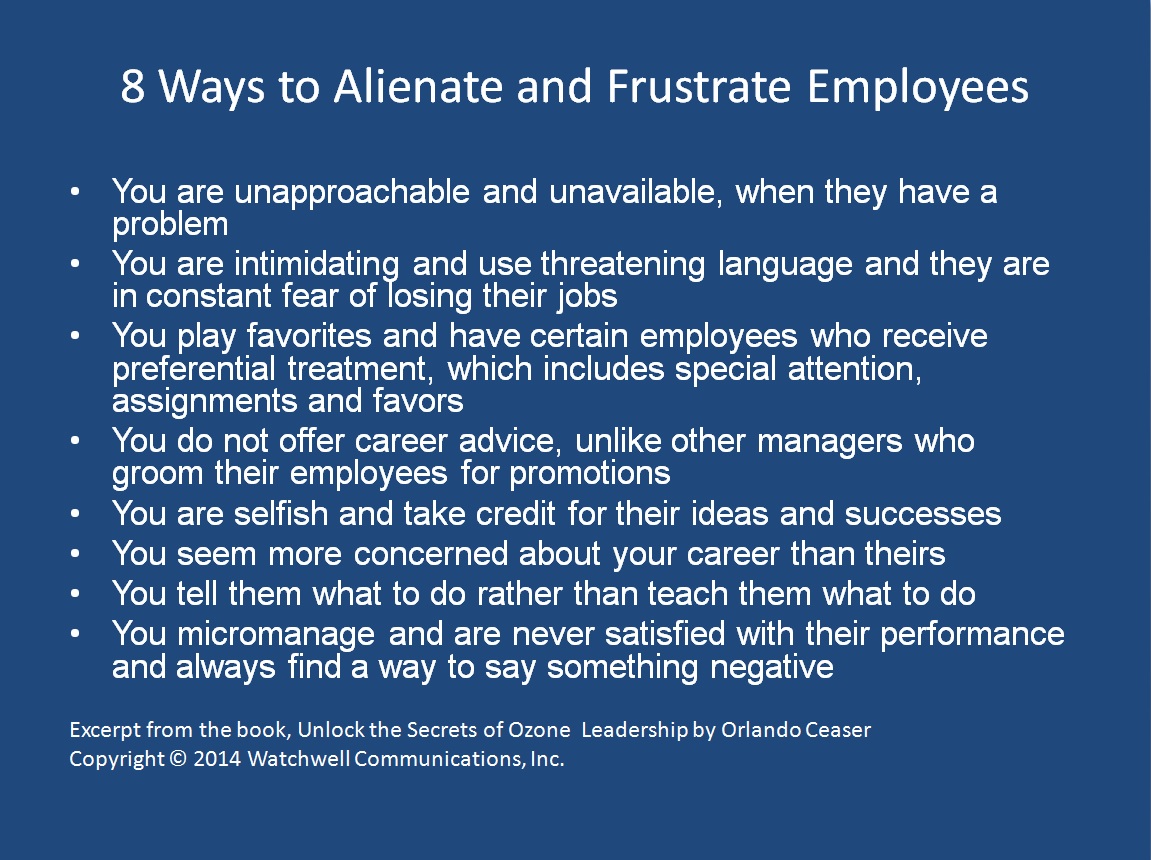
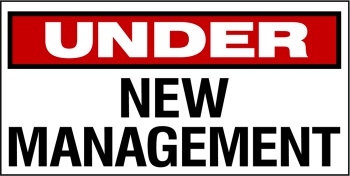
The sign has three words, “Under New Management.” We often see the sign in the window of a retail establishment. What does this sign mean to you? Does it conjure up images of change and great expectations? Are you saddened that a great institution will never be the same, gone the way of the dinosaur? Does it make you think hopeful thoughts about the future, casting aside the circumstances of the previous administration? Do you instantly wonder if new people with more money, resources, business acumen, talent and operational expertise, will make the business successful. Under New Management can bring opportunities, as well old problems and new obstacles.

Your opinion about an “Under New Management” sign is based on being connected to the previous management; as a patron or participant in their business. If you were dissatisfied with the prior regime, this sign may give you words of encouragement that things will be better. If you are on the inside, and not in the inner circle, this may mean greater opportunities for advancement. If you are on the outside, you are hopeful for a better return on investment or an increase in quality and customer service.

When new management arrives on the scene, there are new people to handle the day-to-day operations. The communications industry, especially radio, is notorious for bringing in new ownership, followed by new management. Radio personnel are often under the specter of change. When rumors start about a potential acquisition, panic leaps into the hearts and minds of everyone, except those personalities who view themselves as untouchable. These individuals, due to their notoriety, can be classified as employable, because of their ease of finding another job.

It is customary for most industries to experience change. Will that change be in products or services or the management structure, personnel or brand identity? In radio the change could be in their format? Will the station go from all news to a talk radio or country music format? What will the new manager think is the financially prudent format to recoup their investment? What changes could “Under New Management” bring to your company or industry? How could your life be changed?

“Under New Management” is a sign that could be hung after a merger and acquisition. Those in positions of power and leadership may worry the most. Many times the higher up you are in an organization the more worried you are of losing your job, status, influence, mentors and advocates. But, there are those on the outside of power, looking forward to the opportunity to shine. They want a clean slate, audiences before a new panel of judges.

Some of my greatest opportunities were, “Under New Management.” I recall making a speech before a large audience after a merger. I was approached by one of the sales representatives from Puerto Rico, excited about my message. She said,” I never knew you could speak like that! We have never heard you on the big stage before. Why haven’t you been on stage in this type of setting?” I smiled and thanked her, realizing that there was something special about the opportunities provided by being, under new management. There can be many career benefits brought on by a change in management. Ambitious personnel should strategically plan for a jump start, a new start to their careers and seize the new opportunities.

“Under New Management” could provide an environment where people can feel courageous enough to explore new areas. It could be seen as a chance to overcome mistakes made earlier in one’s career. New management may have a policy of mistake forgiveness, like the accident forgiveness features in some automobile commercials. It is true that negativity never gets amnesia in some organizations. It has a long memory for mistakes, even though the clarity of its memory may be very vague.

I spoke with the manager who applied for re-entry into her former company. She was cleared for rehire, but someone mentioned a problem they had with her almost 20 years earlier. He couldn’t remember the specifics, only that it was unpleasant. This company was under management, however there were lingering problems of old biases from the people they maintained.

New management can therefore, lead to the continuation of old stereotypes and biases from the remaining managers. It may also replace old unconscious biases with a new set of preferences and biases. But we must be optimistic and strive for the excitement and new energy to commit to build something new and magnificent. We must build an organization that allows us to make the most of the honeymoon period assigned to “Under New Management,” to impress upon everyone the desire and willingness to serve in order to achieve high expectations.

“Under New Management” is not the answer to all problems and it is incumbent upon everyone to bring their best and be hopeful that the environmental change will be a breath of fresh air. They must work to help provide fertile soil for people to grow to their fullest potential. They must work diligently to give the new managerial structure a chance to succeed and flourish.

Copyright © 2015 Orlando Ceaser
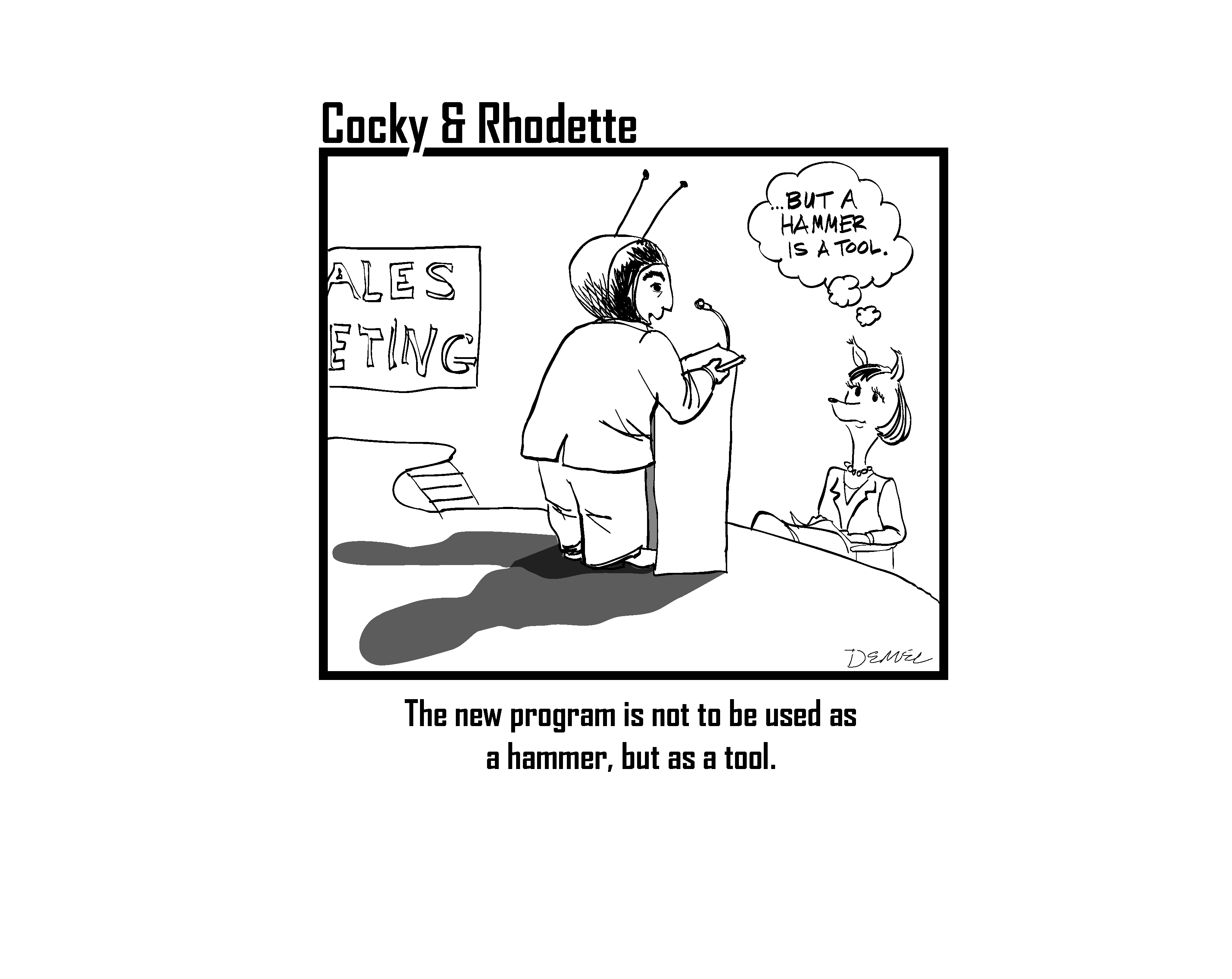
The Case of the Righteous New Manager

Hammer

A promotion to management is quite an accomplishment. A new manager joins the ranks of leadership, among the most important individuals in an organization. The manager conducts the functions of planning, organizing, staffing and budgeting, to help the company achieve results and expectations. They are accountable for implementing corporate policies and strategies, as well as caring for the company’s most important resource which are its people.

New managers may possess traits that may hinder or delay the development of their teams and the rapid results they desire. Some have an attitude of righteousness, which means they feel anointed as a manager, rather than being appointed to the job.

New managers bring a fresh perspective to their assignment. They may not be mired in history, preconceived notions and the barriers and restrictions on what can’t be done. They bring drive, enthusiasm and a can do attitude along with a desire to prove that their superiors made the right choice when they were selected as the manager.

The righteousness that new managers display can be itemized as follows:

  • They use an autocratic management style to avoid being challenged
  • They try to mold people in their own image
  • Abuse power through favoritism and preferential treatment
  • Never truly left their old job

Autocratic style

The righteous new manager using the autocratic management style believes that the manager is always right. This management style is perfect for it allows some new managers to hide their insecurities. They project a feeling of superiority. They display an attitude that says they deserved the job and should not be questioned. Challenges are seen as disrespectful to their position and they are swift and deadly in their response. The righteous new manager can be detrimental to organizations, departments and teams, when they operate vanity, insecurity or sheer arrogance.

If the righteous new manager is not comfortable with her skill level, she may not want people questioning her decisions. Autocratic managers don’t want to be questioned. They are accustomed to having all the answers in their previous assignment. But they have not achieved that level of competence in their new position. They respond to inquiries, as the parent who says,” Do it because I told you to or because I said so.” They are afraid to be vulnerable and admit they don’t know everything. They view this as a sign of weakness.

I watched a new manager receive a suggestion from a member of his group who was a former manager. When the idea was proposed, he simply responded that it can’t be done and moved on to the next subject. He missed an opportunity to compliment an employee on the idea and work with the group to fashion something that was within policy. The discussion could have been very open and fruitful if he had used a more participative style of management.

Autocratic managers unwittingly shut off information, which is vital to the success of their group. Managers do not have all the answers. An environment open to challenge and scrutiny can be very beneficial. The new manager must learn how to create this environment. This will enable the manager and the team to grow immeasurably from this experience.

The autocratic management style is a very effective style in the right circumstances. There are situations when the manager has to make the call without input from their teams. However the misuse of this style can be a problem.

Mold people into your own image

The righteous new manager may be tempted to over emphasize the skills that got them promoted. They may be experts in data analysis, customer service, strategic thinking, problem solving, administration or sales. If they were a great salesperson, they will demonstrate that they can sell and expect everyone to sell as they did. Sometimes they will not allow their salespeople to sell because they are always showing them how it should be done. The magic phrase,” this is how I used to do it,” eventually undermines the team. A righteous new manager will take over the sales call to the chagrin of their salesperson and the customer.

The biggest roadblock with the righteous new manager may be the veteran employee. The variance between the new manager’s methods and the veterans experience may be the most significant challenge. The veteran employees may not have had the advantage of the new terminology and techniques and the latest training modules, but they know their jobs. They have the advantage of experience and know how to get results.

When a veteran employee is in trouble, it is up to the new manager’s superior to guide them through this delicate personnel issue. This enables the new manager to benefit from the expertise of their manager. A high producing veteran employee can be placed on the verge of resignation or termination because the new managers making their lives a living hell. I remember when the most effective salesperson was demoralized and frustrated because the righteous new manager wanted things to be done their way. This frustration affected the workers ability to do his job. Sales began to decrease and the new manager made a case that to the veteran had lost his touch and needed to be replaced.

Favoritism

The new manager may have a number of people play up to them to gain preferential treatment. We’ve already discussed situations where prior relationships may lead people to think they should be treated differently. The new manager cannot give in to this temptation. There must be a concerted effort to treat employees with the appropriate and equivalent level of attention. If someone always gets the best assignments or is always called on and applauded in the group, this can cause problems in morale nothing can undermine credibility and engagement more than preferential treatment.

There may be instances where you have a natural affinity or relationship with someone in the group due to prior history. Don’t let this circumvent your ability to lead. This is easier said than done. Sometimes when you have made a conscious effort to avoid favoritism, people may initially accuse you of it anyway. There are situations when members of your team are of the same gender, race, ethnicity, city or country of origin, fraternity / sorority, college and personality type. People will assume you have a preference, even if you have not exhibited one. This says more about them than it foes about you. Be patient and steadfast. In time people will see that you are fair in your relationships with your team and their accusations, suspicions and thoughts of favoritism will go away.

Never really left the old job

This person loves to be called on in matters related to their old assignment. They were good at that job and it was a source of confidence. There is comfort and safety and the tried and true, the familiar has its own rewards and recognition. The new assignment is not been mastered, so these good feelings from the old days provide satisfaction to their ego, but can hinder their growth in the new job. They have to cut away and devote themselves to the new position. They also have to lose the mother hen mentality and allow the replacement the room to grow in their new job.

The new manager needs validation. It is important for them to receive encouragement as well as continued instruction until the new job is mastered. Maintaining a foot in both camps may result in doing a substandard job in both positions.

New managers want to demonstrate their effectiveness as soon as possible. In most announcements, it states the effective date of the promotion, but it does not state the effective date of the manager, in regards to their skill level. The reason is obvious. No one knows the effective date, when the manager’s leadership skills are fully grown and they are fully operational. A new manager plagued with righteousness delays their effectiveness and the performance of their team

Copyright © 2015 Orlando Ceaser

Motherhood and Leadership

Mothermirrorlion1

You and I are probably very similar. My early exposure to leadership principles came from my Mother. I would imagine that I am not alone. Usually we tend to think of leadership as a masculine trait, but the seeds of leadership in many homes were actually planted by the Mother.

Mother initiated our leadership education. She was the driving force behind our early physical, mental, educational and spiritual development. Mother planted the seeds of leadership by modeling behavior, holding us accountable, introducing us to new experiences, coaching and encouraging us, cultivating gifts and pushing us out of the nest to participate and get involved in our surroundings.

Mother allowed us to explore different activities to find our talents. We were creative around her and she celebrated our ingenuity. Many of us have memories of our Mom taking us to the park, shopping and various school and church programs. She was eager to compliment us when we did something well and quick to discipline us when we were out of line. She was so proud of us. By supporting our interests she identified our gifts and bolstered our confidence.

We were her team. The climate in her leadership environment allowed us to blossom as we outwardly and subliminally listened to the valuable messages. We were constantly infiltrated by leadership qualities that emerged as she navigated the parenting process.

  1. Setting the vision for a possible future
  2. Establishing values and beliefs
  3. Providing direction, opportunities and resources
  4. Encouragement and reinforcement
  5. Discipline, feedback and developing healthy habits

Setting the vision for the future

We were told we could be anything we wanted to be. We were challenged to be and do our best. If we were going to be a janitor, we were told to be the best janitor. Education was strongly touted as the key to our future, as something no one could take from us. When I finished 8th grade, Mother asked, “What is next?” High school was the correct response. After high school, she asked, “What is next? I responded college, as we had discussed so many times since 8th grade. It was drilled into me at an early age that I was someone special and she saw me reaching my God given potential.

Establishing values and beliefs

The rules and regulations of life, the values and beliefs to guide our behavior and understanding of the world, were initially from our Mother. The stories she read, the lessons we learned in her presence and the experiences we received during playtime. She was the moral and religious center of the home. She showed what was important by how she spent her time and through the chores she distributed and the discipline she delivered. She practiced what she preached and walked the talk. My Mother was a continuous learner and went back to school and became a Registered Nurse. Additionally she gained a BS degree after all of the children finished school. She was always active in community, school and church affairs.

Providing direction, opportunities and resources

We were instructed in the ways of approved and acceptable behavior. We were warned about actions that would not be tolerated. We were not going to embarrass and shame her or the family. My Mother was a stickler on manners and polite behavior. We had standards of good conduct which was anchored in the Golden Rule.

Mother gave us opportunities to express our opinions and grow our talents. I had a number of jobs through the years. I worked as a shoe shine boy, a paper boy, shoe salesman and shoveled snow to make extra money. I learned the value of hard work and how to handle money. I also benefitted from collecting money from her Avon customers. I could always count on her doing anything to see that I had what I needed. She paid for my art supplies, new clothes to march in a parade and prepared me for many other school projects.

Encouragement and reinforcement

When we fell she picked us up and made us feel better. She always knew what to say when we were hurting. She was our biggest fan. She had confidence in us. My Mother had many children and she treated us all differently and there were no favorites among the children. If she was leaning toward one of the others, she was open to talk about it. My Mother told me I was the Chosen One. My response was chosen by whom to do what? It was her way of letting me know there was a purpose for my life and I had to find out what it was. When others seemed to abandon us, Mother was always in our corner offering words of support, guidance and forgiveness.

Discipline, feedback and developing healthy habits

Mother was known for providing simulations to prepare us for life in the real world, although we did not call them simulations. She gave us positive and reasonably realistic feedback when we did well. She checked our homework to make sure it was done and done correctly. She did not let us off the hook. She held us accountable for our actions and helped lay down the law and maintain the order.

When we broke the rules, the punishment usually fit the offense. She wanted us to get in the habit of doing our best and acting properly. There was a saying and a television program that said, “Father knows best.” If that was true Mother knew that and all the rest.

My Mother challenged me to learn and present a very long drama poem when I was ten years old. The Creation by James Weldon Johnson was in her English literature text book when she was in night school. She worked with me and checked with me until I mastered the piece. I began performing it in church services all over the city for many years. She brought out my gift of public speaking and made me comfortable in front of crowds.

I realize that some may have a different opinion of their Mother’s role in sowing and demonstrating leadership principles into their lives. Some may have received examples of how a leader should not perform. Nevertheless, we know the value of strong leadership in altering the course of lives and organizations.

When we search our memories and review the books, theories, seminars and the performance of actual leaders, let us not forget where many were first exposed to lessons on leadership. We should recognize and celebrate the awesome contributions of Mothers. They should be honored for the role they play in developing leaders of today and leaders of tomorrow. During the time we spent on our Mother’s knee, in her lap or at her feet, we were overtly or covertly immersed in the relationship between Motherhood and leadership.

Copyright © 2010 Orlando Ceaser

Eight ways to alienate and frustrate your people

alienate

Inclusion is a key desire of all members of the human race, even in the workplace. We want to be included and welcomed into the inner circle, where we can enjoy all of the rights and privileges. Acceptance is another objective of the human heart, closely linked to inclusion. We have a desire to draw into the in crowd, where we are told that we belong. We want to be accepted and inclusion becomes the vehicle that can enable us to achieve a state of connectedness that makes everything worthwhile.

It is generally more productive to discuss how to become a better leader rather than focusing on the negative aspects of leadership. People want to know what they need to do, instead of what they need to stop doing. However, I would like to deviate from this pattern and construct a composite of everyone’s leadership nightmare. I wish to discuss the leadership attributes that cause followers to lose sleep at night, walk around in uncertainty during the day and distress about their future.

I began by exploring common pet peeves and comments made by people during my coaching sessions. It is not unusual for me to walk up on people who are complaining about leadership or lack of leadership within their organizations. These are the topics discussed at the water cooler, provided it is located in a safe location. The same conversations can be heard at the health club and where ever people congregate.

These are perilous times as evidenced by a comment from one of my neighbors. She said she would stare into her husband’s eyes when he arrived home each night to determine if this was the day he would lose his job. During his work day I’m sure he was dealing with some of the eight ways outlined below that leaders use to alienate and frustrate their employees.

My premise revolves around eight ways that a leader can really get under your skin, on your last nerve and drive you out of your mind. The curious thing is these attributes may not always present with the leader. Given the day-to-day stress and pressure of the job many leaders have transformed into the person they never thought they would become. If you were to ask them to list eight things that they could do to alienate and frustrate employees they would probably list some of the items presented.

Ineffective leaders display two or more of the eight qualities. They are so caught up in survival mode that they may not care that they are alienating and frustrating members of your team. The team members are the very ones they need to have fully engaged to accomplish their objectives.

o3banner21.jpg

These eight ways are extracted from my book Unlock the Secrets of Ozone Leadership. The main character is about to experience a mutiny because his people have had enough of his fatalistic leadership style. This style had been very helpful in moving him up the corporate ladder, but at the same time leaving alienated and frustrated bodies in its wake. Finally, he has poisoned the atmosphere so badly it is about to be his downfall.

When the heat is intense, leadership must become as the ozone layer for its people. It must filter the non-essential and non-productive heat, so that the necessary warmth and energy is generated to achieve success. I used to say that I am an environmentalist, not that I wanted to save the spotted owl, but I wanted to create the climate where maximum productivity and people development occurs. The eight ways to alienate and frustrate your people are listed below. Please identify the ones in your current leadership team and decide which of these attributes apply to you. If they apply, you must immediately begin a course of minimization and elimination.

8 Ways to Alienate and Frustrate Your People*

  • You are unapproachable and unavailable, when they have a problem
  • You are intimidating and use threatening language and they are in constant fear of losing their jobs
  • You play favorites and have certain employees who receive preferential treatment, which includes special attention, assignments and favors
  • You do not offer career advice, unlike other managers who groom their employees for promotions
  • You are selfish and take credit for their ideas and successes
  • You seem more concerned about your career than theirs
  • You tell them what to do rather than teach them what to do
  •  You micromanage and are never satisfied with their performance and always find a way to say something negative
  • *Excerpt from the book, Unlock the Secrets of Ozone Leadership by Orlando Ceaser

These are at least eight surefire ways to cause people to be disengaged and paranoid in the workplace. If you want to ensure that the workers you hired or inherited are pushed to the edge, include as many of these dysfunctional practices, as you feel is humanly possible into your workplace.

Employees understand that corporations are in difficult circumstances. They want to play a role. They want to be an integral component in the partnership that enables an organization to lift itself from the quagmire of extinction. Companies are fighting for survival. Companies are competing to service their customers and to meet the needs of their clientele better than the competition. Allow employees to help the organization succeed.

Dedicated individuals are committed to help you achieve your objectives. They deserve the opportunity to contribute at the highest level. They deserve the best leadership has to offer. When they are inspired through effective leadership; when Ozone Leadership is put into action, they will have the necessary direction and energy that will allows them to do their best work. Success becomes an inevitable result of strong leadership at the right time with the right people.

Copyright © 2015 Orlando Ceaser

HR is the new ER

DodgedaBullet

The Human Resources Department in this one organization was reminiscent of a trauma center. Its personnel were extremely busy handling emergencies. People were not necessarily in the facility, but they were backed up on the phone lines and in the e-mail system. HR technicians were anxiously utilizing their expertise to treat each employee for their affliction. When the scene was extremely hurried, calls were routed to the answering service and placed in a queue until the messages could be returned. They often stated that they will get back to you at the earliest convenience. When contact is made, there is the nebulous comfort of knowing that your call is being monitored for quality purposes.

At times the department could have been labeled ER instead of HR. With the ER standing for employee retention, employee recovery, employee replacement or employee rescue. The counselors were there to listen to the grievances, perform attitude adjustments, and recommend strategies that would benefit the patient as well as the organization. Sometimes they had to perform surgery to extract misunderstandings and misinformation and settle claims that could resort from managerial malpractice.

One employee at an insurance company described a situation that reminded me of a trauma center. It was as if she was in a combat zone with warring factions all around her. Some people kept their heads down and continued to fight through the workload. Others went AWOL and left the organization. The climate was similar to a MASH unit. This terminology is familiar to those in the military who fought in combat situations. MASH was also the name of situation comedy which was very popular years ago. MASH in our HR situation stands for Managers Are Stifling Hope or Managers Are Spreading Hostility, as their employees are demoralized and afraid to resign. The tragedy is that these Managers Are Sacrificing Heroes, when they really need their people to deliver heroic efforts beyond expectations in a competitive marketplace.

The ER department’s data bank reveals that many employees have problems with their manager. Their managers are unable to function in a stressful environment without taking it out on their people. They were not given stress management courses in leadership school. Employees are complaining about the way their managers treat them and speak to them. Employees cite circumstances where they feel threatened and intimidated. They describe wounds to their egos and blows to their self-esteem. There are complaints of verbal bashing, name-calling, being betrayed and stabbed in the back by lies and innuendos. The manager’s actions created a hostile work environment that borders on harassment at least in the minds of these individual.

One individual from an insurance company described a toxic climate where the following statements were said to her.

  • “Someone is going to lose their job and it won’t be me.”
  • “If you don’t like it you can leave. There are plenty of people ready to take your place.”
  • “I know I shouldn’t be saying this. And this could get me fired, but……..” (She continued with her inflammatory remarks against her employees)

Veterans of the workforce have commented that they don’t recall seeing things this bad. They are astonished by the lack of trust that exists between employees and management. Some are pessimistic about change in the immediate future. However, some are optimistic and say this is part of a cycle and improvement will occur when business performs better. As sales go up, people perform better at every level and much of the tension is removed from daily interactions between employees and supervisors.

I look forward to the world pictured by the optimist. It will be comforting when people are more engaged and the culture improves at work and at home. I will probably receive fewer telephone calls from people who feel threatened on their jobs and are very nervous because they fear being unemployed. There is hope now that the job market is getting better, but jumping ship is always a nervous thing to do. To the workers who are losing sleep, unable to eat or eat too much and drink to calm their nerves, they want relief. They want the resilience of those who are exercising more to increase the ability to handle the stress until the world improves.

Managers have different ways to handle pressure and stress associated with it. Those who are very skillful and competent, recognize that intimidation is a short term means of getting results. At some point this approach will become counterproductive when the manager really needs his people to deliver their maximum levels of engagement and results. It is easy to say that an employee should control what they can and work to become an indispensable member of the organization. Individuals with superior skills can generally land a job in any economic environment. But employees still need the ER to help them through the tough times.

Periodically, it is important to assess the injuries that are being treated in the Human Resources Department. Responsible leadership should evaluate these cases and the use these data points, along with employee surveys and focus groups to determine the health of the organization.

The question is what can be done to prevent the assault on HR from wounded employees who view it as their Emergency Room where Employee Restoration is practiced before returning them back to work? What can be done for the manager to remove the incentive to intimidate others? How can we turn HR into the ER which is the engagement room, or the empowerment room, where people are revitalized, and energized and anxious to go to work?

The Human Resources Department performs a vital role in the health and well-being of any organization. Its ability to ensure that the company’s greatest asset, its people, are hired, trained, developed, and placed in situations that are best for the individual and the organization, will have a profound business impact.

Organizations must work to ensure that if HR becomes the ER, it is a positive place where people receive the treatment they deserve. If HR becomes a MASH unit may it be because Managers Are Sanctioning Hope. Where the treatment they deserve empowers them to be more engaged, more productive and committed to exceeding the objectives that will make the organization and its members successful.

Copyright © 2015 Orlando Ceaser

Overqualified! Is this a real concern or a convenient excuse?

Lack-of-Vision

Many companies do not give interview feedback to external candidates? But, when feedback is delivered, many of the applicants will hear these dreaded words, “You are an excellent candidate, but I am afraid you are overqualified for the position.” These words, intended to placate the candidate, often leave them frustrated and disillusioned.

There are a tremendous number of talented people in search of a new job. In many instances they are willing to work in jobs that are below their educational level, income history or experience. They want to work. They want to take care of their families, pay their bills and be productive contributors to society.

There are two attitudes about people that come into play in workplace scenarios. First, everybody likes to get added value, purchase something on sale or receive a bonus and a gift that is unexpected. They want to consider themselves lucky. This also applies to personal relationships. If a potential mate is interested in them and they are more attractive, with assets beyond their imagination, they consider themselves very fortunate. They are ecstatic when they gain something that exceeds their needs and expectations.

Second, no one likes to be tricked, used, manipulated, taken advantage of, fooled or exploited. If they hire someone and before they can give them a satisfactory return on investment, they leave the organization, people are left feeling they wasted their time and resources. If people invest time in a relationship and it is severed prematurely, they are disappointed and possibly angry.

Both of these philosophical dynamics come into play when companies are interviewing to fill vacant positions.

Overqualified people

There are facts that are known prior to the interview. Interviewers know whether or not a person’s qualifications match the needs of their assignment. If the person is overqualified, they know it before the interview. If being overqualified is a knockout factor for the assignment, the person should not be invited to the interview. It is wasting their time and company time. If they are brought to the interview, the assumption is that the organization is open-minded to consider them as a temporary or permanent fit for the job.

If they are invited to the interview and rejected, here are some of the potential real concerns and convenient excuses.

Real concerns

  • They have too much experience, but it is the wrong experience for today and for the future
  • They wanted them to perform well, but they bombed the interview
  • They did not convince the interviewer that they really wanted to work for their organization
  • They could not transfer their skills and experience to the job
  • The amount of time necessary to train them would slow down the work teams
  • They told the interviewer, in so many words, they would leave the company if something else became available With real concerns, interviewers have serious doubts about the person’s interest in the assignment. The organization knows, they are only available because a job that matches their background is not ready. They want the person to be happy and productive, but they are skeptical. They do not believe the candidate is ready for the lower paying job. They don’t want to take the risk to see if they could handle it. The interviewer wanted to be sold on the fact that they were capable of making the adjustment to the new job.

Convenient excuses

  •  The interviewer is reluctant or prohibited from giving the candidate the real reason for not selecting them
  • The overqualified line was given because it is the easiest explanation.
  • The candidate was so impressive in the interview that they were seen as a potential threat to vulnerable careers in the organization.
  • They like the candidate, but are afraid they would be frustrated and unhappy

Convenient excuses are used to hide the real reason for not giving someone a job. The excuses could indicate that someone was interviewed to meet a federal regulation to include certain individuals in a candidate pool. Company personnel have to be consistent when offering this explanation to candidates after the interview. When a candidate finds out that they were rejected as overqualified and other individuals with similar experiences were hired, they could cause problems.

Candidate – Overqualified Mindset

The candidate must understand the current predicament of the hiring manager. They are wrestling with the two dynamics discussed earlier; the struggle between obtaining extra value and the risk of being used by a desperate job seeker. They must recognize that the hiring manager has the following issues;

  • They are gauging seriousness as to whether the person really wants the job and would really stick around for a while.
  • The company feels the overqualified person is only interested in them because their real interests is not available.
  • Ask, “What do they need to hear from me, to make them comfortable enough to give me the job?”
  • They want to know that the job will be stimulating enough. They want them engaged and not disruptive to the team.
  • How can they make them feel that it is their lucky day that they are available to benefit the organization?
  • Convince them that they are hopeful that this opportunity will lead to something to benefit their career.
  • They may wonder if they are patient enough to stay with them and learn the job and contribute at a very high level.
  • Show them how they can add value to the organization, while broadening their skills
  • Demonstrate that this is a calculated move to strengthen their portfolio
  • Display belief in their ability to make it work, that they have thought it through and it is more than a desperate ploy, but an opportunity to show their humility while using their skills and work ethic to make a difference.

As discussed earlier, people like it when they can obtain greater value. If an organization can bring someone in the workforce that has skills above and beyond what is expected of the job and they are willing to accept the money offered and can hire them on a trial basis and groom them for greater things, it may be a risk worth taking. The hiring decision can be fraught with risk. Many times hiring a candidate who is not overqualified, can result in, them leaving shortly after being hired.

There isn’t a problem getting someone or being someone that is overqualified. The company, under the right circumstances, could use the person’s skills and experiences to enhance their organization. They could use their leadership to develop their peers. They could ideally be someone they would like to groom to fill other positions in the company down the road.

In this competitive work environment, people who are overqualified are constantly being hired, while others are being turned away. It is important for candidates to continue interviewing for the right job, and to be strategic and look at other positions to determine and how they can add value broaden their portfolio.

When individuals are told they were overqualified, this may mean they were unable to address the real concerns potentially posed by their resume. It could also be an indication that the interviewer took the easy way out and resorted to a convenient excuse.

Copyright © 2015 Orlando Ceaser
Informants in the workplace

Hammer

Information is an essential ingredient in the leader’s decision making arsenal. There are many established, credible resources at their disposal. There is everything from company databases, computer files, the Internet and consultants to the minds of employees. The information available in the minds of employees is critical. However, there may be situations where employees are reluctant to disclose relevant information for a number of reasons.

If the environment is not perceived as safe, people are reticent to step forward with their information. There may be employee surveys and numerous forums within an organization where data is accumulated. But, there is still a need to decipher the data and provide additional perspectives. These translations and interpretations can be provided by informants in the workplace.

An informant is defined by Webster’s New Riverside University dictionary as, “one who discloses information and one who furnishes cultural or linguistic information to a researcher.” Oftentimes, informants volunteer their services. They may be guided by a number of motives. One such motive may be a genuine desire to improve the culture of the workplace or team.

Secondly, informants may be driven by ulterior motives, hoping to be rewarded in some fashion. A pharmaceutical company discontinued their bonus program which disappointed a number of their representatives. A group of employees got together and complained and expressed their dissatisfaction. The most vocal member of the group became an informant and notified leadership of the various opinions expressed. The other members were chastised and eventually the informant was promoted. The moral of this story is to express your opinion in a situation where your insight is appreciated and the person can do something about it.

Thirdly, a leader may ask everyone to be an informant. They would like to create an environment where everyone can step forward and let them know the climate of the team. The leader would like to receive the word on the street regarding a new policy or procedure, directly from the employees.

Fourthly, there are situations where a leader may select a particular person or a small group of people, who have keen insight into the workplace. They may have the ability to articulate the feelings of the team.

Lastly, there are situations where a team may identify someone as a spokesperson, a group sanctioned employee. This person is an approved voice of the people.

There is crucial information that the company must provide to the employees or members of a team, in order for the company or team to be successful. This data is around the vision, mission and the type of organization they are trying to create.

There is also crucial information possessed by the employees. The employees have the perspectives and relevant data obtained by being closest to the customer. They must share or release this information to leadership, in order for leadership to recognize the impact of their programs and strategy. The release of this information from the employee may be through the informant.

There were numerous occasions in my career where I used an informant to improve the success of a strategy, program or my leadership effectiveness. In one situation I did not realize the tension that existed between my District Managers. One manager called me and asked if I noticed the discomfort in the room. Armed with the information from her call, I scheduled a team building session where they were able to play together and resolve their differences.

Additionally, there were another time when individuals were poisoning the environment I was trying to create. There was a time when I served as a healer to address a dysfunction within a team. I brought the team members and their manager into my office for a debriefing session. After the meeting was over, I received a telephone call from one of the participants. She stated that before their drive to their territory, she heard my voice in the back seat of the car. Apparently, one of the representatives had taped my entire session with the team. This informant made me aware of either the insidious nature of the team member for their lack of trust. I was able to satisfactorily handle the situation because of the courage of my informant.

Leaders have told me of situations where members of their team smiled to their face, but tried every effort to undermine their efforts, behind their backs.

The leader must create the environment where people feel comfortable enough to tell management what they think. The manager must create a culture which is an OASIS. The OASIS (Open And Share Information Safely) is an acronym describing a concept that I introduced in my book Unlock Your Leadership Greatness (available at www.OrlandoCeaser.com and www.amazon.com. This environment will have a direct them on the number of formats available in the organization.

Informants are critical in the lives of leaders who are new to an organization or new to the role of leadership. It is comforting to have individuals who can share with you and serve as a barometer for your policies and procedures. They can also let you know how your personality comes across to the group.

Informants do not necessarily have to be spies who infiltrate an organization to gather secrets. They can be legitimate information merchants dedicated to helping leadership make better decisions.

Copyright © 2015 Orlando Ceaser

Pursuing Your Purpose in 2015 – a format for fulfillment

niche (1)

The teacher arrived at the author’s booth at the convention. She perused the books and educational resources on the display table. She previewed the posters and listened to the motivational CD’s that were present. She turned to the author, looked him in the eyes and asked a poignant question,” Why haven’t I heard of you? Why don’t I know you? These resources are exactly the kind of help I need to work with my students.” This scene was repeated by a local television actor on a network show. He was on a program, with the author, speaking and mentoring to students at a high school. While waiting for the session to begin, the actor reviewed the author’s latest book. “Man, why haven’t I heard of you?” he said.

Most of us are not fortunate enough to be challenged to live out our purpose in this manner.  The situations are real and reflect a question we should ask ourselves. Have the right people heard of us? Have they been exposed to our purpose and message? The objective is not necessarily notoriety. But wants to know if we are doing what is required to pursue our purpose. Are we doing what is necessary so that a wide range of people can benefit from the talent and skills we have to offer? I attended a Big-Money Speaker conference conducted by my coach James Malinchak. He suggested that we could use our financial success as one way to determine the level of service we are providing to others. Therefore, if we are pursuing our purpose and utilizing a format or system for fulfillment, we should see this reflected in how we measure success or influence.

We should constantly work to pursue our purpose. This begins with the identification of why we are on this planet. This can usually be suggested in our talents and the passion that we have for certain activities. In my case, it is reflected in the dedication and persistence in spreading the word around the world about leadership, excellence, motivation and utilizing our gifts. My keyword for 2015 will be ubiquitous, which means to be widespread. But, widespread does not mean everywhere or to everyone, it means that I must be widespread within a targeted area of emphasis, within my niche. We can’t be all things to all people or we will eventually dilute our impact and burn out in the process.

We should develop a format for fulfillment which will include a system we will follow to reach our goals. This system or process will be followed routinely as a discipline focusing on our purpose. I created The Know System™ in my book, The Isle of Knowledge, as a way to stay focused on making the right decisions to reach your goals. Great coaches will tell us to pick a niche and focus our attention in that specific area.

We should be determined to be “Known in our niche and famous in our family.” We should work strategically within a targeted area to meet the key customers and prospects and make them aware of our products and services. This awareness could be from attending and running workshops and conferences, conducting podcasts and webinars, or writing articles and blogging. We want to be perceived as an expert in our given area. Therefore, writing a book on the subject, may be appropriate, to establish us as someone who knows more about the subject then most people.

To be famous in our family includes your intermediate as well as our extended family. Are our relatives aware of our job and our purpose? This awareness will enable them to ask questions out of curiosity and to increase their knowledge. They can be inspired by the way we live and come to us for career advice. Our extended family may include friends, acquaintances, business contacts and people we meet at networking events. Do they know who we are? Do they know what we stand for? Do they know our purpose and the products or services we provide? We can use this phrase as a reminder to use the influence we were placed on this planet to acquire and deliver. We must be driven to be known in our niche and to be famous in our families. This will push us toward our responsibility of activating our talent and using it so that we are fulfilled. Our niche and family members may be able to help us achieve our purpose.

I am the entrepreneur mentioned at the beginning of this article. The words stated by the teacher and the actor are being used as a mantra to drive my behavior and performance. I am committed to entertain, educate and inspire action in people to achieve outstanding results. This compels me to deliver the messages and develop the resources to enable people to do their jobs, pursuing their purpose and making a difference. I am hopeful that these messages and resources will help people unlock their leadership greatness and develop a format to fulfill their dreams and provide the level of service necessary to enrich the lives of others. Please contact me if you have any questions about the content of this blog post, my speaking topics and the motivational resources of Watchwell Communications, Inc. I can be reached at Orlando.ceaser@watchwellinc.com, www.OrlandoCeaser.com and http://www.watchwellinc.com.


Copyright © 2015 Orlando Ceaser

4 Directives to Influence Behavior

Instructions since childhood were designed to teach and guide us. Over the years we have noticed remarkable similarities between the directives given in our youth and the requests made of us as adults. In retrospect, their effectiveness varied based on our circumstances and development level. The same is true at work. Leaders and managers give instructions using the same memorable phrases. The objective of these phrases is to elicit our compliance with their demands, commands or requests for action.

“Do as I say, because I said so”

People have used a variety of commands to get the kind of behavior they want. “Do as I say, because I said so,” is the classic power phrase of authority. Parents use it often. The power can be based on position, where they can administer rewards or punishment if someone fails to comply with their request. The sentence could easily end with,” or else.” The job, held by the speaker, confers position power. They are the boss, the parent, the person in charge and when they speak they want others to jump quickly into action. The person using this phrase does not wish to be questioned or challenged. People will also use the specter of fear, brute force, physical strength and threats to persuade people to fall in line. Threats may be physical or assaults to someone’s character or reputation.

Frustrated parents and managers have used this phrase when they run out of answers. When they are busy or in a hurry, they resort to this language to end conversations. They do not want to discuss the matter anymore. They want people to listen, obey and stay quiet.

“Do as I say, because I said so,” is a technique that can influence a number of people. When matched to the right individuals, it is very effective. It is useless when delivered to the wrong person.

“Do as I say, not as I do”

Some people adopt a hypocritical style to exert influence on others. They recognize that they don’t have the discipline or integrity to practice what they preach. Yet, they insist that others listen and obey their dictates and commands. This works in situations stated in example number one, however, the inconsistency and hypocrisy will render it ineffective in some cases. The resistant ones will not comply and they will use the leader’s hypocrisy as justification for refusing to follow their commands.

There is a certain amount of arrogance associated with telling someone to do something that you are not committed to do. The advice may be solid, but the absence of following your own advice, may compromise its impact. They may do what you say, but only when you are watching.

A powerful story was told about Mahatma Gandhi at http://www.witandwisdomstories.com. The blog post “Mahatma Gandhi’s salt less diet” contains the following story. “One day an anxious mother, along with her son visited Mahatma Gandhi. She told Bapuji, “My son is suffering from a kidney disease, Bapuji. I am really concerned. I took him to the doctor and the doctor has advised him to take food without salt.” She continued, “the problem Bapuji is my son refuses to follow the doctor’s orders, but if you tell him he will listen as he worships you and he will not deny you.” The Mahatma asked the mother and son to see him after a week.

After a week or so, Mahatma Gandhi called the mother and the son to his house. He took the boy aside and looked him in the eye and said” You are very important for your mother’s happiness and your health worries her. It is my wish that you follow doctor’s orders and stop taking salt in your diet.”

The boy who was in awe of the Mahatma was so pleased with the Mahatma worrying about him, agreed at once. He turned to his mother and said” no more salt for me Ma.”

The relieved mother stood puzzled for a while and asked Gandhi “But Bapuji, you could have told him this when we came a week ago, why didn’t you?”

To this Gandhi replied, ”But madam at that time I was taking salt in my diet and it has taken a week for me to give up salt myself. How can I advice your son to eat a diet without salt with a clear conscience? How can I tell someone to do something which I myself do not practice?”

Hypocrisy will not be tolerated in today’s climate of transparency and authenticity. Some will follow this request, but must see the benefit or fear the speaker.

“Don’t do what I did – Learn from my mistakes”

It is well-known that experience can be the best teacher. Rebellion is a natural part of the human spirit. Many of us have received instruction, but elected to ignore it to listen to our own voice or the voices of others. Going down the wrong path has caused us discomfort and ultimately we realized we were wrong. Armed with the experience, we wish to let others know the value of staying on the right path. We don’t want them making the same errors in judgment that plagued our lives. We therefore, become an ambassador for the truth. We say to people,” Don’t do what I did. Learn from my mistakes.”

This is sometimes seen as a tough love message or using scare tactics. Former prisoners have used a” scared straight” philosophy to convince youth to stay away from a life of crime. They feel that education on the negatives associated with criminal activity would discourage youth from hanging with the wrong crowd and making questionable decisions. They take the glamour out of disobedience and use their lives as proof.

Conversations in a corporation may involve older employees telling younger employees about the mistakes they made. These mentoring sessions or coaching moments are an effort to steer less tenured employees toward making better decisions on their career path. There is value in information sharing. That occurs when the different generations in the workplace tell their stories of arrival and survival within the context of the organization.

This approach also works on some people, but not on others. There will always be people who think they are too smart, clever, intellectual, lucky, cool or too good-looking to suffer the consequences of their actions. They will view the sad story, as something that only applies to others.

“Do it like I did it – Follow my lead”

This is normally a very potent approach. It is the lead by positive example model. People will look at you, your reputation and your execution and realize the value of your words and actions. Learning occurs through imitation or modeling behavior. “Let me show you how it’s done, makes “Do it like I did it ” even more powerful. Many times, “Do it like I did it” and follow my example, is not verbalized. Yes, there are many occasions where people will issue these words to give a standard to follow, but often its power is in seeing someone act out the phrase. It is the practice that occurs with or without the preaching that makes it work. It is the example exhibited on a day-to-day basis.

Most of the time, “Do it like I did it” and “Follow my example” are positive exhortations. But, it may not work in all cases. People will imitate and follow negative leaders and negative examples. If the culture of an organization is filled with intimidation and a lack of appreciation, individuals desiring to be leaders will pick up on the signals. They will emulate the same kind of insensitivity broadcast by their leaders.

However, leading by example does not work on everyone. Someone will find a way to discredit your work or assign your accomplishments to favoritism or inequality, they cannot duplicate. These 4 directives to influence behavior collectively have been used to get individuals and groups to act and follow orders. They are spoken to move people to action. However, individually, we have found that they may not work on everyone all the time.

Copyright © 2014 Orlando Ceaser

6 Personalities on the Path to Progress

leadercouldbewaiters1
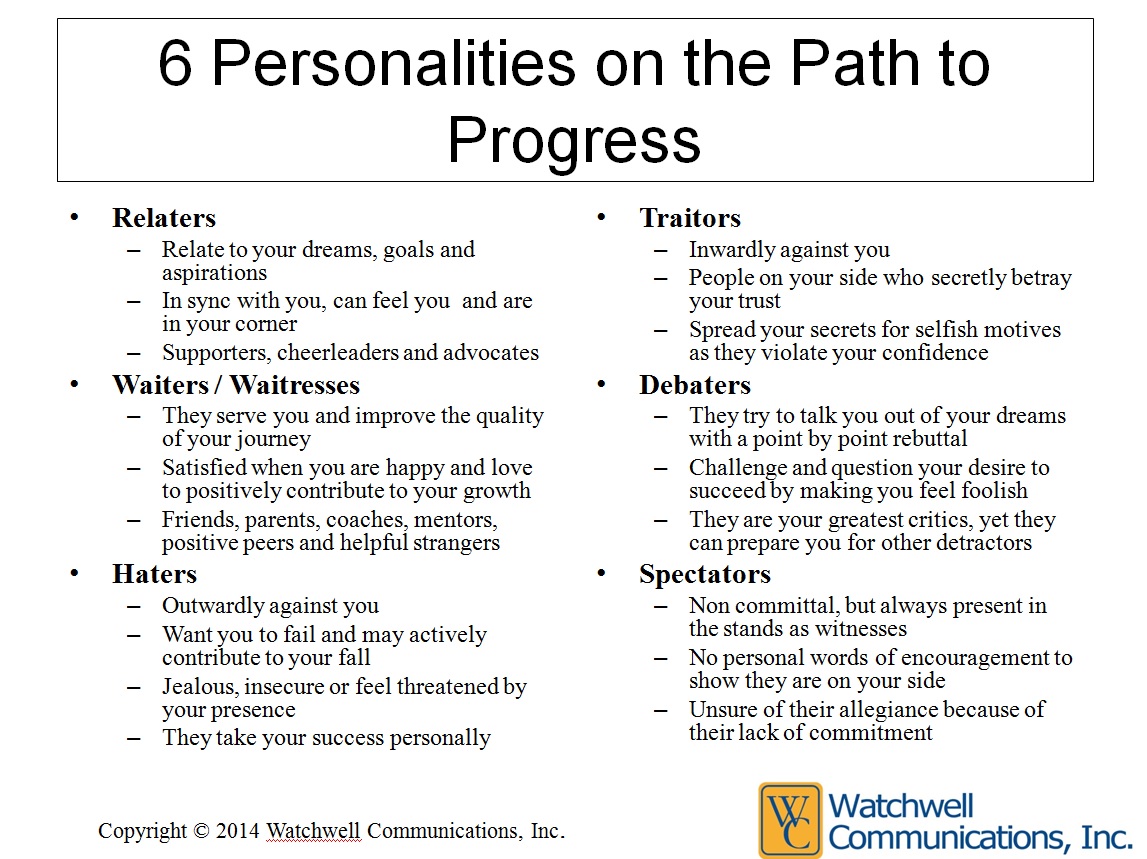
You will encounter a variety of people along the path to progress. There are a number of personalities on your journey willing to provide assistance or to be an impediment to you. Six profiles are highlighted based on personal and group observations. They are the relaters, waiters, haters, traitors, debaters and spectators. No one is exclusively one profile all the time. You may vacillate among the characteristics depending on the situation and the people involved. It is important to identify these personalities in order to enlist their assistance or to avoid their negative attacks on your well-being and your ability to achieve outstanding results.

6_personalities1

Relaters

These individuals relate to your dreams, goals and aspirations. They are in sync with your mission to succeed. There is a connection, commitment and compatibility with your dream. They relate positively to your intentions and seeking the best for you. They are on the sidelines and in the game as supporters, cheerleaders and advocates. It warms your heart to look in your corner and see relaters wanting you to make it.

Waiters / Waitresses

Waiters and waitresses have ‘. They are not individuals hired by you, but people who voluntarily serve you on your journey. They are your friend, parents, teachers, coaches, mentors and positive peers. They may be anonymous or strangers say a kind word or perform a good deed. These individuals derive satisfaction from being of service to and being a part of the delegation responsible for your achievements.

I ran the Chicago Marathon twice and the streets were lined with people with signs encouraging the runners. They screamed out the numbers of the runners and some of them provided us with water and beverages. You may recall a waiter or waitress who gave you outstanding service. They asked poignant questions in order to serve you better. They went out of their way to make your visit an enjoyable and memorable experience.

Haters

You may have come in contact with these individuals. They are outwardly against you. They may be jealous, insecure or just plain malicious in their attitude toward you. You may not have done anything against these people, but they see you and immediately resent you and your accomplishments. Haters are committed to bringing you down. They celebrate and laugh when you stumble. They have the resentment to match your contentment and find great satisfaction whenever you experience difficulties. Haters are prone to go to great lengths to place barriers in front of you and to turn people against you. They are constantly questioning your motives, while developing conspiracy theories to discredit your work.

Haters are very dangerous because of their capacity to spread malicious lies, rumors while attacking your reputation. Their outward expression of contempt may not be to your face, but many people will be exposed to their feelings.

Traitors

Traitors may get very close to you and win your confidence. You may trust them only to find out that they were false friends. They will work inwardly to unravel and discredit your progress to success. They will secretly try to undermine your efforts and tell people about your innermost secrets and weaknesses. Traitors may start out as relaters, but somewhere along the way they turn against you. Hopefully you will find out soon enough that they cannot be trusted. They are back biters and back stabbers. They may be passive aggressive, sneaky and secretive. Traitors may ruin your reputation by selling your secrets to the highest bidder.

Because traitors are believed to be your friends, their words ring with truth and credibility to an unsuspecting audience. Traitors will break your heart because of their proximity to your inner circle. They are on the inside and privy to your thoughts, feelings and actions.

Debaters

While you are committed to your journey, you will find a number of people challenging you every step of the way. They try to talk you out of success. They will question your sacrifice and try to discourage you from wasting your time. They will give you countless counter arguments and examples of others who failed through no fault of their own. They will persistently challenge the value of your dreams and the foolishness of your work ethic. Debaters will make you question your intelligence and qualifications for your objectives.

Debaters, however, can strengthen your resolve and survival skills. When you successfully counter their arguments, you will be stronger against other opponents. They actually prepare you for meaningful discourse with the conscientious objectors who are against your desire to be successful.

Spectators

In many respects your journey to succeed is a competitive event. There are spectators who are on the roadway in the field. There are other individuals who are in the stands watching the game. They do not get involved in the activities. They may cheer, but the cheers may not be for you. You may see the spectators in the stands, but you do not know their allegiance. You just know that they are present. They do not personally give you words of encouragement, as is the case with relaters and the waiters. You may not know if they are against you like the haters, debaters and the traitors.

Haters and traitors are potentially destructive. You need to find out who they are and develop strategies, structures and individuals to shield you from their insecurities. Haters and traitors attack you from different positions. Haters are outwardly against you. Traitors are inwardly against you. They gained your confidence and many times, you were unaware of their insidious nature.

Some debaters are convinced they are trying to protect you by talking you out of your dream. They may feel the dream is too dangerous and you may be hurt and they want to spare you the grief and humiliation associated with failing. However, many debaters are insecure and don’t want you to succeed because they will take it personally. If you succeed and they do not, they will see themselves as failures.

The spectators may be harmless, but they should be more than a witness along your path to progress. Spectators should get involved in the game and become relaters and waiters to support your cause. It is wonderful when spectators decide to be a part of the success of others. This service to others could be a major personal development growth opportunity on their path to becoming a leader.

These six personalities are present any time you try to accomplish something. They are the people you meet along the path to progress. The supportive personalities such as the relaters and waiters are essential to give you the moral support and technical proficiency, you need to succeed. Words of encouragement and acts of kindness from these individuals are instrumental in giving you the confidence and competence to achieve your goals.

Copyright © 20014 Orlando Ceaser