First Quarter – New Year’s Resolution Reboot

We are approaching the end of the first quarter. How is your New Year’s resolution going for you? Usually, about this time, many resolutions have been abandoned and kicked to the curb. The good intentions have fallen by the wayside and people walk away as defeated as they were this time last year. However, a seemingly failed attempt at a change in behavior for self-improvement can be salvaged with persistence and the right perspective.

For example, health club attendance usually spikes at the beginning of each year.

People are usually well engaged, as measured by attendance in classes or in the workout facility. The first three weeks are filled with enthusiasm. However, this year the enthusiasm waned after the first week. What is going on? Why are people disenchanted and disengaged so quickly? Is this indicative of results in other areas where resolutions are generated? Are they becoming harder and harder to sustain? We need to think of a different way of approaching our resolutions to give them greater sustainability.

We need to look at New Year’s resolutions as is a promise; and we like to keep our word. We need to see our resolutions as a computer program that simply needs to be realigned. What is really required is a resolution reboot.

Additionally, we should not confine our performance into a tight time frame, but to see it as a work in progress. A resolution reboot is necessary and admissible as evidence of our long term commitment. It is permissible as a continuation of the implementation of your growth strategy. We will reboot as many times as necessary until the program is fully functioning and running smoothly.

We must see our resolution as a part of an overall plan. Included in this strategy is our propensity to stop and start until the task is completed. It is our nature to not necessarily get something right the first time.  We have a tendency to collect a series of false starts, a few glitches before we are running like a well oiled machine.

Don’t beat yourself up if the early returns on your performance against your goal are not successful. Humans have a history of persistence until we reach our objectives. From learning how to walk, talk, think and run, the beginning stages did not go as planned.

Many of our goals as defined and described are like New Year’s resolutions. They had a rough beginning, but eventually became a part of our daily routine. We must approach our current resolutions simply as goals with things need to work on.

When a computer is not acting according to plan or specifications, the manufacturer usually asks us to reboot the program to see if it corrects itself. Whenever I have a computer issue, invariably I am asked to turn off the equipment and reboot. The same happens when I have a problem with my cable service. I am asked to please turn off the system for 30 seconds and turn it on to allow it to reboot itself. Many times this corrects the problem, as if the machine knows what is appropriate and aligns itself with the proper behavior. There is something therapeutic about shutting yourself down, rethinking your position, recommitting yourself to the goal and reminding yourself what success looks like.

You may need to try the same procedures to restart your resolutions, while keeping your goal in mind.

The early stages of your New Year’s resolution should not be seen as a performance failure, but as a temporary setback to regroup and rededicate yourself. Even if you are one of those individuals who backed away from your exercise goals after the first week, the game is not over. Tell yourself that your discontinuation was expected. It is a part of your well-planned routine to keep you working on your resolution until you get it right.

With the remaining days in the month and year, stay dedicated to your resolution. You know it is needed and the right thing to do for your development.  View the early returns as data and make the necessary course corrections to get you back on track. What worked for you in the early stages?

I remember training for the marathon and following the Galloway method. He suggested continuing to move forward, even if you had to stop and walk, but eventually you will reach your goal. So get Ready – Recommit – React – Reboot.  Keep moving and each  successful step in the right direction will get you closer to your overall goal.

Copyright © 2017 Orlando Ceaser
 

Personal development – Learning for others

A librarian posed a question to me that I heard many times in my career.” Are leadership or other training programs of any value?” She has seen many managers attend training programs and return completely unchanged. She wondered if the programs were a complete waste of time and money.

The success of training programs is determined by the manager and their supervisor. The manager must attend the training session with an objective in mind. There should be something in the content that they feel will help them become a better manager/leader. Their supervisor should hold them accountable and ensure that they return from the training session with the answers to two questions;

  1. What did you learn?
  2. How will you use this information to be a better performer?

It is optimal for the manager to have these questions in mind before attending the training, to prompt them to search for critical information, techniques and relationships. It is important for them to be open to how they will benefit, how it will change their current behavior and how it will influence their present goals and performance objectives. There may also be aspects of the training they can use to target specific individuals/teams.

If managers return from a training program and nothing has happened in their behavior and vocabulary, we can deduce that the program was not used it to its maximum benefit. Additionally, some managers feel that information is power and are therefore reluctant to share. However, managers should incorporate the techniques and vocabulary from the training into their everyday speech. They should share with their peers and direct reports, subject matter from the training. They should show how their peers, direct reports and supervisors can benefit from the information obtained.

Training should be seen as crucial for the individual and everyone within their sphere of influence. Acquiring knowledge, experiences and resources should be for the benefit and distribution to self and others. The same holds true when acquiring other information, such as reading a book. When you are reading you are not reading for just one. You are reading to develop yourself and learning for others.

A manager relocated seven times during his career in the pharmaceutical industry. There were a number of occasions when he wondered why he had to move so often, when others achieved similar milestones without as many moves. It dawned on him one day that when he moved, it increased his exposure, experience and expertise in many areas. This additional information allowed him to be of greater value to his people. He realized that growth was not just about him and this increased his eagerness to gain information for the benefit of others.

There are several other strategies managers can use to ensure that a transformation occurred when they attend training programs. They are as follows:

  1. Multiple uses of the training programs

Managers can be shown the value of the training beyond their immediate job; it increases the likelihood of them utilizing the training and gaining practice in the principles and techniques. For example, a training program around situational leadership contains principles that can be used at work, home, community meetings, places of worship and associations they belong to. If they use the information in these multiple sessions it increases the value and return on investment, regarding time, energy and money spent.

  1. Share with others

When managers make it a practice to have meetings to discuss the information learned that multiply the value of the training. Many individuals sit down with their teams to review the information learned and to discuss how it will be used to improve individual and team performance. The successful implementation and transfer of this data may actually have the people look forward to them learning new things, because they will benefit from the new knowledge.

  1. Ask about the program

If someone returns from training and do not share information, ask questions. They may be flattered or encouraged that others are interested enough in the training to want to know more. People may inadvertently hold their manager accountable by asking questions about the value of the program, the changes in the organization because of the program and how the information can be used to make them better employees?

  1. Use the information to improve yourself

Recognize that information learned by their manager can make them a better performer. If they have ambition to rise within the organization, what they learn can help them improve as well. Even if they do not have plans for advancement, it is imperative that they learn as much as possible in their current role. The more they know the more valuable they are to self and the organization. Bear in mind that the current appointment environment is fluid. It is impossible to stand still without being passed by or passed over. Expectations are higher everyday and the more skilled they are, the more likely they are to regain employment in the event of a job loss.

discretionary-effort-model

The second question that came out of my discussion with the librarian was, “Why should people change, if there boss is not changing?” There are many individuals feel they will do just enough to keep their job and maintain sufficient raises and increase in performance rankings. People feel better when they are functioning at their best. When they are fulfilled and engaged, they are working on all cylinders and the work can be fun.

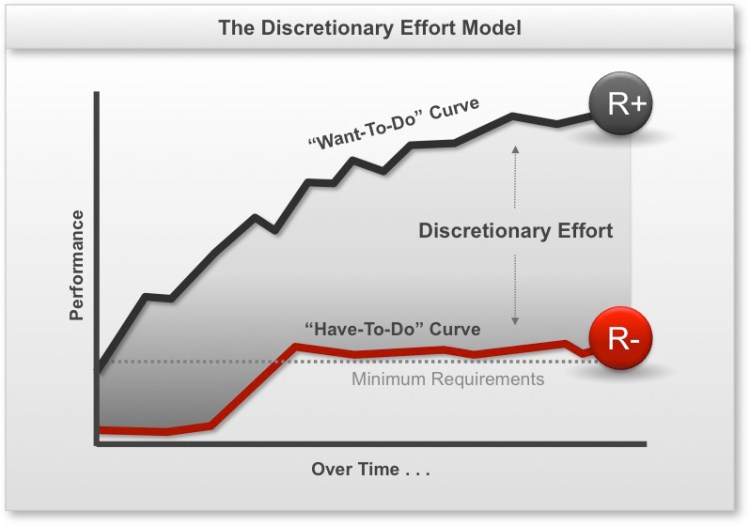
There is a factor known as discretionary effort. Aubrey Daniels International says “Discretionary effort is the level of effort people could give if they wanted to, but above and beyond the minimum required.” An increase in discretionary effort could be brought on by positive reinforcement and feeling as if they are a part of the team. However, if the manager is not providing positive reinforcement, it is still imperative for the individual to engage in self defense activities. These actions involve a making themselves more valuable to the organization, which in turns increases their value to potential employers. As they take control of their careers, implementing their strategy for advancement could help them tremendously in the long run.

In summary, when managers realize that there development contributes to the development of others, this multiplying effect gives additional power to their job. Additionally, you should always grow, because it is good for you. You should make yourself better, because being better positively influences everyone around you, regardless of your manager’s perspective on the training they attend.

Copyright © 2017 Orlando Ceaser

The 4th Monkey – “Do No Evil”

We grew up with the story of the three monkeys. I imagine that many of us have the same interpretation of what they represent. We were exposed to pictures or statues. One monkey had his hands over his eyes, the second monkey with hands over his ears and the third monkey’s hands were over his mouth. They were see no evil (Mizaru), hear no evil (Kikazura) and speak no evil (Iwazura). There were actions and behaviors demanded of us based on the three monkeys, but nothing was said about the fourth monkey. The fourth monkey was do no evil (Shizaru).

four-wise-monkeys

The stories of the four monkeys were popular in Japan in the 17th century. Their origin is between 2 and 4 BC in China. The Storyologer web-site (www.storyologer.com) has this account of Mahatma Gandhi who carried around a small statue of the three monkeys.  “Gandhi had a statue of three monkeys in three different postures. One was shutting his mouth with his hands, the other was shutting his ears similarly and the third one had put hands on his eyes. A visitor to his house became curious and questioned Gandhi about the various postures of the monkeys. Gandhi politely replied, ‘The one shutting his mouth tells us that we should not speak ill of any body. The one shutting his ears tells us that we should not hear the ill of any body. And the one shutting his eyes tells us that we should not see the ills of any body. If we do so, we will have all goodness and nothing but goodness.’

Travelers will often find local markets with carved depictions or artwork featuring the three monkeys. My wife was able to purchase an angelic model of the same concept. There are three angels; one was covering her eyes, one was covering her ears and the other was covering her mouth. However, the fourth monkey was not shown. The 4th monkey, when pictured, is usually shown folding his arms (the body language of being closed) or covering his crotch to signify inactivity.

It is fascinating the different interpretations of the four monkeys. In Buddhist tradition it meant don’t spend your time preoccupied with evil thoughts. In the West it relates to not facing up to our moral responsibility, for example turning a blind eye. But in my household, the monkeys were presented to us as a model of proper behavior. Our parents wanted us to identify with the images, to supplement our moral code.

See no evil (Mizaru)

We were told to pay attention to people and location(s). The idea was that if we were in the right location, we would minimize seeing trouble develop before our eyes. This was applicable in school and at work. We were instructed against being at the wrong place at the wrong time. We were also told not to look for bad things in people or in certain situations. There are people who see bad things when they don’t exist, which could explain the manifestations of bias, stereotypes and profiling. We were not taught to be naïve, but to be careful and respectful.

Hear no evil (Kikazaru)

We were told to shield ourselves from bad language and bad intentions. We should stay away from people who spoke ill of others and gossiped. If we were not in the wrong place we could minimize hearing things that we should not hear. There was an exception: if we could acquire evil information and use it to do good or to help others, that would be permissible.

Speak no evil (Iwazura)

Speak no evil was used to discourage gossiping or speaking ill will about someone. We were told to watch our language and to speak kind words. “If you can’t say anything good about someone, don’t say anything” was a part of this same philosophy. Adults told us that spreading bad news or malicious information could come back to haunt us. We should also, apply this same advice to the workplace.

Some of us have adopted a code of silence in the workplace and would not tell when someone was not pulling their own weight. We would rather silently complain or resign, before talking about a employee who was not working. It is our responsibility to find a way to report injustice, illegal behavior and practices that undermine people and the organization.

One way to break the code of silence is by offering incentives to whistleblowers. These individuals are people who step forward and report unlawful activities in an organization. They are generally paid a 10% bounty if the measure goes to court and fines are levied against the lawbreakers. In neighborhoods where people know the perpetrators of violence, but fail to come forward, there are no such incentives. Residents may be afraid of retribution, as the rationale for their silence.

Do no evil (Shizaru)

The fourth monkey’s actions are truly related to the others. The workplace is a common place for the four monkeys to be used as an operating system. Employee bullying and intimidation, sexual-harassment claims, the presence of racial discrimination and sexually charged language and actions exists in some organizations. Where improprieties and liberties are taken with people’s rights in the form of disrespectful words and actions, there are laws in place to prevent and punish these actions. Employees, who adopt a see no evil, hear no evil, speak no evil mindset are not helping to develop a positive company culture or a respectful workplace

Do no evil is a perfect monkey to enforce the values of character and integrity. He reminds us of proper behavior and etiquette. Our choices have consequences and the more we can emphasize a positive corporate culture and a respectful workplace the more effective our organizations will be become. There is conduct and behavior norms which must be identified, emphasized and enforced vigorously. Character will minimize stress in the workplace and reduce the number of lawsuits and discipline related to improper behavior.

How can we create an environment in our workplaces, families and communities, where people are held accountable for their own unlawful actions and the private citizens who come forward can feel safe and protected. If the fourth monkey was modeled, we would have less of a cause to talk about the other three monkeys.

Do no evil should be magnified and connected to many of our guiding principles of behavior.  The Golden Rule and its equivalent in many cultures advise us to treat people the way we want to be treated. The Platinum Rule which asks us to treat people the way they want to be treated. The 10 Commandments implores us not to do a series of acts which could be seen as evil, such as murder, stealing, etc.

We must clearly outline expectations of behavior and the judgment related to them to improve the climate in our organizations, homes and places where people meet. Correct action is essential to achieving healthy results in our relationships.

The imagery and practices espoused by the 4th monkey holds the key to making this possible. I am hopeful that by emphasizing the fourth monkey, we can improve our behaviors, connections, interactions and relationships of all kinds.

Copyright © 2016 Orlando Ceaser

Loyalty – To be or not to be?

Just_a_Game_b

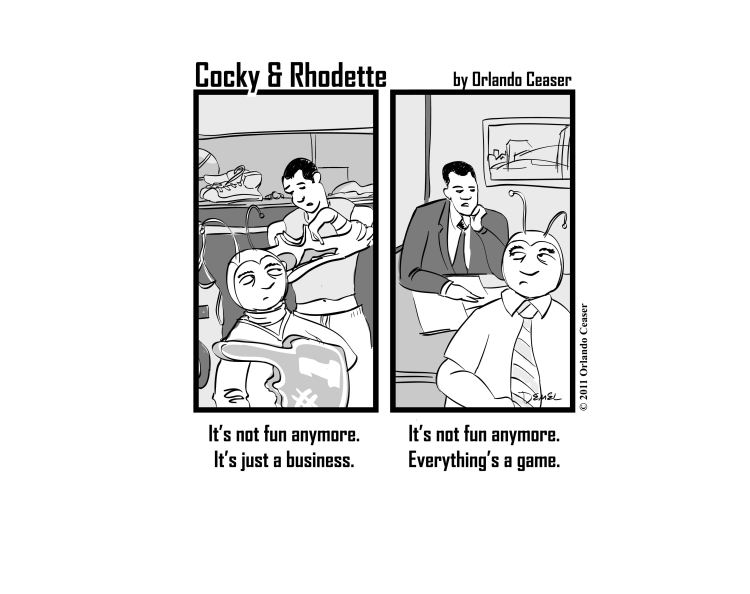
Loyalty is an awkward discussion topic within organizations. The relationship with our jobs is complicated. Layoffs, reorganizations, mergers and acquisitions, plant/store closings, and outsourcing jobs overseas have a negative impact on employers/employee relations and more row. Managers in some organizations think, “Why should I be loyal to my employees, after all this is business.” Company survival trumps loyalty is their current mindset. Employees wonder if they should stick around.

Additionally, employees who were loyal to their companies find themselves out of work and feel betrayed and used by their former employers.

Loyalty can be defined as allegiance to something or someone. Loyalty is earned and its compliance is given by consent. We are speaking of loyalty in terms of fidelity to your company. We may also view loyalty on several different levels: loyal to your manager, coworkers and team

Loyalty is an intriguing concept. We know what it is and the circumstances where it should be exercised. It is emotional and enhances the value of a relationship. Relationships have expectations. If these expectations are not met or are threatened, loyalty is affected. When loyalty is coerced or forced, people will stay on the job until the right opportunity arrives to ease their conscience as they leave the organization.

We are loyal when someone or something is worthy of our trust. However, when there is a breach of trust, loyalty is retracted.

Loyalty Demonstration

Loyalty must be discussed in the context of equality and reciprocity. After all, reciprocity is a part of the transactional currency of loyalty. The company is providing something to the individual and the individual performs the work commensurate with the salary and the environment. Loyalty involves fairness and keeping your promises. The employee’s level of engagement reflects their level of appreciation for the services rendered. If the employee is treated fairly, allegedly, they will work hard, speak highly and positively about the company and remain a part of the organization. Loyalty is given as long as both parties fulfill their part of the obligation.

A leader who is loyal to their people may fight hard to justify retaining good people at the expense of others. An organization/leader that has a reputation of doing everything to minimize layoffs and retain employees can influence the number of loyal employees who choose to stay and speak highly of the company. Some companies may take less profit, in the short term, and minimize turnover in their organization.

What do you do to develop loyalty within your people? Some may argue that loyalty is not something that you develop, but like trust, is something that is earned. What steps can you implement that will save your business and earn loyalty from your employees? Do you show that you truly value their contributions? Do you adopt strategies that protect your people during the hard times until profit improves? Do you honor your promises and meet their expectations? Discuss the big picture to keep employees apprised of company challenges and performance, where appropriate.

Seeds of defection

Organizations will frequently make decisions and state that they were made in the best interests of the company. Budgets are cut; people are reassigned or displaced in order to improve the bottom line. Some leaders will not search for an alternative view that would spare jobs and careers. Leadership will quickly reduce headcount. This plants the seeds of defection, as people realize they are only a number, a statistic, headcount and a line item on a budget.

A selfish organization risk creating a selfish, culture where people stay or jump based on their individual needs being met. Therefore, everyone is treated as expendable. People respond by acting as mercenaries or hired guns. This removes the stability that people like to experience.

If a company reduces staff, so they can bring them back later, employees become stressed. They are constantly performing emotional gymnastics in a toxic environment. Conversely, if the company goes out of its way to inform and retain people and they know it, they may go out of their way to stay or deliver higher levels of engagement, retention and overall performance, to protect the company and their jobs.

Loyalty used to be defined in the context of fidelity, as it related to staying with an organization long-term. However, there’ve been countless instances where people passed up job offers from other organizations, only to be terminated by their own company. Individuals are angry at themselves for being loyal to a company and then the company does not show the same kind of loyalty to them. When did these stories circulate around an organization, people vow to never let that happen to them if they can help it.

Mindset in Today’s market

What kind of mindset should you have in today’s precarious job market? Should you keep your head down and not worry and everything will be alright and work itself out? Should you be open-minded to the flirtations from other companies promising a better deal? Should you put the word out that you are interested and seeking a different long term relationship? When people approach work with the mindset of the, “it’s just a job,” loyalty can be compromised.

Some people strategically interview internally and externally to keep their interviewing skills sharp. Their rationale is that it keeps them sharp for jobs inside and outside of the company. Other employees interview for ego and the self worth to see if they still have the skills desired by another organization. Others want to test their market value to benchmark for raises.

Loyalty Risks

People are hired who have demonstrated the propensity to jump frequently from job to job. Their track record is firmly stated on the resume. They are hired hands or have a mercenary mentality. They have an unspoken understanding with management that they are there to fulfill an assignment or until they can’t get something better. This may ultimately become a disadvantage.

I was impressed by a young man who fits the above the description. We met between sales calls and he asked if my company was hiring? He was very impressive; He went on to say that he was always looking for a better job. He made a very elaborate presentation of his thought process of always looking out for something better. As a hiring manager, I pondered the risk of recommending or hiring someone like him who was always looking to leave for greener pastures. Loyalty with him would be misplaced and could be detrimental to the survival of the new organization.

Loyalty is a learned trait. It is generally observed and imitated. Individuals learn from an environment where loyalty is practiced. They learn the components and the guiding principles and foundation regarding its use. Both parties in the employer/employee relationship are evaluating the value of the arrangement. Both groups are under enormous pressure to behave in a manner that is considerate of each other.

If a company lays off employees as a last resort, it may be the nature of the business that is the business required it. Employees may not like it, but ultimately will understand.

If an employee receives an outstanding offer from another company that could benefit them and their families, it may be the right decision to take the job. In some industries, it is the nature of the business to change jobs frequently to build a resume of different experiences. In each situation, the ideal objective is to be respectful of each other and perform in the best interests of all parties involved.

Loyalty also mandates that you honor your decisions, whether they are to work for the company, leave the company, hire or release employees; act in a manner that shows you are respectful and deliver the best you can in the relationship. You can always show loyalty by working as hard as you can, as long as you are on the job. An organization may have to reduce staff, as a last option to remain viable as a company. An individual may be faced with the tough decision to leave a job that has good to them; in today’s turbulent times we should respond to these difficult situations with dignity and respect in all roles and for all employees. Loyalty must continue to be an important value for us. However, loyalty is strained and tested; we must combine it with trust to build stronger organizations and relationships that benefits all participants.

Copyright © 2016 Orlando Ceaser


Will there be a Mutiny on your watch? Is there a silent rebellion on your team?

People who have been tolerant of oppressive leadership/management behavior eventually revolt.  Mutiny is on their minds and it describes a revolutionary action. In an organization that has owners, principals and stockholders mutiny does not occur by physically taking over a facility or its leadership. It occurs by people determining that they will not give 100%. They will not be totally engaged at work. They will not give their best. Employees will adopt an “over my dead body” mindset, which means they theoretically would rather die than give their total cooperation to an organization that does not respect them. Workers have decided that the company does not deserve their best, therefore their best ideas, solutions and discretionary effort will be withheld.

A sales representative approached his mentor and told him about the dissent in his district. Apparently, the district was fed up with the leadership inadequacies of their District manager. He listed several failures in emotional intelligence and examples of managerial malpractice. He wanted to know the path they should take to bring their discontent to higher authorities. They were going to stage a mutiny. Their mutiny was not going to be a work stoppage nor were they going to physically remove their manager from his position. In essence, they wanted to schedule a meeting with their regional manager on their grievances. They wanted to know if they were going through the proper channels to get results. The team was to meet with the regional sales manager to complain about the District Manager’s tactics and the impact on morale and performance.

The curious part of the discussion was the performance history of the regional sales manager. In his prior role as a district sales manager, his team complained about his management style. He was notorious for lacking emotional intelligence and created an environment of fear and intimidation. He exhibited the same tendencies present in his current subordinate. How sympathetic would he be to their claims about a hostile work environment?

The representative was advised to go through the proper channels. They felt more comfortable contacting Human Resources to state their case. HR, by remit, would investigate their issues and take the necessary actions. Additionally, he was advised to not be seen as the ring leader in this uprising. The Regional manager in question was also notorious for retaliating against individuals who challenged him or stood in his way.

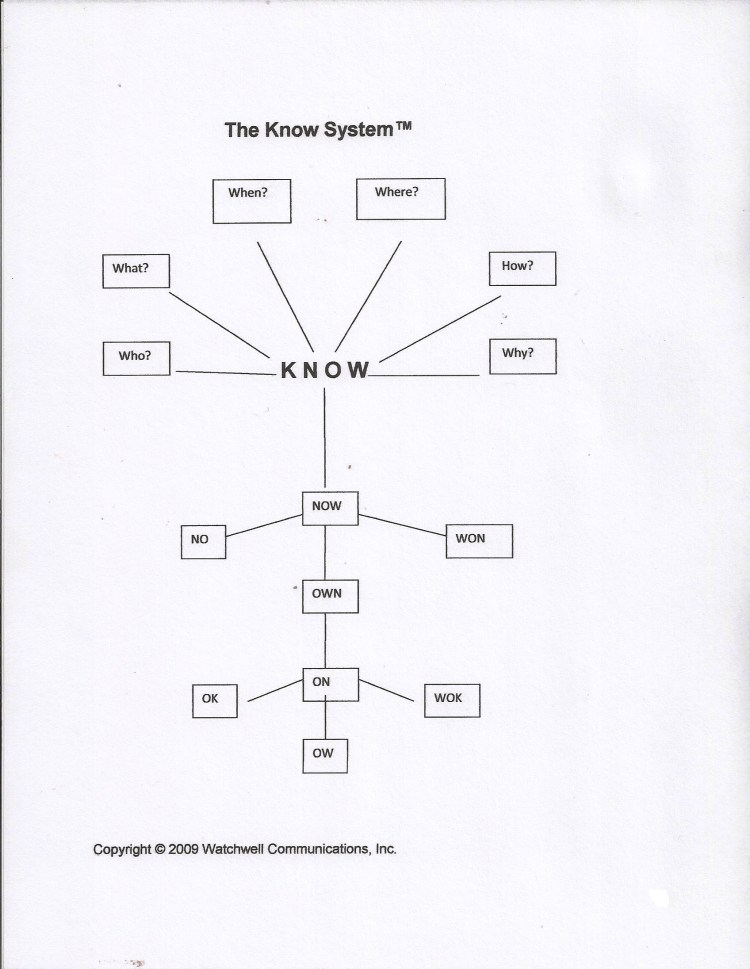
Managers can evaluate their culture through The Know System™ which could provide a simplified look at their environment. The Know System™ featured in the book The Isle of Knowledge is a decision making model which is also useful for individual and group coaching exercises. It is easy to use and allows the participants to accumulate information to enhance the quality of their decisions and discussions. The system is devised from the word Know. The user should ask a series of questions to gather information. Let’s look at 6 words from the word Know and a few related questions that apply to company culture.

  1. Won – What would a winning culture look like to you? What type of atmosphere, level of engagement and customer satisfaction scores would represent success to you?
  2. Know – What do you know and need to know about your culture and the people in your organization? (This can be enhanced with the words who, what, where, when, how and why, if appropriate)
  3. Now – What are you doing now to ensure a healthy habitat? Are you placing priority on the proper indicators?
  4. No – What are you doing that you need to stop doing? What goes against your culture and stated values that you need to say no to? What do your people want you to eliminate or stop doing?
  5. On – You must be vigilant at all times to monitor culture and maintain a proper cultural air quality. What are you doing to track leading indicators of a great culture? How are you measuring your work environment?
  6. Own – Do you own the culture as evidenced by leadership behavior? How are you holding yourself and others accountable? How are you reporting your performance and interest in a strong culture to your people?

knowsystemchart1

The beauty of our current leadership/managerial landscape is that many organizations have ascribed to the notion of a healthy work environment. There are employee surveys and satisfaction surveys, as well as engagement surveys to take the temperature or climate of the organization. These surveys can uncover problems and managers can be presented with data and held accountable for changing their environment. These surveys are strengthened with direct contact with management and human resources to ensure the environment is conducive for maximum productivity.

Is imperative as a leader to gauge how your people are responding to your direction and the culture in your environment. It is also apparent that many leaders are promoted because they excelled in their previous sales position, but are not cut out for management. You should try to train and develop these individuals, but in some instances it is not a good match and a decision should be made to place the person in the right job.  A worst-case scenario may develop where people mentally abandon the company, but stay on the job, because the company failed to address a main contributor to their toxic culture.

When the organization does not feel like a respectful place, people feel that the company has let them down and cannot be trusted. Mutiny or thoughts of mutiny is an indication that the current culture has failed or is failing many of its workers. They may resort to subversive action and taking matters into their own hands.

Mutiny may show itself as a single silent action called a resignation. Your top performers or the most influential members on your team may leave, causing a chain reaction of departures. Management must be accessible and periodically and personally check the culture pulse of the organization. People must believe that leadership is authentic, transparent and sincere when leaders speak of core values. Trust will be enhanced when people really believe that they are the number one resource in the organization. Otherwise, silent mutinies will going unchecked, unnoticed and leaving people unfulfilled.

Copyright © 2016 Orlando Ceaser


How to use guilt to your advantage?

Rick was promised a promotion. His manager committed the cardinal sin of sharing classified information from recent talent discussions with upper management and human resources. His candidacy for a mid level leadership position was about to yield positive results. However, a new executive arrived from the overseas office and used his considerable influence to put his own person in the job. Rick was devastated to learn the position, he was promised, was going to another individual. His boss was placed in a precarious position. He was apologetic and felt guilty for delivering the premature verdict.

There were two lessons. One was the need to be silent when trusted with confidential information. The second involved what to do when immersed in guilt after the situation blows up in your face. What was his subordinate going to do?

Rick could not complain for this would involve throwing his boss under the bus. Knowing his boss felt guilty, he decided to be a good worker and not compromise his managers’ decision. He was confident that eventually he would be promoted and his boss was an ally who really felt bad about the situation. The boss felt guilty enough to do everything in his power to see that it never happened again. Rick made the most of the additional time in the job. H and is silence and work ethic qualified him for a new assignment.
guilt

In another scenario, a merger placed a number of careers in shambles. The subsequent reorganization came with the requisite confusion and uncertainty. A few individuals who did not receive the promotions they desired were angry enough to express their discontent in a public forum and through the corporate grapevine. Their lack of good judgment and composure made a poor impression on the new managers. It gave valuable insight into their personalities and how they would respond in difficult times. Other individuals were also disappointed, but expressed their loyalty to the company, even though they may have been equally upset. They demonstrated wisdom by stating their disappointment only to their managers, while vowing to work harder for the next promotion. They were able to express their ambition, authenticity and transparency. This approach was appreciated and served as an example of managerial maturity.

Managers have a tendency to provide extra coaching to individuals they like. If they aren’t able to protect their people, they generally feel guilty about their inability to place them in the appropriate jobs at the appropriate time. If the company makes a decision that works against you, you may see it in your managers’ face, even if they don’t express their feelings outwardly. If they are genuinely contrite in a situation that worked against you, you may use that to set up a favorable situation down the road. The manager will appreciate your cooperation and understanding. They may internally feel as if they owe you something, when in reality they don’t.

In most situations, we don’t have very large career impacting decisions that people lose sleep over because they have a negative personal impact on your life. The more mundane instances are usually around appointments and not offering the support or resources necessary when you need them. When someone doesn’t come through as planned or promised, you want to acknowledge the breakdown. You want to gain an understanding that even if it was not intentional, steps will be taken to ensure that it doesn’t happen again. Actually, you’re asking them to do the best they can to help you. They may or may not verbalize this but you walk away with the general understanding of intent to work as your advocate. Let them off the hook and gain their commitment to come through for you in the future.

The style and grace that comes from patience and understanding the pressures on another person will be appreciated in the long run. The guilt issue may be a minor one, but it can be used in your favor.

As stated earlier, guilt is usually accumulated in everyday situations. Can you think of a time when someone may not come through as planned or promised? Anticipate the event and plan your response. Give them some grace, a way out and a show of support, which may pay dividends. They will seek ways to reward you in the future for your understanding and cooperation.

Additionally, can you think of the time when someone was late for an appointment or missed one altogether? How did they respond? Did you sense, there tardiness for the meeting or otherwise falling short of expectations was something that made them feel guilty. People have reputations around punctuality and your forgiveness will go a long way to making them feel remorseful and appreciative

We must acknowledge those individuals who exert a total disregard for you, as it relates to your time, resources and career. They are chronically late for appointments. They will make decisions that hinder your effectiveness and will not apologize when they let you down or stab you in the back. Using guilt in a situation where no one feels remorse is a classic waste of time. You should be very careful around these individuals and cast a large safety network of trusted individuals who will let you know when they are working against you.

When working with individuals who do not respect your time, resources and career, you must be careful not to use the same tactic with them, especially if they outrank you. Your reputation, business acumen and social skills should inspire you to continue to lead by example. Your goal is to achieve results and make others better by becoming a highly effective leader.

In summary, if someone fails in their interactions with you and are genuinely contrite, rather than lashing out in anger and causing irreparable damage to your relationship, you may consider being patient. Your show of grace will benefit you because it has an uncanny way of magnifying guilt. The trick is how to use this to your advantage without an overriding feeling of manipulation.

You may inadvertently or intentionally benefit from their feeling of guilt down the road. You’ll also find that grace will convert guilt into an expression of gratitude. This state of gratitude may have profound implications on your effectiveness as a leader who achieves outstanding results.


Copyright © 2016 Orlando Ceaser

Managing your personal power supply

The Spin class was about to begin. Gayle, the instructor, stated, “I lost power yesterday.” She said she was in her home when suddenly, a loud noise was heard and her electricity went off. We stretched, continued a light conversation and launched into a rigorous routine. I wondered during the class, “How many times, as individuals, have we lost power in our lives? Did we give it away or was it taken from us? Are there certain situations or individuals who cause us to lose power? Who are they and why does this happen? What are the early warning signs before there is a loss of power?

The loss of power is readily detectable. You have that feeling of loss of confidence, which is demonstrated by your body language, vocabulary and actions. Many times the loss of power at home or at work may come as a surprise. However, just as in nature there is a flash of lightning or thunderclaps before a storm, you can rely on certain indicators as precursors to a storm. You can anticipate someone’s presence, behaviors, as a good sign that a storm and potential power loss is on the way.

We should be aware of the signs of losing power and fortify your defenses. This will require us to increase our competence, confidence and network of individuals who will cooperate with us in our efforts to enhance our power position. There are times when we lose power and look around us and everyone seems to have theirs. What can we do to maintain or regain our power during a power outage? Power outages may be due to:

  1. Burnout
  2. Lack of confidence
  3. Power drainers
  4. Power mongers

Burnout

We can lose power by expending too much energy. We may fail to prioritize and try to do too many things at once. Processing too many projects at one time will lead to an increase in stress. Lack of sleep and irritability may negatively affect your disposition. You may become moody and easy to anger. Our lives are running at many revolutions per minute (rpm’s). We create to do lists (TDL’s) to keep track of our obligations. To do lists are getting longer and serve as a repository of unlimited tasks of varying priorities. We may fail to rank the items or every item seems to be important, which will lead to none of them being important. If we don’t put a filter on the funnel, we will be overwhelmed. This state of overload will lead to burnout, a breakdown and a loss of power. You must realize that some items on your list may not be covered or should be delegated or deleted.

Lack of confidence

Sometimes lack of confidence can lead to a loss of power. You may be faced with the possibility that you are not as good as you think you are and are afraid that others will discover your shortcomings. A way to address this fear is to conduct a self assessment of your skills and abilities. Be honest with yourself. You should relentlessly study your craft until we are an expert in your field. This may require study and validation which will give you the necessary credentials to ward off any challenges. If you lack confidence or courage you may doubt your abilities and lose the power of conviction needed to be successful.

Power drainers

Some people exist as leaches in the workplace, at home and wherever you engage in relationships. They will drain your power through constant complaining. Negative thoughts and the complaints will drain your energy supply. Their negative disposition and complaint oriented disposition puts everyone in a bad mood. They are not satisfied with anything and they never bring a solution to the myriad of problems they detect. When they enter the room, you can feel the life being sucked out of the place. Engagement levels seem to go down and the level of interaction and cooperation is reduced. The focus is on the speed of ending the meeting and getting back to work away from this malcontent.

The power drainers are time wasters. They do not respect time. They will barge into your office or workspace and tell you the latest gossip and shortcomings of the organization. Many power drainers have a running conflict with their peers and want you to come in as a peacemaker, which is time consuming and emotionally exhausting.

Power mongers

Power mongers are perpetrators who like to hoard power and use it over people based on their level of influence or authority. They will take the power away from you in a meeting. If you have the floor in a meeting they will ask the questions to shift the emphasis to them. I attended a meeting where one participant had more handouts on my subject than I did and spent the meeting time explaining their handouts which took away my power and control of the meeting. The better preparation and communication skills may address some of the issues of the power mongers.

The manager who asks you to do something because they said it does everything to shut down questions from the meeting attendees. Power mongers also work by using intimidation to get results. They will level threats at people who do not complete assignment correctly. A power monger will embarrass people in front of their peers. They may do this deliberately to show who’s the boss? A new manager at a paper recycling plant announced to his employees that he wanted them to fear him. He went on to exercise this management style as an egocentric power monger.

A power monger believes that information is power and takes this concept to the extreme. They delegate information sparingly. A manager had access to updates from the home office that would have been useful to one of his subordinates making a presentation. Rather than call him off to the side before the meeting and provide the updates, he strategically interrupted during the meeting with the latest news from headquarters. You may need help in dealing with a power monger, who negatively uses power. This can be done by working with mentors, advocates and power brokers. These individuals have the wisdom, insight and influence to assist you in relating to the power mongers.

Power brokers

Powerbrokers are individuals who use power effectively to get results. These individuals should be utilized and studied in order to gain their assistance. You want to use their techniques to minimize personal power outages. These individuals can be identified and cultivated at work, networking groups, referrals from their contacts and through personal introductions.

Work with powerbrokers to increase your confidence; improve your influence skills and knowledge of your area of interest and expertise. Conduct a personal assessment; improve your communication skills and your knowledge of your subject. Your objective is to isolate the individuals and circumstances that drain your power and counteract their affect on you. This will enable you to be stronger and effective in harnessing your power supply and minimizing instances where you lose power.

Copyright © 2016 Orlando Ceaser

Itemize Individual Contributions to Team Results

Career_in_a_Box[1]

An interview is an excellent opportunity to blow your own horn, trumpet individual performance and brag about your accomplishments in a politically correct environment. However, in our team oriented culture, we sometimes forget that individual accomplishment is important. Frequently in an interview, candidates answer questions highlighting team accomplishments. They falsely believe the interview is a place only to celebrate team achievement. After all, we are constantly immersed in the value of effectively utilizing teams to reach corporate objectives. It seems only logical to use team vernacular in the interview to respond to the behaviorally based interview questions.

Candidates may fail to realize, that it is difficult for the interviewer, especially one who lacks a lot of interview experience, to extract an individual’s role in team centered answers. Therefore it is incumbent upon you as a candidate to isolate and itemize your contributions to the overall success of the team. The interview therefore, becomes a safe place for you to clarify and celebrate your individual accomplishments.

As a member of the team, you are expected to use team specific language while working on the job. We know it is important for you to coordinate your activities and collaborate with others to achieve a synergistic effect. But in the midst of daily activities, it is important for you to keep a record of your unique input to the overall project. This may involve questions asked, suggestions made and challenges delivered to accepted practices or ideas. In a team oriented department / organization, it is sometimes difficult to separate individual results from team performance. However, a strategic approach is necessary to isolate and itemize your contributions, as you climb the corporate ladder or interview for a job in another organization.

You must develop a “We / I” mentality. State that “We achieved a certain result and I was able to contribute in this achievement;” Then specifically itemize your contributions. The “We / I” based orientation is hard to do at first, but with practice and training, it will become a natural part of your conversation. The conversation that helps you develop an up-to-date resume, examples to be used in an interview and information necessary to grow your skills and abilities. It is critical to have an accurate perception of your strengths and weaknesses, so that you will know where they need to be enhanced. If you know your strengths, competencies, abilities, skills and talents, you can utilize them to effectively and accurately assess results and explain your actions.

The objective of “We / I” is not to put yourself in competition with your team members. It is not an opportunity to tell how you are more important to the team than your teammates. Part of the success of the team is the collective contributions of each member and the synergy created to get results. The idea of working in order to get credit for your actions can be counterproductive to the smooth working of the group. I believe the old adage that states,” consider the amount of work that can be done if we didn’t worry about who got credit for the results.” It is important in a team setting for everyone to work for the betterment and efficiency of the team to succeed as a unit.

Many organizations will tout the value of their teams. Some of these organizations will design their incentive programs to reward team performance. However, they will also assess individual performance. They will breakout or itemize individual performance through concentrating on particular behaviors. Recognizing these individual behaviors and distinctions are important when deciding career growth, promotions and succession planning.

Interviewers ask follow-up questions to determine the candidate’s role in their department’s success. When the candidates language and examples are structured in the context of what “we accomplished” the interviewer has to work too hard to obtain information. Many may not be patient enough and place the candidate in the” Not Interested” pile.  not interested”

Do not want the interview to incur the extra effort required to probe for individual contributions. You should provide concrete examples of your ideas; strategies and challenges that helped the team become better. You do not want to make it difficult for them to determine if you were an active member of the team or a member hiding behind the team’s reputation with very few ideas of your own. Interviewers look for the leadership role played in achieving results, rather than someone who just served as a follower or implementer of the ideas of others.

Candidates are frustrated by a perceived inconsistency between a team oriented culture and individualistic specific questions in an interview. When they receive the feedback that they did not specifically itemize their contributions to the team, they are confused. They feel as if the organization is sending mixed messages. Therefore, organizations need to clarify and ask people working in a team environment to track their individual contributions to the team and the reasons behind the request. We can compare this to team performances in other areas of our lives, whether in the field of athletics, academia, music or community activities. Success may be measured by the overall group achieving a goal, but there may be individual statistics, ideas, questions or actions that help the group reach its objectives.

If you’re working in a group where team performance is paramount, undoubtedly you are constantly thinking about achieving team objectives. These thoughts about achieving objectives will lead to actions that will inspire, challenge or push the team toward success, however it is measured. There will come a time when this project, job or assignment is over and you decide to move on to a different role. When you arrive at the different role, at some point in the interview, they will want to know the success of your team and your role in helping that team excel. The more clarity they can gain around your contributions, the better they will be able to determine if you are a person they need to fill the vacant position. Protect your career, assess your contributions and establish a system to itemize your contributions to the overall success of your group, team, Department or organization.  This will lead to better interviews and pave the way for a successful career through clearly stating the scope of your performance.


Copyright © 2016 Orlando Ceaser

Performance fixing in the workplace – Lost productivity and restricted growth

C&R 9-3 0007

Athletes and their sports periodically are plagued by scandal. Athletes may be asked to lose a match, fight, or game by delivering less than their best effort. The tennis world was recently rocked by allegations of match fixing where players allegedly accepted payment for losing or throwing a match. Novak Djokovic, the reigning number one men’s player in the world, said he was offered $200,000 through his previous handlers in 2007 to lose a match.

Boxing has had its share of scandals. Unscrupulous fighters have been known to take a dive, throw a fight or lose a fight on purpose. Controversies have surfaced with football, basketball and baseball.

This tactic of solicitation; altering the outcome of a performance is also prevalent in other aspects of our lives. Performance fixing is not customarily a term used to describe substandard performance at work. We do not accuse employees of collusion, throwing a project or taking a dive regarding their objectives. However, there may be similarities with sports.

Friends or coworkers may ask you to deliberately act in ways that could negatively affect results. They may expect you to limit your participation or productivity, hold back by not delivering your best effort and engage in activities with consequences that will affect your grade, goal achievement, contributions or career.

It is an integrity issues when someone delivers an unearned and unsanctioned discount or illegally influences the score. But failing to bring your best effort is also unfairly influencing results by delivering below expectations.

People may have a variety of reasons for convincing others to take a dive. They may want you to make a supervisor look bad, fail or simply to compromise results for a number of reasons.

As a sales representative my competitors tried to discourage me from working hard and going beyond the call of duty. Ultimately, when I was promoted to management, they told me they thought I was smarter than to take a role in leadership. Their code of ethics was to do just enough to get by, not rock the boat or bring too much attention to the status quo of their comfortable world. They had tried for several years to get me to perform at a level that did not upset their established level of mediocrity. They were in effect asking me to fix the outcome of my selling activities by reducing my effectiveness.

Take a moment to reflect on your life and your performance in school, relationships or in your career. Have there been instances where people have discouraged you from taking a course of action; pursuing an MBA, volunteering for a project, advancing your education or participating in a manner that would improve the outlook for your career? They may not have offered money, but there was an expectation that you would conform to their request and maintain a friendship or relationship. Did they influence you to withhold your best performance or restrict your participation? How did you respond to their subtle influences to maintain the status quo? You probably did not see it as performance fixing.

Can you think of instances where you were reluctant to excel and talked yourself out of delivering your best performance? You may have convinced yourself that inertia, standing still, the status quo was more desirable than going after a promotion or shaming your peers. You may have told yourself the aggravation of more responsibility would be too much work and not worth the small financial payout and alienation from your peers. You may have held back, telling yourself that management would not be receptive to your efforts to improve your opportunities. The result was stabilization and stagnation.  Therefore, you took an internal dive and restricted the release of your talent and failed to maximize on the opportunities available.

Companies have lost productivity and revenue due to people shaving productivity across the organization. Individuals intentionally or unconsciously participated in a conspiracy to hold back on excellence. The payout was not also in money. They may have received resources or items of nominal value. It was for either pleasure or pain.

Pleasure could involve the camaraderie and benefits of connection in a powerful networking relationship. Being affiliated with people who are well known or who praise them makes them feel special. They may want the pleasure of associating with someone they wish to emulate, who makes them feel special.

The compensation could be the avoidance of pain. People are deprived of the discomfort of being shunned by their friends and the humiliation of failing to land a job because they took a risk. If they don’t pursue the job then they don’t have to make mistakes or suffer the failure not reaching it.

Withholding effort and talent is not considered a criminal event. People don’t think of themselves as being complicit in an illegal activity. But, they are assisting other people in activities that hurt themselves, other people or the company. Under the cover of darkness they are essentially breaking into a residence of excellence and stealing from the organization. They are taking a payoff to engage in activities that restrict growth and development.

Professional tennis was struck hard by the accusations of impropriety. The governing bodies of tennis are investigating their handling of this potential blemish on their profession and the parties involved. Other athletic associations, through the years have investigated and disciplined all parties found to be guilty of affecting the integrity of their sport. What must we do to ensure that performance fixing is minimized or eliminated from within our areas of responsibility?

You may consider it unfair to view lack of excellence and substandard engagement, as an integrity issue. But people are hired and expected to bring their best effort to the workplace every day. I had a manager who always asked me,” is this your best thinking?”  We must ensure that we bring our best thinking and best action to the workplace in our interactions with others. The dollar value on waste and on the opportunity costs of lost or poorly implemented ideas.

Copyright © 2016 Orlando Ceaser

5 Self Restraining Tendencies (SRT’s) That Can Hurt You

We are human and therefore, have idiosyncrasies, nuances and eccentricities that come with our personalities. Many of these unique characteristics position us for survival and success. But some of these peculiarities are counterproductive and are detrimental to our growth. I will call them self restraining tendencies or SRT’s. They are not necessarily life-threatening, but they may serve as impediments to development.

SRT’s are indigenous to human beings. They may be formed by life experiences and thoughts and subsequently create insecurities. They may be pseudo-defense mechanisms to allegedly protect us. SRT’s may be categorized as bad habits that may hold us back, restrict growth or work against us. How do we know we have them? Self assessments and times of reflection can increase self awareness and reveal SRT’s, as we examine our lives and impact on others. Additionally, we may receive the gift of honesty from a friend through candid comments. Constant feedback from co-workers, parents and peers can also be useful by adding to our enlightenment. But, we must be objective, receptive and appreciative of their candor.

5 Self Restraining Tendencies (SRT’s)

  1. Procrastination
  2. Poor communication skills
  3. Negativity mindset
  4. Toxic people skills
  5. Lack of Integrity

1. Procrastination

It is interesting to learn that many people are struggling with procrastination. The act of postponing things until later is not intellectually difficult for people to understand. They know that something should be done immediately and to postpone will have consequences. But, nevertheless, they still will delay until later, that which should be done today.

We recognize that we may not feel like doing something right now or we have awarded a greater priority to something else. If we continue to kick the can down the road or delay the inevitable, we will continue to waste time and effort and increase the amount of stress in our lives.

Lisa was interviewing for a job as a pharmaceutical sales representative. She felt very comfortable with the interview. The interviewer asked her about her number one shortcoming. She responded, “I am a procrastinator. I get things done, but sometimes it takes me a while to get started.” Procrastination was her Self Restraining Tendency, but the interview may not be the right place to disclose this particular self restraining tendency.

2.  Poor communication skills

Communicating is something we do every day. It is the currency by which we interact with people in order to state our ideas, convey instructions and build relationships. Those among us, who communicate effectively, actually have an advantage at school, in our careers and in relationships. If we are hampered by poor communication skills, our effectiveness is restricted. This self restraining tendency, like the others featured in this article, must be identified and corrected.

Poor communication skills could be non verbal or verbal to include written, body language and group presentations. Ask yourself, “Am I plagued by poor communication skills? Are there aspects of my communication ability that are hindering my progress?” Conduct a self-assessment. Diagnose your communication ability to see if there is a deficiency. You may seek to solicit feedback from respected sources and trusted friends and colleagues to see if they can identify areas that require improvement. When the SRT is disclosed, a change management process should be initiated. However, rather than go through multiple steps to change we should go directly from denial to acceptance and put a plan in place to correct the SRT.

3. Negativity Mindset

People who have a negativity mindset are not necessarily the individuals who look at the pros and cons of every situation. I am speaking of the people who like to rain on the parade. When the entire group has decided to move in a positive direction, they are the naysayers who constantly focus on what is or could go wrong. They provide excuses rather than explanations. They seldom do anything but complain without the slightest contribution to positive constructive participation to change anything. 

4. Toxic people skills

The toxic people SRT is different from the poor communication skills mentioned earlier. Individuals prone to this tendency will use power to humiliate and intimidate in order to gain the upper hand or to create an environment of fear.

My son worked for an organization where the new boss actually said, “When I walk into a room I want people to fear me.” He wanted people to be intimidated by his presence. This attitude is supported by language and interactions that cause stress, a lack of trust, poor engagement and ultimately subpar performance. Individuals with toxic people skills may speak about people behind their backs, pit coworkers against each other and generate an atmosphere of tension.

People with toxic people skills may be cursed with the propensity to enter every interaction with a transaction mindset. They are constantly thinking what is in it for them, how can they beat the other person by any means necessary and how it can only help them succeed. This is prevalent in relationships where they only socialize or interact with people who can help them advance their position, today. 

5. Lack of Integrity

People with a lack of integrity are flawed in their relational and work performance. They utilize a winning at all cost or any cost approach to work and relationships. People with this tendency view the rules as an inconvenience, something for weak minded people, to be broken and circumvented whenever possible. Breaking rules is seen as a badge of honor, a necessary evil to give themselves the ultimate advantage toward victory.

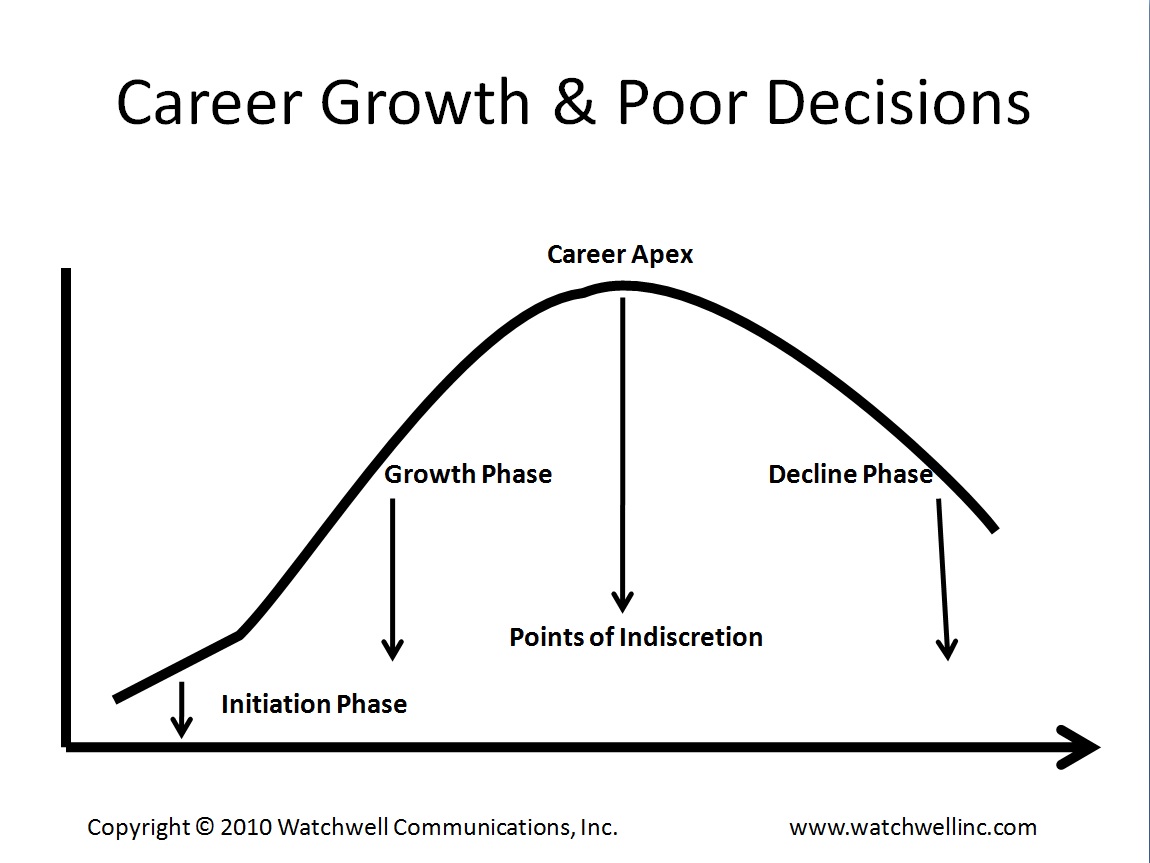
Invariably, this SRT will cause the downfall of their career and reputation. Oftentimes, the integrity flaw does not manifest itself until well into a person’s career. Please find below a chart illustrating a natural career growth curve and the various points of indiscretion where a lack of integrity can doom a person’s career.

careergrowth

If a lack of integrity shows itself at the end of someone’s career, a lot of their positive contributions can be discounted and shrouded in suspicion, nullifying their reputation. If a lack of integrity revealed itself early in someone’s career, they may never have the opportunity to make significant positive contributions or to realize the potential present in their talents and abilities.

Ideally, we should establish self restraining orders or SROs for those character traits which are limiting our joy and effectiveness. The five self restraining tendencies listed or others should be addressed if they are a problem for you. They have the capacity to limit your effectiveness and keep you away from realizing your full potential in every segment of your life.

Copyright © 2016 Orlando Ceaser