What do Ambitious People Want?

Monitored_Life

Conversations with ambitious people who want to embark upon an ad venture leading to success, revealed at least six attributes that describe their appetite for achievement.

The attributes are access, acknowledgment, acceptance, appreciation, advocates and awards.

Access

Ambitious people want unfettered, unrestricted access to key people, resources, and information that can help their careers. The resources could be information, data, budgets and expertise. They know that relationships and networking are important to job acquisition and promotions. Salespeople think,” If I can see them, I can sell them.” Ambitious people want the keys to unlock the doors to opportunity.

People want access to key developmental opportunities, assignments and high visibility projects that will hone their skills and prepare them to assume additional responsibilities. Ambitious people want access to meaningful work and connections to mentors, coaches and the senior leaders who can ultimately influence their careers.

Acknowledgment

Ambitious people want to be acknowledged, once they are around and gain access. They want to be recognized and feel like a part of the team. Recognition as an attribute means simply to notice them, sense their presence and smile or nod in their direction. They want common courtesies through greetings and eye contact. People want to feel as if they are a part of something very special. It is not always necessary to remember their names, but that would be a nice touch. A smile in their direction while walking in the hallways signals to people that you know that they are there. No one likes to feel invisible, so when leaders find a way to acknowledge and identify someone it is very well received.

Acceptance

Everyone wants to be accepted and included. If a leader in the organization taps into a person’s need to be accepted they will feel valued, relevant and necessary. They will feel a part of something bigger than themselves and this will enrich their time at work. They can feel accepted when invited to functions after work and involved in social activities. When they feel welcome, they feel as if they belong. It is one thing for an organization to talk about inclusion, but the proof is in the daily practices of its members to involve everyone in activities beneficial to the organization.

When people are accepted, they feel as if they are wanted and this can contribute to higher statistics on engagement, productivity and job satisfaction.

Appreciation

People like to feel their work has value; is noticed and essential to the enterprise. When leaders or the organization finds ways to say “thank you”, people remember. A senior leader wrote a poem to his sales organization and received numerous positive responses from the team. In addition to the other awards they receive at year end, one person said,” My manager took to time to write something special to show his appreciation.”

Employees enjoy when managers demonstrate actions, not just words to prove that their people are their most important resource in the company. Programs are put in place that minimize workload and attempt to ease the tension between work and their personal life. It is often very difficult to achieve work/life balance. Some organizations refer to it as work life effectiveness or a blending between work and home. Feedback is given consistently, not just at the end of the year, to ensure that employees know where they stand relative to their performance expectations. They are told the truth in a fair and candid manner, which builds trust. Not only are people appreciate, but they are respected and their opinions are solicited.

Think of ways to say or show your appreciation. It can involve little things like thank you cards, hand written notes, bonuses, time off or special celebrations. There are numerous ways to show gratitude and these will go a long way to making people see that managers care about them as individuals.

Advocates

Ambitious people love to rise within the organization. They want to be known and supported by individuals who can advance their careers. They want mentors who will speak up on their behalf in personnel meetings. They want people to put in a good word for them when assignments are being discussed. They want supporters, cheerleaders, mentors, coaches and sponsors. When they are doing a good job, they want the managers to sing their praises from the rooftop. They want people to run interference for them on their way to other assignments. In meetings when people are quoting misinformation about their performance, they want someone present who will set the record straight.

Ambitious people love advocates. These individuals can have a positive impact on their financial status and their ability to be successful on the job. When individuals within the company and outside the organization learn about positions, advocates are invaluable to deliver positive comments about your personality, work ethic and capabilities.

Awards

Everyone likes to be rewarded and recognized when their performance meets and exceeds expectations. These awards can be in the form of pay increases, additional responsibility and kind words delivered in the presence of your peers. People want to feel acknowledged, accepted and appreciated. These three attribute can be considered awards for showing up at work and delivering results at a very high level. When access is provided and advocates communicate and celebrate your performance, awards in the form of certificates, pay increases, promotional opportunities and developmental assignments is a great way to show that the organization understands the importance of cultivating a motivated workforce.

The six attributes stated in this article answers the question, “What do ambitious people want?” An argument can be made that not only are the six attributes what ambitious people want, but everyone in the company want the same things. Everybody wants to be respected, rewarded and recognized, as well as to be supported and mentored. Ambitious people and those not interested in climbing the company ladder want to enjoy work and feel they are making a difference, as a part of something significant, where they are playing an important role.

Copyright © 2015 Orlando Ceaser
Nullification of Positional Power – Undermining authority

Byside

The merger was in full bloom. HR and local sales leadership from both companies met to resolve some issues and establish a working relationship. The highest ranking person in the group was a Director, who was African American. The discussion was very intense and the room responded as if the Director did not have a rank several positions above their own. At the end of the session the HR person turned to the Director and stated, “People at our company would have never reacted to you as they did. They would be more respectful of your position.”

Disregarding and nullifying positional power is more common than we think. It is a risky proposition, potentially detrimental to all parties involved. Additionally, it is difficult to prove in many instances. In most instances, the evidence is circumstantial, relying essentially on body language cues and hurt feelings. Unless you can quantify it with actions on the part of the perpetrator, the target appears insecure or overly sensitive.

New leaders have stated how they do not receive the prestige, recognition and respect they deserve from their peers and subordinates. Shockingly, people lower in the organization challenge them when they would not challenge others with the same level of authority.

The nullification of positional power is a universal problem, but women and minorities have expressed it many times in conversations. They feel as if their jobs are not perceived the same as others in their position. When nullification is evident, and in its worst cases, the team does not function, as well as it should, which ultimately could reflect negatively on the manager. Team members may also suffer the consequences of reduced effectiveness and its impact on financial rewards. Engagement levels may go down and productivity can be adversely affected if this practice is not addressed.

Sometimes, nullification of positional power shows itself in overly aggressive challenges to your authority, undermining your directives and refusing to seek your guidance or valuing your opinion. You may be tempted to retaliate or verbally castigate them in public. But remember, you are still the leader and must be above the fray, as it relates to executing the duties and responsibilities of your position. You cannot let your ego impair your judgment. Public admonishments or executions, may feel good, but can damage the defectiveness of the team.

It is interesting how some people walk around with a look on their face that says,” I don’t care what job you have. I am still better than you and will not accept you in your role in this organization.” They are defiant and have a difficult time suppressing the conditioning they received from their experiences, environment, biases, preferences and stereotypes.

It is a fact that most of the time nullification of positional power is not blatantly obvious. It is demonstrated through negative body language, micro-inequities and comments made in private. Micro-inequities are subtle actions, often unconscious offenses, injustices and inconveniences that make the recipient feel inadequate, insufficient, irrelevant, unimportant, insignificant, unnecessary and undervalued. They may be verbal or non verbal and reflect overt and covert actions. The persistent activity may cause people to second guess their competence and lose confidence in their abilities.

It may seem easier to address this behavior if the individual reports to the manager. But the behavior is not usually out in the open. The actions may be underground and committed in secret. Significant damage may be done to your effectiveness as a leader, before you discover this breach in your positional power.

Within many organizations it is acceptable to challenge ideas for they pride themselves on candor. That is their culture and it is understandable. Challenge is in their DNA, as a part of their mindset which is evident in their practices. Candor is woven into the fabric of their culture and no one takes it personally when challenged by someone lower in the organization. Status and titles are irrelevant when they are solving problems or developing ideas in brainstorming sessions. However, respect of all levels is expected.

Nullification of positional power is often used against the new manager. Some people deliberately set out to embarrass the new manager. They feel the person does not deserve the job for a variety of reasons and find it distasteful that they have to report to them. They may try everything in their power to cause them to fail by not cooperating and performing at a lower level beneath their capabilities.

Nullification or disregard for positional power has always been an enigma to me, particularly with people, who were actually afraid of leadership. However, they become emboldened and antagonistic when certain people were promoted into a job. Whereas, they were cautious with their words around most leaders, because they were concerned about their careers, these same individuals took a huge risk and acted out of character, because either they did not care or felt there would not be any repercussions.

A District Manager was promoted to his new assignment. He lacked the experience of some of the senior members on the team. One of the members thought they should have received the promotion. He did everything in his power to make the job difficult for the new manager. Years later, he confided in me that he did this out of spite. He did not respect the person in the position and worked within his power to make it difficult for his new boss. He told me, as if to soothe his conscience during a moment of remorse.

Occasionally, resistance to the new manager is in the subconscious realm. There is unconscious bias where people do not recognize what they are doing. When they are reprimanded for insubordination or written up for behavior unbecoming of a team member, they are surprised. Their argument is that they were just stating their ideas and the manager became offended and took it personally. However, it is often conscious, malicious, intentional and secretive.

A Regional Manager was conducting a session with one of his Districts. There was dissention in the group. He brought them in for an opportunity to clear the air and for the District Manager to essentially apologize for his actions, reset expectations for the manager and each member of the team. The meeting ended and several members left in the same car to return to their territories. Before they departed the sound of the Regional Manager’s voice was heard in the back seat. The driver who was a veteran representative went to the backseat and shut off the tape recorder. Apparently, he had secretly and illegally taped the entire meeting. The other representatives were surprised by his actions. His actions gave a signal to the other members that it was OK to act in a manner that nullified the positional power of the Regional Manager.

What does a manager do when they are aware of members in her organization trying to nullify their positional power? What does she do when she discovers the corrosive impact of subversive comments and actions?

If the action occurs in a meeting, they could table the discussion until later with words such as, “John we can take this conversation off line and I’m we can resolve the issue and bring it back to the group.” It may be documented as a performance issue and expectations and consequences stated if the behavior continues. Sometimes, companies may reassign promising performers and justify it by saying there was a personality clash with the new manager. This could send a dangerous message, set a dangerous precedent and inadvertently sanctioned inappropriate behavior.

One of my favorite personal stories involved an encounter I had when I attended a manager’s meeting. I was from the Home Office, which usually has a mystique associated with it. After all I was from the epicenter of power for the organization. I was at least two levels above most of the people in the room. A manager two level below me misunderstood my position on a certain point. He raised his hand and said, “I strongly disagree with what you just said.” The room became very quiet. I responded, “Allow me to restate my case, because if you heard me right, I’m sure you would not “strongly” disagree with my position.” I repeated my statement almost word for word and he acknowledged that he was in agreement.

Leaders should not get provoked into unprofessional behavior. The matter can be addressed by going to supportive leadership within your company. Your job as a leader is to be a leader for all, even though everyone may not want you in the job. Press on. Show your value and contribute substantial results, resources, reputation and financial performance. If they don’t, the matter must be discussed with their supervisor, with specific examples of the breach of protocol.

Your performance and your network of supporters will change the perception of some of these detractors. You will never be liked by everyone, but your leadership and excellent performance will add value to the company. Inappropriate behavior and disrespect should be handled appropriately and should not be tolerated.

Lastly, leaders can counteract nullification of personal power by elevating their social power or social capital. Your personality, work ethic and integrity are revealed to the organization through personal and professional interactions. People get to know you and realize what an asset you are to the company. They realize that you are committed to their personal growth and development. They may become advocates and speak out against those who are stabbing you in the back. Team members see that you belong in the job and are the right leader to help them achieve their personal and professional objectives.

Copyright © 20015 Orlando Ceaser

Communication Excellence – A Competitive Advantage

We should help our young people become better communicators as a part of their educational development, while helping ourselves improve in this area. This should begin in our homes, and shift to the schools, work, community, places of worship and other organizations.

There are statistics that indicate that 85% of success will be attributed to communication skills. Correct speech builds confidence and youth won’t feel self-conscious in the presence of individuals with strong verbal skills. Leadership qualities blossom in the portfolio of a strong communicator. If communication skills are solid, youth can concentrate on the content of their conversations, articulating their dreams and the ideas they want to present. If communication skills are solid, adults can broaden their career opportunities.

Improving communication skills is a phenomenal benefit and competitive advantage. Improved speech at an early age actually making life easier for everyone. Students don’t have to think as much about choosing the right words for speaking clearly will come naturally for them. It is easier to have excellent speech and shift to colloquialisms, then to always speak in colloquialisms and try to shift to excellent speech.

People will jump to conclusions, make snap judgments and make decisions about someone based on their speech. They will rightfully or wrongfully gauge intellect, display bias about where someone were born and raised, gauge economic status, and achievement potential. Companies will hire, promote or allow employees to speak for the company in a meeting or to the media, based on their ability to communicate. These subjective and objective reactions may not be fair, but are indicative of the power of communication skills.

People are resistant to broach the subject of speech correction. This tendency has to change, so that we can radically assist our youth on their path to excellence. I don’t know if this reluctance is due to a lack of confidence, individuals discomfort and knowledge about what is correct speech or if they feel it is not important enough to address. Clearly the data suggests that communication is an area where improvement could be emotionally and financially beneficial.

There are several skill areas essential to master. They are conversations, group presentations, punctuation and written communications. As youth grow older they will get into the intricacies of verbal and non-verbal indication (body language). Mastering these areas will contribute to other parts of their intellectual endeavor such as improving math, science and reading skills. Focusing on these areas early in life will help children form habits that will make communicating easier.

More people should pay attention to individuals whose professions rely on effective speaking. If children use them as a mirror, they could elevate the quality of their communications. Youth would make their career choices and competitively pursue more promotional opportunities. Adults will grow in confidence, credibility and grow in their organizations as communication excellence contributes to their leadership abilities.

Athletes are a prime example of individuals receiving different careers options because of their competence in communicating. Effective communications through their fluid speaking ability could lead to a career in broadcasting. Here are a few examples of athletes who combined athletic excellence with effective communication skills to add another source of income and another career.

  1. Michael Jordan as a pitchman for several products
  2. Michael Strahan, a professional football player who became a sports announcer. His personality and communication skills enabled him to be a co-host on a talk show and opened the doors for numerous commercials
  3. The Rock, a famous actor, at one point in his career was a college football champion and a professional wrestler. His personality and indication skills enabled him to take on many roles due to his ability to communicate.

We should be impressed by people who immigrate to another country unable to speak the language. Many come to the United States and assume English as their second language. Many of the older generation would listen to the radio and watch television, using these as venues to practice and learn English. I admired their persistence and dedication and the quality of their speech after working tirelessly to master the language. We would use them as motivation to improve communication skills.

What is wrong with communication excellence?

Some people feel it is the duty to attack communication excellence. Youth should beware of people who ridicule them because of their dedication to speak a language in the way it was designed to be spoken. Speaking right should not be given a derogatory label. Youth should not have to fight for their freedom to pursue excellence in speech. Youth should not apologize for achievement (excellence does not deserve sympathy or ridicule). Unlocking their leadership greatness will give them the necessary perspective, drive and credibility to lead their peers to share their commitment to excellence.

Effective communication should be seen as a vehicle to achieve goals and fulfill dreams. Achieving their dreams is the objective for youth and adults. Being able to communicate at a high level will work to their advantage. It is therefore, helpful to emulate the articulation of professional communicators, i.e. teachers, actors, newscasters, television and radio personalities, lawyers, spokespersons and politicians to help improve communication skills. There is also value in joining speaking organizations such as Toastmasters International to gain real world speaking experience and coaching in a nurturing environment. Additionally, Local schools and junior colleges also have speech classes which can help students and aspiring professionals.

As adults, we should not abandon the practice of improving our speech. It is never too late to speak better. We will serve as a model for people who watch and listen to us. Diligence in communication can have a powerful effect on the job. People in leadership position will select people they feel have the power to communicate corporate messages to employees. We noted that statistics have indicated that 85% of the skills necessary to be promoted on the job are related to your communication skills. This statistic alone underscores the importance of communicating with excellence and its value as a competitive advantage.

Copyright © 2015 Orlando Ceaser

Under New Management – A chance to decline or a chance to shine

new-mgmt

The sign has three words, “Under New Management.” We often see the sign in the window of a retail establishment. What does this sign mean to you? Does it conjure up images of change and great expectations? Are you saddened that a great institution will never be the same, gone the way of the dinosaur? Does it make you think hopeful thoughts about the future, casting aside the circumstances of the previous administration? Do you instantly wonder if new people with more money, resources, business acumen, talent and operational expertise, will make the business successful. Under New Management can bring opportunities, as well old problems and new obstacles.

Your opinion about an “Under New Management” sign is based on being connected to the previous management; as a patron or participant in their business. If you were dissatisfied with the prior regime, this sign may give you words of encouragement that things will be better. If you are on the inside, and not in the inner circle, this may mean greater opportunities for advancement. If you are on the outside, you are hopeful for a better return on investment or an increase in quality and customer service.

When new management arrives on the scene, there are new people to handle the day-to-day operations. The communications industry, especially radio, is notorious for bringing in new ownership, followed by new management. Radio personnel are often under the specter of change. When rumors start about a potential acquisition, panic leaps into the hearts and minds of everyone, except those personalities who view themselves as untouchable. These individuals, due to their notoriety, can be classified as employable, because of their ease of finding another job.

It is customary for most industries to experience change. Will that change be in products or services or the management structure, personnel or brand identity? In radio the change could be in their format? Will the station go from all news to a talk radio or country music format? What will the new manager think is the financially prudent format to recoup their investment? What changes could “Under New Management” bring to your company or industry? How could your life be changed?

“Under New Management” is a sign that could be hung after a merger and acquisition. Those in positions of power and leadership may worry the most. Many times the higher up you are in an organization the more worried you are of losing your job, status, influence, mentors and advocates. But, there are those on the outside of power, looking forward to the opportunity to shine. They want a clean slate, audiences before a new panel of judges.

Some of my greatest opportunities were, “Under New Management.” I recall making a speech before a large audience after a merger. I was approached by one of the sales representatives from Puerto Rico, excited about my message. She said,” I never knew you could speak like that! We have never heard you on the big stage before. Why haven’t you been on stage in this type of setting?” I smiled and thanked her, realizing that there was something special about the opportunities provided by being, under new management. There can be many career benefits brought on by a change in management. Ambitious personnel should strategically plan for a jump start, a new start to their careers and seize the new opportunities.

“Under New Management” could provide an environment where people can feel courageous enough to explore new areas. It could be seen as a chance to overcome mistakes made earlier in one’s career. New management may have a policy of mistake forgiveness, like the accident forgiveness features in some automobile commercials. It is true that negativity never gets amnesia in some organizations. It has a long memory for mistakes, even though the clarity of its memory may be very vague.

I spoke with the manager who applied for re-entry into her former company. She was cleared for rehire, but someone mentioned a problem they had with her almost 20 years earlier. He couldn’t remember the specifics, only that it was unpleasant. This company was under management, however there were lingering problems of old biases from the people they maintained.

New management can therefore, lead to the continuation of old stereotypes and biases from the remaining managers. It may also replace old unconscious biases with a new set of preferences and biases. But we must be optimistic and strive for the excitement and new energy to commit to build something new and magnificent. We must build an organization that allows us to make the most of the honeymoon period assigned to “Under New Management,” to impress upon everyone the desire and willingness to serve in order to achieve high expectations.

“Under New Management” is not the answer to all problems and it is incumbent upon everyone to bring their best and be hopeful that the environmental change will be a breath of fresh air. They must work to help provide fertile soil for people to grow to their fullest potential. They must work diligently to give the new managerial structure a chance to succeed and flourish.

Copyright © 2015 Orlando Ceaser

The Case of the Righteous New Manager

Hammer

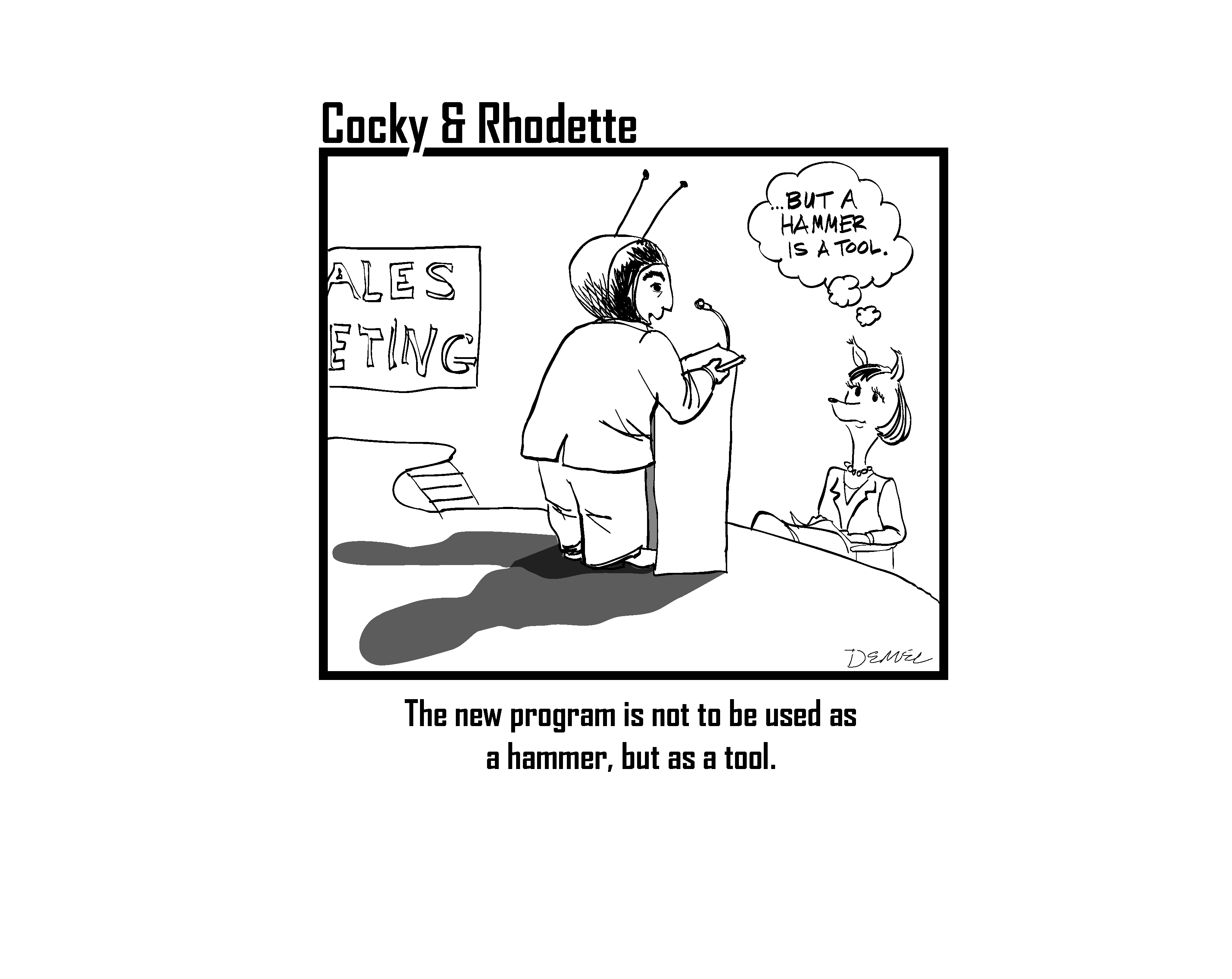
A promotion to management is quite an accomplishment. A new manager joins the ranks of leadership, among the most important individuals in an organization. The manager conducts the functions of planning, organizing, staffing and budgeting, to help the company achieve results and expectations. They are accountable for implementing corporate policies and strategies, as well as caring for the company’s most important resource which are its people.

New managers may possess traits that may hinder or delay the development of their teams and the rapid results they desire. Some have an attitude of righteousness, which means they feel anointed as a manager, rather than being appointed to the job.

New managers bring a fresh perspective to their assignment. They may not be mired in history, preconceived notions and the barriers and restrictions on what can’t be done. They bring drive, enthusiasm and a can do attitude along with a desire to prove that their superiors made the right choice when they were selected as the manager.

The righteousness that new managers display can be itemized as follows:

  • They use an autocratic management style to avoid being challenged
  • They try to mold people in their own image
  • Abuse power through favoritism and preferential treatment
  • Never truly left their old job

Autocratic style

The righteous new manager using the autocratic management style believes that the manager is always right. This management style is perfect for it allows some new managers to hide their insecurities. They project a feeling of superiority. They display an attitude that says they deserved the job and should not be questioned. Challenges are seen as disrespectful to their position and they are swift and deadly in their response. The righteous new manager can be detrimental to organizations, departments and teams, when they operate vanity, insecurity or sheer arrogance.

If the righteous new manager is not comfortable with her skill level, she may not want people questioning her decisions. Autocratic managers don’t want to be questioned. They are accustomed to having all the answers in their previous assignment. But they have not achieved that level of competence in their new position. They respond to inquiries, as the parent who says,” Do it because I told you to or because I said so.” They are afraid to be vulnerable and admit they don’t know everything. They view this as a sign of weakness.

I watched a new manager receive a suggestion from a member of his group who was a former manager. When the idea was proposed, he simply responded that it can’t be done and moved on to the next subject. He missed an opportunity to compliment an employee on the idea and work with the group to fashion something that was within policy. The discussion could have been very open and fruitful if he had used a more participative style of management.

Autocratic managers unwittingly shut off information, which is vital to the success of their group. Managers do not have all the answers. An environment open to challenge and scrutiny can be very beneficial. The new manager must learn how to create this environment. This will enable the manager and the team to grow immeasurably from this experience.

The autocratic management style is a very effective style in the right circumstances. There are situations when the manager has to make the call without input from their teams. However the misuse of this style can be a problem.

Mold people into your own image

The righteous new manager may be tempted to over emphasize the skills that got them promoted. They may be experts in data analysis, customer service, strategic thinking, problem solving, administration or sales. If they were a great salesperson, they will demonstrate that they can sell and expect everyone to sell as they did. Sometimes they will not allow their salespeople to sell because they are always showing them how it should be done. The magic phrase,” this is how I used to do it,” eventually undermines the team. A righteous new manager will take over the sales call to the chagrin of their salesperson and the customer.

The biggest roadblock with the righteous new manager may be the veteran employee. The variance between the new manager’s methods and the veterans experience may be the most significant challenge. The veteran employees may not have had the advantage of the new terminology and techniques and the latest training modules, but they know their jobs. They have the advantage of experience and know how to get results.

When a veteran employee is in trouble, it is up to the new manager’s superior to guide them through this delicate personnel issue. This enables the new manager to benefit from the expertise of their manager. A high producing veteran employee can be placed on the verge of resignation or termination because the new managers making their lives a living hell. I remember when the most effective salesperson was demoralized and frustrated because the righteous new manager wanted things to be done their way. This frustration affected the workers ability to do his job. Sales began to decrease and the new manager made a case that to the veteran had lost his touch and needed to be replaced.

Favoritism

The new manager may have a number of people play up to them to gain preferential treatment. We’ve already discussed situations where prior relationships may lead people to think they should be treated differently. The new manager cannot give in to this temptation. There must be a concerted effort to treat employees with the appropriate and equivalent level of attention. If someone always gets the best assignments or is always called on and applauded in the group, this can cause problems in morale nothing can undermine credibility and engagement more than preferential treatment.

There may be instances where you have a natural affinity or relationship with someone in the group due to prior history. Don’t let this circumvent your ability to lead. This is easier said than done. Sometimes when you have made a conscious effort to avoid favoritism, people may initially accuse you of it anyway. There are situations when members of your team are of the same gender, race, ethnicity, city or country of origin, fraternity / sorority, college and personality type. People will assume you have a preference, even if you have not exhibited one. This says more about them than it foes about you. Be patient and steadfast. In time people will see that you are fair in your relationships with your team and their accusations, suspicions and thoughts of favoritism will go away.

Never really left the old job

This person loves to be called on in matters related to their old assignment. They were good at that job and it was a source of confidence. There is comfort and safety and the tried and true, the familiar has its own rewards and recognition. The new assignment is not been mastered, so these good feelings from the old days provide satisfaction to their ego, but can hinder their growth in the new job. They have to cut away and devote themselves to the new position. They also have to lose the mother hen mentality and allow the replacement the room to grow in their new job.

The new manager needs validation. It is important for them to receive encouragement as well as continued instruction until the new job is mastered. Maintaining a foot in both camps may result in doing a substandard job in both positions.

New managers want to demonstrate their effectiveness as soon as possible. In most announcements, it states the effective date of the promotion, but it does not state the effective date of the manager, in regards to their skill level. The reason is obvious. No one knows the effective date, when the manager’s leadership skills are fully grown and they are fully operational. A new manager plagued with righteousness delays their effectiveness and the performance of their team

Copyright © 2015 Orlando Ceaser

Authenticity – From Impressionist to Your Authentic Self*

Inconsistent

The path to understanding people will lead to greater personal awareness. There are 4 roles you may encounter during your developmental journey. Several contain character traits and skills commonly associated with actors and other performers. The 4 portraits can be seen as roles played that can influence personality styles and overall performance. They are the impressionist, impersonator, imposter and the authentic self. Knowledge of these images and the ability to adjust to them will enable you to adapt and survive in business and social situations.

Impressionist

The impressionist likes to imitate or model someone they admire. They may copy their speech patterns, mannerisms, key phrases, behaviors or routines. The television show Saturday Night Live garners huge ratings during presidential elections. Their actors do a fantastic job with impressions of the political candidates. Actresses Tina Fey and Amy Poehler’s impressions of Sarah Palin and Hillary Clinton were performed to perfection and rave reviews.

People may accidentally or intentionally model character traits that are synonymous with someone else. Some will select a person and duplicate the way they make decisions or perform their jobs. Individuals may stand like them or speak like them and conduct meetings the way they do. Additionally, they may be drawn to someone’s excellence and decide to emulate a particular characteristic in order to make it their own.

There is a danger in randomly and haphazardly imitating too many people. A person may lose their own identity. Rich Little a famous impressionist who made a living imitating famous entertainers once said, “I have done so many impressions I sometimes forget what my voice sounds like. It is true that we are a composite of many people but we must be strategic and systematic and how we inculcate their traits into our personality. We must be consistent with our true nature and not forget who we are.

Professional development can be helped by utilizing the appropriate impressions. In the early days of my career I worked in the Sales Department, where I had to make decisions when my boss was on vacation. I would ask myself, “How would John handle this particular situation or what would John do if faced with the same set of circumstances?” I would use the same wording and try to deliver messages with the same tone, emphasis and authority, as I imagined John would do it. My impression of John’s decision-making was instrumental in my growth and development.

We are all impressionable and prone to mirror and match behavior. We assume these impressionist tendencies to cope with our environment. This is how we survive and grow. One of the side effects of our impressions is that we may be accused of kissing up to management or trying to gain special favors by being the teacher’s pet.

Impersonator

An impersonator is an impressionist who is totally immersed in a role. They may temporarily abandon their identity and put on another persona. You have seen female impersonators, Elvis impersonators, individuals who impersonate presidents and other political figures. They may go to great lengths to excel and playing the part. We hired a guest speaker who was an impersonator of former president Bill Clinton. He looked like him, spoke like him and had the similar mannerisms. We wondered if he naturally looked like the former president or were enhancements necessary to project that appearance. It may take tremendous sacrifice to stay in character.

Impersonators may eat, sleep, think and act like the person they are imitating. They may assume the person’s name in public. They lose their identity and put on the image and character of another. They will conduct their daily activities from the vantage point of how would that person perform an activity or live their lives. They may give up their own ideas and opinions to become the other person, thus paying tribute to their idol.

Organizations have been known to promote clones of their top executives. This is the epitome of advertising to their employees, the value of impersonating and projecting the corporate image.

You must be careful. Do not surrender your personality to play a role. If you abandon your key traits and characteristics to assume the role of another you have denied yourself the right to fully express your gifts. You cannot fool people into thinking you are the original and you will deprive the world of your authentic self. Remember, a copy will never be a superior representation of the original.

The use of the impersonator style may be due to the image that is rewarded in the organization. People reproduce what is rewarded and what the organization really wants to see. Being an impersonator could also be as innocent as not feeling safe or appreciated by the company. The use of the impersonator style is typically designed to gain a personal benefit. It is often used to please someone in power with your ability to pattern your behavior after their professional image. You may be seeking a mentor/protégé relationship. You are hopeful that they in turn will generously lavish you with special favors or recognition.

Imposter

The imposter is based on misrepresentation. They claim to be someone or something they are not. They present an image that is inauthentic, false or misleading. This is easy to see on the movie screen or in television shows where the person assumes the identity of a dead person or through examples of identity theft, where someone assumes another person’s identity to steal their money.

However, an imposter is difficult to see in business and in your relationships, especially if we want to believe they are who they claim to be. Hopefully, we find out about their deception before significant damage is done.

The imposter in an interview misrepresents their personal history. They may assume the personality of someone they think the employer is wishing to hire. They may profess credentials, such as degrees, skills or connections that are nonexistent. They present themselves with high integrity and character which are far from their real values and personality. The imposter is a liar and will do anything to fool you into thinking their façade is their true image or actual position on an important matter.

Years ago one of our offices on the West coast hired a person they were pleased to bring on board. They said she was intelligent, beautiful and articulate with an electric personality. When she arrived at the office to sign up for the company orientation they were surprised by her calm, demure and low keyed demeanor. She was introverted and had little to say, which was a concern since she had to make presentations to physicians. They felt something was wrong, but they couldn’t explain it.

At the end of the second day of her orientation she mentioned that she was going to meet her sister for dinner. She introduced her sister to the group. You guessed it. It was her twin sister. She was equally beautiful, articulate and intelligent with an electric personality. They wondered if they had hired an imposter. Most cases of imposters are not this dramatic.

When an imposter is discovered, justice is usually swift. The person is confronted, embarrassed and fired. Their reputation is ruined and many people may be hurt in the process. If you are tempted to pose as an imposter, remember, the results are rarely positive. The masquerade is seldom worth the pain and embarrassment when you are exposed.

Authentic Self

The authentic self should be the desired objective or personality style. You should be vigilante and remain true to your real character and true self. The authentic self is who we really are. It is true that we may model some of our behavior after the three earlier models. However, this is done to enhance not to misrepresent your authentic self.

We are a composite a combination of many factors woven together to form a distinct creation with the potential to achieve phenomenal results. If we feel threatened we will be reluctant to bring our whole selves to work because it may be used against us. This fear is a challenge to authenticity and may tempt us to be an impressionist, impersonator or imposter to ensure our survival.

You will find out that there is no substitute to being authentic. The refreshing satisfaction of fulfilling your purpose will grant you the peace you need to joy the success of the life lived to the fullest with integrity.

*Excerpt from Unlock Your Diversity Greatness, release date 4th quarter of 2015

Copyright © 2015 Orlando Ceaser

HR is the new ER

DodgedaBullet

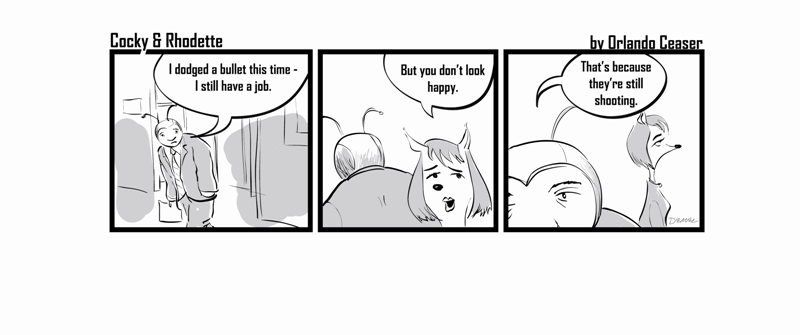
The Human Resources Department in this one organization was reminiscent of a trauma center. Its personnel were extremely busy handling emergencies. People were not necessarily in the facility, but they were backed up on the phone lines and in the e-mail system. HR technicians were anxiously utilizing their expertise to treat each employee for their affliction. When the scene was extremely hurried, calls were routed to the answering service and placed in a queue until the messages could be returned. They often stated that they will get back to you at the earliest convenience. When contact is made, there is the nebulous comfort of knowing that your call is being monitored for quality purposes.

At times the department could have been labeled ER instead of HR. With the ER standing for employee retention, employee recovery, employee replacement or employee rescue. The counselors were there to listen to the grievances, perform attitude adjustments, and recommend strategies that would benefit the patient as well as the organization. Sometimes they had to perform surgery to extract misunderstandings and misinformation and settle claims that could resort from managerial malpractice.

One employee at an insurance company described a situation that reminded me of a trauma center. It was as if she was in a combat zone with warring factions all around her. Some people kept their heads down and continued to fight through the workload. Others went AWOL and left the organization. The climate was similar to a MASH unit. This terminology is familiar to those in the military who fought in combat situations. MASH was also the name of situation comedy which was very popular years ago. MASH in our HR situation stands for Managers Are Stifling Hope or Managers Are Spreading Hostility, as their employees are demoralized and afraid to resign. The tragedy is that these Managers Are Sacrificing Heroes, when they really need their people to deliver heroic efforts beyond expectations in a competitive marketplace.

The ER department’s data bank reveals that many employees have problems with their manager. Their managers are unable to function in a stressful environment without taking it out on their people. They were not given stress management courses in leadership school. Employees are complaining about the way their managers treat them and speak to them. Employees cite circumstances where they feel threatened and intimidated. They describe wounds to their egos and blows to their self-esteem. There are complaints of verbal bashing, name-calling, being betrayed and stabbed in the back by lies and innuendos. The manager’s actions created a hostile work environment that borders on harassment at least in the minds of these individual.

One individual from an insurance company described a toxic climate where the following statements were said to her.

  • “Someone is going to lose their job and it won’t be me.”
  • “If you don’t like it you can leave. There are plenty of people ready to take your place.”
  • “I know I shouldn’t be saying this. And this could get me fired, but……..” (She continued with her inflammatory remarks against her employees)

Veterans of the workforce have commented that they don’t recall seeing things this bad. They are astonished by the lack of trust that exists between employees and management. Some are pessimistic about change in the immediate future. However, some are optimistic and say this is part of a cycle and improvement will occur when business performs better. As sales go up, people perform better at every level and much of the tension is removed from daily interactions between employees and supervisors.

I look forward to the world pictured by the optimist. It will be comforting when people are more engaged and the culture improves at work and at home. I will probably receive fewer telephone calls from people who feel threatened on their jobs and are very nervous because they fear being unemployed. There is hope now that the job market is getting better, but jumping ship is always a nervous thing to do. To the workers who are losing sleep, unable to eat or eat too much and drink to calm their nerves, they want relief. They want the resilience of those who are exercising more to increase the ability to handle the stress until the world improves.

Managers have different ways to handle pressure and stress associated with it. Those who are very skillful and competent, recognize that intimidation is a short term means of getting results. At some point this approach will become counterproductive when the manager really needs his people to deliver their maximum levels of engagement and results. It is easy to say that an employee should control what they can and work to become an indispensable member of the organization. Individuals with superior skills can generally land a job in any economic environment. But employees still need the ER to help them through the tough times.

Periodically, it is important to assess the injuries that are being treated in the Human Resources Department. Responsible leadership should evaluate these cases and the use these data points, along with employee surveys and focus groups to determine the health of the organization.

The question is what can be done to prevent the assault on HR from wounded employees who view it as their Emergency Room where Employee Restoration is practiced before returning them back to work? What can be done for the manager to remove the incentive to intimidate others? How can we turn HR into the ER which is the engagement room, or the empowerment room, where people are revitalized, and energized and anxious to go to work?

The Human Resources Department performs a vital role in the health and well-being of any organization. Its ability to ensure that the company’s greatest asset, its people, are hired, trained, developed, and placed in situations that are best for the individual and the organization, will have a profound business impact.

Organizations must work to ensure that if HR becomes the ER, it is a positive place where people receive the treatment they deserve. If HR becomes a MASH unit may it be because Managers Are Sanctioning Hope. Where the treatment they deserve empowers them to be more engaged, more productive and committed to exceeding the objectives that will make the organization and its members successful.

Copyright © 2015 Orlando Ceaser

Informants in the workplace

Hammer

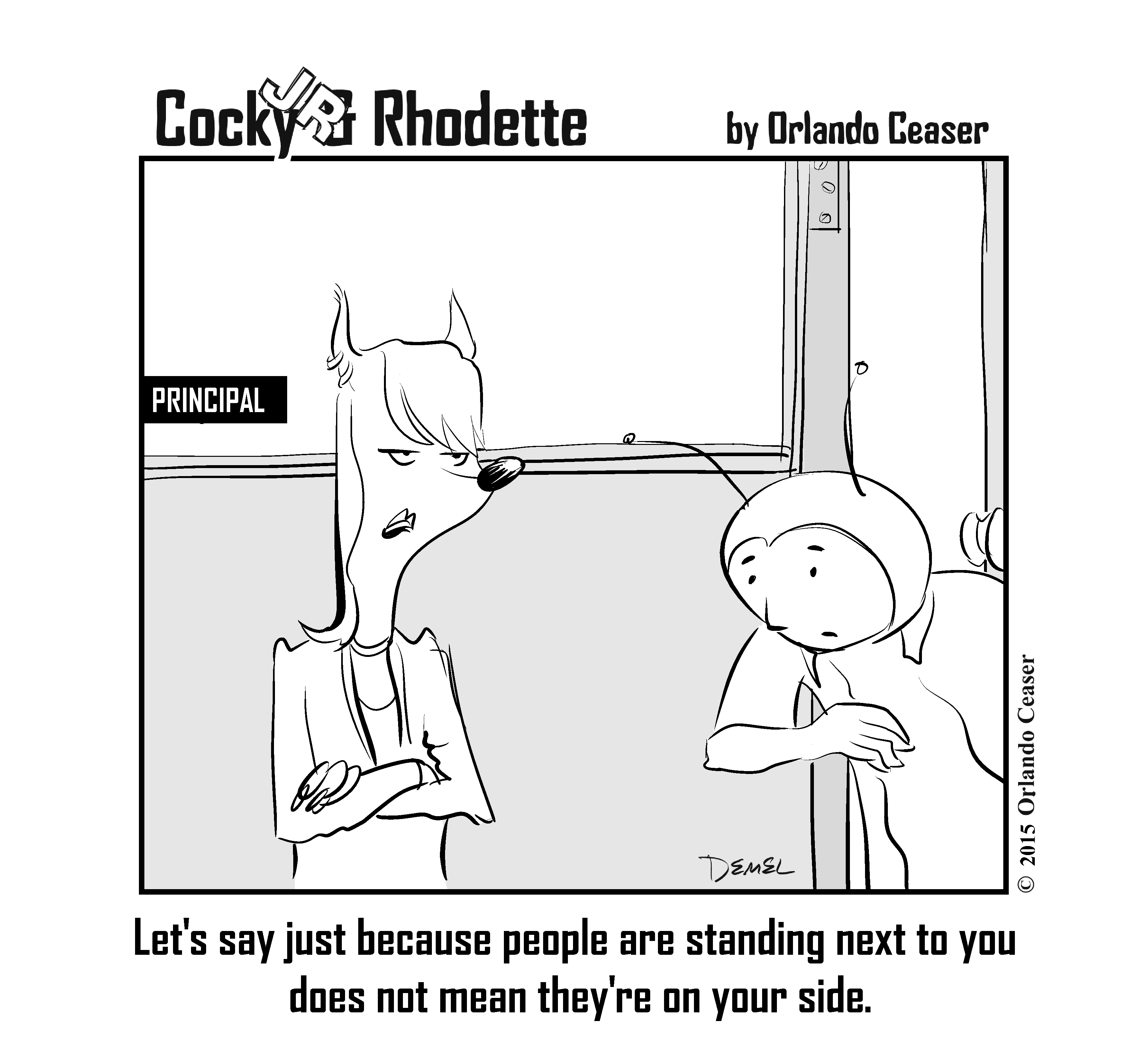
Information is an essential ingredient in the leader’s decision making arsenal. There are many established, credible resources at their disposal. There is everything from company databases, computer files, the Internet and consultants to the minds of employees. The information available in the minds of employees is critical. However, there may be situations where employees are reluctant to disclose relevant information for a number of reasons.

If the environment is not perceived as safe, people are reticent to step forward with their information. There may be employee surveys and numerous forums within an organization where data is accumulated. But, there is still a need to decipher the data and provide additional perspectives. These translations and interpretations can be provided by informants in the workplace.

An informant is defined by Webster’s New Riverside University dictionary as, “one who discloses information and one who furnishes cultural or linguistic information to a researcher.” Oftentimes, informants volunteer their services. They may be guided by a number of motives. One such motive may be a genuine desire to improve the culture of the workplace or team.

Secondly, informants may be driven by ulterior motives, hoping to be rewarded in some fashion. A pharmaceutical company discontinued their bonus program which disappointed a number of their representatives. A group of employees got together and complained and expressed their dissatisfaction. The most vocal member of the group became an informant and notified leadership of the various opinions expressed. The other members were chastised and eventually the informant was promoted. The moral of this story is to express your opinion in a situation where your insight is appreciated and the person can do something about it.

Thirdly, a leader may ask everyone to be an informant. They would like to create an environment where everyone can step forward and let them know the climate of the team. The leader would like to receive the word on the street regarding a new policy or procedure, directly from the employees.

Fourthly, there are situations where a leader may select a particular person or a small group of people, who have keen insight into the workplace. They may have the ability to articulate the feelings of the team.

Lastly, there are situations where a team may identify someone as a spokesperson, a group sanctioned employee. This person is an approved voice of the people.

There is crucial information that the company must provide to the employees or members of a team, in order for the company or team to be successful. This data is around the vision, mission and the type of organization they are trying to create.

There is also crucial information possessed by the employees. The employees have the perspectives and relevant data obtained by being closest to the customer. They must share or release this information to leadership, in order for leadership to recognize the impact of their programs and strategy. The release of this information from the employee may be through the informant.

There were numerous occasions in my career where I used an informant to improve the success of a strategy, program or my leadership effectiveness. In one situation I did not realize the tension that existed between my District Managers. One manager called me and asked if I noticed the discomfort in the room. Armed with the information from her call, I scheduled a team building session where they were able to play together and resolve their differences.

Additionally, there were another time when individuals were poisoning the environment I was trying to create. There was a time when I served as a healer to address a dysfunction within a team. I brought the team members and their manager into my office for a debriefing session. After the meeting was over, I received a telephone call from one of the participants. She stated that before their drive to their territory, she heard my voice in the back seat of the car. Apparently, one of the representatives had taped my entire session with the team. This informant made me aware of either the insidious nature of the team member for their lack of trust. I was able to satisfactorily handle the situation because of the courage of my informant.

Leaders have told me of situations where members of their team smiled to their face, but tried every effort to undermine their efforts, behind their backs.

The leader must create the environment where people feel comfortable enough to tell management what they think. The manager must create a culture which is an OASIS. The OASIS (Open And Share Information Safely) is an acronym describing a concept that I introduced in my book Unlock Your Leadership Greatness (available at www.OrlandoCeaser.com and www.amazon.com. This environment will have a direct them on the number of formats available in the organization.

Informants are critical in the lives of leaders who are new to an organization or new to the role of leadership. It is comforting to have individuals who can share with you and serve as a barometer for your policies and procedures. They can also let you know how your personality comes across to the group.

Informants do not necessarily have to be spies who infiltrate an organization to gather secrets. They can be legitimate information merchants dedicated to helping leadership make better decisions.

Copyright © 2015 Orlando Ceaser