How to go from an Extra in a job interview to a Starring Role

Interview_Trick_C

Have you discovered that you were an extra in a job interview, when you thought you were auditioning for the lead role? Usually, you do not find out about this reality, but if it is discovered, how do you handle the knowledge? Allow me to use the movie metaphor throughout this article to make a few points that will hopefully be of benefit to you.

When interviewing internal candidates within an organization, there is usually a preferred candidate. This person is the odds on favorite, a person who it is their job to lose, who will get the job unless they are an embarrassment and fall on their face during the interview. Don’t be naïve going to the interview thinking that this is not a reality. What can you do to shift the odds in your favor or set yourself up or your next career move?

Secondly, even when interviews involve candidates from outside the organization, judging by recommendations, review of resumes, and telephone screening, there are still candidates who on paper, the interviewer may feel have an edge. What should be your mindset going into the interview? You should assume that you are interviewing against a pool of talented individuals and securing the job will require your best performance. You cannot be distracted by the competitive field of talent. You should feel thankful for the chance to show the world why you are the person for the job and did deliver a powerful, mind altering performance.

Interview preparation

Prepare yourself for a courageously effective interview, as if you were competing against the most potent candidates in the universe. You must know yourself thoroughly and be ready to present your credentials in the most authentic, persuasive and powerful means possible. Your focus should be on delivering the best audition, reflective of your skills and abilities, to perform the job at a very high level. Your research into the organization should enable you to craft a strategic vision of how you could do the job better than anyone else. You should visualize yourself in the job, performing the job and achieving beyond managerial and company expectations.

It is company policy in many organizations to post a job, even when a person has been identified to fill the position. This may seem like a sham, but it does provide an opportunity for other people to audition for the vacancy. It may feel as if you are going through the motions and it may feel unfair, but it provides an opportunity that would not be there without the Human Resource Department (HR) involvement.

I have been on both sides of the situation. I have had people who were targeted for a specific role as a part of their professional development. When the role became available, I wanted to immediately put them in the job, however I was told by HR that the job needed to be posted and others given the opportunity to pursue the position. In other words, the people had to earn the position. HR wanted people throughout the organization to have a chance to pursue available and appropriate positions. Otherwise, people would leave jobs and be replaced based on favoritism and preferential treatment. It was better for the organization and the rationale made sense to me. However, it was incumbent upon the interviewers to be open-minded. This was a challenge and everyone had to be held accountable, which required challenging the judgment of everyone involved in order to arrive at a fair and equitable decision. There were instances where initial feelings were changed, based on the skills and abilities of a better candidate.

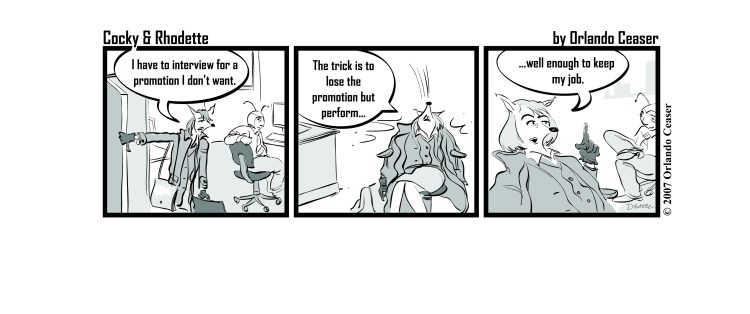
I have experience interviewing for a job when I knew I was a part of a crowd scene. I was an extra, to allegedly give credibility to the interviewing process. I did not want the job, but I was encouraged to interview for the job because it would be beneficial for my career. Interviewing for a job requires preparation time, which I did not want to spend because I wanted a different position. I did not want to deliver a poor interview because it would take me out of consideration for the job I really wanted. The feedback I received, after I did not get the job, was they could tell that my heart was not in the interview. I thought that was amazing, since I told them in the beginning that I did not want to interview for the position. My presence in the interview, gave credibility to the person and the interview process. It also showed my willingness to be a team player.

Initially, I felt they could have given the job to the individual without putting me through the process of preparing and executing multiple interviews. Serving as an interview extra however, ultimately worked in my favor. He was an amazing candidate and ultimately I got the assignment I wanted.

How should you perform when you suspect that you are an extra in the interviewing process? Should you follow through with the interview? Should you complain to those interviewing about your suspicions? Should you withdraw your name from consideration because you view it as a waste of time?

Many managers would suggest you approach the situation from a strategic point of view. They would suggest that you consider the following;

  • The interview process may not be as open-minded as you would like
  • The interview is an opportunity to showcase your talents, skills and abilities
  • The interview allows you to network and expose other individuals to your career aspirations
  • The interview allows you an opportunity to practice your interviewing skills in a manner sanctioned by the organization (receiving interview practice by interviewing for jobs outside the organization would not be smiled upon)
  • You could enter the interview with the mindset of making it very difficult for the interviewers to offer the job to their preferred candidate
  • Your stellar performance could set you up for a recommendation from the interviewers for an even better positionThe moral of the interview process is that even though you may knowingly or unknowingly be an extra in the interview process, it is a golden opportunity to network and showcase your talents. It can be the move that can set you up for an even greater job, building relationships, advocates and individuals anxious to recommend you and potentially bring you onto their team.


  • Copyright © 2016 Orlando Ceaser

Performance fixing in the workplace – Lost productivity and restricted growth

C&R 9-3 0007

Athletes and their sports periodically are plagued by scandal. Athletes may be asked to lose a match, fight, or game by delivering less than their best effort. The tennis world was recently rocked by allegations of match fixing where players allegedly accepted payment for losing or throwing a match. Novak Djokovic, the reigning number one men’s player in the world, said he was offered $200,000 through his previous handlers in 2007 to lose a match.

Boxing has had its share of scandals. Unscrupulous fighters have been known to take a dive, throw a fight or lose a fight on purpose. Controversies have surfaced with football, basketball and baseball.

This tactic of solicitation; altering the outcome of a performance is also prevalent in other aspects of our lives. Performance fixing is not customarily a term used to describe substandard performance at work. We do not accuse employees of collusion, throwing a project or taking a dive regarding their objectives. However, there may be similarities with sports.

Friends or coworkers may ask you to deliberately act in ways that could negatively affect results. They may expect you to limit your participation or productivity, hold back by not delivering your best effort and engage in activities with consequences that will affect your grade, goal achievement, contributions or career.

It is an integrity issues when someone delivers an unearned and unsanctioned discount or illegally influences the score. But failing to bring your best effort is also unfairly influencing results by delivering below expectations.

People may have a variety of reasons for convincing others to take a dive. They may want you to make a supervisor look bad, fail or simply to compromise results for a number of reasons.

As a sales representative my competitors tried to discourage me from working hard and going beyond the call of duty. Ultimately, when I was promoted to management, they told me they thought I was smarter than to take a role in leadership. Their code of ethics was to do just enough to get by, not rock the boat or bring too much attention to the status quo of their comfortable world. They had tried for several years to get me to perform at a level that did not upset their established level of mediocrity. They were in effect asking me to fix the outcome of my selling activities by reducing my effectiveness.

Take a moment to reflect on your life and your performance in school, relationships or in your career. Have there been instances where people have discouraged you from taking a course of action; pursuing an MBA, volunteering for a project, advancing your education or participating in a manner that would improve the outlook for your career? They may not have offered money, but there was an expectation that you would conform to their request and maintain a friendship or relationship. Did they influence you to withhold your best performance or restrict your participation? How did you respond to their subtle influences to maintain the status quo? You probably did not see it as performance fixing.

Can you think of instances where you were reluctant to excel and talked yourself out of delivering your best performance? You may have convinced yourself that inertia, standing still, the status quo was more desirable than going after a promotion or shaming your peers. You may have told yourself the aggravation of more responsibility would be too much work and not worth the small financial payout and alienation from your peers. You may have held back, telling yourself that management would not be receptive to your efforts to improve your opportunities. The result was stabilization and stagnation.  Therefore, you took an internal dive and restricted the release of your talent and failed to maximize on the opportunities available.

Companies have lost productivity and revenue due to people shaving productivity across the organization. Individuals intentionally or unconsciously participated in a conspiracy to hold back on excellence. The payout was not also in money. They may have received resources or items of nominal value. It was for either pleasure or pain.

Pleasure could involve the camaraderie and benefits of connection in a powerful networking relationship. Being affiliated with people who are well known or who praise them makes them feel special. They may want the pleasure of associating with someone they wish to emulate, who makes them feel special.

The compensation could be the avoidance of pain. People are deprived of the discomfort of being shunned by their friends and the humiliation of failing to land a job because they took a risk. If they don’t pursue the job then they don’t have to make mistakes or suffer the failure not reaching it.

Withholding effort and talent is not considered a criminal event. People don’t think of themselves as being complicit in an illegal activity. But, they are assisting other people in activities that hurt themselves, other people or the company. Under the cover of darkness they are essentially breaking into a residence of excellence and stealing from the organization. They are taking a payoff to engage in activities that restrict growth and development.

Professional tennis was struck hard by the accusations of impropriety. The governing bodies of tennis are investigating their handling of this potential blemish on their profession and the parties involved. Other athletic associations, through the years have investigated and disciplined all parties found to be guilty of affecting the integrity of their sport. What must we do to ensure that performance fixing is minimized or eliminated from within our areas of responsibility?

You may consider it unfair to view lack of excellence and substandard engagement, as an integrity issue. But people are hired and expected to bring their best effort to the workplace every day. I had a manager who always asked me,” is this your best thinking?”  We must ensure that we bring our best thinking and best action to the workplace in our interactions with others. The dollar value on waste and on the opportunity costs of lost or poorly implemented ideas.

Copyright © 2016 Orlando Ceaser

5 Self Restraining Tendencies (SRT’s) That Can Hurt You

We are human and therefore, have idiosyncrasies, nuances and eccentricities that come with our personalities. Many of these unique characteristics position us for survival and success. But some of these peculiarities are counterproductive and are detrimental to our growth. I will call them self restraining tendencies or SRT’s. They are not necessarily life-threatening, but they may serve as impediments to development.

SRT’s are indigenous to human beings. They may be formed by life experiences and thoughts and subsequently create insecurities. They may be pseudo-defense mechanisms to allegedly protect us. SRT’s may be categorized as bad habits that may hold us back, restrict growth or work against us. How do we know we have them? Self assessments and times of reflection can increase self awareness and reveal SRT’s, as we examine our lives and impact on others. Additionally, we may receive the gift of honesty from a friend through candid comments. Constant feedback from co-workers, parents and peers can also be useful by adding to our enlightenment. But, we must be objective, receptive and appreciative of their candor.

5 Self Restraining Tendencies (SRT’s)

  1. Procrastination
  2. Poor communication skills
  3. Negativity mindset
  4. Toxic people skills
  5. Lack of Integrity

1. Procrastination

It is interesting to learn that many people are struggling with procrastination. The act of postponing things until later is not intellectually difficult for people to understand. They know that something should be done immediately and to postpone will have consequences. But, nevertheless, they still will delay until later, that which should be done today.

We recognize that we may not feel like doing something right now or we have awarded a greater priority to something else. If we continue to kick the can down the road or delay the inevitable, we will continue to waste time and effort and increase the amount of stress in our lives.

Lisa was interviewing for a job as a pharmaceutical sales representative. She felt very comfortable with the interview. The interviewer asked her about her number one shortcoming. She responded, “I am a procrastinator. I get things done, but sometimes it takes me a while to get started.” Procrastination was her Self Restraining Tendency, but the interview may not be the right place to disclose this particular self restraining tendency.

2.  Poor communication skills

Communicating is something we do every day. It is the currency by which we interact with people in order to state our ideas, convey instructions and build relationships. Those among us, who communicate effectively, actually have an advantage at school, in our careers and in relationships. If we are hampered by poor communication skills, our effectiveness is restricted. This self restraining tendency, like the others featured in this article, must be identified and corrected.

Poor communication skills could be non verbal or verbal to include written, body language and group presentations. Ask yourself, “Am I plagued by poor communication skills? Are there aspects of my communication ability that are hindering my progress?” Conduct a self-assessment. Diagnose your communication ability to see if there is a deficiency. You may seek to solicit feedback from respected sources and trusted friends and colleagues to see if they can identify areas that require improvement. When the SRT is disclosed, a change management process should be initiated. However, rather than go through multiple steps to change we should go directly from denial to acceptance and put a plan in place to correct the SRT.

3. Negativity Mindset

People who have a negativity mindset are not necessarily the individuals who look at the pros and cons of every situation. I am speaking of the people who like to rain on the parade. When the entire group has decided to move in a positive direction, they are the naysayers who constantly focus on what is or could go wrong. They provide excuses rather than explanations. They seldom do anything but complain without the slightest contribution to positive constructive participation to change anything. 

4. Toxic people skills

The toxic people SRT is different from the poor communication skills mentioned earlier. Individuals prone to this tendency will use power to humiliate and intimidate in order to gain the upper hand or to create an environment of fear.

My son worked for an organization where the new boss actually said, “When I walk into a room I want people to fear me.” He wanted people to be intimidated by his presence. This attitude is supported by language and interactions that cause stress, a lack of trust, poor engagement and ultimately subpar performance. Individuals with toxic people skills may speak about people behind their backs, pit coworkers against each other and generate an atmosphere of tension.

People with toxic people skills may be cursed with the propensity to enter every interaction with a transaction mindset. They are constantly thinking what is in it for them, how can they beat the other person by any means necessary and how it can only help them succeed. This is prevalent in relationships where they only socialize or interact with people who can help them advance their position, today. 

5. Lack of Integrity

People with a lack of integrity are flawed in their relational and work performance. They utilize a winning at all cost or any cost approach to work and relationships. People with this tendency view the rules as an inconvenience, something for weak minded people, to be broken and circumvented whenever possible. Breaking rules is seen as a badge of honor, a necessary evil to give themselves the ultimate advantage toward victory.

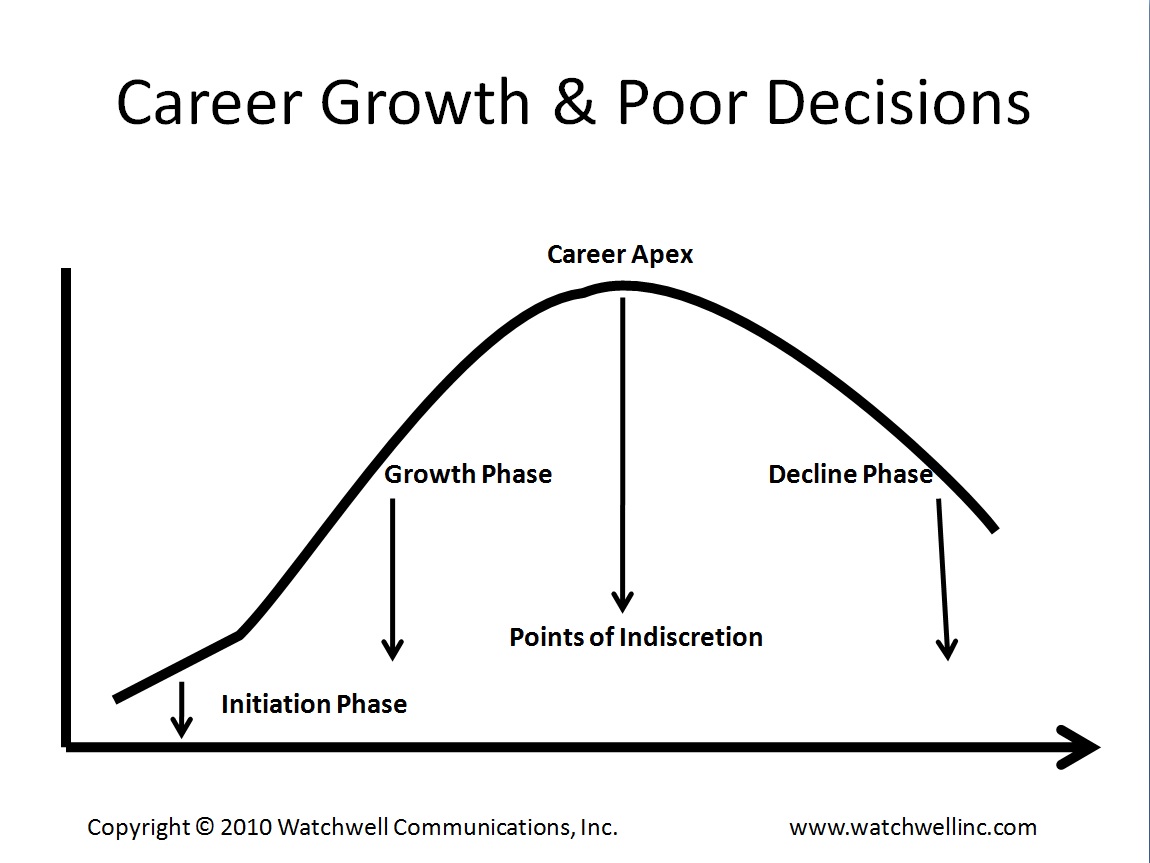
Invariably, this SRT will cause the downfall of their career and reputation. Oftentimes, the integrity flaw does not manifest itself until well into a person’s career. Please find below a chart illustrating a natural career growth curve and the various points of indiscretion where a lack of integrity can doom a person’s career.

careergrowth

If a lack of integrity shows itself at the end of someone’s career, a lot of their positive contributions can be discounted and shrouded in suspicion, nullifying their reputation. If a lack of integrity revealed itself early in someone’s career, they may never have the opportunity to make significant positive contributions or to realize the potential present in their talents and abilities.

Ideally, we should establish self restraining orders or SROs for those character traits which are limiting our joy and effectiveness. The five self restraining tendencies listed or others should be addressed if they are a problem for you. They have the capacity to limit your effectiveness and keep you away from realizing your full potential in every segment of your life.

Copyright © 2016 Orlando Ceaser

Rudolph the Red Nosed Reindeer – Lessons in Handling Differences

Reindeer

We are often started with the commercialization of Christmas. We are reminded to not lose sight of the reason for the season. This is valuable advice for Christians and others during this reverent time of year.

We grew up with Gene Autry Christmas classic of Rudolph the red nosed reindeer. It is a delightful song, but also delivers a powerful message about encountering and handling differences. This song could start meaningful conversations about accepting others.

The song begins with a reference to the reindeer popularized in Clement Clarke Moore’s, “The night before Christmas”, also known as “A visit from St. Nicholas.” It begins with a roll call of Santa Claus’ reindeer that of course omits the name of Rudolph. As you recall, Rudolph was different from the other reindeer because of the luminescent quality of his nose. His nose was so shiny that it had either reflective qualities or it glowed like a light. This was enough to make him the object of ridicule and ultimately ostracism by the other reindeer.

This lack of acceptance is seen when children and adults are confronted with someone who is different from them. Our initial response is to make fun of the person and then to isolate them because of their characteristics, traits, heredity or idiosyncrasies. Many of us recall when we were young and begged for approval. Even to this day, there is something about us that makes us stand out from the crowd and the crowd lets us know it.

At work or is school, simply being the new person, the new kid on the block, the person who is an unknown, becomes a source for teasing or isolation. We often wondered,” if they would only get to know me, they would see that I’m just like them. “Rudolph was a reindeer, so he surely had a similar appearance, except for his nasal peculiarity. But suppose he was of a different color, from a different region of the country or had a different ability.  He would have manifested a difference that would have caused him difficulty until he was accepted. We usually ask the different party to fit in, when the real focus should be on them being accepted by the group.

Bullying is also a response shown toward those who are different. The song the does not indicate that Rudolph was bullied, but we can only assume that preventing him from “playing in any reindeer games” was not always accomplished in the most delicate manner.

The song does not tell us what Santa Claus was doing during the hazing or if he even knew about it. But, as a good leader, he engineered a very strategic response. He knew the talent and value of all of his reindeer. He evaluated the weather system for his next journey and realized he was going to encounter numerous blizzards. He knew that the solution to his problem existed among the ranks of his reindeer. He knew he had one reindeer that could help navigate the wintry delivery of toys to boys and girls around the world. This opportunity would be well received it if every reindeer benefited from his gift.

We can give Santa credit for waiting for the appropriate time to unveil strategy. He could have given the reindeer the opportunity to work it out amongst themselves, as so many people do in similar situations. They say such things as,” kids are just being kids, learning to navigate difficult situations will only make the recipient stronger and teach them valuable life skills and that which does not kill them will make them stronger, to paraphrase Friedrich Nietzsche the philosopher. Maybe the reindeer performed similar initiation rites to others in the group that had other distinctions from their peers. Maybe they solve their treatment of Rudolph as being harmless and natural.

The defining moment came,” one foggy Christmas Eve, Santa came to say: Rudolph with your nose so bright, won’t you guide my sleigh tonight?” Many managers, leaders and parents look for the opportune moment to use the skills of their people. The right moment to show the world and the individual, that they recognize their true value and wish to share this value with every member on the team. We can only assume that in the fictitious conversation, Santa’s encouraged Rudolph and told him about the value of his difference. He made him feel that he was something special and should never feel that he was not important and did not have a place. I’m sure he made him feel like an important member of the team. He validated his value by asking him to lead the team by moving up to the front of the line.

You remember the happy ending to the song. “Then all the reindeer loved him, as they shouted out with glee, Rudolph the red nosed reindeer, you’ll go down in history! We know that in real life, responses to differences may not always lead to a happy ending. Sometimes the individuals have lingering insecurity, damage to their self-esteem and underlying resentment from the initial exclusion. But, so often when the difference that is ridiculed or denied is used for the benefit of the group, the organization, institution, group or community becomes stronger. The people learn a valuable lesson about inclusion. We are hopeful that when the person is accepted they don’t become complicit and act in the same manner when they encounter other people who are different.

If we remember the Rudolph days of our lives and commit ourselves to prevent them from happening to others, we will maximize their future contributions to our teams, families, organizations and communities. We will perform a noble act when leading by example with the lessons learned from Rudolph the red-nose reindeer.

Please look forward to reading more about differences in my new book due by June 2016, Unlock Your Diversity Greatness. It is based on the premise that your uniqueness is not a weakness and contains strategies to utilize your talents, skills and abilities. More books in the Unlock Your Leadership Greatness series can be found at www.OrlandoCeaser.com or www.amazon.com.

Copyright © 2013 Orlando Ceaser

The Anatomy of Acronyms to Positively Impact Performance


MSU_CAcronyms are used extensively by writers, speakers, students and anyone who likes to communicate. Businesses, organizations and institutions use them to assist in the retention of a message, concept or name. They are used along with association, rhyming, and alliteration to help people remember things.

Acronyms have been proven as a simple way to help people recall information by breaking it down into manageable bits of data. An acronym, is defined by Merriam-Webster’s collegiate dictionary as, “a word (such as NATO, radar, or snafu) formed from the initial letter or letters of each of the successive parts or major parts of a compound term.” Some of my favorite acronyms are; Fear is False Evidence Appearing Real, EGO is Edging God Out and when learning musical scales E, G, B, D, and F (Every Good Boy Does Fine).

Acronyms can work to inspire, motivate and improve performance. For example, years ago our sales region wanted to emphasize the value of asking questions. I came up with the acronym ASK, which stood for Acquiring Selling Knowledge. If our reps wanted to be effective they had to gather information by asking probing questions. When you establish the framework you can apply it to various concepts by substituting other words, such as spiritual, significant, etc.

The need and applications for acronyms are all around us. We had a feedback group known as VOICE to give us information on company policies, programs, products and procedures. One day the director of the program was asked if VOICE stood for anything. He replied that it was not an acronym. I walked up to the booth and suggested, Very Often I Change Everything. The director stood there in amazement. He looked back at the word and saw that it worked, for all of the words were there. It captured the purpose of the company changing some of our initiatives based on hearing the voices of our people.

There are organizations that can create acronyms for your organizations. You can search for acronyms at http://www.acronymsearch.com where over 50,000 acronyms are listed and you can even post your company’s acronyms to their database.

Acronyms vary across companies as each organization has their own vocabulary. Therefore, it is important to explain them to ensure you are communicating effectively. I was a part of the pharmaceutical sales organization and STD’s were sexually transmitted diseases. When I spent time in our human resources department, they openly discussed the rise in the number of STD’s which was disconcerting until I realized they were speaking of (short term disabilities).

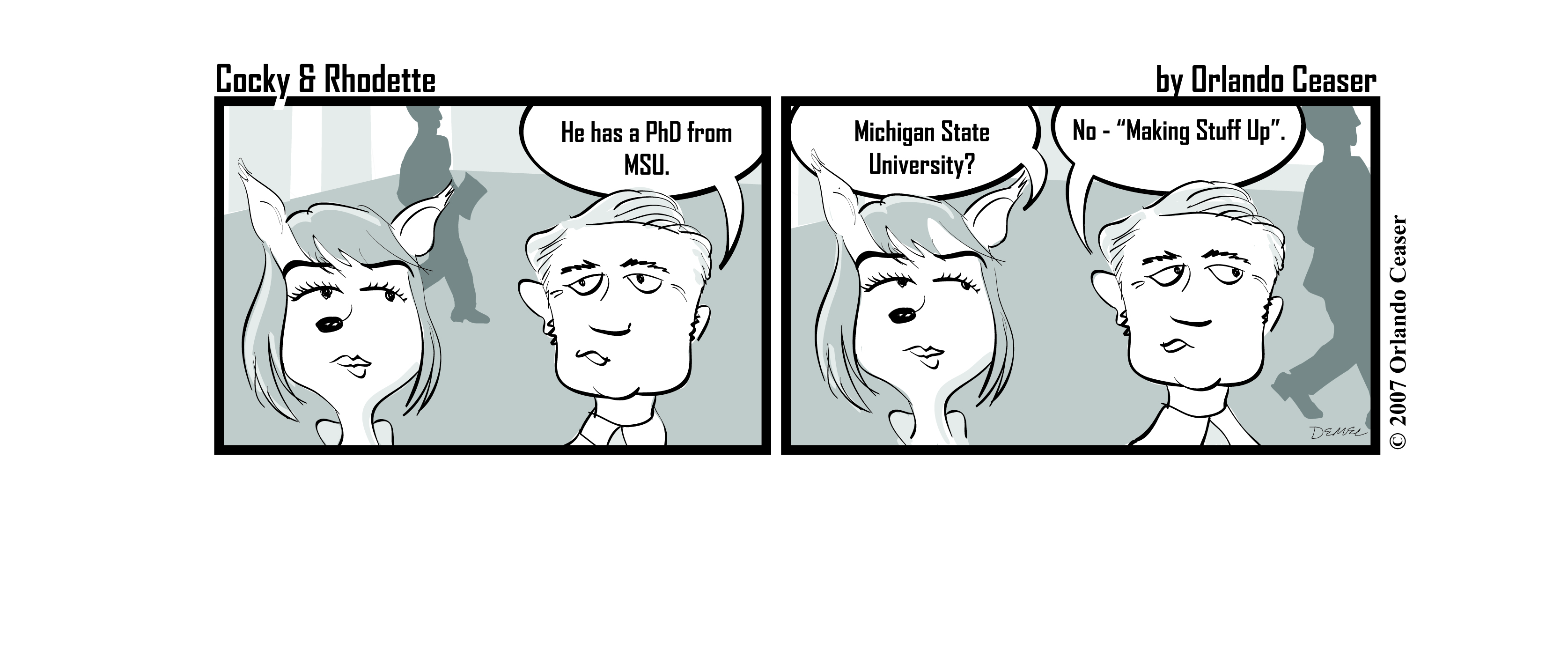
The secret of a good acronym is to be simple, clear and catchy. In the 1980’s I was training sales reps and noted that several of them were trying to make up information during a sales simulation. I reminded them that their doctors had forgotten more about medicine then they would ever know. I suggested that they could not Make Stuff Up or words to that effect. Years later I found out this concept was the subject of a book of a similar concept.

If the acronym has too many words it may maintain its effectiveness by association rather than attaching each letter with a particular word. For example, the Jupiter trial for a popular cholesterol lowering medicine: Justification for the Use of Statins in Primary Prevention: An Intervention Trial Evaluating Rosuvastin.

When you hear the word you want someone to make a quick association. I speak to organizations about creating a climate where people can safely state what is on their mind. In my book Unlock Your Leadership Greatness; (available at www.OrlandoCeaser.com and http://www.amazon.com) an OASIS is described as, a place where people can be Open And Share Information Safely.

Acronyms are an art. Since I have a knack for acronym development I have been asked on several occasions to help groups in their efforts to create one. I would speak with them and solicit their intent, the word they are trying to develop (if they have one) and the placement of the word in their overall strategy. This information allows me to know what they are trying to achieve and gives me the insight to meet their expectations.

Has Anyone Been Inspired Today is a mantra  for HABIT to remind me to help people through positive and encouraging actions. When an expert in a given area or topic is performing their duties it looks effortless. Aga Karve, my spin instructor is such a person. When she is working on the bike she is smiling while class members are groaning under her strenuous workout. One day it struck me that She Makes it Look Easy, SMILE. So we can say Someone Makes It Look Easy as they are smiling and effortlessly performing their work.

Acronyms can be fun. They can build your vocabulary and creativity. When creating acronyms, please remember the following:

    • Acronyms can be designed as a memory device
    • They are more effective when they are simple, succinct, catchy and linked to the topic in a powerful way


  • Be observant and on the lookout for acronyms and do not be surprised when they appear
  • Keep track of acronyms in notebooks and computers

When you allow acronyms to incubate in your mind you can develop fascinating associations between the words and concepts you want to remember creatively and assist you in memorization and performance.

Copyright © 2015 Orlando Ceaser

Managerial Monsters in the Workplace

Devil_Deal_CI grew up with a different generation of monsters. The monsters in the movies and television of my day had the same objective as the ones today, to shock and terrify. They strive to literally frighten you out of your mind. Please indulge me for a moment as I ask you to play a game. Answer this question “If my manager were a monster, who would they be?” To play along with me you must have a picture of your current manager, a manager from the past or a manager you heard about from someone else.

I grew up watching a program called Shock Theater. The hosts were zombie musicians who were probably the inspiration for the look of Michael Keaton in the movie Beetlejuice. The program was a prelude to the Creature Features segments on late night television. There were six favorite monsters or categories that dominated the movies in my childhood; the Wolfman, Dracula, the Mummy, Frankenstein and various reptiles or mutated animals that were exposed to radiation. For this segment let’s concentrate on the top four; Wolfman, Dracula, Frankenstein and the Mummy.

My favorite character was Lon Chaney, Jr. who played the Wolfman. He was a frustrated man who was bitten by a werewolf and had to spend the rest of his life howling at the full moon. He was always seeking a cure and looking for sympathy from anyone who would listen to his tale of woe and help rescue him from his fate. He wanted to be different but was overpowered by the curse. Have you seen the Wolfman Manager in your organization? They appear to be nice, but are tormented by their role. They blame something or someone else for their cruel behavior. They were forced to be tough and it was agonizing for them because it was, out of character and against their temperament. In the presence of their boss, they would reluctantly turned into something horrible, to become consistent with leadership expectations.

Then there was Dracula, the vampire. He was charismatic, smooth talking and mesmerizing. He spoke with a distinctive accent and people were drawn to his charm, appearance and professional demeanor. He was royalty; after all he was a Count. But Dracula was still a blood sucker planned to render his victims hopeless and under his control. His intent was to drain others until they were no longer of use to him, other than to locate another food source. You may have seen a vampire walking around your company with that same arrogant, cold, uncaring look. The look that says they are interested in you for what you can do for them. The Vampire Managers walk around feeling as if they would be there forever and no one would discover their secrets. You may wonder if somewhere, there is a coffin containing their native soil.

The Mummy was cursed to guard the tomb or temple of his beloved. He was slow of foot, but was loyal, relentless and powerful. I’m speaking of the older version played by Boris Karloff. The newer version with Brandon Fraser is a stylized adaptation, but the plot is the same. There is a creature driven by an overpowering love and allegiance for the object of their affection. This person within your organization has an undying love for the status quo and will destroy anyone who tries to harm or change it. They will blindly institute unethical policies and cover them up, especially if an investigation is pending or inevitable. This individual will persistently pursue anyone who has anything negative to say about the company or anyone they personally admire within the organization. They will practice a technique known as delayed retaliation to seek revenge against their enemies.

An organization began a process of offering 360° feedback to its managers. The managers enlisted the help of their peers, direct reports and their supervisor. When they received less than flattering commentary, they smiled and thanked everyone for their contributions. Over the next several months, the Mummy Manager did everything within their power to slowly, relentlessly, strike back against those who offered disparaging feedback. The mummy within the organization is wrapped up, as a metaphor for hiding either their identity or their intentions.

Lastly, there was Frankenstein, named after his creator. He was a collection of body parts, that were sewn together to create a living breathing inhuman being. Frankenstein’s monster was depicted as mindless and easily irritated. He was created to be controlled and to demonstrate the power and influence of the scientist. He was the earlier version of the zombie. Frankenstein became identified with his creation. When the Frankenstein Monster saw his reflection and what he had become, he became angry. He realized how different it was from everyone else and that people were afraid of him. He was deliberately created to be controlled as an example of his creator’s intellect and power. He ultimately turned on his master.

The Frankenstein Manager appears in many organizations as the protégé who was shaped, mentored and created in the ruthless image of their sponsor. Eventually, the protégé will turn on its creator, causing much instruction in its wake. They emulate the same selfish tendencies observed in their Pygmalion. After the monster received or learned all they could from their master, it may cast the mad scientist mentor aside.

Each generation has its own monsters; whether it is the Wicked Witch of the East, Aliens, the Predator, Jason of Friday the 13th or Freddy Krueger from Nightmare on Elm Street, they can be compared to the leadership styles of many of the leaders seen in organizations around the world. The traits of these frightful creatures are found in the leadership practices of some managers who believe they must resort to fiendish tactics or insensitive methods in order to get results. Where there is a monster, there is fear. Where there is fear, there is an antidote or a strategy possible to eventually relieve people from the threat of the monster and the power it has over the employees in the workplace.

Copyright © 2015 Orlando Ceaser

What do Ambitious People Want?

Monitored_Life

Conversations with ambitious people who want to embark upon an ad venture leading to success, revealed at least six attributes that describe their appetite for achievement.

The attributes are access, acknowledgment, acceptance, appreciation, advocates and awards.

Access

Ambitious people want unfettered, unrestricted access to key people, resources, and information that can help their careers. The resources could be information, data, budgets and expertise. They know that relationships and networking are important to job acquisition and promotions. Salespeople think,” If I can see them, I can sell them.” Ambitious people want the keys to unlock the doors to opportunity.

People want access to key developmental opportunities, assignments and high visibility projects that will hone their skills and prepare them to assume additional responsibilities. Ambitious people want access to meaningful work and connections to mentors, coaches and the senior leaders who can ultimately influence their careers.

Acknowledgment

Ambitious people want to be acknowledged, once they are around and gain access. They want to be recognized and feel like a part of the team. Recognition as an attribute means simply to notice them, sense their presence and smile or nod in their direction. They want common courtesies through greetings and eye contact. People want to feel as if they are a part of something very special. It is not always necessary to remember their names, but that would be a nice touch. A smile in their direction while walking in the hallways signals to people that you know that they are there. No one likes to feel invisible, so when leaders find a way to acknowledge and identify someone it is very well received.

Acceptance

Everyone wants to be accepted and included. If a leader in the organization taps into a person’s need to be accepted they will feel valued, relevant and necessary. They will feel a part of something bigger than themselves and this will enrich their time at work. They can feel accepted when invited to functions after work and involved in social activities. When they feel welcome, they feel as if they belong. It is one thing for an organization to talk about inclusion, but the proof is in the daily practices of its members to involve everyone in activities beneficial to the organization.

When people are accepted, they feel as if they are wanted and this can contribute to higher statistics on engagement, productivity and job satisfaction.

Appreciation

People like to feel their work has value; is noticed and essential to the enterprise. When leaders or the organization finds ways to say “thank you”, people remember. A senior leader wrote a poem to his sales organization and received numerous positive responses from the team. In addition to the other awards they receive at year end, one person said,” My manager took to time to write something special to show his appreciation.”

Employees enjoy when managers demonstrate actions, not just words to prove that their people are their most important resource in the company. Programs are put in place that minimize workload and attempt to ease the tension between work and their personal life. It is often very difficult to achieve work/life balance. Some organizations refer to it as work life effectiveness or a blending between work and home. Feedback is given consistently, not just at the end of the year, to ensure that employees know where they stand relative to their performance expectations. They are told the truth in a fair and candid manner, which builds trust. Not only are people appreciate, but they are respected and their opinions are solicited.

Think of ways to say or show your appreciation. It can involve little things like thank you cards, hand written notes, bonuses, time off or special celebrations. There are numerous ways to show gratitude and these will go a long way to making people see that managers care about them as individuals.

Advocates

Ambitious people love to rise within the organization. They want to be known and supported by individuals who can advance their careers. They want mentors who will speak up on their behalf in personnel meetings. They want people to put in a good word for them when assignments are being discussed. They want supporters, cheerleaders, mentors, coaches and sponsors. When they are doing a good job, they want the managers to sing their praises from the rooftop. They want people to run interference for them on their way to other assignments. In meetings when people are quoting misinformation about their performance, they want someone present who will set the record straight.

Ambitious people love advocates. These individuals can have a positive impact on their financial status and their ability to be successful on the job. When individuals within the company and outside the organization learn about positions, advocates are invaluable to deliver positive comments about your personality, work ethic and capabilities.

Awards

Everyone likes to be rewarded and recognized when their performance meets and exceeds expectations. These awards can be in the form of pay increases, additional responsibility and kind words delivered in the presence of your peers. People want to feel acknowledged, accepted and appreciated. These three attribute can be considered awards for showing up at work and delivering results at a very high level. When access is provided and advocates communicate and celebrate your performance, awards in the form of certificates, pay increases, promotional opportunities and developmental assignments is a great way to show that the organization understands the importance of cultivating a motivated workforce.

The six attributes stated in this article answers the question, “What do ambitious people want?” An argument can be made that not only are the six attributes what ambitious people want, but everyone in the company want the same things. Everybody wants to be respected, rewarded and recognized, as well as to be supported and mentored. Ambitious people and those not interested in climbing the company ladder want to enjoy work and feel they are making a difference, as a part of something significant, where they are playing an important role.

Copyright © 2015 Orlando Ceaser

Nullification of Positional Power – Undermining authority

Byside

The merger was in full bloom. HR and local sales leadership from both companies met to resolve some issues and establish a working relationship. The highest ranking person in the group was a Director, who was African American. The discussion was very intense and the room responded as if the Director did not have a rank several positions above their own. At the end of the session the HR person turned to the Director and stated, “People at our company would have never reacted to you as they did. They would be more respectful of your position.”

Disregarding and nullifying positional power is more common than we think. It is a risky proposition, potentially detrimental to all parties involved. Additionally, it is difficult to prove in many instances. In most instances, the evidence is circumstantial, relying essentially on body language cues and hurt feelings. Unless you can quantify it with actions on the part of the perpetrator, the target appears insecure or overly sensitive.

New leaders have stated how they do not receive the prestige, recognition and respect they deserve from their peers and subordinates. Shockingly, people lower in the organization challenge them when they would not challenge others with the same level of authority.

The nullification of positional power is a universal problem, but women and minorities have expressed it many times in conversations. They feel as if their jobs are not perceived the same as others in their position. When nullification is evident, and in its worst cases, the team does not function, as well as it should, which ultimately could reflect negatively on the manager. Team members may also suffer the consequences of reduced effectiveness and its impact on financial rewards. Engagement levels may go down and productivity can be adversely affected if this practice is not addressed.

Sometimes, nullification of positional power shows itself in overly aggressive challenges to your authority, undermining your directives and refusing to seek your guidance or valuing your opinion. You may be tempted to retaliate or verbally castigate them in public. But remember, you are still the leader and must be above the fray, as it relates to executing the duties and responsibilities of your position. You cannot let your ego impair your judgment. Public admonishments or executions, may feel good, but can damage the defectiveness of the team.

It is interesting how some people walk around with a look on their face that says,” I don’t care what job you have. I am still better than you and will not accept you in your role in this organization.” They are defiant and have a difficult time suppressing the conditioning they received from their experiences, environment, biases, preferences and stereotypes.

It is a fact that most of the time nullification of positional power is not blatantly obvious. It is demonstrated through negative body language, micro-inequities and comments made in private. Micro-inequities are subtle actions, often unconscious offenses, injustices and inconveniences that make the recipient feel inadequate, insufficient, irrelevant, unimportant, insignificant, unnecessary and undervalued. They may be verbal or non verbal and reflect overt and covert actions. The persistent activity may cause people to second guess their competence and lose confidence in their abilities.

It may seem easier to address this behavior if the individual reports to the manager. But the behavior is not usually out in the open. The actions may be underground and committed in secret. Significant damage may be done to your effectiveness as a leader, before you discover this breach in your positional power.

Within many organizations it is acceptable to challenge ideas for they pride themselves on candor. That is their culture and it is understandable. Challenge is in their DNA, as a part of their mindset which is evident in their practices. Candor is woven into the fabric of their culture and no one takes it personally when challenged by someone lower in the organization. Status and titles are irrelevant when they are solving problems or developing ideas in brainstorming sessions. However, respect of all levels is expected.

Nullification of positional power is often used against the new manager. Some people deliberately set out to embarrass the new manager. They feel the person does not deserve the job for a variety of reasons and find it distasteful that they have to report to them. They may try everything in their power to cause them to fail by not cooperating and performing at a lower level beneath their capabilities.

Nullification or disregard for positional power has always been an enigma to me, particularly with people, who were actually afraid of leadership. However, they become emboldened and antagonistic when certain people were promoted into a job. Whereas, they were cautious with their words around most leaders, because they were concerned about their careers, these same individuals took a huge risk and acted out of character, because either they did not care or felt there would not be any repercussions.

A District Manager was promoted to his new assignment. He lacked the experience of some of the senior members on the team. One of the members thought they should have received the promotion. He did everything in his power to make the job difficult for the new manager. Years later, he confided in me that he did this out of spite. He did not respect the person in the position and worked within his power to make it difficult for his new boss. He told me, as if to soothe his conscience during a moment of remorse.

Occasionally, resistance to the new manager is in the subconscious realm. There is unconscious bias where people do not recognize what they are doing. When they are reprimanded for insubordination or written up for behavior unbecoming of a team member, they are surprised. Their argument is that they were just stating their ideas and the manager became offended and took it personally. However, it is often conscious, malicious, intentional and secretive.

A Regional Manager was conducting a session with one of his Districts. There was dissention in the group. He brought them in for an opportunity to clear the air and for the District Manager to essentially apologize for his actions, reset expectations for the manager and each member of the team. The meeting ended and several members left in the same car to return to their territories. Before they departed the sound of the Regional Manager’s voice was heard in the back seat. The driver who was a veteran representative went to the backseat and shut off the tape recorder. Apparently, he had secretly and illegally taped the entire meeting. The other representatives were surprised by his actions. His actions gave a signal to the other members that it was OK to act in a manner that nullified the positional power of the Regional Manager.

What does a manager do when they are aware of members in her organization trying to nullify their positional power? What does she do when she discovers the corrosive impact of subversive comments and actions?

If the action occurs in a meeting, they could table the discussion until later with words such as, “John we can take this conversation off line and I’m we can resolve the issue and bring it back to the group.” It may be documented as a performance issue and expectations and consequences stated if the behavior continues. Sometimes, companies may reassign promising performers and justify it by saying there was a personality clash with the new manager. This could send a dangerous message, set a dangerous precedent and inadvertently sanctioned inappropriate behavior.

One of my favorite personal stories involved an encounter I had when I attended a manager’s meeting. I was from the Home Office, which usually has a mystique associated with it. After all I was from the epicenter of power for the organization. I was at least two levels above most of the people in the room. A manager two level below me misunderstood my position on a certain point. He raised his hand and said, “I strongly disagree with what you just said.” The room became very quiet. I responded, “Allow me to restate my case, because if you heard me right, I’m sure you would not “strongly” disagree with my position.” I repeated my statement almost word for word and he acknowledged that he was in agreement.

Leaders should not get provoked into unprofessional behavior. The matter can be addressed by going to supportive leadership within your company. Your job as a leader is to be a leader for all, even though everyone may not want you in the job. Press on. Show your value and contribute substantial results, resources, reputation and financial performance. If they don’t, the matter must be discussed with their supervisor, with specific examples of the breach of protocol.

Your performance and your network of supporters will change the perception of some of these detractors. You will never be liked by everyone, but your leadership and excellent performance will add value to the company. Inappropriate behavior and disrespect should be handled appropriately and should not be tolerated.

Lastly, leaders can counteract nullification of personal power by elevating their social power or social capital. Your personality, work ethic and integrity are revealed to the organization through personal and professional interactions. People get to know you and realize what an asset you are to the company. They realize that you are committed to their personal growth and development. They may become advocates and speak out against those who are stabbing you in the back. Team members see that you belong in the job and are the right leader to help them achieve their personal and professional objectives.

Copyright © 20015 Orlando Ceaser

Motivation from the Heart – Propel Yourself into Action

heart

We can gain valuable information about motivation by studying the heart and how it functions to keep us alive. During my training as a pharmaceutical sales representative, I received cardiovascular instruction to prepare me to sell a drug for treating heart disease. There were two components of my cardiovascular education I use to this day. They are the characteristics of the heart and the equation for blood pressure. To truly experience motivation from the heart we must demonstrate these qualities.

The heart has 4 main characteristics. They are as follows:

  1. Automatism – the heart can generate its own impulse to initiate the heart beat
  2. Contractility – the heart has the ability to contract, which is to do work
  3. Conductivity – the heart conducts and therefore, sustain electrical impulses
  4. Compensatory mechanism – the heart can create additional arteries to help supply oxygen to areas where existing arteries are blocked

Automatism

Just as the heart has the ability to generate a signal to get started, we should have automatism built into the fabric of our personality and value system. We need to be self starters. Our biological clock must have an alarm to awaken our desire to achieve. Additionally, we should align ourselves with people who also demonstrate this trait.

People with automatism instinctively start, regardless of the changes in their environment. The heart has an SA node, the sino-atrial node which is the network of nerves that are responsible for the impulse that triggers the heart beat. Each person is hotwired with his or her own hot button. What is your SA node? Do you know the triggers, switches and hot button to turn on your ignition to drive toward greatness?

The best workers are those who are doing what they love. They are using their talents and skills in a career or area suited to their interests and passions. Individuals in the right job utilize their values, beliefs and purpose to propel them to higher levels of performance. They have the spark that provides their own ignition.

Contractility

Contractility is the second trait, which is expressed as the ability to do work. The heart when faced with increased demand or workload will beat faster. We must work smarter and harder when the challenges are higher and more difficult. We need to spend the time and effort, exhibit the stamina and energy to reach our potential and expected outcomes. We don’t need people to carry around a motivational defibrillator to frequently jump start our attitude. Some employees are great workers when things are calm, but when the tension rises they fall apart and become less productive. We will not become those individuals, because we have lofty career goals.

Individuals may require help during an intermittent crisis in morale, but the matter should be temporary and should not be needed often. A motivational pacemaker, would be a drain on time and resources.  These pacemakers and defibrillators can become habit forming and lead to entitlement and an always need to be rescued mentality. The resulting motivation is effective only if the stimulant is always present. If the external stimulant is a manager or threat of disciplinary action, the long term motivational impact is doubtful.

Conductivity

Conductivity is the third trait. It is important because we must sustain the desire and commitment needed to do the work. The heart is like a battery. It can distribute power that is stored inside. The drive must be rejuvenated over time with the stamina and repetition to achieve results. The need for continuous external stimulation is not desirable. Conductive people are enthusiastic and easily identified by their ability to transmit this energy and enthusiasm to others.

Conductive workers are usually positive role models. They are the ambassadors of the purpose, mission and goals of the group. They lead by example and can be counted on to support the goals of the organization. We must be people who cause a positive chain reaction and a current of courage and collaboration to achieve results.

Compensatory

The heart’s compensatory ability is the fourth characteristic. It is shown by its ability to create new arteries to go around the blocked areas to deliver oxygen to the region of the heart that is not getting enough blood flow. When motivation is in short supply in the workplace, this compensatory mechanism has protective properties to keep people fired up and dedicated to reach the goal.

We are expected to compensate, adjust and adapt to forces within our environment. When barriers confront us while completing responsibilities, we need to think of creative measures to work around the obstacles. Innovation and flexibility are requirements in these changing times and versatile people with compensatory abilities are in great demand.

Work versus Resistance

The other major component related to the heart is the blood pressure equation. Blood pressure exists in the Circulatory System and serves as another way of illustrating the concept of motivation. Blood pressure in the body can be displayed in a simple equation.

CO (Cardiac Output) X TPR (Total Peripheral Resistance) = Blood Pressure

Blood pressure is a function of cardiac output (CO) and total peripheral resistance (TPR). CO is the work the heart performs, when it beats. The heart works against TPR, resistance in the arteries. If the heart works harder, this will increase blood pressure. If the resistance goes up, there will be an increase in blood pressure. The resistance is like the drag that an airplane experiences in flight. It is like the head wind that causes friction that could slow down the plane.

Work X Resistance =  Success (Quality of life, performance, results, etc.)

The equation can also apply to life. If quality of life or success is the goal of motivation, we can say it is influenced by the amount of work we do in the face of the internal and external resistance in our environment. If we want to improve our quality of life or success, we have to be motivated to do more work or reduce the resistance or competition.

Resistance is an obstacle and can represent people, environment, lack of resources, competition, peers, attitudes and other circumstances. As the resistance increases, we must counteract by working harder and more efficient. If we can reduce the resistance, we minimize the barriers to our quality of life, but we must still do the work.

Leadership should recognize and reward, motivated performance and establish an environment of positivity, optimism and development. Workers must ensure that their communication arteries and career arteries aren’t clogged with bad habits, unhealthy attitudes (entitlement and negativity) and a failure to give their best performance.  We must also encourage each other to greater performance levels of excellence.

When we speak of motivation from the heart, the correlation between how the heart works and what is needed today is very strong. We must be heart smart in developing ourselves and the people around us. We should look to the heart and emulate the qualities of automatism, conductivity, contractility and compensatory mechanisms. We should also remind ourselves of the blood pressure equation and the relationship of work and resistance. We can influence success, quality of life, performance and results by affecting the quality and quantity of work we produce against the various levels of resistance.

Communication Excellence – A Competitive Advantage

We should help our young people become better communicators as a part of their educational development, while helping ourselves improve in this area. This should begin in our homes, and shift to the schools, work, community, places of worship and other organizations.

There are statistics that indicate that 85% of success will be attributed to communication skills. Correct speech builds confidence and youth won’t feel self-conscious in the presence of individuals with strong verbal skills. Leadership qualities blossom in the portfolio of a strong communicator. If communication skills are solid, youth can concentrate on the content of their conversations, articulating their dreams and the ideas they want to present. If communication skills are solid, adults can broaden their career opportunities.

Improving communication skills is a phenomenal benefit and competitive advantage. Improved speech at an early age actually making life easier for everyone. Students don’t have to think as much about choosing the right words for speaking clearly will come naturally for them. It is easier to have excellent speech and shift to colloquialisms, then to always speak in colloquialisms and try to shift to excellent speech.

People will jump to conclusions, make snap judgments and make decisions about someone based on their speech. They will rightfully or wrongfully gauge intellect, display bias about where someone were born and raised, gauge economic status, and achievement potential. Companies will hire, promote or allow employees to speak for the company in a meeting or to the media, based on their ability to communicate. These subjective and objective reactions may not be fair, but are indicative of the power of communication skills.

People are resistant to broach the subject of speech correction. This tendency has to change, so that we can radically assist our youth on their path to excellence. I don’t know if this reluctance is due to a lack of confidence, individuals discomfort and knowledge about what is correct speech or if they feel it is not important enough to address. Clearly the data suggests that communication is an area where improvement could be emotionally and financially beneficial.

There are several skill areas essential to master. They are conversations, group presentations, punctuation and written communications. As youth grow older they will get into the intricacies of verbal and non-verbal indication (body language). Mastering these areas will contribute to other parts of their intellectual endeavor such as improving math, science and reading skills. Focusing on these areas early in life will help children form habits that will make communicating easier.

More people should pay attention to individuals whose professions rely on effective speaking. If children use them as a mirror, they could elevate the quality of their communications. Youth would make their career choices and competitively pursue more promotional opportunities. Adults will grow in confidence, credibility and grow in their organizations as communication excellence contributes to their leadership abilities.

Athletes are a prime example of individuals receiving different careers options because of their competence in communicating. Effective communications through their fluid speaking ability could lead to a career in broadcasting. Here are a few examples of athletes who combined athletic excellence with effective communication skills to add another source of income and another career.

  1. Michael Jordan as a pitchman for several products
  2. Michael Strahan, a professional football player who became a sports announcer. His personality and communication skills enabled him to be a co-host on a talk show and opened the doors for numerous commercials
  3. The Rock, a famous actor, at one point in his career was a college football champion and a professional wrestler. His personality and indication skills enabled him to take on many roles due to his ability to communicate.

We should be impressed by people who immigrate to another country unable to speak the language. Many come to the United States and assume English as their second language. Many of the older generation would listen to the radio and watch television, using these as venues to practice and learn English. I admired their persistence and dedication and the quality of their speech after working tirelessly to master the language. We would use them as motivation to improve communication skills.

What is wrong with communication excellence?

Some people feel it is the duty to attack communication excellence. Youth should beware of people who ridicule them because of their dedication to speak a language in the way it was designed to be spoken. Speaking right should not be given a derogatory label. Youth should not have to fight for their freedom to pursue excellence in speech. Youth should not apologize for achievement (excellence does not deserve sympathy or ridicule). Unlocking their leadership greatness will give them the necessary perspective, drive and credibility to lead their peers to share their commitment to excellence.

Effective communication should be seen as a vehicle to achieve goals and fulfill dreams. Achieving their dreams is the objective for youth and adults. Being able to communicate at a high level will work to their advantage. It is therefore, helpful to emulate the articulation of professional communicators, i.e. teachers, actors, newscasters, television and radio personalities, lawyers, spokespersons and politicians to help improve communication skills. There is also value in joining speaking organizations such as Toastmasters International to gain real world speaking experience and coaching in a nurturing environment. Additionally, Local schools and junior colleges also have speech classes which can help students and aspiring professionals.

As adults, we should not abandon the practice of improving our speech. It is never too late to speak better. We will serve as a model for people who watch and listen to us. Diligence in communication can have a powerful effect on the job. People in leadership position will select people they feel have the power to communicate corporate messages to employees. We noted that statistics have indicated that 85% of the skills necessary to be promoted on the job are related to your communication skills. This statistic alone underscores the importance of communicating with excellence and its value as a competitive advantage.

Copyright © 2015 Orlando Ceaser