Unconscious Bias & Micro-inequities – Strategies Using The Know System

Do you want to create the right climate for your employees? Worker satisfaction and operational objectives are influenced by the culture in the workplace. Do you feel your employees are your most important asset? If they feel valued, employees will increase their level of engagement and tap into their discretionary effort to increase productivity. Leaders may have good intentions around workplace climate and culture. However, leadership success may be compromised by factors they may not have considered, such as, unconscious bias and micro-inequities.

Leaders may blunt their effectiveness by shutting out people and creating walls that block the contributions of individuals and groups within their teams. Unconscious bias and micro-inequities may cast a negative cloud over their culture, work environment and work life balance/effectiveness. The Know System™ (TKS™) will help you ask key questions to gather information to solve problems and make decisions. TKS™ is a philosophy to help you develop a strategy to address barriers to success. Leaders, who create a safe environment, are in position to discover and capitalize on the potential in their talent pool.

Unconscious bias

The subconscious mind takes in over 11 million bits of information per second. The conscious mind is only aware of about 40 bits of information per second. Therefore, 99.99% of our thinking is at the subconscious level. The mind uses bias to help us process the sheer volume of information it has to handle. It makes shortcuts to a new in processing the data quickly, but sometimes speed causes it to make mistakes. Additionally, the mind uses past experiences and other bits of information to fill in the gaps where there is missing data. This automatic processing can give rise to misinformation, invalid conclusions and inappropriate decisions.

Tesia T. Marshik, Ph.D, Associate Professor of Psychology, University of Wisconsin – La Crosse, in her lecture, Unconscious Bias and the Mind: Challenging the way we think about thinking1 (available on YouTube), mentions four distinct attributes related to our biases.

  1. We don’t always see the world as it actually is
  2. We often see the world differently from other people
  3. When told there is a another perspective, it affects our opinion
  4. How we expect the world to be, changes how we see it

We know that biases are thoughts, ideas or beliefs that cause us to prejudge an individual or group. Sondra Thiederman, PhD, in her book 7 steps for Defeating Bias in the Workplace2, defines bias as an inflexible belief about a particular kinship group. She also says that biases are attitudes not behaviors. When biases are negative, they can cause us to unfairly interact with the target of our bias.

Unconscious bias by definition is bias that is outside of a leader’s awareness. It can undermine the corporate culture and create tension that works against goals and objectives. Therefore, a strategy must be instituted. It must contain a system that minimizes harmful effects on the current culture. This strategy should address unconscious bias and micro-inequities.

Joseph Greeny, et al, in the book Crucial Conversations3 describes the relationship between our thoughts and actions. Initially, we see, hear or experience something which causes us to create a story around it. This story creates feelings that in turn are converted into actions. Unconscious bias affects the stories that we tell ourselves, which ultimately affect our behavior.

There is a large body of evidence to validate the existence, prevalence and effects of unconscious bias. Individuals involved in the studies would have categorically denied that they were biased, yet data conflicts with their impressions. These results may explain why women, people of color, those with age differences and disabilities may be at a disadvantage in some companies.

  • US orchestras – 50% more women selected in first round with the implementation of blind auditions4
  • Resumes with white sounding names received more call backs than ethnic sounding names for interviews5
  • 58% of Fortune 500 CEO’s are six feet or taller compared to 14.5% in the US population6

The Implicit Associate Test, IAT, developed by Professors Mahzarin R. Banaji and Anthony G. Greewald has compiled data on millions of people. The results validate that we are a product of our experiences, conditioning, cultural and societal messaging. Additionally, we have a subconscious tendency to display preference toward or against individuals or groups. The summaries of their research are presented in their book, Blind spot7. You may take the test at Implicit.harvard.edu. Some of the findings are;

  • 76% of us associate male with career and female with family
  • 70% associate male with science and female with arts
  • 75% have an implicit preference for white people over black people
  • 76% have an implicit preference for able bodied people

Micro – inequities

Micro-inequities are the negative micro messages that we communicate to others. They represent the manifestation of unconscious bias. Our conditioning, experiences and advertisements are embedded in our subconscious mind. Our actions are the fruit of our innermost thoughts and feelings.

Micro-inequities was coined by Dr. Mary Rowe8 in the 1970’s to explain behaviors identified while working with female and minority students at the Massachusetts Institute of Technology. Dr. Rowe was an ombudsman who noticed many complaints from students that did not fall under the classic definition of discrimination.  She discovered a pattern of behavior of subtle slights which could be verbal or non verbal. The cumulative effect of these devaluing messages affected the student’s self esteem and self confidence. The actions of others made them feel unimportant, devalued and irrelevant.  Micro-inequities is an apt description of their encounters.

Micro-will inequities are the subtle, persistent slights that may be unconscious or conscious9. They make the recipient feel insignificant, not important, not valued the, invisible and inconsequential. Individuals, who experience micro-inequities, may become frustrated, isolated and retaliate by reducing their level of engagement and withholding vital information which, could be necessary for the success of the enterprise. They may feel invisible, like an outsider, unwanted, as if they don’t belong. These individuals do not feel included and may withhold vital information or adopt, what I like to call, an OMDB (Over My Dead Body) mentality about sharing their ideas. A few examples of micro-inequities10,11,12 are listed below;

  • Stealing ideas or not giving credit to the originator
  • Multi-tasking when talking to some individuals
  • Leaving people names off of memos
  • Some are not invited to the meeting before the meeting or the one after
  • Introductions by name only, while others get name / title and a story
  • Constantly checking their watch
  • Avoiding eye contact or rolling their eyes
  • Constantly interrupting in mid sentence
  • Forgetting a person’s name or using the wrong name
  • Don’t listen when some individuals speak
  • Closed to some suggestions but open to others
  • Comments ignored unless voiced by others
  • Selectively withholding praise
  • No small talk – selectively given
  • No time or very little time
  • Look for ways ideas won’t work, while others receive why their ideas may work
  • Communicate low expectations
  • Impatience in interactions
  • Always rushing when certain people want to speak to themUnconscious bias and micro-inequities must be identified and minimized. Systems must be put in place and a language instituted to build commitment and accountability. Unconscious bias and micro-inequities may be addressed using The Know System™.

The Know System™

The Know System™13 is a technique to assist in developing a customized or standard standards method of addressing these issues. Organizations are implementing programs to address unconscious bias and micro-inequities. The Know System™ is a decision-making, problem solving model that can assist individuals and institutions in addressing unconscious bias and micro – inequities. The model can contribute to individual, team and organizational strategies to improve culture. It will allow them to use their creativity to tailor a training program that fits their needs.

The Know System™ can be used to: 

  1. Define evidence of unconscious bias and micro-inequities
  2. Develop strategy and tactics to address them
  3. Set up programs, procedures or structure to minimize
    1. Performance management implications
    2. Interviews for hire or promotion
    3. Customer service
    4. Client and consultant selections
    5. Embed into corporate culture through standalone training programs
    6. Embed into corporate culture by inclusion in all training programs
  4. Establish accountability measures

The Know System™ is an intuitive methodology for gathering crucial information. It can help you create a mind map for data collection for analysis and implementation. Companies can use the creativity of their leaders and other employees to customize programs to address these issues at a local or national level. An opening exercise will familiarize everyone with the decision-making platform.

Opening Exercise

The following is a simple means to become comfortable with the Know System™  

  1. Write the word Know on the top of a sheet of paper or on your tablet or computer screen
  2. Write down words you can pull from the word Know
  3. Use your imagination and include 4, 3 and 2 letter words, which may include a few colloquialismsThe words identified may include the following: Won, Know, Now, No, On, Own, Ow (pain), Wok, Ok, Wonk, KO (Knock Out), Wo (slow down). It is not necessary to use all of the words, but only those pertinent to your situation. Only use the words you feel are related to address the unconscious bias and micro-inequities in your culture.

Write each word at the top of its own page or column and answer the relevant questions. You may review The Know System™ diagram for assistance.

TKSjpeg

The Know System™ will have a positive influence on individual reflections and group conversations and discussions. Once you have selected the words, start thinking of how they apply to your situations. I will give you a few examples to get you started.

Won

The first thing you may want to do is to select the word Won. This represents your vision, goal or objective. You want to determine what success or excellence looks like to you? Write this down to guide your thinking.

Know

What do you know and what do you need to know about your organization and employees? What you need to know may be in areas crucial to maximizing our relationship with our employees. The next step is to apply Who, What, Where, When and Why.

Now      

What is the current state of the organization? Describe the climate as seen through the eyes of your employees. How is the client?

No

It is critical to establish priorities and to maintain focus by removing or deflecting assignments that detract from your objective. Employees need to know what is important, so that they can maintain their vigilance on the matters that are truly necessary to achieve your vision and your goals.

WOK

Sometimes you have to stir things up a bit. Just because something is always been that way, does not mean that it always has to be done that way. There are instances when the status quo must be revised. There may be a need to disrupt the traditional way of doing things in favor of something better.

The Know System™ can be applied to strategy development, problem solving and decision-making. This also pertains to unconscious bias and micro-inequities. Additional information can be found in my books The Isle of Knowledge14 and Unlock Your Leadership Greatness15.

Copyright © 2017 Orlando Ceaser


Bibliography &  References

  1. Tesia T. Marshik, Unconscious Bias and the Mind: Challenging the way we think about thinking lecture at Learning Technologies Conference, 2016 (available on YouTube).
  2. Sondra Thiederman, PhD, 7 Steps for Defeating Bias in the Workplace (Chicago, IL: Dearborn Trade Publishing, A Kaplan Professional Company, 2003).
  3. Kerry Patterson, Joseph Grenny, Ron McMillan, and Al Switzler, Crucial Conversation (New York, New York: McGraw-Hill, 2002).
  4. Cecilia Rouse & Claudia Goldin, Blind Auditions Key to Hiring Musicians, American Economic Review, September – November, 2000.
  5. Marianne Bertran & Sendhil Mullainathan, Employers’ Replies to Racial Names, National Bureau of Economic Research, 2004.
  6. Malcolm Gladwell, Blink, (New York, New York: Little, Brown and Company, 2005).
  7. Mahzarin R. Banaji & Anthony G. Greenwald, Blind Spot (New York, New York: Delacorte Press, 2013).
  8. Mary Rowe, “Barriers to Equality, the Power of Subtle Discrimination to Maintain Unequal Opportunity,” 1990.
  9. Brigid Moynahan, Go Ahead: Sweat the Small Stuff, The Conference Board, 2005.
  10. Brigid Moynahan, Go Ahead: Sweat the Small Stuff, The Conference Board, 2005.
  11. Stephen Young, Micro Messaging (New York, New York: McGraw-Hill, 2007).
  12. Janet Crenshaw Smith, 58 little things that have a Big impact – What’s Your MicroTrigger™? (Rockville, Md: Ivy Planning Group, LLC, 2006).
  13. Orlando Ceaser, The Isle of Knowledge (Belleville, Ontario, Canada: Guardian Books, 2009).
  14. Orlando Ceaser, The Isle of Knowledge (Belleville, Ontario, Canada: Guardian Books, 2009).
  15. Orlando Ceaser, Unlock Your Leadership Greatness (Chicago, IL: Watchwell Communications, Inc., 2014).


Cartoons for the Chaos in Corporate Communities – Cocky and Rhodette

Corporations are communities of citizens who are ideally committed to a common vision. They are able hopefully resilient, with the capacity to withstand change, reinvent themselves and introduce new business paradigms, in order to succeed. These companies are survivors. They truly represent the “survival of the fittest” mentality. Corporations are staffed with individuals who have the survived a myriad of corporate reorganizations, growth spurts and culture adjustments. They have demonstrated the ability to adapt to change by adopting techniques necessary to avoid extinction.

Cockroaches and rodents have existed on this planet for millions of years. Cockroaches have been around an estimated 240 million years and rodents were probably chasing them for a good number of those years. They are truly survivors, exhibiting adaptive behaviors that have enabled them to adjust to changing circumstances.

The personification of these two characters is in the form of a cockroach named Cocky and a rodent known as Rhodette. They represent and will articulate the thoughts and feelings of employees in Corporate America. They will speak through reenacting scenarios that happen every day in some company around the world.

Cocky is a male and Rhodette is female. They are co-workers. Their biographies speak to their diversity. They manifest their diversity in many ways, such as gender, thinking styles, age, genus, species, educational levels and introversion versus extroversion, to name a few distinctions. Cocky learned business from his father Coach (co is from cockroach and ach is from roach), whereas Rhodette received her business acumen from her mother Rhoda. Cocky and Rhodette are close friends who spend many hours talking about business and comparing and despairing over the current environment in their company where the emphasis on production has a few casualties among the rank and file. They have revised their personal strategies for growing their careers. They speak for the masses although they also, have leadership responsibilities.

Cocky does not totally live up to his name. Whereas, he is self confident, he is also quiet and introspective; a true introvert. He knows when to keep his mouth shut. He may appear to be low key, but this is an adaptive quality, survival tactic. He can be commanding, when necessary. He will frequently sit in meetings and speak only when he has something significant to say. He is appalled by the amount of hot air released in meetings, as people speak to hear themselves talk. He is also disappointed when management condones and rewards this type of behavior. He sees his role as a pioneer to help others to adjust to corporate life. He has been promoted numerous times based on his productivity and the support of advocates, coaches and mentors. He says he is a realist, who fears he will go only as far as the company will let him. He is ambitious and has no desire to leave the organization.

Rhodette is flashy, extroverted and her electric personality makes her the major energy source in any gathering of employees. She can seemingly get away with outrageous statements. She is a strategic thinker and her mind and forceful presentation demeanor are threatening to others. She is aware that she has to be careful in how and when she states her views. She has been coached on her need to increase her self- awareness. She is a team player and her actions are usually to benefit the company or her teammates, not to acquire power, stroke her ego or build a fiefdom. She is a great sounding board for Cocky and their interactions are insightful and at times hilarious. They look out for each other and provide constant feedback, which helps them grow personally. Through their networks they are also able to gather information on internal competitors who may try to undermine their performance and career growth.

Cocky and Rhodette are both managers in a large corporation but their escapades and situations are found in smaller organizations. Their poignant comments and witty observations are thought provoking with educational lessons for everyone. They have coaches and mentors to assist them in their development. They are also connected with many employees within the company to help them report accurately on performance and levels of engagement.

Cocky and Rhodette have given birth to a new creation, Cocky, Jr. The perspectives of teenagers are expressed through the eyes of Cocky, Jr. and Rhodesia. They are hilariously representing thought-provoking issues experienced by teenagers and the adults who interact with them.


Copyright © 2007 Orlando Ceaser

The Power Of Paying Positive Attention (POPPA)

success

I admire people who have a reputation for making people feel noticed and special. Presidents have been lauded for their ability to remember people’s names and making them feel as if they were the only people in the room (John F. Kennedy and Bill Clinton). Others also, they have the keen sense to recognize and comment on any changes in a person’s appearance or behavior. You may be such a person. You have an eye for detail. You know the right questions to ask, and the appropriate comments to make. These individuals have the power of observation and paying positive attention.

Additionally, individuals have a knack for always pointing out when something is wrong. But, we will spend time focusing on the people who have the power of paying positive attention to something that is right. These individuals may have the gift because it comes to them naturally, so they have the knack for it. Or they may have acquired the knowledge of the impact it has on people. They have the knack or the knowledge. Therefore, they have the intuition or received instruction on the value of paying positive attention to others.

We could describe this skill with an acronym (Power Of Paying Positive Attention). It can have a profound effect on productivity, performance, productivity and relationships.

When you watch something carefully, continuously over time, you formulate a mental baseline of how things are. This is cemented in your memory. If something changes, alarm bells signal a deviation from the norm. You may not know what changed immediately, but you are aware that something is different. Observation and perception notify the brain.

POPPA is a great skill to demonstrate in the workplace, home and school. It helps to establish and strengthen relationships. The power of paying positive attention causes you to focus on people and every aspect of their beings. You look them in the eyes. You notice them and ask questions about the quality of their work. You remember their names. You ask questions about the pictures in their workspace and other symbols in which they have pride. You may comment on their backgrounds, families, education and interest as appropriate. They feel important. You value their contributions at work and are authentically concerned about them as individuals with families and a life outside of work. You see the employee, peer or classmate as a total person with long term professional and personal interests.

If you treat people as if they matter, they may ultimately live up to your projections and live up to and exceed your expectations. If you treat people as if they exist and make them feel important, and did not invisible, you will ultimately reap the benefits of an engaged and inspired person.

We are equipped with our 5 senses, highlighted by the senses of sight and hearing to enhance our powers of observation. It does not cost us anything, but a small investment of time to notice someone. If the average human being could walk around with a fictitious cartoon bubble over their head, it would say, “Notice me” or “Please see me.” They want to feel significant, special, substantial, loved and connected.

While observing a sales representative making a presentation a manager noticed that he was obviously preoccupied. There were points in the call when additional information was needed and he was usually very adept at picking up signals and following through with the right questions. After the presentation, rather than point out the obvious oversights, he asked if everything was alright. He discovered that he had personal matters that compromised his thinking and performance. The manager adjusted his coaching accordingly.

A District Sales Manager working with a star performer was confronted with the following situation. During one of her presentations, there was tension in the air on. The sales representative was noticeably reluctant as she was visibly holding back when a strong challenge was required. The company’s reputation was being assaulted and her usually strong personality folded in the moment. The manager asked, “What would you have done if I was not present with you today?” She outlined her strategy and why she did not pursue a more aggressive stance. She told him what she would have said ordinarily if he wasn’t there. She did not want to challenge the doctor in the presence of sales management, so she was reserved.

The manager gave her the following advice. “When I work with you I want to see reality. If I coach behavior that is not your usual behavior I leave feeling that I had a productive day. But my comments would have been a waste of time. You would leave feeling that the words were meaningless because they did not apply to you. If you don’t want me to waste my time, show me what is real and trust the process that I will handle each moment as a teaching and growth opportunity.” The power of paying positive attention allowed him to recognize a change in behavior and to coach to improve performance.

Lastly, there are times in our lives where we give routine responses. We are simply going through the motions in our very busy days. We feature the same words, whether it is in a greeting or part of the key messages delivered in a conversation or presentation. It is important to get these words right, but do not become bored or distracted with repetition. This may cause you to lose focus and fail to pay attention. You may miss an opportunity to connect with someone on a different level and strengthen a relationship. Watch the person’s face and body language to detect the messages they are sending to denote interest or a reaction to your words.

Our interactions in the workplace, at home and in school are environments where we should engage with other people by showing them that they matter. As a species, we want to be recognized and respected, belong and accepted. If we positively and authentically comment on their appearance, behavior, and performance, the compliment will inspire them to work harder to become more competent, which will have a profound impact on their confidence and they will complement your work culture, family, team, and organization.

Copyright © 2017 Orlando Ceaser

Personal development – Learning for others

A librarian posed a question to me that I heard many times in my career.” Are leadership or other training programs of any value?” She has seen many managers attend training programs and return completely unchanged. She wondered if the programs were a complete waste of time and money.

The success of training programs is determined by the manager and their supervisor. The manager must attend the training session with an objective in mind. There should be something in the content that they feel will help them become a better manager/leader. Their supervisor should hold them accountable and ensure that they return from the training session with the answers to two questions;

  1. What did you learn?
  2. How will you use this information to be a better performer?

It is optimal for the manager to have these questions in mind before attending the training, to prompt them to search for critical information, techniques and relationships. It is important for them to be open to how they will benefit, how it will change their current behavior and how it will influence their present goals and performance objectives. There may also be aspects of the training they can use to target specific individuals/teams.

If managers return from a training program and nothing has happened in their behavior and vocabulary, we can deduce that the program was not used it to its maximum benefit. Additionally, some managers feel that information is power and are therefore reluctant to share. However, managers should incorporate the techniques and vocabulary from the training into their everyday speech. They should share with their peers and direct reports, subject matter from the training. They should show how their peers, direct reports and supervisors can benefit from the information obtained.

Training should be seen as crucial for the individual and everyone within their sphere of influence. Acquiring knowledge, experiences and resources should be for the benefit and distribution to self and others. The same holds true when acquiring other information, such as reading a book. When you are reading you are not reading for just one. You are reading to develop yourself and learning for others.

A manager relocated seven times during his career in the pharmaceutical industry. There were a number of occasions when he wondered why he had to move so often, when others achieved similar milestones without as many moves. It dawned on him one day that when he moved, it increased his exposure, experience and expertise in many areas. This additional information allowed him to be of greater value to his people. He realized that growth was not just about him and this increased his eagerness to gain information for the benefit of others.

There are several other strategies managers can use to ensure that a transformation occurred when they attend training programs. They are as follows:

  1. Multiple uses of the training programs

Managers can be shown the value of the training beyond their immediate job; it increases the likelihood of them utilizing the training and gaining practice in the principles and techniques. For example, a training program around situational leadership contains principles that can be used at work, home, community meetings, places of worship and associations they belong to. If they use the information in these multiple sessions it increases the value and return on investment, regarding time, energy and money spent.

  1. Share with others

When managers make it a practice to have meetings to discuss the information learned that multiply the value of the training. Many individuals sit down with their teams to review the information learned and to discuss how it will be used to improve individual and team performance. The successful implementation and transfer of this data may actually have the people look forward to them learning new things, because they will benefit from the new knowledge.

  1. Ask about the program

If someone returns from training and do not share information, ask questions. They may be flattered or encouraged that others are interested enough in the training to want to know more. People may inadvertently hold their manager accountable by asking questions about the value of the program, the changes in the organization because of the program and how the information can be used to make them better employees?

  1. Use the information to improve yourself

Recognize that information learned by their manager can make them a better performer. If they have ambition to rise within the organization, what they learn can help them improve as well. Even if they do not have plans for advancement, it is imperative that they learn as much as possible in their current role. The more they know the more valuable they are to self and the organization. Bear in mind that the current appointment environment is fluid. It is impossible to stand still without being passed by or passed over. Expectations are higher everyday and the more skilled they are, the more likely they are to regain employment in the event of a job loss.

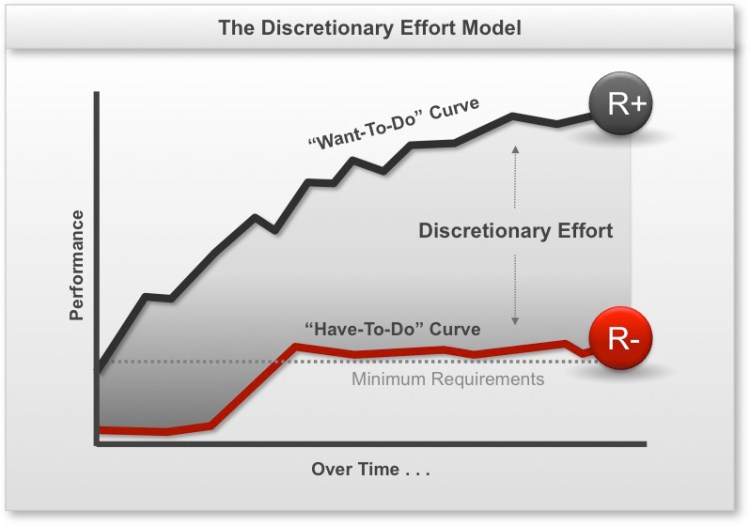
discretionary-effort-model

The second question that came out of my discussion with the librarian was, “Why should people change, if there boss is not changing?” There are many individuals feel they will do just enough to keep their job and maintain sufficient raises and increase in performance rankings. People feel better when they are functioning at their best. When they are fulfilled and engaged, they are working on all cylinders and the work can be fun.

There is a factor known as discretionary effort. Aubrey Daniels International says “Discretionary effort is the level of effort people could give if they wanted to, but above and beyond the minimum required.” An increase in discretionary effort could be brought on by positive reinforcement and feeling as if they are a part of the team. However, if the manager is not providing positive reinforcement, it is still imperative for the individual to engage in self defense activities. These actions involve a making themselves more valuable to the organization, which in turns increases their value to potential employers. As they take control of their careers, implementing their strategy for advancement could help them tremendously in the long run.

In summary, when managers realize that there development contributes to the development of others, this multiplying effect gives additional power to their job. Additionally, you should always grow, because it is good for you. You should make yourself better, because being better positively influences everyone around you, regardless of your manager’s perspective on the training they attend.

Copyright © 2017 Orlando Ceaser

5 Self Restraining Tendencies (SRT’s) That Can Hurt You

We are human and therefore, have idiosyncrasies, nuances and eccentricities that come with our personalities. Many of these unique characteristics position us for survival and success. But some of these peculiarities are counterproductive and are detrimental to our growth. I will call them self restraining tendencies or SRT’s. They are not necessarily life-threatening, but they may serve as impediments to development.

SRT’s are indigenous to human beings. They may be formed by life experiences and thoughts and subsequently create insecurities. They may be pseudo-defense mechanisms to allegedly protect us. SRT’s may be categorized as bad habits that may hold us back, restrict growth or work against us. How do we know we have them? Self assessments and times of reflection can increase self awareness and reveal SRT’s, as we examine our lives and impact on others. Additionally, we may receive the gift of honesty from a friend through candid comments. Constant feedback from co-workers, parents and peers can also be useful by adding to our enlightenment. But, we must be objective, receptive and appreciative of their candor.

5 Self Restraining Tendencies (SRT’s)

  1. Procrastination
  2. Poor communication skills
  3. Negativity mindset
  4. Toxic people skills
  5. Lack of Integrity

1. Procrastination

It is interesting to learn that many people are struggling with procrastination. The act of postponing things until later is not intellectually difficult for people to understand. They know that something should be done immediately and to postpone will have consequences. But, nevertheless, they still will delay until later, that which should be done today.

We recognize that we may not feel like doing something right now or we have awarded a greater priority to something else. If we continue to kick the can down the road or delay the inevitable, we will continue to waste time and effort and increase the amount of stress in our lives.

Lisa was interviewing for a job as a pharmaceutical sales representative. She felt very comfortable with the interview. The interviewer asked her about her number one shortcoming. She responded, “I am a procrastinator. I get things done, but sometimes it takes me a while to get started.” Procrastination was her Self Restraining Tendency, but the interview may not be the right place to disclose this particular self restraining tendency.

2.  Poor communication skills

Communicating is something we do every day. It is the currency by which we interact with people in order to state our ideas, convey instructions and build relationships. Those among us, who communicate effectively, actually have an advantage at school, in our careers and in relationships. If we are hampered by poor communication skills, our effectiveness is restricted. This self restraining tendency, like the others featured in this article, must be identified and corrected.

Poor communication skills could be non verbal or verbal to include written, body language and group presentations. Ask yourself, “Am I plagued by poor communication skills? Are there aspects of my communication ability that are hindering my progress?” Conduct a self-assessment. Diagnose your communication ability to see if there is a deficiency. You may seek to solicit feedback from respected sources and trusted friends and colleagues to see if they can identify areas that require improvement. When the SRT is disclosed, a change management process should be initiated. However, rather than go through multiple steps to change we should go directly from denial to acceptance and put a plan in place to correct the SRT.

3. Negativity Mindset

People who have a negativity mindset are not necessarily the individuals who look at the pros and cons of every situation. I am speaking of the people who like to rain on the parade. When the entire group has decided to move in a positive direction, they are the naysayers who constantly focus on what is or could go wrong. They provide excuses rather than explanations. They seldom do anything but complain without the slightest contribution to positive constructive participation to change anything. 

4. Toxic people skills

The toxic people SRT is different from the poor communication skills mentioned earlier. Individuals prone to this tendency will use power to humiliate and intimidate in order to gain the upper hand or to create an environment of fear.

My son worked for an organization where the new boss actually said, “When I walk into a room I want people to fear me.” He wanted people to be intimidated by his presence. This attitude is supported by language and interactions that cause stress, a lack of trust, poor engagement and ultimately subpar performance. Individuals with toxic people skills may speak about people behind their backs, pit coworkers against each other and generate an atmosphere of tension.

People with toxic people skills may be cursed with the propensity to enter every interaction with a transaction mindset. They are constantly thinking what is in it for them, how can they beat the other person by any means necessary and how it can only help them succeed. This is prevalent in relationships where they only socialize or interact with people who can help them advance their position, today. 

5. Lack of Integrity

People with a lack of integrity are flawed in their relational and work performance. They utilize a winning at all cost or any cost approach to work and relationships. People with this tendency view the rules as an inconvenience, something for weak minded people, to be broken and circumvented whenever possible. Breaking rules is seen as a badge of honor, a necessary evil to give themselves the ultimate advantage toward victory.

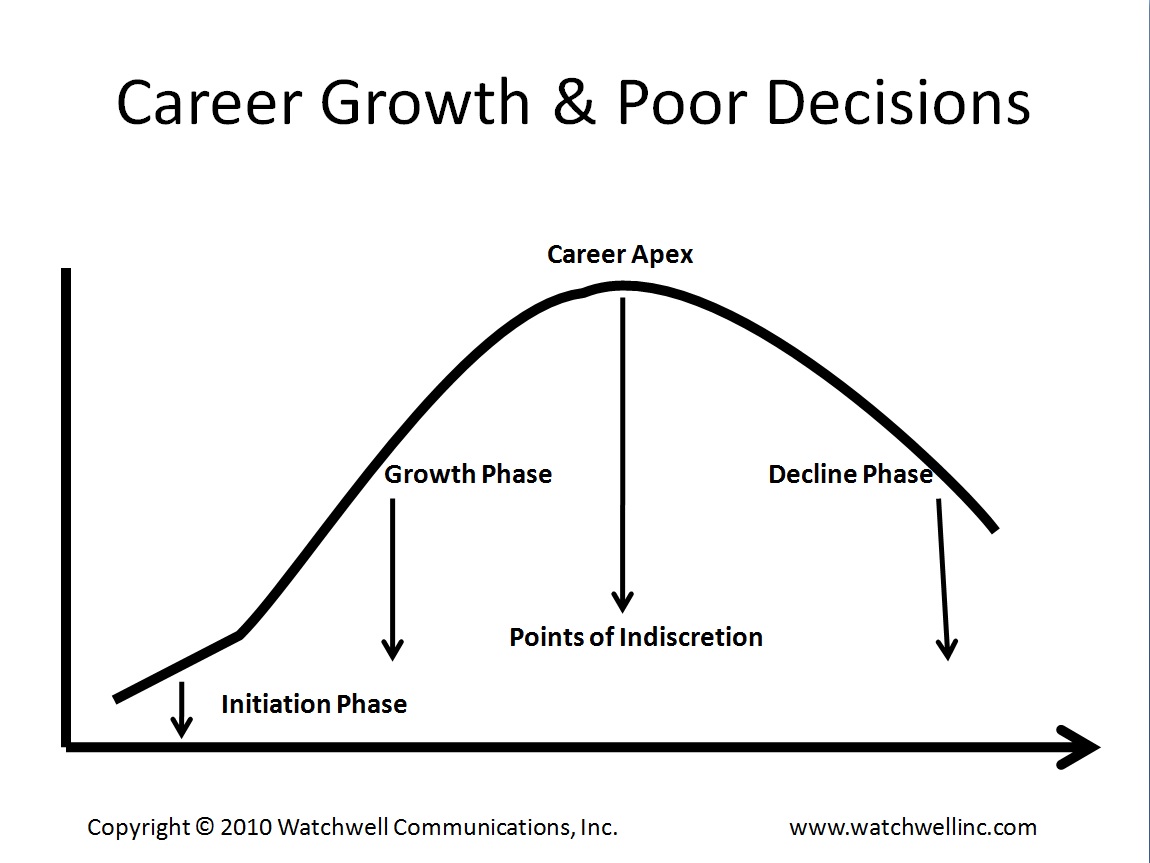
Invariably, this SRT will cause the downfall of their career and reputation. Oftentimes, the integrity flaw does not manifest itself until well into a person’s career. Please find below a chart illustrating a natural career growth curve and the various points of indiscretion where a lack of integrity can doom a person’s career.

careergrowth

If a lack of integrity shows itself at the end of someone’s career, a lot of their positive contributions can be discounted and shrouded in suspicion, nullifying their reputation. If a lack of integrity revealed itself early in someone’s career, they may never have the opportunity to make significant positive contributions or to realize the potential present in their talents and abilities.

Ideally, we should establish self restraining orders or SROs for those character traits which are limiting our joy and effectiveness. The five self restraining tendencies listed or others should be addressed if they are a problem for you. They have the capacity to limit your effectiveness and keep you away from realizing your full potential in every segment of your life.

Copyright © 2016 Orlando Ceaser

Nullification of Positional Power – Undermining authority

Byside

The merger was in full bloom. HR and local sales leadership from both companies met to resolve some issues and establish a working relationship. The highest ranking person in the group was a Director, who was African American. The discussion was very intense and the room responded as if the Director did not have a rank several positions above their own. At the end of the session the HR person turned to the Director and stated, “People at our company would have never reacted to you as they did. They would be more respectful of your position.”

Disregarding and nullifying positional power is more common than we think. It is a risky proposition, potentially detrimental to all parties involved. Additionally, it is difficult to prove in many instances. In most instances, the evidence is circumstantial, relying essentially on body language cues and hurt feelings. Unless you can quantify it with actions on the part of the perpetrator, the target appears insecure or overly sensitive.

New leaders have stated how they do not receive the prestige, recognition and respect they deserve from their peers and subordinates. Shockingly, people lower in the organization challenge them when they would not challenge others with the same level of authority.

The nullification of positional power is a universal problem, but women and minorities have expressed it many times in conversations. They feel as if their jobs are not perceived the same as others in their position. When nullification is evident, and in its worst cases, the team does not function, as well as it should, which ultimately could reflect negatively on the manager. Team members may also suffer the consequences of reduced effectiveness and its impact on financial rewards. Engagement levels may go down and productivity can be adversely affected if this practice is not addressed.

Sometimes, nullification of positional power shows itself in overly aggressive challenges to your authority, undermining your directives and refusing to seek your guidance or valuing your opinion. You may be tempted to retaliate or verbally castigate them in public. But remember, you are still the leader and must be above the fray, as it relates to executing the duties and responsibilities of your position. You cannot let your ego impair your judgment. Public admonishments or executions, may feel good, but can damage the defectiveness of the team.

It is interesting how some people walk around with a look on their face that says,” I don’t care what job you have. I am still better than you and will not accept you in your role in this organization.” They are defiant and have a difficult time suppressing the conditioning they received from their experiences, environment, biases, preferences and stereotypes.

It is a fact that most of the time nullification of positional power is not blatantly obvious. It is demonstrated through negative body language, micro-inequities and comments made in private. Micro-inequities are subtle actions, often unconscious offenses, injustices and inconveniences that make the recipient feel inadequate, insufficient, irrelevant, unimportant, insignificant, unnecessary and undervalued. They may be verbal or non verbal and reflect overt and covert actions. The persistent activity may cause people to second guess their competence and lose confidence in their abilities.

It may seem easier to address this behavior if the individual reports to the manager. But the behavior is not usually out in the open. The actions may be underground and committed in secret. Significant damage may be done to your effectiveness as a leader, before you discover this breach in your positional power.

Within many organizations it is acceptable to challenge ideas for they pride themselves on candor. That is their culture and it is understandable. Challenge is in their DNA, as a part of their mindset which is evident in their practices. Candor is woven into the fabric of their culture and no one takes it personally when challenged by someone lower in the organization. Status and titles are irrelevant when they are solving problems or developing ideas in brainstorming sessions. However, respect of all levels is expected.

Nullification of positional power is often used against the new manager. Some people deliberately set out to embarrass the new manager. They feel the person does not deserve the job for a variety of reasons and find it distasteful that they have to report to them. They may try everything in their power to cause them to fail by not cooperating and performing at a lower level beneath their capabilities.

Nullification or disregard for positional power has always been an enigma to me, particularly with people, who were actually afraid of leadership. However, they become emboldened and antagonistic when certain people were promoted into a job. Whereas, they were cautious with their words around most leaders, because they were concerned about their careers, these same individuals took a huge risk and acted out of character, because either they did not care or felt there would not be any repercussions.

A District Manager was promoted to his new assignment. He lacked the experience of some of the senior members on the team. One of the members thought they should have received the promotion. He did everything in his power to make the job difficult for the new manager. Years later, he confided in me that he did this out of spite. He did not respect the person in the position and worked within his power to make it difficult for his new boss. He told me, as if to soothe his conscience during a moment of remorse.

Occasionally, resistance to the new manager is in the subconscious realm. There is unconscious bias where people do not recognize what they are doing. When they are reprimanded for insubordination or written up for behavior unbecoming of a team member, they are surprised. Their argument is that they were just stating their ideas and the manager became offended and took it personally. However, it is often conscious, malicious, intentional and secretive.

A Regional Manager was conducting a session with one of his Districts. There was dissention in the group. He brought them in for an opportunity to clear the air and for the District Manager to essentially apologize for his actions, reset expectations for the manager and each member of the team. The meeting ended and several members left in the same car to return to their territories. Before they departed the sound of the Regional Manager’s voice was heard in the back seat. The driver who was a veteran representative went to the backseat and shut off the tape recorder. Apparently, he had secretly and illegally taped the entire meeting. The other representatives were surprised by his actions. His actions gave a signal to the other members that it was OK to act in a manner that nullified the positional power of the Regional Manager.

What does a manager do when they are aware of members in her organization trying to nullify their positional power? What does she do when she discovers the corrosive impact of subversive comments and actions?

If the action occurs in a meeting, they could table the discussion until later with words such as, “John we can take this conversation off line and I’m we can resolve the issue and bring it back to the group.” It may be documented as a performance issue and expectations and consequences stated if the behavior continues. Sometimes, companies may reassign promising performers and justify it by saying there was a personality clash with the new manager. This could send a dangerous message, set a dangerous precedent and inadvertently sanctioned inappropriate behavior.

One of my favorite personal stories involved an encounter I had when I attended a manager’s meeting. I was from the Home Office, which usually has a mystique associated with it. After all I was from the epicenter of power for the organization. I was at least two levels above most of the people in the room. A manager two level below me misunderstood my position on a certain point. He raised his hand and said, “I strongly disagree with what you just said.” The room became very quiet. I responded, “Allow me to restate my case, because if you heard me right, I’m sure you would not “strongly” disagree with my position.” I repeated my statement almost word for word and he acknowledged that he was in agreement.

Leaders should not get provoked into unprofessional behavior. The matter can be addressed by going to supportive leadership within your company. Your job as a leader is to be a leader for all, even though everyone may not want you in the job. Press on. Show your value and contribute substantial results, resources, reputation and financial performance. If they don’t, the matter must be discussed with their supervisor, with specific examples of the breach of protocol.

Your performance and your network of supporters will change the perception of some of these detractors. You will never be liked by everyone, but your leadership and excellent performance will add value to the company. Inappropriate behavior and disrespect should be handled appropriately and should not be tolerated.

Lastly, leaders can counteract nullification of personal power by elevating their social power or social capital. Your personality, work ethic and integrity are revealed to the organization through personal and professional interactions. People get to know you and realize what an asset you are to the company. They realize that you are committed to their personal growth and development. They may become advocates and speak out against those who are stabbing you in the back. Team members see that you belong in the job and are the right leader to help them achieve their personal and professional objectives.

Copyright © 20015 Orlando Ceaser

Authenticity – From Impressionist to Your Authentic Self*

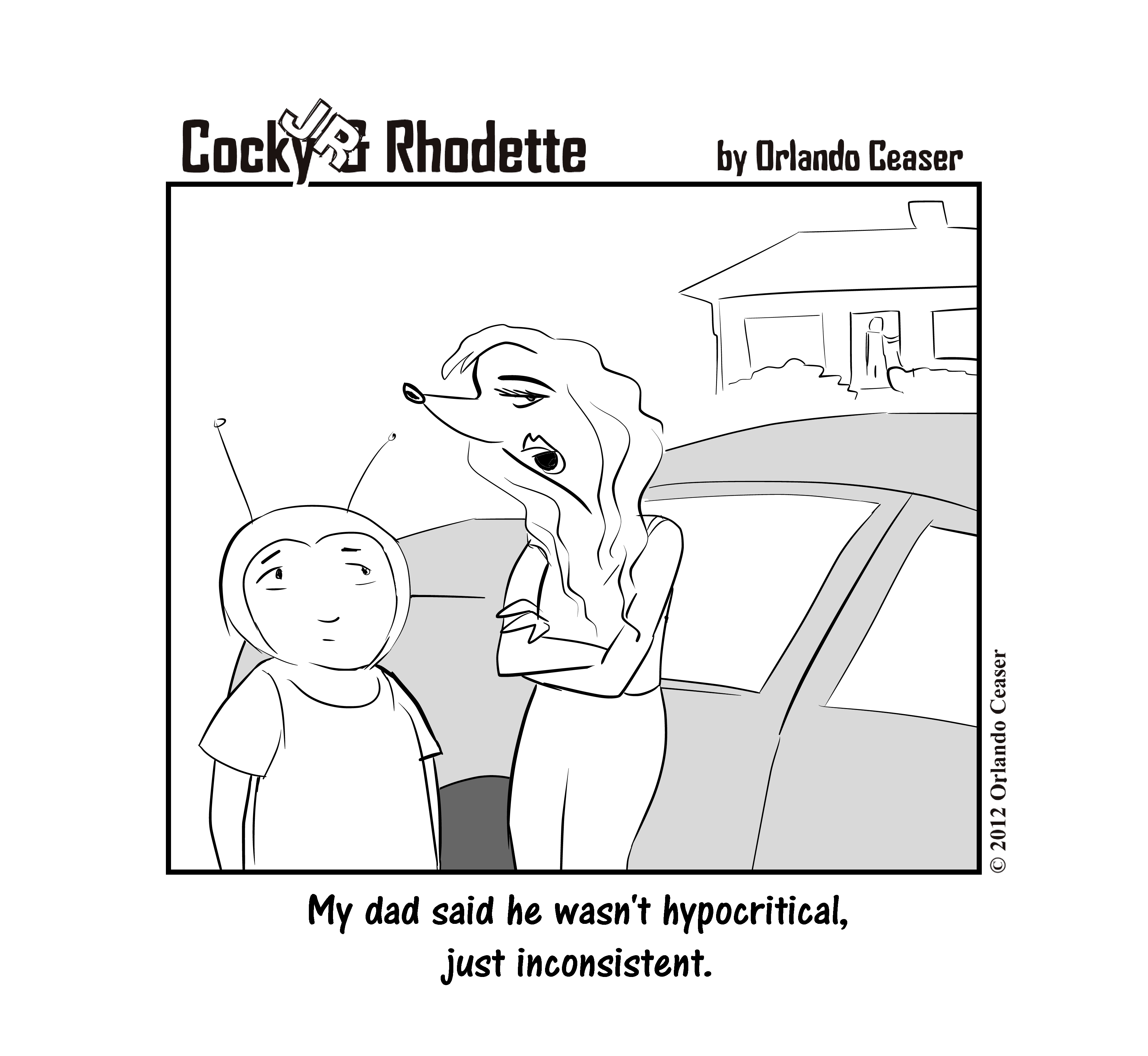
Inconsistent

The path to understanding people will lead to greater personal awareness. There are 4 roles you may encounter during your developmental journey. Several contain character traits and skills commonly associated with actors and other performers. The 4 portraits can be seen as roles played that can influence personality styles and overall performance. They are the impressionist, impersonator, imposter and the authentic self. Knowledge of these images and the ability to adjust to them will enable you to adapt and survive in business and social situations.

Impressionist

The impressionist likes to imitate or model someone they admire. They may copy their speech patterns, mannerisms, key phrases, behaviors or routines. The television show Saturday Night Live garners huge ratings during presidential elections. Their actors do a fantastic job with impressions of the political candidates. Actresses Tina Fey and Amy Poehler’s impressions of Sarah Palin and Hillary Clinton were performed to perfection and rave reviews.

People may accidentally or intentionally model character traits that are synonymous with someone else. Some will select a person and duplicate the way they make decisions or perform their jobs. Individuals may stand like them or speak like them and conduct meetings the way they do. Additionally, they may be drawn to someone’s excellence and decide to emulate a particular characteristic in order to make it their own.

There is a danger in randomly and haphazardly imitating too many people. A person may lose their own identity. Rich Little a famous impressionist who made a living imitating famous entertainers once said, “I have done so many impressions I sometimes forget what my voice sounds like. It is true that we are a composite of many people but we must be strategic and systematic and how we inculcate their traits into our personality. We must be consistent with our true nature and not forget who we are.

Professional development can be helped by utilizing the appropriate impressions. In the early days of my career I worked in the Sales Department, where I had to make decisions when my boss was on vacation. I would ask myself, “How would John handle this particular situation or what would John do if faced with the same set of circumstances?” I would use the same wording and try to deliver messages with the same tone, emphasis and authority, as I imagined John would do it. My impression of John’s decision-making was instrumental in my growth and development.

We are all impressionable and prone to mirror and match behavior. We assume these impressionist tendencies to cope with our environment. This is how we survive and grow. One of the side effects of our impressions is that we may be accused of kissing up to management or trying to gain special favors by being the teacher’s pet.

Impersonator

An impersonator is an impressionist who is totally immersed in a role. They may temporarily abandon their identity and put on another persona. You have seen female impersonators, Elvis impersonators, individuals who impersonate presidents and other political figures. They may go to great lengths to excel and playing the part. We hired a guest speaker who was an impersonator of former president Bill Clinton. He looked like him, spoke like him and had the similar mannerisms. We wondered if he naturally looked like the former president or were enhancements necessary to project that appearance. It may take tremendous sacrifice to stay in character.

Impersonators may eat, sleep, think and act like the person they are imitating. They may assume the person’s name in public. They lose their identity and put on the image and character of another. They will conduct their daily activities from the vantage point of how would that person perform an activity or live their lives. They may give up their own ideas and opinions to become the other person, thus paying tribute to their idol.

Organizations have been known to promote clones of their top executives. This is the epitome of advertising to their employees, the value of impersonating and projecting the corporate image.

You must be careful. Do not surrender your personality to play a role. If you abandon your key traits and characteristics to assume the role of another you have denied yourself the right to fully express your gifts. You cannot fool people into thinking you are the original and you will deprive the world of your authentic self. Remember, a copy will never be a superior representation of the original.

The use of the impersonator style may be due to the image that is rewarded in the organization. People reproduce what is rewarded and what the organization really wants to see. Being an impersonator could also be as innocent as not feeling safe or appreciated by the company. The use of the impersonator style is typically designed to gain a personal benefit. It is often used to please someone in power with your ability to pattern your behavior after their professional image. You may be seeking a mentor/protégé relationship. You are hopeful that they in turn will generously lavish you with special favors or recognition.

Imposter

The imposter is based on misrepresentation. They claim to be someone or something they are not. They present an image that is inauthentic, false or misleading. This is easy to see on the movie screen or in television shows where the person assumes the identity of a dead person or through examples of identity theft, where someone assumes another person’s identity to steal their money.

However, an imposter is difficult to see in business and in your relationships, especially if we want to believe they are who they claim to be. Hopefully, we find out about their deception before significant damage is done.

The imposter in an interview misrepresents their personal history. They may assume the personality of someone they think the employer is wishing to hire. They may profess credentials, such as degrees, skills or connections that are nonexistent. They present themselves with high integrity and character which are far from their real values and personality. The imposter is a liar and will do anything to fool you into thinking their façade is their true image or actual position on an important matter.

Years ago one of our offices on the West coast hired a person they were pleased to bring on board. They said she was intelligent, beautiful and articulate with an electric personality. When she arrived at the office to sign up for the company orientation they were surprised by her calm, demure and low keyed demeanor. She was introverted and had little to say, which was a concern since she had to make presentations to physicians. They felt something was wrong, but they couldn’t explain it.

At the end of the second day of her orientation she mentioned that she was going to meet her sister for dinner. She introduced her sister to the group. You guessed it. It was her twin sister. She was equally beautiful, articulate and intelligent with an electric personality. They wondered if they had hired an imposter. Most cases of imposters are not this dramatic.

When an imposter is discovered, justice is usually swift. The person is confronted, embarrassed and fired. Their reputation is ruined and many people may be hurt in the process. If you are tempted to pose as an imposter, remember, the results are rarely positive. The masquerade is seldom worth the pain and embarrassment when you are exposed.

Authentic Self

The authentic self should be the desired objective or personality style. You should be vigilante and remain true to your real character and true self. The authentic self is who we really are. It is true that we may model some of our behavior after the three earlier models. However, this is done to enhance not to misrepresent your authentic self.

We are a composite a combination of many factors woven together to form a distinct creation with the potential to achieve phenomenal results. If we feel threatened we will be reluctant to bring our whole selves to work because it may be used against us. This fear is a challenge to authenticity and may tempt us to be an impressionist, impersonator or imposter to ensure our survival.

You will find out that there is no substitute to being authentic. The refreshing satisfaction of fulfilling your purpose will grant you the peace you need to joy the success of the life lived to the fullest with integrity.

*Excerpt from Unlock Your Diversity Greatness, release date 4th quarter of 2015

Copyright © 2015 Orlando Ceaser