Cartoons for the Chaos in Corporate Communities – Cocky and Rhodette

Corporations are communities of citizens who are ideally committed to a common vision. They are able hopefully resilient, with the capacity to withstand change, reinvent themselves and introduce new business paradigms, in order to succeed. These companies are survivors. They truly represent the “survival of the fittest” mentality. Corporations are staffed with individuals who have the survived a myriad of corporate reorganizations, growth spurts and culture adjustments. They have demonstrated the ability to adapt to change by adopting techniques necessary to avoid extinction.

Cockroaches and rodents have existed on this planet for millions of years. Cockroaches have been around an estimated 240 million years and rodents were probably chasing them for a good number of those years. They are truly survivors, exhibiting adaptive behaviors that have enabled them to adjust to changing circumstances.

The personification of these two characters is in the form of a cockroach named Cocky and a rodent known as Rhodette. They represent and will articulate the thoughts and feelings of employees in Corporate America. They will speak through reenacting scenarios that happen every day in some company around the world.

Cocky is a male and Rhodette is female. They are co-workers. Their biographies speak to their diversity. They manifest their diversity in many ways, such as gender, thinking styles, age, genus, species, educational levels and introversion versus extroversion, to name a few distinctions. Cocky learned business from his father Coach (co is from cockroach and ach is from roach), whereas Rhodette received her business acumen from her mother Rhoda. Cocky and Rhodette are close friends who spend many hours talking about business and comparing and despairing over the current environment in their company where the emphasis on production has a few casualties among the rank and file. They have revised their personal strategies for growing their careers. They speak for the masses although they also, have leadership responsibilities.

Cocky does not totally live up to his name. Whereas, he is self confident, he is also quiet and introspective; a true introvert. He knows when to keep his mouth shut. He may appear to be low key, but this is an adaptive quality, survival tactic. He can be commanding, when necessary. He will frequently sit in meetings and speak only when he has something significant to say. He is appalled by the amount of hot air released in meetings, as people speak to hear themselves talk. He is also disappointed when management condones and rewards this type of behavior. He sees his role as a pioneer to help others to adjust to corporate life. He has been promoted numerous times based on his productivity and the support of advocates, coaches and mentors. He says he is a realist, who fears he will go only as far as the company will let him. He is ambitious and has no desire to leave the organization.

Rhodette is flashy, extroverted and her electric personality makes her the major energy source in any gathering of employees. She can seemingly get away with outrageous statements. She is a strategic thinker and her mind and forceful presentation demeanor are threatening to others. She is aware that she has to be careful in how and when she states her views. She has been coached on her need to increase her self- awareness. She is a team player and her actions are usually to benefit the company or her teammates, not to acquire power, stroke her ego or build a fiefdom. She is a great sounding board for Cocky and their interactions are insightful and at times hilarious. They look out for each other and provide constant feedback, which helps them grow personally. Through their networks they are also able to gather information on internal competitors who may try to undermine their performance and career growth.

Cocky and Rhodette are both managers in a large corporation but their escapades and situations are found in smaller organizations. Their poignant comments and witty observations are thought provoking with educational lessons for everyone. They have coaches and mentors to assist them in their development. They are also connected with many employees within the company to help them report accurately on performance and levels of engagement.

Cocky and Rhodette have given birth to a new creation, Cocky, Jr. The perspectives of teenagers are expressed through the eyes of Cocky, Jr. and Rhodesia. They are hilariously representing thought-provoking issues experienced by teenagers and the adults who interact with them.


Copyright © 2007 Orlando Ceaser
I work for a Monster

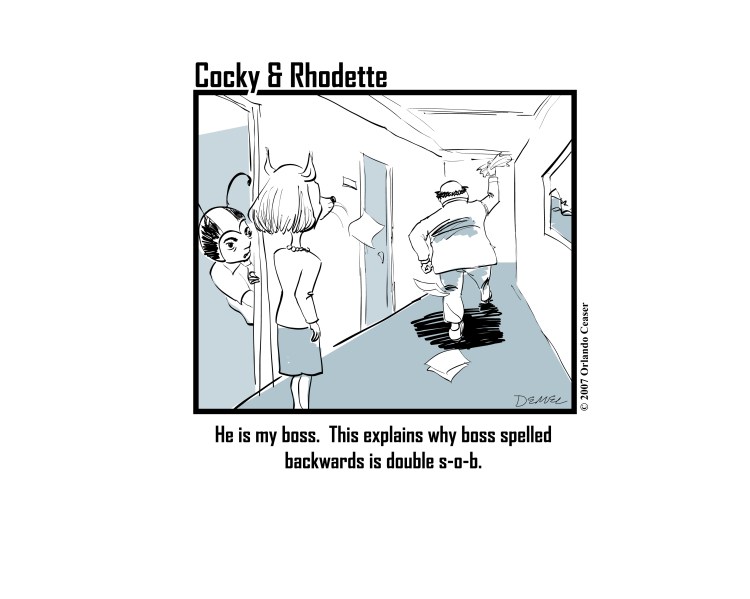
Double_S-O-B_C


I grew up with a different generation of monsters. The monsters in the movies and television of my day had the same objective as the ones today, to shock and terrify. They strive to literally frighten you out of your mind. Please indulge me for a moment as I ask you to play a game. Answer this question “If my worst manager was a monster, who would they be?” To play along with me you must have a picture of your worst manager, a manager from the past or a diabolical manager you heard about from someone else.

I grew up watching a program called Shock Theater. The hosts were zombie musicians who were probably the inspiration for the look of Michael Keaton in the movie Beetlejuice. The program was a prelude to the Creature Features segments on late night television. There were 4 favorite monsters or categories that dominated the movies in my childhood; the Wolfman, Dracula, the Mummy, Frankenstein and various reptiles or mutated animals that were exposed to radiation. For this segment let’s concentrate on the top four; Wolfman, Dracula, Frankenstein and the Mummy.

My favorite character was Lon Chaney, Jr. who played the Wolfman. He was a frustrated man who was bitten by a werewolf and had to spend the rest of his life howling at the full moon. He was always seeking a cure and looking for sympathy from anyone who would listen to his tale of woe and help rescue him from his fate. He was a normal person during good times, which was during daylight hours and things were going well. However, under pressure, he changed into something frightening and unrecognizable.

He wanted to be different, but was overpowered by the curse. Have you seen the Wolfman Manager in your organization? They appear to be nice, but are tormented by change. Therefore, their full moon experience could be pressure of any kind. Their poor sales results could cause pressure, a difficult boss or skill deficiencies due to incompatibility with their job could turn them into terrible creatures. The Wolfman Manager blames something or someone else for their cruel behavior. They were forced to be tough and it was agonizing for them because it was, out of character and against their temperament. In the presence of their boss, they would reluctantly turned into something horrible, due to fear or the need to become something to match leadership expectations.

Then there was Dracula, the vampire. He was charismatic, smooth talking and mesmerizing. He spoke with a distinctive accent and people were drawn to his charm, appearance and professional demeanor. He was royalty; after all he was a Count. But Dracula was still a blood sucker, a manipulator who planned to render his victims hopeless and under his control. His intent was to drain others until they were no longer of use to him, other than to locate another food source. You may have seen a vampire walking around your company with that same arrogant, cold, uncaring look. The look that says they are interested in you for what you can do for them. The Vampire Managers walk around feeling, as if they would be there forever and no one would discover their secret intentions to victimize others. You may wonder if somewhere, there is a coffin containing their native soil, somewhere hidden in the office.

The Mummy was cursed to guard the tomb or temple of his beloved. He was slow of foot, but was loyal, relentless and powerful. I’m speaking of the older version played by Boris Karloff, not the newer versions found in the Brandon Fraser movies, but the plot is the same. There is a creature driven by an overpowering love and allegiance for the object of their affection. This person within your organization has an undying love for power and ambition, status quo and will destroy anyone who tries to harm or change it. They will blindly institute unethical policies and cover them up, especially if an investigation is pending or inevitable. This individual will persistently pursue anyone who has anything negative to say about the company or anyone they personally admire within the organization. They will practice a technique known as delayed retaliation to seek revenge against their enemies. They will also be the micromanaging monster who slowly follows you and hovers over you.

An organization began a process of offering 360° feedback to its managers. The managers enlisted the help of their peers, direct reports and their supervisor. When they received less than flattering commentary, they smiled and thanked everyone for their contributions. Over the next several months, the Mummy Manager did everything within their power to slowly, relentlessly, strike back against those who offered disparaging feedback. The mummy within the organization is wrapped up, as a metaphor for hiding either their identity or their intentions.

Lastly, there was Frankenstein, named after his creator. He was a collection of body parts, that were sewn together to create a living breathing inhuman being. Frankenstein’s monster was depicted as mindless and easily irritated. He was created to be controlled and to demonstrate the power and influence of the scientist. He was the earlier version of the zombie. Frankenstein became identified with his creation. When the Frankenstein Monster saw his reflection and what he had become, he became angry. He realized how different it was from everyone else and that people were afraid of him. He was deliberately created to be controlled as an example of his creator’s intellect and power. He ultimately turned on his master.

The Frankenstein Manager appears in many organizations as the protégé who was shaped, mentored and created in the ruthless image of their sponsor. He is loyal, as long, as it is a benefit to him, but when they received negative feedback, they will revolt. He is a henchman who follows blindly. Eventually, the protégé will turn on its creator, causing much instruction in its wake. After the monster received or learned all they could from their master, it may cast the mad scientist mentor aside.

Each generation, even the Millenials, has its own monsters; whether it is the Wicked Witch of the East, Aliens, the Predator, zombies, Jason of Friday the 13th or Freddy Krueger from Nightmare on Elm Street, they can be compared to the leadership styles of many of the leaders seen in organizations around the world. The traits of these frightful creatures are found in the leadership practices of some managers who believe they must resort to fiendish tactics or insensitive methods in order to get results. Where there is a monster, there is fear. Where there is fear, there needs to be a strategy to relieve people from the threat of the monster and the power it has over the employees in the workplace. To be successful, you must be wise enough to identify the managers with monster tendencies and develop the right skills and resources to stay safe. When you realize that your manager is a monster, you must act appropriately and find the correct strategy to take care of yourself.

Copyright © 2016 Orlando Ceaser

Will there be a Mutiny on your watch? Is there a silent rebellion on your team?

People who have been tolerant of oppressive leadership/management behavior eventually revolt.  Mutiny is on their minds and it describes a revolutionary action. In an organization that has owners, principals and stockholders mutiny does not occur by physically taking over a facility or its leadership. It occurs by people determining that they will not give 100%. They will not be totally engaged at work. They will not give their best. Employees will adopt an “over my dead body” mindset, which means they theoretically would rather die than give their total cooperation to an organization that does not respect them. Workers have decided that the company does not deserve their best, therefore their best ideas, solutions and discretionary effort will be withheld.

A sales representative approached his mentor and told him about the dissent in his district. Apparently, the district was fed up with the leadership inadequacies of their District manager. He listed several failures in emotional intelligence and examples of managerial malpractice. He wanted to know the path they should take to bring their discontent to higher authorities. They were going to stage a mutiny. Their mutiny was not going to be a work stoppage nor were they going to physically remove their manager from his position. In essence, they wanted to schedule a meeting with their regional manager on their grievances. They wanted to know if they were going through the proper channels to get results. The team was to meet with the regional sales manager to complain about the District Manager’s tactics and the impact on morale and performance.

The curious part of the discussion was the performance history of the regional sales manager. In his prior role as a district sales manager, his team complained about his management style. He was notorious for lacking emotional intelligence and created an environment of fear and intimidation. He exhibited the same tendencies present in his current subordinate. How sympathetic would he be to their claims about a hostile work environment?

The representative was advised to go through the proper channels. They felt more comfortable contacting Human Resources to state their case. HR, by remit, would investigate their issues and take the necessary actions. Additionally, he was advised to not be seen as the ring leader in this uprising. The Regional manager in question was also notorious for retaliating against individuals who challenged him or stood in his way.

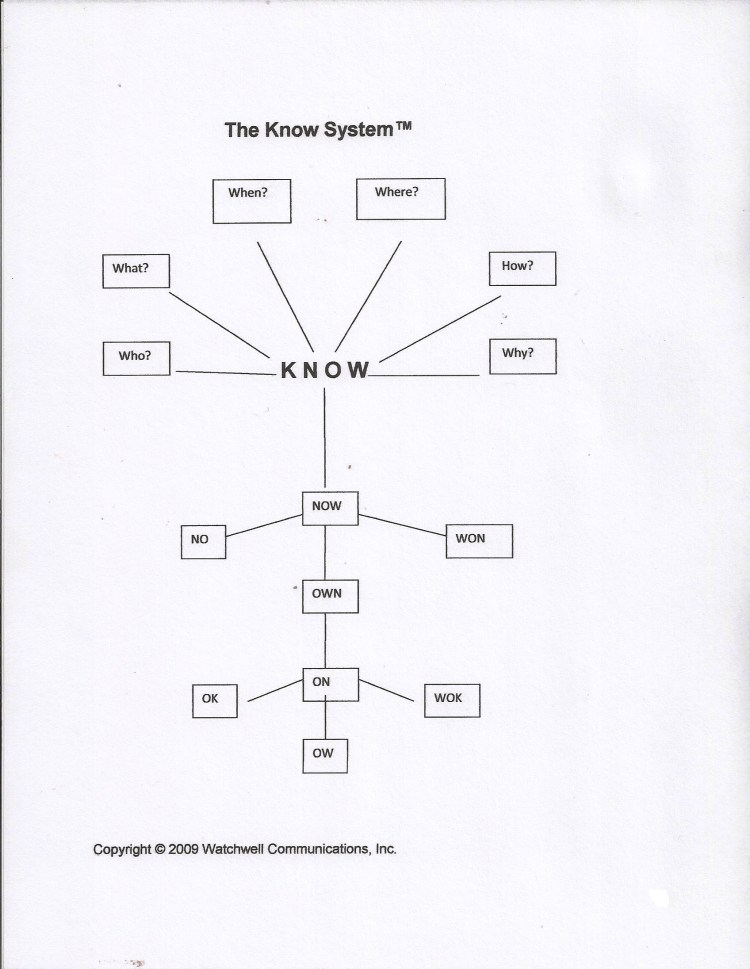
Managers can evaluate their culture through The Know System™ which could provide a simplified look at their environment. The Know System™ featured in the book The Isle of Knowledge is a decision making model which is also useful for individual and group coaching exercises. It is easy to use and allows the participants to accumulate information to enhance the quality of their decisions and discussions. The system is devised from the word Know. The user should ask a series of questions to gather information. Let’s look at 6 words from the word Know and a few related questions that apply to company culture.

  1. Won – What would a winning culture look like to you? What type of atmosphere, level of engagement and customer satisfaction scores would represent success to you?
  2. Know – What do you know and need to know about your culture and the people in your organization? (This can be enhanced with the words who, what, where, when, how and why, if appropriate)
  3. Now – What are you doing now to ensure a healthy habitat? Are you placing priority on the proper indicators?
  4. No – What are you doing that you need to stop doing? What goes against your culture and stated values that you need to say no to? What do your people want you to eliminate or stop doing?
  5. On – You must be vigilant at all times to monitor culture and maintain a proper cultural air quality. What are you doing to track leading indicators of a great culture? How are you measuring your work environment?
  6. Own – Do you own the culture as evidenced by leadership behavior? How are you holding yourself and others accountable? How are you reporting your performance and interest in a strong culture to your people?

knowsystemchart1

The beauty of our current leadership/managerial landscape is that many organizations have ascribed to the notion of a healthy work environment. There are employee surveys and satisfaction surveys, as well as engagement surveys to take the temperature or climate of the organization. These surveys can uncover problems and managers can be presented with data and held accountable for changing their environment. These surveys are strengthened with direct contact with management and human resources to ensure the environment is conducive for maximum productivity.

Is imperative as a leader to gauge how your people are responding to your direction and the culture in your environment. It is also apparent that many leaders are promoted because they excelled in their previous sales position, but are not cut out for management. You should try to train and develop these individuals, but in some instances it is not a good match and a decision should be made to place the person in the right job.  A worst-case scenario may develop where people mentally abandon the company, but stay on the job, because the company failed to address a main contributor to their toxic culture.

When the organization does not feel like a respectful place, people feel that the company has let them down and cannot be trusted. Mutiny or thoughts of mutiny is an indication that the current culture has failed or is failing many of its workers. They may resort to subversive action and taking matters into their own hands.

Mutiny may show itself as a single silent action called a resignation. Your top performers or the most influential members on your team may leave, causing a chain reaction of departures. Management must be accessible and periodically and personally check the culture pulse of the organization. People must believe that leadership is authentic, transparent and sincere when leaders speak of core values. Trust will be enhanced when people really believe that they are the number one resource in the organization. Otherwise, silent mutinies will going unchecked, unnoticed and leaving people unfulfilled.

Copyright © 2016 Orlando Ceaser


Managing your personal power supply

The Spin class was about to begin. Gayle, the instructor, stated, “I lost power yesterday.” She said she was in her home when suddenly, a loud noise was heard and her electricity went off. We stretched, continued a light conversation and launched into a rigorous routine. I wondered during the class, “How many times, as individuals, have we lost power in our lives? Did we give it away or was it taken from us? Are there certain situations or individuals who cause us to lose power? Who are they and why does this happen? What are the early warning signs before there is a loss of power?

The loss of power is readily detectable. You have that feeling of loss of confidence, which is demonstrated by your body language, vocabulary and actions. Many times the loss of power at home or at work may come as a surprise. However, just as in nature there is a flash of lightning or thunderclaps before a storm, you can rely on certain indicators as precursors to a storm. You can anticipate someone’s presence, behaviors, as a good sign that a storm and potential power loss is on the way.

We should be aware of the signs of losing power and fortify your defenses. This will require us to increase our competence, confidence and network of individuals who will cooperate with us in our efforts to enhance our power position. There are times when we lose power and look around us and everyone seems to have theirs. What can we do to maintain or regain our power during a power outage? Power outages may be due to:

  1. Burnout
  2. Lack of confidence
  3. Power drainers
  4. Power mongers

Burnout

We can lose power by expending too much energy. We may fail to prioritize and try to do too many things at once. Processing too many projects at one time will lead to an increase in stress. Lack of sleep and irritability may negatively affect your disposition. You may become moody and easy to anger. Our lives are running at many revolutions per minute (rpm’s). We create to do lists (TDL’s) to keep track of our obligations. To do lists are getting longer and serve as a repository of unlimited tasks of varying priorities. We may fail to rank the items or every item seems to be important, which will lead to none of them being important. If we don’t put a filter on the funnel, we will be overwhelmed. This state of overload will lead to burnout, a breakdown and a loss of power. You must realize that some items on your list may not be covered or should be delegated or deleted.

Lack of confidence

Sometimes lack of confidence can lead to a loss of power. You may be faced with the possibility that you are not as good as you think you are and are afraid that others will discover your shortcomings. A way to address this fear is to conduct a self assessment of your skills and abilities. Be honest with yourself. You should relentlessly study your craft until we are an expert in your field. This may require study and validation which will give you the necessary credentials to ward off any challenges. If you lack confidence or courage you may doubt your abilities and lose the power of conviction needed to be successful.

Power drainers

Some people exist as leaches in the workplace, at home and wherever you engage in relationships. They will drain your power through constant complaining. Negative thoughts and the complaints will drain your energy supply. Their negative disposition and complaint oriented disposition puts everyone in a bad mood. They are not satisfied with anything and they never bring a solution to the myriad of problems they detect. When they enter the room, you can feel the life being sucked out of the place. Engagement levels seem to go down and the level of interaction and cooperation is reduced. The focus is on the speed of ending the meeting and getting back to work away from this malcontent.

The power drainers are time wasters. They do not respect time. They will barge into your office or workspace and tell you the latest gossip and shortcomings of the organization. Many power drainers have a running conflict with their peers and want you to come in as a peacemaker, which is time consuming and emotionally exhausting.

Power mongers

Power mongers are perpetrators who like to hoard power and use it over people based on their level of influence or authority. They will take the power away from you in a meeting. If you have the floor in a meeting they will ask the questions to shift the emphasis to them. I attended a meeting where one participant had more handouts on my subject than I did and spent the meeting time explaining their handouts which took away my power and control of the meeting. The better preparation and communication skills may address some of the issues of the power mongers.

The manager who asks you to do something because they said it does everything to shut down questions from the meeting attendees. Power mongers also work by using intimidation to get results. They will level threats at people who do not complete assignment correctly. A power monger will embarrass people in front of their peers. They may do this deliberately to show who’s the boss? A new manager at a paper recycling plant announced to his employees that he wanted them to fear him. He went on to exercise this management style as an egocentric power monger.

A power monger believes that information is power and takes this concept to the extreme. They delegate information sparingly. A manager had access to updates from the home office that would have been useful to one of his subordinates making a presentation. Rather than call him off to the side before the meeting and provide the updates, he strategically interrupted during the meeting with the latest news from headquarters. You may need help in dealing with a power monger, who negatively uses power. This can be done by working with mentors, advocates and power brokers. These individuals have the wisdom, insight and influence to assist you in relating to the power mongers.

Power brokers

Powerbrokers are individuals who use power effectively to get results. These individuals should be utilized and studied in order to gain their assistance. You want to use their techniques to minimize personal power outages. These individuals can be identified and cultivated at work, networking groups, referrals from their contacts and through personal introductions.

Work with powerbrokers to increase your confidence; improve your influence skills and knowledge of your area of interest and expertise. Conduct a personal assessment; improve your communication skills and your knowledge of your subject. Your objective is to isolate the individuals and circumstances that drain your power and counteract their affect on you. This will enable you to be stronger and effective in harnessing your power supply and minimizing instances where you lose power.

Copyright © 2016 Orlando Ceaser

5 Self Restraining Tendencies (SRT’s) That Can Hurt You

We are human and therefore, have idiosyncrasies, nuances and eccentricities that come with our personalities. Many of these unique characteristics position us for survival and success. But some of these peculiarities are counterproductive and are detrimental to our growth. I will call them self restraining tendencies or SRT’s. They are not necessarily life-threatening, but they may serve as impediments to development.

SRT’s are indigenous to human beings. They may be formed by life experiences and thoughts and subsequently create insecurities. They may be pseudo-defense mechanisms to allegedly protect us. SRT’s may be categorized as bad habits that may hold us back, restrict growth or work against us. How do we know we have them? Self assessments and times of reflection can increase self awareness and reveal SRT’s, as we examine our lives and impact on others. Additionally, we may receive the gift of honesty from a friend through candid comments. Constant feedback from co-workers, parents and peers can also be useful by adding to our enlightenment. But, we must be objective, receptive and appreciative of their candor.

5 Self Restraining Tendencies (SRT’s)

  1. Procrastination
  2. Poor communication skills
  3. Negativity mindset
  4. Toxic people skills
  5. Lack of Integrity

1. Procrastination

It is interesting to learn that many people are struggling with procrastination. The act of postponing things until later is not intellectually difficult for people to understand. They know that something should be done immediately and to postpone will have consequences. But, nevertheless, they still will delay until later, that which should be done today.

We recognize that we may not feel like doing something right now or we have awarded a greater priority to something else. If we continue to kick the can down the road or delay the inevitable, we will continue to waste time and effort and increase the amount of stress in our lives.

Lisa was interviewing for a job as a pharmaceutical sales representative. She felt very comfortable with the interview. The interviewer asked her about her number one shortcoming. She responded, “I am a procrastinator. I get things done, but sometimes it takes me a while to get started.” Procrastination was her Self Restraining Tendency, but the interview may not be the right place to disclose this particular self restraining tendency.

2.  Poor communication skills

Communicating is something we do every day. It is the currency by which we interact with people in order to state our ideas, convey instructions and build relationships. Those among us, who communicate effectively, actually have an advantage at school, in our careers and in relationships. If we are hampered by poor communication skills, our effectiveness is restricted. This self restraining tendency, like the others featured in this article, must be identified and corrected.

Poor communication skills could be non verbal or verbal to include written, body language and group presentations. Ask yourself, “Am I plagued by poor communication skills? Are there aspects of my communication ability that are hindering my progress?” Conduct a self-assessment. Diagnose your communication ability to see if there is a deficiency. You may seek to solicit feedback from respected sources and trusted friends and colleagues to see if they can identify areas that require improvement. When the SRT is disclosed, a change management process should be initiated. However, rather than go through multiple steps to change we should go directly from denial to acceptance and put a plan in place to correct the SRT.

3. Negativity Mindset

People who have a negativity mindset are not necessarily the individuals who look at the pros and cons of every situation. I am speaking of the people who like to rain on the parade. When the entire group has decided to move in a positive direction, they are the naysayers who constantly focus on what is or could go wrong. They provide excuses rather than explanations. They seldom do anything but complain without the slightest contribution to positive constructive participation to change anything. 

4. Toxic people skills

The toxic people SRT is different from the poor communication skills mentioned earlier. Individuals prone to this tendency will use power to humiliate and intimidate in order to gain the upper hand or to create an environment of fear.

My son worked for an organization where the new boss actually said, “When I walk into a room I want people to fear me.” He wanted people to be intimidated by his presence. This attitude is supported by language and interactions that cause stress, a lack of trust, poor engagement and ultimately subpar performance. Individuals with toxic people skills may speak about people behind their backs, pit coworkers against each other and generate an atmosphere of tension.

People with toxic people skills may be cursed with the propensity to enter every interaction with a transaction mindset. They are constantly thinking what is in it for them, how can they beat the other person by any means necessary and how it can only help them succeed. This is prevalent in relationships where they only socialize or interact with people who can help them advance their position, today. 

5. Lack of Integrity

People with a lack of integrity are flawed in their relational and work performance. They utilize a winning at all cost or any cost approach to work and relationships. People with this tendency view the rules as an inconvenience, something for weak minded people, to be broken and circumvented whenever possible. Breaking rules is seen as a badge of honor, a necessary evil to give themselves the ultimate advantage toward victory.

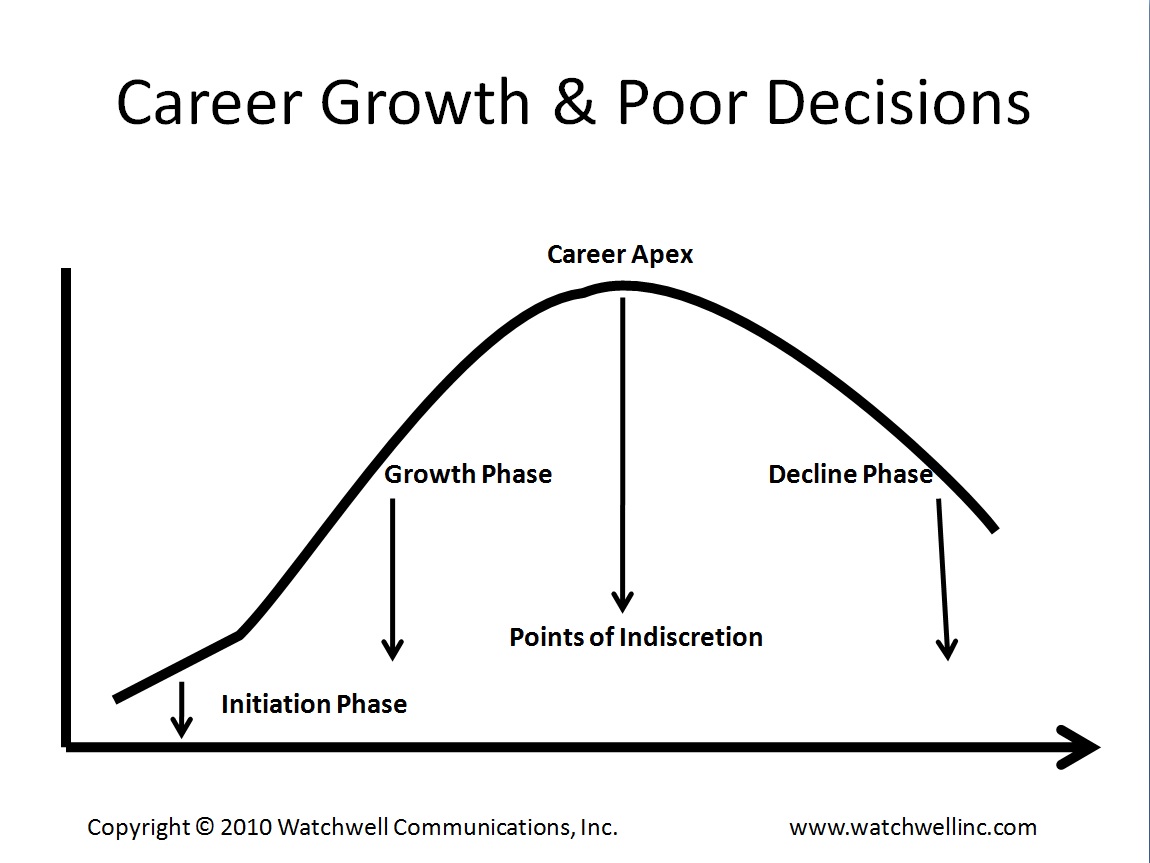
Invariably, this SRT will cause the downfall of their career and reputation. Oftentimes, the integrity flaw does not manifest itself until well into a person’s career. Please find below a chart illustrating a natural career growth curve and the various points of indiscretion where a lack of integrity can doom a person’s career.

careergrowth

If a lack of integrity shows itself at the end of someone’s career, a lot of their positive contributions can be discounted and shrouded in suspicion, nullifying their reputation. If a lack of integrity revealed itself early in someone’s career, they may never have the opportunity to make significant positive contributions or to realize the potential present in their talents and abilities.

Ideally, we should establish self restraining orders or SROs for those character traits which are limiting our joy and effectiveness. The five self restraining tendencies listed or others should be addressed if they are a problem for you. They have the capacity to limit your effectiveness and keep you away from realizing your full potential in every segment of your life.

Copyright © 2016 Orlando Ceaser

The Case of the Righteous New Manager

Hammer

A promotion to management is quite an accomplishment. A new manager joins the ranks of leadership, among the most important individuals in an organization. The manager conducts the functions of planning, organizing, staffing and budgeting, to help the company achieve results and expectations. They are accountable for implementing corporate policies and strategies, as well as caring for the company’s most important resource which are its people.

New managers may possess traits that may hinder or delay the development of their teams and the rapid results they desire. Some have an attitude of righteousness, which means they feel anointed as a manager, rather than being appointed to the job.

New managers bring a fresh perspective to their assignment. They may not be mired in history, preconceived notions and the barriers and restrictions on what can’t be done. They bring drive, enthusiasm and a can do attitude along with a desire to prove that their superiors made the right choice when they were selected as the manager.

The righteousness that new managers display can be itemized as follows:

  • They use an autocratic management style to avoid being challenged
  • They try to mold people in their own image
  • Abuse power through favoritism and preferential treatment
  • Never truly left their old job

Autocratic style

The righteous new manager using the autocratic management style believes that the manager is always right. This management style is perfect for it allows some new managers to hide their insecurities. They project a feeling of superiority. They display an attitude that says they deserved the job and should not be questioned. Challenges are seen as disrespectful to their position and they are swift and deadly in their response. The righteous new manager can be detrimental to organizations, departments and teams, when they operate vanity, insecurity or sheer arrogance.

If the righteous new manager is not comfortable with her skill level, she may not want people questioning her decisions. Autocratic managers don’t want to be questioned. They are accustomed to having all the answers in their previous assignment. But they have not achieved that level of competence in their new position. They respond to inquiries, as the parent who says,” Do it because I told you to or because I said so.” They are afraid to be vulnerable and admit they don’t know everything. They view this as a sign of weakness.

I watched a new manager receive a suggestion from a member of his group who was a former manager. When the idea was proposed, he simply responded that it can’t be done and moved on to the next subject. He missed an opportunity to compliment an employee on the idea and work with the group to fashion something that was within policy. The discussion could have been very open and fruitful if he had used a more participative style of management.

Autocratic managers unwittingly shut off information, which is vital to the success of their group. Managers do not have all the answers. An environment open to challenge and scrutiny can be very beneficial. The new manager must learn how to create this environment. This will enable the manager and the team to grow immeasurably from this experience.

The autocratic management style is a very effective style in the right circumstances. There are situations when the manager has to make the call without input from their teams. However the misuse of this style can be a problem.

Mold people into your own image

The righteous new manager may be tempted to over emphasize the skills that got them promoted. They may be experts in data analysis, customer service, strategic thinking, problem solving, administration or sales. If they were a great salesperson, they will demonstrate that they can sell and expect everyone to sell as they did. Sometimes they will not allow their salespeople to sell because they are always showing them how it should be done. The magic phrase,” this is how I used to do it,” eventually undermines the team. A righteous new manager will take over the sales call to the chagrin of their salesperson and the customer.

The biggest roadblock with the righteous new manager may be the veteran employee. The variance between the new manager’s methods and the veterans experience may be the most significant challenge. The veteran employees may not have had the advantage of the new terminology and techniques and the latest training modules, but they know their jobs. They have the advantage of experience and know how to get results.

When a veteran employee is in trouble, it is up to the new manager’s superior to guide them through this delicate personnel issue. This enables the new manager to benefit from the expertise of their manager. A high producing veteran employee can be placed on the verge of resignation or termination because the new managers making their lives a living hell. I remember when the most effective salesperson was demoralized and frustrated because the righteous new manager wanted things to be done their way. This frustration affected the workers ability to do his job. Sales began to decrease and the new manager made a case that to the veteran had lost his touch and needed to be replaced.

Favoritism

The new manager may have a number of people play up to them to gain preferential treatment. We’ve already discussed situations where prior relationships may lead people to think they should be treated differently. The new manager cannot give in to this temptation. There must be a concerted effort to treat employees with the appropriate and equivalent level of attention. If someone always gets the best assignments or is always called on and applauded in the group, this can cause problems in morale nothing can undermine credibility and engagement more than preferential treatment.

There may be instances where you have a natural affinity or relationship with someone in the group due to prior history. Don’t let this circumvent your ability to lead. This is easier said than done. Sometimes when you have made a conscious effort to avoid favoritism, people may initially accuse you of it anyway. There are situations when members of your team are of the same gender, race, ethnicity, city or country of origin, fraternity / sorority, college and personality type. People will assume you have a preference, even if you have not exhibited one. This says more about them than it foes about you. Be patient and steadfast. In time people will see that you are fair in your relationships with your team and their accusations, suspicions and thoughts of favoritism will go away.

Never really left the old job

This person loves to be called on in matters related to their old assignment. They were good at that job and it was a source of confidence. There is comfort and safety and the tried and true, the familiar has its own rewards and recognition. The new assignment is not been mastered, so these good feelings from the old days provide satisfaction to their ego, but can hinder their growth in the new job. They have to cut away and devote themselves to the new position. They also have to lose the mother hen mentality and allow the replacement the room to grow in their new job.

The new manager needs validation. It is important for them to receive encouragement as well as continued instruction until the new job is mastered. Maintaining a foot in both camps may result in doing a substandard job in both positions.

New managers want to demonstrate their effectiveness as soon as possible. In most announcements, it states the effective date of the promotion, but it does not state the effective date of the manager, in regards to their skill level. The reason is obvious. No one knows the effective date, when the manager’s leadership skills are fully grown and they are fully operational. A new manager plagued with righteousness delays their effectiveness and the performance of their team

Copyright © 2015 Orlando Ceaser